Soochow University First Hospital: Guide for International Patients
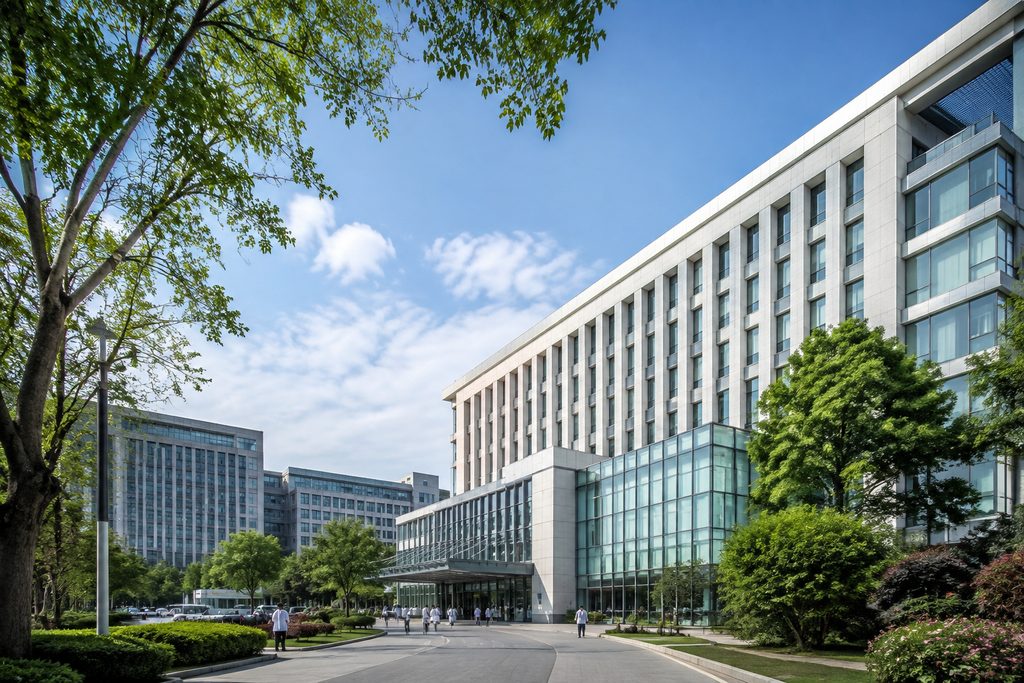
Soochow University First Hospital: Guide for International Patients
Roughly 6,000 foreign patients travel to Suzhou every year for medical care, and a growing share of them arrive with a single hospital name in hand: Soochow University First Hospital. It sits inside China’s top 5% of hospitals — a group of about 340 facilities out of more than 35,000 nationwide — and it anchors one of the country’s strongest hematology programs. If you are searching for a clear picture of Soochow University First Hospital international patient services, this guide walks through what the hospital actually offers, what it costs, how booking works, and where the friction points hide.
We are not doctors. Our team coordinates care for international patients across China, and we have watched enough families navigate this hospital to know which parts go smoothly and which parts catch people off guard.
How This Actually Works, Step by Step
The process starts long before you board a plane. Here is the real sequence.
Step one: gather your records. You send us (or the hospital’s international office directly) your existing examination reports — imaging files, lab results, pathology slides, discharge summaries. These need to be in Chinese or accompanied by certified translation. That translation step alone can take 3–7 business days depending on volume.
Step two: a specialty review. A relevant department — hematology, cardiology, orthopedics, whatever your case requires — reviews the file and returns a written assessment. This is a written second opinion, not a diagnosis. It tells you whether your case is a fit for the hospital and roughly what treatment path makes sense.
Step three: a video consultation if you want one. You speak online with the Chinese specialty team, explain your symptoms and goals, and hear their recommendations directly. Fees for this run $100–300 for a standard international department, or $500–800 if you want a top-tier specialist on the call.
Step four: visa and logistics. If treatment in China looks feasible, you apply for an S2 visa — the short-stay category used for medical treatment and private affairs. Your accompanying family member applies for S2 as well. Approval always depends on the latest embassy requirements and your supporting hospital documents.
Step five: arrival and in-person care. You land, register at the hospital, complete any remaining exams, and meet the specialist face to face. Surgery or admission only happens after that in-person consultation.
What Soochow University First Hospital Is Actually Known For
Suzhou is not Beijing or Shanghai, and that matters. The city hosts fewer internationally famous hospitals, but Soochow University First Hospital carries genuine weight in specific fields. Its hematology department has a national reputation, and the hospital appears on Fudan University’s specialist reputation rankings — the list that ranks China’s top 10 hospitals across 45 specialties. Note that the general hospital ranking only uses tiers (A++++ down to A), not numbered positions, so any claim of a precise national rank should be treated with suspicion.
The hospital is a large public tertiary facility. That means volume. Outpatient departments handle thousands of visits daily, corridors are busy, and English signage is limited outside the international office. Bilingual accompaniment is not a luxury here — it is close to essential for registration, payment, pharmacy pickup, and finding the right building.
For patients weighing whether is Soochow University First Hospital good for international patients, the honest answer is: it depends on your condition. For hematology, it is a strong choice. For complex cardiac surgery, many families still route to Fuwai Hospital in Beijing, which performs over 14,000 cardiac operations a year. For oncology, Shanghai’s Fudan-affiliated centers often top the list. Use our specialty rankings by department to compare before committing.
A Realistic Timeline
Optimistic timelines online rarely survive contact with reality. Here is what the calendar usually looks like.
| Stage | Typical Duration | What Slows It Down |
|---|---|---|
| Records collection and translation | 1–2 weeks | Incomplete files, missing pathology slides |
| Written second opinion | 3–10 business days | Department workload, need for clarification |
| Video consultation scheduling | 1–3 weeks | Specialist availability, time zone gaps |
| S2 visa application | 1–3 weeks | Embassy processing times, document errors |
| Travel and arrival | 1–3 days | Flight availability, jet lag recovery |
| In-person consultation and admission | 2–7 days | Additional exams required before surgery |
| Treatment and hospital stay | Varies by procedure | Case complexity, recovery pace |
| Follow-up after returning home | Ongoing | Coordinating with your local physician |
Add buffer. A case that looks like a four-week project frequently stretches to six or eight.
What Can Go Wrong — and What Happens Then
Things break. Knowing the failure modes in advance saves weeks.
Your records are rejected as incomplete. This is the most common delay. Pathology blocks, original imaging discs, and recent bloodwork are frequent gaps. The fix is a checklist from the hospital’s international office before you courier anything.
The specialist says your case is not a good fit. It happens. Some conditions are better treated closer to home, and no ethical hospital will take a case it cannot help. A written second opinion exists precisely to surface this early, before you spend money on flights.
Your visa application stalls. S2 applications require supporting documents from the hospital. If those documents are vague or missing, processing drags. Never book non-refundable flights before the visa is in hand.
The surgeon you wanted is unavailable. Senior specialists travel, operate on fixed days, and fill schedules months out. No coordination service can promise a specific doctor on a specific date. What we can do is coordinate through official international department channels and refund the coordination fee if the appointment cannot be secured at all.
Understanding the Costs
Cost is usually the reason people start looking at China in the first place, so let’s put real numbers on the table.
A cardiac bypass at a top Chinese public hospital typically runs $12,000–20,000. The same procedure in the United States often exceeds $120,000. That gap — roughly one-fifth to one-tenth of Western pricing — holds across many surgical categories, though it varies by hospital and case complexity.
For Soochow University First Hospital cost for foreigners, expect to pay the same published rates Chinese patients pay, plus international department surcharges if you use VIP channels. Public hospitals require prepayment; insurance reimbursement happens afterward, in your home country, according to your policy. Private international hospitals in China often bill insurers directly, but Soochow University First Hospital is a public institution, so plan your cash flow accordingly.
Coordination services sit on top of medical fees. A bilingual medical companion runs from $300 per day. Airport transfers are $200 round-trip. Hospital appointment coordination starts at $300. A VIP end-to-end package ranges $5,000–8,000. Any consultation fee you pay is credited in full toward on-the-ground coordination if you proceed within 90 days — a one-time credit applied to the coordination fee only, never to hospital treatment charges.
Practical Considerations: Records, Visa, Payment, Language
Four things trip up most international patients.
- Records. Bring originals plus translations. Digital copies help, but hospitals may require physical pathology slides.
- Visa. S2 for short medical stays, S1 if you expect to stay beyond 180 days. Family companions use S2. The M visa is for commercial and trade activity — it has nothing to do with medical treatment.
- Payment. Public hospitals want prepayment. Wire transfers take days. Carry a backup card that works internationally.
- Language. Outside the international office, English is sparse. A bilingual companion handles registration, queueing, payment, and pharmacy — the unglamorous work that consumes entire days.
If you want to compare this hospital against alternatives before deciding, browse our directory of top-ranked Chinese hospitals by city or explore options in Shanghai, about 30 minutes away by high-speed rail.
Frequently Asked Questions
Contact the hospital’s international office directly, or work through a coordination service that handles registration and medical card creation on your behalf. Standard outpatient slots cannot be reserved from overseas in advance — you register on arrival. Surgery requires an in-person consultation first, without exception.
It depends on your condition. The hospital is genuinely strong in hematology and carries national standing in several specialties. But its international infrastructure is less developed than Beijing or Shanghai’s flagship hospitals, and English support outside the international office is limited. For straightforward cases with coordination support, it works well. For highly complex cases, comparison shopping is wise.
Foreigners pay the same base rates as Chinese patients, plus surcharges if using VIP or international channels — typically 1.5–2x standard. A specific quote requires your records and a department review. Published price lists do not exist for complex cases because complexity drives cost.
Independent English reviews of this specific hospital are scarce. Most patient feedback circulates on Chinese platforms. Treat any review site claiming detailed first-hand foreign-patient experiences with caution unless it can verify them. Ask for direct references instead.
No. Packages bundle services you may not need. A written second opinion plus appointment coordination plus a bilingual companion covers most patients. Build the package around your actual case rather than buying a fixed bundle upfront.
Your Next Step
The core message: Soochow University First Hospital is a legitimate, well-regarded public hospital with real strengths in specific specialties, and it rewards preparation far more than improvisation. Our team at China Medical Services connects international patients with 340+ top-ranked hospitals across 37 cities — we handle records, coordination, and bilingual accompaniment, and we do not promise admission, outcomes, or queue priority. If you want a straight assessment of whether this hospital fits your case, start with a free consultation at our patient services page. No pressure, no obligation — just a clearer picture before you decide anything.
For more medical information and treatment options in China, visit chinamedservices.com (China Medical Services).
