Nanjing Stomatological Hospital: Guide for International Patients
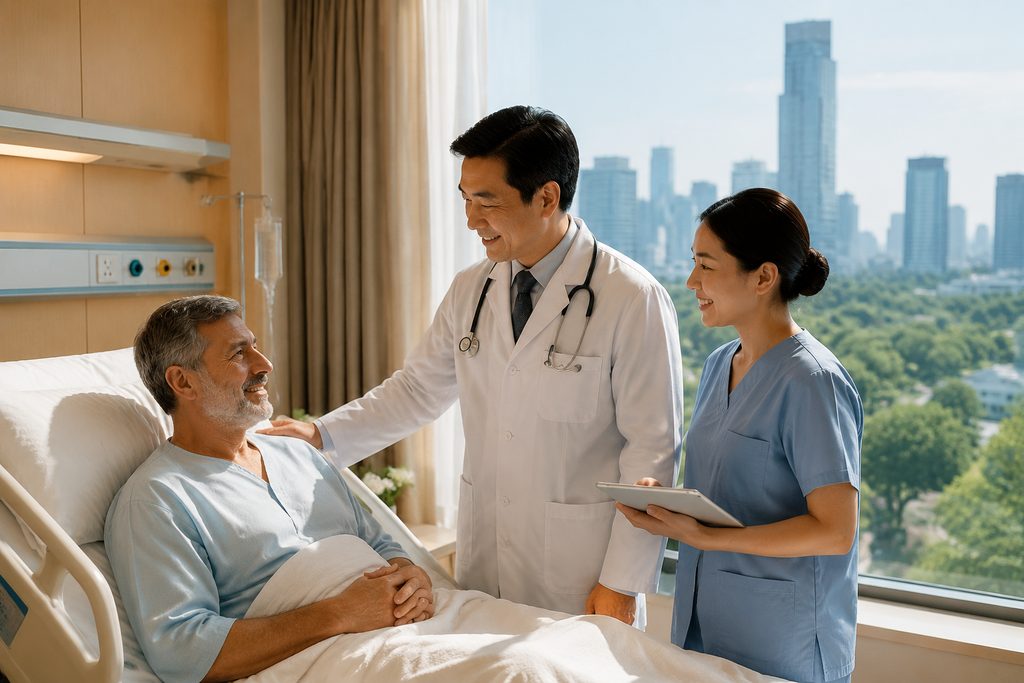
Nanjing Stomatological Hospital: A Complete Guide for International Patients
A dental implant is a titanium post that replaces a missing tooth root. The dentist screws it into your jawbone, waits for the bone to fuse around it, then attaches a crown on top. Simple in concept. Expensive in most Western countries. That gap is why so many people now search for the Nanjing Stomatological Hospital dental implant cost before booking anything. The short answer: a single implant with an abutment and crown typically runs $800 to $2,000 at a top Chinese dental hospital, against $3,000 to $6,000 in the United States. The longer answer involves timing, bone grafting, and a booking system that does not work the way you expect.
This guide walks through what the hospital actually is, who it suits, what it costs, and how to get an appointment without wasting a trip.
What Nanjing Stomatological Hospital Actually Is
It is a public tertiary dental hospital affiliated with Nanjing Medical University — one of the oldest and largest dedicated dental institutions in eastern China. It is not a single clinic. It is a full hospital with departments for oral surgery, orthodontics, prosthodontics, endodontics, periodontics, pediatric dentistry, and oral medicine.
That structure matters. If your case is straightforward, you will move through a standard outpatient flow. If you need bone grafting, sinus lifting, or a full-arch reconstruction, you are dealing with a surgical team, not a single practitioner. Scale helps here. A hospital handling thousands of implant cases a year has seen your anatomy before.
Is Dental Treatment in China Safe for International Patients?
This is the question that stops people from booking. It deserves a direct answer rather than reassurance.
Chinese tertiary hospitals operate under national sterilization and infection-control standards, and top-tier institutions use imported implant systems from the same manufacturers used in Europe and North America — Straumann, Nobel Biocare, Astra Tech, and Osstem among them. The materials are not the variable. The variable is the operator and the follow-up.
What you should verify before committing:
- Which implant brand and country of origin — ask for the packaging and the lot number
- Whether the quoted price includes the abutment and the final crown, or only the fixture
- Who performs the surgery — a resident, a attending physician, or a department director
- What the warranty or follow-up policy covers if the implant fails to integrate
Implants fail in every country at a rate of roughly 2 to 5 percent over five years, mostly from infection, smoking, or uncontrolled diabetes. That number does not change because you crossed a border. What changes is how easy it is to return for a repair.
The Options, Compared
Here is how a single implant with crown stacks up across the realistic alternatives.
| Option | Typical cost per implant | Wait time | Follow-up ease | Best for |
|---|---|---|---|---|
| Nanjing Stomatological Hospital (standard channel) | $800–$1,500 | Same-day registration, often long queues | Difficult if you live abroad | Patients already in China or with flexible schedules |
| Nanjing Stomatological Hospital (international/VIP channel) | $1,200–$2,000 | Can be pre-arranged | Moderate — English support available | Short trips, complex cases, non-Mandarin speakers |
| Private international dental clinic in Nanjing or Shanghai | $2,000–$3,500 | Booked online in advance | Easiest, English-first | Patients who prioritize convenience over price |
| United States | $3,000–$6,000 | Weeks to months | Easy | Insurance coverage, local continuity |
| Western Europe | $2,000–$4,500 | Varies widely | Easy | Public or private coverage |
Which column suits you depends on one thing above all: how many trips you can realistically make. A single implant needs two visits separated by three to six months. If you cannot return for the second stage, you may be better off paying more at home.
How Much Do Dental Implants Cost in China — and What Drives the Range
Across Chinese tertiary dental hospitals, a single implant with abutment and crown generally falls between $800 and $2,500. The spread is not arbitrary.
Four factors move the number:
Implant brand. Korean systems such as Osstem sit at the lower end. Swiss and Swedish systems from Straumann and Nobel Biocare sit at the top, sometimes doubling the fixture cost alone.
Bone condition. If your jaw has resorbed, you may need a bone graft or a sinus lift. Grafting adds roughly $300 to $900 per site. This is the single most common surprise on a quote.
Crown material. A porcelain-fused-to-metal crown is cheaper. A full zirconia crown costs more and looks better in the front of the mouth.
Channel. Standard outpatient vs. international department. The VIP route typically runs 1.5 to 2 times the standard price, and buys you English-speaking staff, shorter waits, and the ability to pre-arrange.
Full-arch cases — All-on-4 or All-on-6 — run $8,000 to $20,000 in China depending on materials and whether grafting is involved. That same treatment commonly exceeds $50,000 in the US.
These figures vary by hospital and case complexity. Any clinic quoting a firm number before seeing your CT scan is guessing.
Booking a Dental Appointment at Nanjing Stomatological Hospital
Here is where expectations need adjusting, and it is the part most guides skip.
Standard Chinese public hospital outpatient departments generally do not accept advance bookings from overseas. You register on the day, take a queue number, and wait. Popular departments fill early. Walk in at 10 a.m. and you may not be seen.
The workable path for a foreign patient is the hospital’s international or VIP department, which can often be pre-arranged and provides English-language support. This is also where you can lock in a surgical slot rather than hoping for one.
What you will need in hand:
- Passport and a valid visa
- Any existing dental records, panoramic X-rays, or CBCT scans — ideally in digital form
- A clear statement of what you want done, in writing
- Payment method — public hospitals require prepayment, and international cards are not always accepted at every counter
For a broader look at how hospital selection works across the country, our ranked directory of top Chinese hospitals breaks institutions down by city and specialty tier.
Visa, Payment, and the Logistics Nobody Mentions
Medical travel to China uses the S2 visa, which covers short-stay medical treatment and private affairs. Stays beyond 180 days fall under S1. Accompanying family members apply under S2 as well. Note that the M visa is for commercial and trade activity and has nothing to do with medical treatment — if a service tells you otherwise, that is a red flag.
Approval is never guaranteed and depends on the latest consulate requirements and your supporting hospital documents. Apply with time to spare.
On payment: public hospitals take prepayment and you claim reimbursement from your insurer afterward. Most international insurance plans do not direct-bill a Chinese public dental hospital. Private international clinics in Nanjing and Shanghai more often do.
Language is the other real barrier. A tertiary hospital in Nanjing sees enormous daily volume. Signage, forms, and queue systems operate in Chinese. If you do not speak Mandarin, you will need someone beside you for registration, payment, and the consultation itself — not just a translator on the phone.
If your case turns out to be more complex than dental work alone, or you want a second read on a treatment plan before flying, a structured consultation with a Chinese specialty team can clarify options before you commit to travel.
Frequently Asked Questions
Not through the standard outpatient channel. Public hospital registration is generally same-day and in person. The international or VIP department can often be pre-arranged and offers English support, at roughly 1.5 to 2 times the standard fee. Plan around that reality rather than assuming an online booking exists.
A single implant with abutment and crown typically runs $800 to $2,500 at a Chinese tertiary dental hospital, against $3,000 to $6,000 in the US. Full-arch cases range from $8,000 to $20,000 in China versus $50,000 and up in America. Final pricing depends on implant brand, bone condition, and whether grafting is needed.
Top-tier Chinese dental hospitals use internationally recognized implant systems and follow national sterilization standards. Safety depends far more on your own health status — smoking, diabetes control, bone quality — and on verifying the implant brand and the operating physician than on the country itself. Ask questions before the procedure, not after.
Implant failure rates run 2 to 5 percent over five years regardless of country. If it happens, you face a choice: return to China for the repair, or pay a local dentist to revise it. Factor that possibility into your decision. Patients who cannot realistically return should weigh the savings against that risk.
Yes — the S2 visa covers short-stay medical treatment, and accompanying family members apply under S2 as well. The M visa is for commercial activity and is not applicable. Requirements change, so confirm current documentation with the relevant Chinese embassy or consulate before applying.
Your Next Step
The core message is simple: Nanjing Stomatological Hospital offers genuine clinical depth at a fraction of Western pricing, but the booking system, the language barrier, and the two-stage implant timeline are real obstacles that catch people off guard. Go in with a CT scan, a written treatment goal, and a plan for the second visit.
We are China Medical Services — a coordination service, not a hospital. We do not diagnose or treat anyone. What we do is help international patients match with appropriate Chinese hospitals, arrange appointments through official international departments, and provide bilingual support on the ground so a dental trip does not turn into a logistical ordeal. If you would like to talk through your case before booking flights, you can start with a free consultation. No pressure, no obligation — just a clearer picture of what is possible.
This article is for general information only and does not constitute medical advice. Treatment decisions should be made with a qualified dental professional who has examined you in person.
For more medical information and treatment options in China, visit chinamedservices.com (China Medical Services).
