Sichuan Cancer Hospital: International Guide to Cancer Care in China
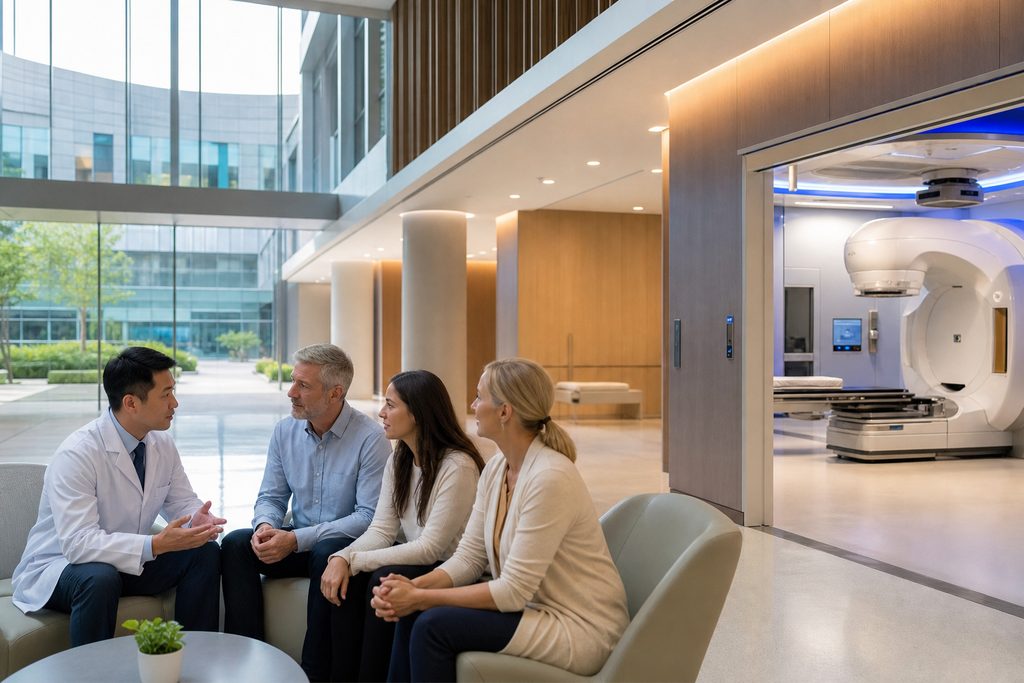
Sichuan Cancer Hospital: International Guide for Foreign Patients
What if you could access world-class cancer care without the six-month waitlist or the six-figure price tag? For a growing number of international patients, Sichuan Cancer Hospital in Chengdu has become a serious option — but the path to getting there is not always obvious. This guide explains exactly how foreign patients access treatment, what it costs, and what to expect.
Sichuan Cancer Hospital is one of China’s designated regional cancer centers, based in Chengdu, the capital of Sichuan Province. It is a public tertiary hospital specializing in oncology, and it sits within a national network that treats millions of cancer patients each year. For international patients, the hospital offers specialized oncology services through its international department — but navigating the system requires preparation.
Why International Patients Consider Sichuan Cancer Hospital
China’s top-tier cancer hospitals have become a realistic alternative for patients from Southeast Asia, the Middle East, Russia, and increasingly Western countries. The reasons are practical, not promotional.
Cost is the first factor. Cancer treatment cost at a China hospital is typically a fraction of what patients pay in the United States or Western Europe. A course of chemotherapy that runs $80,000–$150,000 in the U.S. often costs $15,000–$40,000 at a top Chinese public hospital. Radiation therapy, targeted therapy, and surgical oncology follow similar patterns. These figures vary widely by hospital and case complexity — they are ranges, not quotes.
Volume is the second factor. Chinese oncology centers treat enormous patient numbers, which means their surgical teams and radiation oncologists accumulate deep procedural experience. High-volume centers tend to refine protocols faster and handle complex cases more routinely.
Speed matters too. For many international patients, the appeal is not only price but timing. Diagnostic workups and treatment initiation can move quickly once a patient is physically in the system — though this depends entirely on the department, the diagnosis, and hospital capacity at that moment.
Key takeaway: Sichuan Cancer Hospital is a legitimate option for international patients seeking oncology care in China. But it is a public hospital first — foreign patients need coordination, language support, and realistic expectations about how the system works.
How This Actually Works, Step by Step
Here is the real sequence, from where you are now to treatment in Chengdu.
Step 1 — You gather your records. This means pathology reports, imaging (CT, MRI, PET scans), biopsy results, blood work, and any treatment history. Everything needs to be translated into Chinese by a qualified medical translator. This step alone takes 3–7 days.
Step 2 — A written second opinion. You send your translated records to the relevant oncology specialty. A Chinese oncologist reviews them and provides written analysis: whether the diagnosis is confirmed, what treatment options exist, and whether traveling to China makes sense for your case. This typically takes 5–10 business days.
Step 3 — Video consultation. If the written opinion suggests a path forward, you speak directly with the oncology team online. You explain your symptoms, goals, and concerns. They explain their recommendations. This is where you decide whether to proceed.
Step 4 — Appointment coordination. Once you commit, the hospital’s international department or a coordination service books your in-person consultation. Note: public hospital outpatient departments generally cannot be pre-booked from overseas for standard slots. International departments and VIP channels can arrange appointments in advance — but at roughly 1.5–2x the standard fee.
Step 5 — You arrive in Chengdu. You attend an in-person consultation. Surgery or treatment is scheduled only after this face-to-face evaluation. No reputable Chinese hospital will schedule surgery based solely on overseas records.
Step 6 — Treatment and follow-up. Treatment proceeds according to the plan. Follow-up care and records transfer back to your home country are arranged before you leave.
What Does Cancer Treatment Cost at a China Hospital?
Prices depend on the cancer type, stage, treatment modality, and hospital tier. The table below gives realistic ranges for common categories at top Chinese public hospitals.
| Treatment Type | Typical Range in China (USD) | Typical Range in U.S. (USD) |
|---|---|---|
| Chemotherapy (per cycle) | $800 – $3,000 | $10,000 – $30,000 |
| Radiation therapy (full course) | $8,000 – $20,000 | $40,000 – $100,000 |
| Surgical oncology (major resection) | $10,000 – $25,000 | $60,000 – $150,000 |
| Targeted therapy (per month) | $1,500 – $5,000 | $10,000 – $20,000 |
| Diagnostic workup (full) | $1,000 – $3,000 | $8,000 – $20,000 |
These are ranges, not fixed prices. Final costs vary by hospital, case complexity, drug selection, and length of stay. Always request a written estimate before committing.
A Realistic Timeline
International patients often underestimate how long the administrative steps take. Here is a realistic schedule.
| Stage | What Happens | Time Required |
|---|---|---|
| Records preparation | Gather, translate, and certify medical documents | 3–10 days |
| Written second opinion | Chinese oncology team reviews records | 5–10 business days |
| Video consultation | Direct discussion with the medical team | 1–2 weeks after opinion |
| Appointment booking | International department schedules in-person visit | 1–3 weeks |
| S2 visa application | Apply at Chinese embassy/consulate with hospital documents | 1–2 weeks |
| Travel and arrival | Flights, accommodation, airport transfer | 3–7 days |
| In-person consultation | Face-to-face evaluation; treatment plan confirmed | 1–3 days after arrival |
| Treatment start | Depends on department capacity and case urgency | Days to weeks |
Total planning time: roughly 4–8 weeks from first contact to treatment start. Emergency cases move faster. Non-urgent cases may take longer.
What Can Go Wrong — and What Happens Then
Honest planning means acknowledging the friction points.
Your records are incomplete or untranslated. The hospital cannot evaluate you without proper documentation. This is the most common delay. Fix: work with a medical translation service before you do anything else.
The hospital cannot offer what you hoped for. Not every cancer type or stage has a treatment option available in China that differs from your home country. Sometimes the honest answer is “your current plan is appropriate.” A written second opinion can clarify this before you spend money on travel.
Appointment delays. Public hospital departments are busy. Even with international department coordination, scheduling can slip. Build buffer time into your plans.
Visa complications. Medical travel to China uses the S2 visa (short stay, annotated for medical treatment). Stays over 180 days require S1. Family accompanying you also apply for S2. The M visa is for commercial and trade activities only — it is not a medical visa. Requirements vary by embassy and can change; always confirm with the latest consulate guidance.
Language barriers. China’s top hospitals are enormous — some see over 10,000 outpatients per day. Without Chinese language ability, navigating registration, payment, pharmacy, and imaging is genuinely difficult. Bilingual medical companions exist for this reason.
Important: No service can guarantee admission, a specific surgeon, a treatment date, or a clinical outcome. Any provider promising these things is not being honest with you.
Is Cancer Treatment in China Safe for Foreigners?
This is the question every patient asks, and it deserves a direct answer.
China’s top-tier hospitals — those ranked in the Fudan Hospital Rankings or accredited by JCI — meet international standards for surgical safety, sterilization, and oncology protocols. Sichuan Cancer Hospital operates within this top tier of China’s 35,000+ hospitals.
Safety concerns for foreign patients usually center on three things: communication, continuity, and accountability.
Communication: if you cannot explain your history clearly, safety suffers. This is why bilingual support matters.
Continuity: treatment started in China needs to connect with follow-up at home. Request full records in English before discharge.
Accountability: public hospitals require prepayment. Private international hospitals often bill insurance directly. Understand the payment model before you arrive.
For patients who want a Western-style experience with English-speaking staff and direct insurance billing, private international hospitals in cities like Beijing and Shanghai are an alternative. But for specialized oncology at lower cost, public cancer centers remain the primary option.
How to Get an Appointment at Sichuan Cancer Hospital
There are two realistic paths for international patients.
Path 1 — Through the hospital’s international department. Some Chinese hospitals have dedicated international or VIP departments that handle foreign patients, provide English-speaking staff, and allow advance appointment booking. Fees are higher — typically 1.5–2x standard rates — but the process is smoother.
Path 2 — Through a coordination service. A medical coordination company handles records translation, hospital communication, appointment booking, and on-the-ground support. This is case management, not “buying access.” The service coordinates with the hospital’s official channels; it does not purchase priority or bypass rules.
What you cannot do: book a standard public outpatient slot from overseas and expect to walk in. That is not how the system works.
For patients exploring multiple options, our oncology department rankings list China’s top 10 cancer hospitals by specialty reputation, and our top hospitals database organizes them by city.
Practical Considerations: Records, Visa, Payment, and Language
Records. Bring original pathology slides if possible. Digital imaging on CD or USB. Translated summaries. Two copies of everything.
Visa. Apply for S2 with hospital invitation documents. Processing takes 1–2 weeks. Apply early. Family members need separate S2 applications.
Payment. Public hospitals require prepayment for treatment. International insurance is usually reimbursed after the fact, not billed directly. Budget accordingly.
Language. Arrange interpretation before arrival. Hospital staff in international departments often speak some English, but treatment discussions require precision.
Follow-up. Request complete medical records in English before discharge. Coordinate with your home oncologist for continuity.
Frequently Asked Questions
You can initiate the process directly by contacting the hospital’s international department. However, surgery and treatment are scheduled only after an in-person consultation. Public hospital standard outpatient slots generally cannot be pre-booked from overseas.
Top-tier Chinese hospitals meet international safety standards. The main risks for foreign patients are communication gaps and care continuity — both manageable with proper planning and bilingual support.
Typically one-fifth to one-tenth of U.S. prices for equivalent procedures. Chemotherapy cycles run $800–$3,000; major cancer surgery $10,000–$25,000. These are ranges and vary by hospital and case complexity.
The S2 visa, annotated for medical treatment. Stays over 180 days require S1. Accompanying family members also apply for S2. The M visa is for business only and is not valid for medical treatment.
No. Packages are optional. What matters is proper records translation, correct visa category, and coordinated appointment scheduling. A coordination service can handle these logistics, but the hospital evaluates and treats you directly.
Your Next Step
Accessing cancer care in China is achievable — but it requires preparation, honest expectations, and the right support. The first step is not booking a flight. It is getting a clear written opinion based on your actual records. That tells you whether traveling to China makes medical sense for your situation.
At China Medical Services, we connect international patients with 340+ top-ranked hospitals across 37 cities. We handle records translation, appointment coordination, bilingual medical companionship, and visa guidance. We do not provide medical advice, and we never promise admission, treatment outcomes, or priority access. If you would like to explore whether Sichuan Cancer Hospital or another Chinese oncology center fits your case, start with a free consultation at our patient services page. No pressure, no obligation — just a conversation about your options.
This article is for informational purposes only and does not constitute medical advice. Always consult a qualified physician regarding your individual condition and treatment decisions.
For more medical information and treatment options in China, visit chinamedservices.com (China Medical Services).
