Myopia Surgery Hospital in Harbin: Costs, Safety, and How to Book
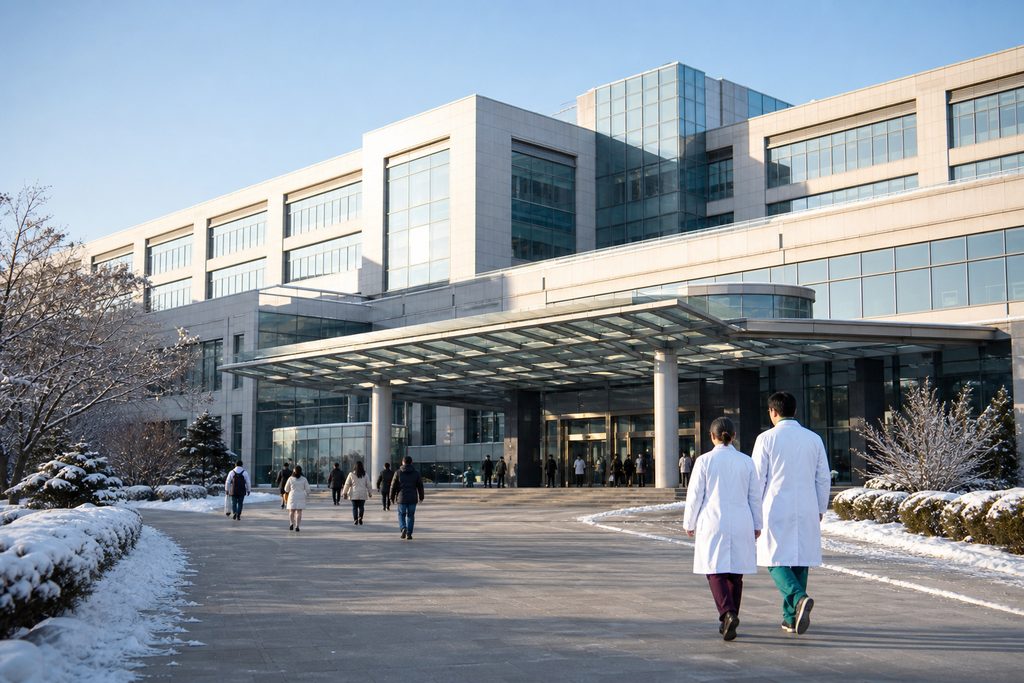
While a LASIK procedure in the United States averages $2,200 per eye, top-tier Chinese ophthalmology centers routinely quote $800 to $1,500 for both eyes combined — with femtosecond laser platforms and surgeon volumes that rival anything in North America. Harbin, a city of 10 million in northeast China, sits at the center of that gap. For foreign patients searching for a myopia surgery hospital in Harbin, the question is rarely whether the technology exists. It is whether they can access it safely, affordably, and without speaking a word of Mandarin.
That last part is the real obstacle. Not the lasers. Not the surgeons. The navigation.
Myopia Surgery Cost in China: The Short Answer
Laser vision correction in China costs between $700 and $2,000 for both eyes at a reputable public or private hospital, depending on the procedure and the city. In Harbin specifically, most clinics fall in the $800–$1,600 range. That is roughly one-fifth to one-third of typical US pricing, and about half of what you would pay in Western Europe.
The caveat: not every clinic quoting a low price is one you should walk into. China has more than 35,000 hospitals, and ophthalmology departments vary enormously in equipment age, surgeon experience, and post-operative follow-up standards. Price alone tells you almost nothing.
Key takeaway: The cheapest quote is rarely the best value. What matters is whether the clinic uses a current-generation excimer platform, whether the surgeon performs at least 500 procedures per year, and whether anyone on staff can explain your follow-up plan in English.
Who This Is Right For — and Who It Isn’t
Harbin attracts a specific kind of medical traveler. Russian-speaking patients from the Far East have crossed into Heilongjiang province for eye surgery for years, and the city’s hospitals have adapted accordingly. English-speaking patients are a smaller but growing group.
You are likely a good candidate if:
- You are between 18 and 45 with a stable prescription (unchanged for at least 12 months)
- Your myopia falls between -1.00 and -10.00 diopters, with or without astigmatism
- Your corneas are thick enough for the procedure your surgeon recommends
- You can stay in Harbin for 5–7 days, including a pre-op exam and a follow-up visit
- You want to combine surgery with a trip — Harbin’s Ice Festival runs December through February
You should probably not pursue this if:
- You have keratoconus, severe dry eye, or an active eye infection
- You are pregnant or nursing — hormonal shifts can affect refraction
- You expect to fly home the day after surgery (most surgeons want a 24–48 hour check first)
- You have no plan for follow-up care once you return home
That last point matters more than most patients realize. Your surgery takes twenty minutes. Your recovery takes six months. If your home-country optometrist won’t see you for post-op checks, you have a problem.
The Options, Compared
Four procedures dominate the Chinese market. Here is how they stack up on cost, recovery, and suitability.
| Procedure | Typical Cost in Harbin (both eyes) | Recovery to Clear Vision | Best For |
|---|---|---|---|
| SMILE (small incision lenticule extraction) | $1,200–$1,800 | 1–3 days | Higher prescriptions, athletes, dry-eye-prone patients |
| Femtosecond LASIK | $900–$1,500 | 24–48 hours | Most prescriptions, fast visual recovery |
| PRK / Surface Ablation | $700–$1,100 | 4–7 days | Thin corneas, patients in contact sports |
| ICL (implantable collamer lens) | $2,800–$4,000 | 1–2 days | Very high myopia (-10.00 and above), thin corneas |
Which column suits you? If you have a moderate prescription and want the fastest return to normal life, femtosecond LASIK is the default. If your corneas are thin or you play contact sports, PRK costs less but demands patience. SMILE sits in the middle — slightly more expensive, but it preserves more corneal nerves and tends to produce less dry eye. ICL is the outlier: it is a lens implant, not a laser procedure, and it is the only reversible option on this list.
Note that SMILE and ICL require more specialized equipment. Not every Harbin clinic offers them. Confirm before you book.
Is LASIK Safe in China? What the Data Actually Shows
This is the question that keeps patients up at night, and it deserves a straight answer.
Laser refractive surgery has been performed in China since the early 1990s. The country now conducts an estimated one million-plus refractive procedures annually, making it one of the largest markets in the world. Complication rates at accredited centers track closely with international benchmarks — roughly 1 in 1,000 for significant flap-related issues with LASIK, and lower for SMILE.
But “accredited center” is doing a lot of work in that sentence.
China’s ophthalmology hierarchy is steep. A handful of hospitals sit at the top — Zhongshan Ophthalmic Center in Guangzhou, Beijing Tongren Hospital, and a small group of provincial flagships. Below them, quality drops faster than in most Western systems, because regulation of private eye clinics has historically been inconsistent. Some private chains operate excellent facilities. Others cut corners on equipment maintenance and surgeon credentialing.
How do you tell the difference from 6,000 miles away? Three checks:
- Equipment generation. Ask for the model name of the excimer laser. If the clinic cannot or will not tell you, walk away.
- Surgeon volume. A refractive surgeon should perform at least 300–500 procedures per year. Ask how many the assigned surgeon did last year.
- Pre-op screening depth. A proper workup includes corneal topography, pachymetry, and a dilated retinal exam. If the clinic skips topography, that is a red flag — it is how you catch keratoconus before you operate on it.
Caution: Some low-cost clinics advertise prices under $500 for both eyes. These quotes typically exclude the pre-op exam, post-op medications, and follow-up visits — or they use older laser platforms. Ask for a written all-in quote before committing.
How Much Does Myopia Surgery Cost in Harbin — and What’s Included?
Let’s break down a realistic budget for a foreign patient flying into Harbin for SMILE or LASIK.
| Item | Typical Range (USD) |
|---|---|
| Pre-operative examination | $50–$150 |
| Surgery (both eyes) | $800–$1,800 |
| Post-op medications (drops, antibiotics) | $30–$80 |
| Follow-up visits (2–3 during your stay) | $0–$100 |
| Hotel (5–7 nights, mid-range) | $250–$500 |
| Airport transfers | $50–$100 |
| Bilingual medical companion (optional) | from $300/day |
Total, excluding flights: roughly $1,200 to $2,700. Compare that with $4,400 to $5,000 for the same procedure in the US, before travel and lodging.
What drives the variance? Three things. The procedure type (ICL costs three times what PRK does). The hospital tier — a top-ranked public hospital’s international department charges more than a mid-tier private clinic, and it is usually worth it. And whether you need a bilingual companion, which we will get to shortly.
What is not included in most quotes: your flight, travel insurance, and any treatment for complications after you leave China. Budget for those separately.
Book LASIK Surgery in China: The Practical Steps
Here is where most foreign patients hit a wall. Chinese public hospitals do not operate like Western ones. You cannot book a specialist appointment online from abroad the way you would with a US health system. Walk-in registration is the norm, and same-day slots for popular surgeons disappear by 7 a.m.
The workaround is the hospital’s international department or VIP channel. These exist at most top-tier hospitals, offer English-speaking staff, and can pre-arrange consultations. Expect to pay roughly 1.5 to 2 times the standard fee for that access. It is not a bribe or a backdoor — it is a separate service tier, and it is how foreign patients get seen efficiently.
For a step-by-step guide to the broader process, our patient consultation page walks through hospital matching, appointment coordination, and what to expect on arrival.
The sequence looks like this:
- Weeks 1–2: Send your existing eye exam records for review. A Chinese ophthalmologist confirms whether you are a candidate and which procedure fits.
- Week 3: The hospital schedules your pre-op exam and surgery date. You apply for your visa.
- Days 1–2 in Harbin: Full pre-operative workup. If your corneas don’t cooperate, the surgeon may switch procedures or decline. This happens in about 10–15% of cases.
- Day 3: Surgery. Twenty minutes in the operating room, both eyes.
- Days 4–6: Follow-up checks. Most patients reach 20/20 or better within 48 hours, though final stabilization takes three to six months.
- Day 7: Fly home with a written follow-up plan for your local eye doctor.
Practical Considerations: Visas, Payment, and Follow-Up
Visa. Foreign patients traveling to China for medical treatment apply for an S2 visa, which covers short-stay medical and private affairs. Accompanying family members apply for the same category. You will need an invitation or supporting document from the treating hospital. Note that the M visa is for commercial and trade activities — it is not the right category for medical travel. Requirements shift, so confirm current rules with your nearest Chinese embassy or consulate before applying.
Payment. Chinese public hospitals require prepayment. International credit cards are accepted at international departments, but smaller clinics may only take cash or local digital payment apps. Bring a backup method. Insurance reimbursement happens after you return home — direct billing is rare outside private international hospitals.
Language. This is the single biggest friction point. Harbin’s public hospitals operate almost entirely in Mandarin, and the city sees far fewer English-speaking patients than Beijing or Shanghai. A bilingual medical companion handles registration, queuing, payment, and translation during your appointments. Our specialty department directory can help you identify which hospitals have the strongest ophthalmology programs before you commit.
Follow-up. Arrange a check with your home optometrist before you travel. Bring your operative report and medication list. Most surgeons want to see you at one week, one month, and three months post-op — remotely is acceptable if your local doctor handles the exam.
Frequently Asked Questions
Yes, but not easily on your own. Hospital international departments provide some English support, though availability varies by facility. Most foreign patients use a bilingual medical companion for registration, translation, and coordination. Without one, expect significant difficulty navigating appointments and payment.
Roughly one-fifth to one-third. LASIK in Harbin runs $900–$1,500 for both eyes; the same procedure in the US averages $4,400–$5,000. SMILE and ICL cost more but still undercut Western pricing substantially. Final quotes depend on hospital tier and case complexity.
At accredited hospitals with experienced surgeons, complication rates match international benchmarks. The risk lies in choosing a clinic based on price alone. Verify equipment generation, surgeon volume, and pre-op screening protocols before committing. If a clinic won’t disclose these details, find another one.
This is a genuine risk to plan for. Arrange a local eye doctor before you travel, and bring your complete operative records. Most post-op issues — dry eye, minor flap irritation, temporary halos — are manageable locally. Serious complications are rare but require prompt care, which is why the pre-travel follow-up plan matters.
Your Next Step
Harbin offers real value for laser vision correction: current-generation equipment, high-volume surgeons, and pricing that undercuts the West by 60–80%. The barrier is not medical. It is logistical — visas, language, appointment systems that weren’t designed for foreign patients.
China Medical Services is not a hospital and does not provide medical advice or diagnoses. We connect international patients with top-ranked Chinese hospitals, coordinate appointments through official international departments, and provide bilingual support on the ground. If you would like to explore whether Harbin is the right fit for your case, our team offers a free initial consultation — no pressure, no obligation, just a conversation about what is realistic. You can start here: Get a free consultation.
This article is for informational purposes only and does not constitute medical advice. Treatment decisions should be made in consultation with a qualified ophthalmologist who has reviewed your individual examination results.
For more medical information and treatment options in China, visit chinamedservices.com (China Medical Services).
