PET Scan Cost in China: Real Prices, Top Hospitals, and How to Book
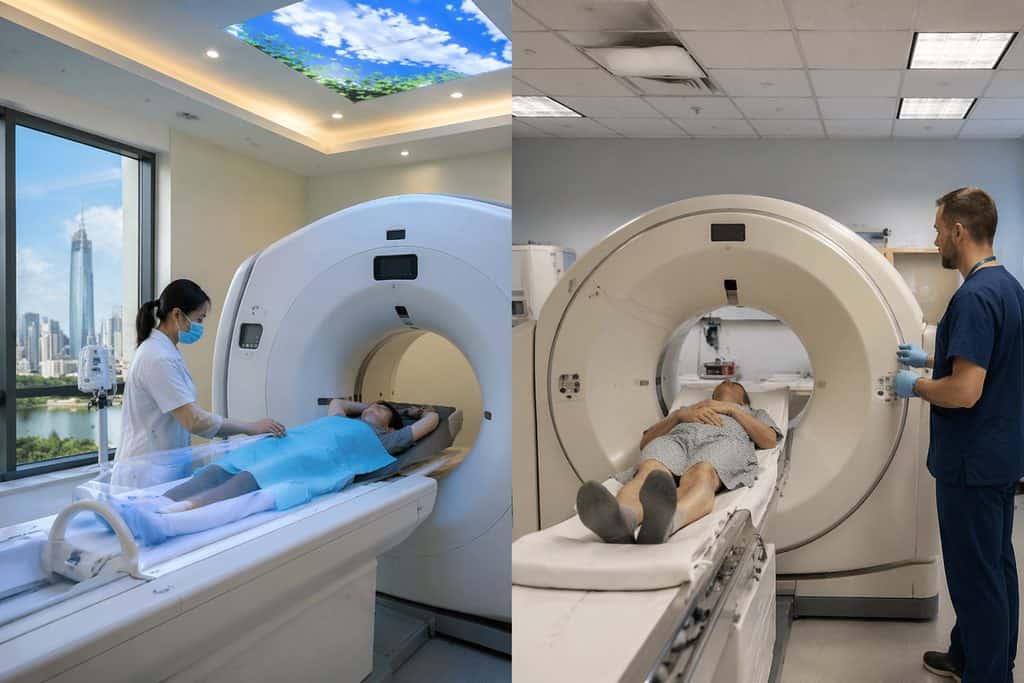
When 54-year-old David from Melbourne received a suspicious lung nodule on a routine chest X-ray, his oncologist ordered a PET scan to stage the finding. The quote from his local private imaging center came back at roughly AUD 1,100 out of pocket, with a two-week wait. A colleague mentioned that a PET scan cost in China might run a fraction of that — but David had no idea whether the quality, the radiopharmaceutical, or the reporting would be comparable. That uncertainty is exactly what this guide addresses.
PET imaging in China is not a budget compromise. Major Chinese hospitals operate some of the highest-volume nuclear medicine departments in the world, with the same Siemens, GE, and United Imaging scanners used in Europe and North America. What differs is the price, the wait, and the logistics of access for a foreign patient.
How This Actually Works, Step by Step
If you are outside China and want a PET scan there, the sequence is more structured than you might expect. Here is the real path, start to finish.
Step 1 — Send your existing records. You email your CT, MRI, pathology reports, and a short clinical summary (in English is fine; we handle translation). A nuclear medicine physician or the relevant specialty reviews them to confirm a PET scan is actually indicated. Not every case needs one, and a good department will tell you so.
Step 2 — Choose a hospital and get a written plan. Based on your case, the team recommends a facility — often a top-ranked public hospital’s international department or a JCI-accredited private hospital. You receive a written estimate covering the scan, the radiotracer, and the radiologist’s report.
Step 3 — Confirm the appointment. Public hospital general imaging queues cannot be booked from overseas in advance. International departments and private hospitals can hold a slot. This is the single biggest practical difference for foreign patients.
Step 4 — Arrive, register, scan. On the day, you check in with your passport, receive the FDG injection, rest for about 60 minutes while the tracer distributes, then lie still for a 15–30 minute scan. Total time on site: roughly 2–3 hours.
Step 5 — Get the report. Preliminary findings usually come the same day or next morning. The full written report, translated into English if needed, follows within 24–72 hours depending on the hospital.
What a PET Scan Actually Costs in China
Here is the honest answer: prices vary by hospital tier, city, tracer type, and whether you use a standard or international channel. The figures below are 2026 reference ranges in US dollars, and they shift with exchange rates and hospital policy.
| Scan type | Public hospital (standard) | International / private | Typical US price |
|---|---|---|---|
| FDG PET-CT (whole body) | $700 – $1,100 | $1,200 – $2,000 | $3,000 – $6,000 |
| PET-CT (single region) | $500 – $850 | $900 – $1,500 | $2,000 – $4,500 |
| PET-MRI | $1,100 – $1,600 | $1,800 – $2,800 | $4,500 – $8,000 |
| PSMA PET-CT (prostate) | $900 – $1,400 | $1,500 – $2,400 | $4,000 – $7,000 |
| Amyloid / tau PET (neurology) | $1,000 – $1,600 | $1,700 – $2,600 | $5,000 – $9,000 |
Two things drive the spread. First, the radiotracer itself — FDG is inexpensive and widely produced; PSMA and amyloid tracers are costlier and only available at a limited number of centers. Second, the channel: a public hospital’s standard nuclear medicine department charges the domestic rate, but you will queue like everyone else and navigate a Mandarin-only environment. International departments add English-speaking staff, faster scheduling, and roughly 1.5–2x the standard price.
For a PET scan price at a Shanghai hospital specifically, expect the upper end of these ranges. Shanghai’s major centers — Ruijin, Zhongshan, and the affiliated cancer hospitals — carry heavy domestic demand, and their international departments price accordingly. Beijing runs similar. If cost is the primary driver and your case is straightforward, a strong provincial capital hospital can deliver the same scan for 20–30% less.
Is PET Scan Safe in China?
Yes, with the same caveats that apply anywhere. PET-CT delivers ionizing radiation — roughly 7–10 mSv for a whole-body FDG study, comparable to a diagnostic CT plus a small tracer dose. PET-MRI eliminates the CT radiation component entirely, which matters if you are young or likely to need repeat imaging.
The safety question international patients actually ask is different, though. They want to know whether the equipment is maintained, whether the tracer is pharmaceutical-grade, and whether the reading radiologist is qualified. On all three, top Chinese centers meet international standards. Nuclear medicine is a regulated specialty, PET facilities operate under government licensing, and the major hospitals participate in international quality accreditation. The private international hospitals in our network are JCI-accredited, which requires documented equipment calibration and radiopharmaceutical sourcing protocols.
A Realistic Timeline
Timelines depend heavily on how far ahead you plan and whether your documents need translation. Here is a realistic schedule for a patient traveling from abroad.
| Stage | Duration | What happens |
|---|---|---|
| Records review & indication check | 2–5 days | You send imaging and reports; a specialist confirms the scan is appropriate |
| Hospital selection & written quote | 3–7 days | Facility recommended, estimate issued, questions answered |
| Appointment confirmation | 3–10 days | Slot held at an international or private department |
| Visa (S2) processing | 4–10 business days | Requires hospital invitation letter and supporting documents |
| Travel & arrival | 1–2 days | Flights, airport transfer, hotel check-in |
| Scan day | Half day | Injection, uptake rest, imaging, initial findings |
| Full written report | 24–72 hours | Translated into English if requested |
Realistic total from first email to scan: 3 to 6 weeks. If you already hold a valid visa and choose a private hospital, that can compress to 10–14 days. The steps people forget are document translation and the visa letter — both add days, and neither can be rushed past a certain point.
What Can Go Wrong — and What Happens Then
Yes — imaging-only visits are possible, and some patients travel specifically for a PET-CT scan plus a specialist read. The catch is that public hospital general imaging cannot be reserved from overseas; you need an international department or a private hospital to hold a slot. Packages combining scan, consultation, and translation are the most practical route for a short trip.
Safety is comparable to any accredited center worldwide, but cumulative radiation dose is a legitimate concern for patients with extensive imaging history. PET-MRI avoids the CT component and is available at several major centers. Discuss cumulative dose with your own physician before adding another study.
Most international departments provide a written report within 24–72 hours, and many offer a follow-up consultation to discuss findings. If you want a second read from a top-tier specialist without traveling first, a written second opinion based on your existing scans is a lower-commitment starting point.
It happens occasionally with very high-demand tracers or narrow travel windows. Reputable coordination services refund the appointment coordination fee in full if the booking shown in the order cannot be obtained. What no one can promise is a specific physician or a specific scan date — only a genuine effort and a clear answer.
Your Next Step
The core message is simple: a PET scan in China costs roughly one-fifth to one-third of US pricing, on comparable equipment, with reports that Western physicians can act on — provided you plan the logistics properly. What we do is coordinate that logistics layer: records translation, hospital selection through official international departments, appointment scheduling, and bilingual accompaniment on the day. We are not physicians and we do not provide medical advice or guarantee clinical outcomes. If you would like a straightforward assessment of your case and a written cost estimate, start with a free consultation — no obligation, and no pressure to travel.
This article is for general information only and does not constitute medical advice. Imaging decisions should be made with a qualified physician who knows your history. Prices are reference ranges and vary by hospital and case complexity.
Frequently Asked Questions
Yes. The hospitals used for international patients are JCI-accredited and follow the same international safety standards as top hospitals in the US and Europe. Surgical teams perform high volumes of procedures — often more than their Western counterparts — which studies show leads to better outcomes.
Costs vary by procedure and hospital, but international patients typically save 40-80% compared to US prices — even when factoring in travel and accommodation. A consultation with our team will give you an exact, all-inclusive quote with no hidden fees.
Send us your existing medical reports to get started. We handle everything from hospital selection and appointment scheduling to visa assistance and post-operative recovery planning. Your medical records are reviewed by the specialist before you even book a flight.
For more medical information and treatment options in China, visit chinamedservices.com (China Medical Services).
