Tendon Repair Cost in China: 2026 Price Ranges and Top Hospitals
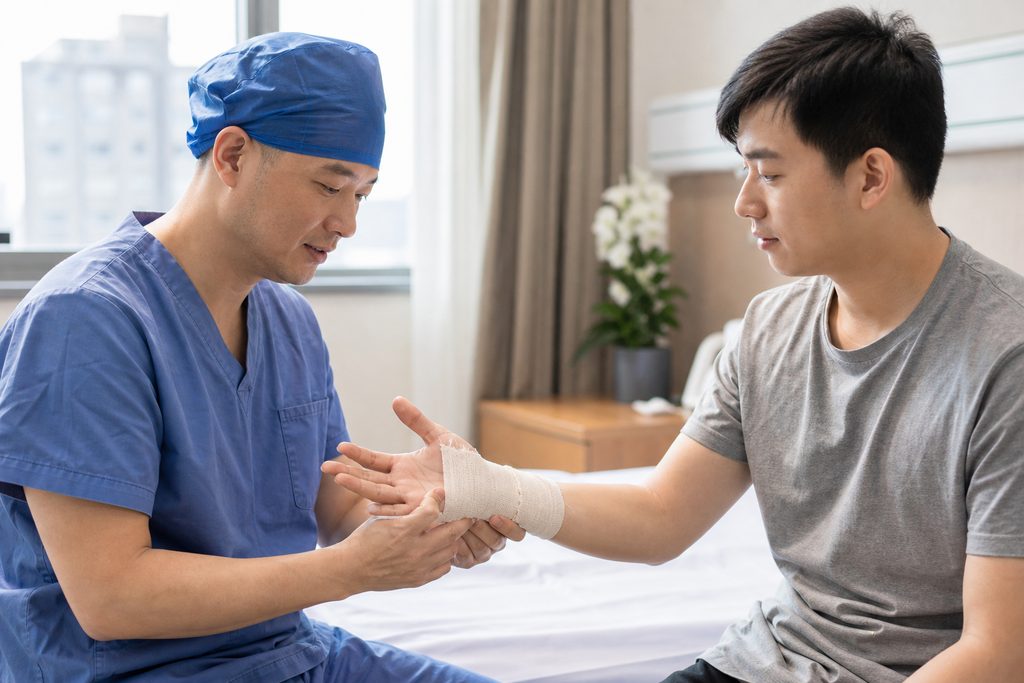
Tendon Repair Cost in China: What International Patients Actually Pay
A tendon repair in China typically costs between $3,500 and $12,000 all-in, depending on the tendon involved, the hospital tier, and whether you choose a public or private facility. That’s the short answer. The longer answer involves a few moving parts — which tendon, which city, which hospital channel — and those variables can swing your final bill by several thousand dollars in either direction.
Let’s break down what “tendon repair” actually means, because the term covers everything from a 45-minute outpatient procedure on a finger to a complex Achilles reconstruction requiring two nights in hospital.
Tendon Repair Cost China: The Short Answer
Tendons are the tough cords of tissue that connect muscle to bone. When one tears — whether from a sports injury, a fall, or a kitchen accident — a surgeon reattaches it, usually with sutures, sometimes with grafts or anchors. Straightforward cases are day surgery. Complicated ones need inpatient care and months of physiotherapy.
In China’s top public hospitals, the surgical fee itself for a standard flexor tendon repair of the hand runs roughly $2,000 to $4,500. An Achilles tendon repair at a top-tier public hospital lands between $4,000 and $8,000. Private international hospitals charge more — often $9,000 to $18,000 for the same procedure — but include English-speaking staff, shorter waits, and direct insurance billing.
Compare that to the United States, where the same Achilles repair routinely bills $20,000 to $40,000 before insurance, and the gap becomes obvious. For patients paying out of pocket or facing a high deductible, China’s pricing is a genuine alternative — not a bargain-bin one, but a real one at internationally accredited facilities.
Who This Is Right For — and Who It Isn’t
Medical tourism for orthopedic surgery isn’t for everyone. Being honest about that saves people time and money.
You’re likely a good candidate if:
- You have a confirmed tendon injury with imaging (MRI or ultrasound) already done
- You’re paying out of pocket, or your insurance reimburses internationally but doesn’t cover US prices
- You can travel within a few weeks of injury — tendon repairs have a window, and chronic ruptures are harder to fix
- You’re willing to stay in China for 10 to 14 days post-surgery before flying home
- You can arrange follow-up physiotherapy locally after you return
You should probably stay home if:
- The injury is fresh and your home country’s wait time is under two weeks — speed matters more than savings here
- You have uncontrolled diabetes, active infection, or significant cardiovascular risk that makes long-haul travel unsafe
- You need complex revision surgery after a failed repair — these cases demand continuity of care with the original surgeon
- Your insurer only covers domestic treatment and you can’t absorb the full cost yourself
The Options, Compared
Here’s how the main pathways stack up. Prices are typical ranges for a single tendon repair, including surgery, anesthesia, hospital stay, and basic follow-up. They exclude flights, accommodation, and long-term physiotherapy.
| Option | Typical Cost | Wait Time | English Support | Insurance |
|---|---|---|---|---|
| US hospital (out of pocket) | $20,000–$45,000 | 2–6 weeks | Yes | Direct billing |
| UK private hospital | $12,000–$25,000 | 2–4 weeks | Yes | Often self-pay |
| China top public hospital (standard channel) | $3,500–$8,000 | Days to 2 weeks | Limited | Pay first, claim later |
| China public hospital international/VIP channel | $6,000–$12,000 | Days to 1 week | Yes | Pay first, claim later |
| China private international hospital | $9,000–$18,000 | Days | Yes | Direct billing common |
Which column suits you? If budget is the deciding factor and you have a companion who speaks Mandarin, the standard public channel offers the best value. If you’re traveling alone and want zero language friction, the private international tier is worth the premium. The VIP channel sits in between and is where most of our clients land.
Finding the Best Hospital for Tendon Repair in China
China has over 35,000 hospitals. Roughly the top 5%, ranked by the Fudan Hospital Ranking and JCI accreditation, handle the complex cases. For tendon surgery, you want a hospital with a strong Orthopedics department and a dedicated Hand Surgery unit — they’re not always the same place.
Hand surgery is a distinct specialty in China, and a few centers are genuinely world-class. Beijing Jishuitan Hospital is widely regarded as the country’s leading hand surgery center. Shanghai’s Huashan Hospital, affiliated with Fudan University, runs one of the largest hand surgery departments in Asia. For Achilles and larger tendon work, the orthopedic departments at Peking Union Medical College Hospital and West China Hospital in Chengdu are strong choices. You can browse specialty rankings on our departments page, which lists the top 10 hospitals for each of 45 specialties including Orthopedics.
One practical note: public hospitals in China don’t allow you to book surgery directly from overseas. You must be seen in person at an outpatient clinic first, and only then can surgery be scheduled. This is a national rule, not a hospital quirk. Private international hospitals are more flexible and often can arrange a surgical date in advance.
How Much Does Tendon Surgery Cost in Shanghai?
Shanghai deserves its own section because it’s the most common destination for international patients, and its pricing reflects that.
At a top public hospital like Huashan or Ruijin, a flexor tendon repair of the hand runs about $3,500 to $6,000. An Achilles repair sits around $5,000 to $9,000. These figures include the surgeon’s fee, anesthesia, operating room time, standard implants or sutures, and a short hospital stay.
At private international hospitals such as Shanghai United Family or Jiahui Health, expect $10,000 to $18,000 for the same procedures. The premium buys you an English-speaking care team, a private room, minimal waiting, and often direct billing to international insurers.
What drives the variance? Three things. First, the tendon itself — a thumb flexor is simpler than a rotator cuff or Achilles. Second, whether grafts or anchors are needed, since these add $800 to $2,500 in materials. Third, the channel — standard, VIP, or private. A VIP channel at a public hospital typically costs 1.5 to 2 times the standard rate but gives you a senior specialist and English-language coordination.
Beijing pricing runs similar to Shanghai, with top public hospitals charging $4,000 to $8,000 for standard repairs. If you’re specifically comparing tendon repair surgery packages in Beijing, note that “package” pricing is mostly a private-hospital concept — public hospitals bill item by item.
Practical Considerations: Visas, Records, and Payment
Getting the logistics right matters as much as choosing the hospital.
Visa. Foreign patients coming to China for medical treatment apply for the S2 visa, which covers short-stay private affairs including medical care. Family members accompanying you apply for S2 as well. If your treatment requires a stay beyond 180 days, the S1 visa applies instead. Requirements shift, so confirm current rules with your nearest Chinese embassy or consulate. Do not confuse this with the M visa — that’s for commercial and trade activities and has nothing to do with medical treatment.
Records. Bring your MRI or ultrasound on disc, plus a written radiology report in English or Chinese. Chinese surgeons want to see the imaging itself, not just the summary. If your reports are in another language, professional translation is worth arranging in advance.
Payment. Public hospitals require prepayment — you settle the bill before or during admission, then claim from your insurer afterward. Private international hospitals frequently bill your insurer directly if you’re covered by a major international plan. Bring a card that works internationally, and check your daily transaction limits before you travel.
Language. China’s top hospitals see tens of thousands of outpatients daily. Signage is in Chinese, and few staff outside the international departments speak English. This is the single biggest practical hurdle for foreign patients, and it’s why bilingual medical companions exist.
Follow-up. Your surgeon will want to see you at roughly 10 to 14 days for wound review and suture removal. Plan your flight home after that. Hand therapy or physiotherapy then continues for 8 to 12 weeks — arrange this before you leave China so there’s no gap in your recovery.
Is Tendon Repair Surgery Safe in China?
At accredited hospitals, yes — the surgical standards are comparable to Western centers. China’s top public hospitals perform high volumes of orthopedic and hand surgery, and volume correlates with proficiency. Beijing Jishuitan alone handles thousands of hand trauma cases annually.
But safety isn’t just about the operating room. It’s about communication before and after. If you can’t explain your medical history clearly or understand discharge instructions, you’re exposed to avoidable risk. That’s a systems problem, not a surgeon problem — and it’s solvable with the right support.
Ask any hospital you’re considering three questions: Is the department JCI-accredited or part of the Fudan top tier? How many of this specific procedure does the surgeon perform each year? And who will manage your post-operative care if a complication arises after you fly home? Vague answers to any of these are a red flag.
Frequently Asked Questions
You can, but not by clicking a button. Public hospitals require an in-person outpatient consultation before scheduling surgery. Private international hospitals are more flexible and can often confirm a surgical date in advance. Either way, you’ll need a confirmed diagnosis and imaging before anyone commits to a plan.
It depends entirely on your policy. Some international plans reimburse treatment at accredited Chinese hospitals; many don’t. Public hospitals require you to pay upfront and claim afterward. Call your insurer before you book anything and get the answer in writing — verbal assurances from a call center aren’t worth much when a $6,000 bill arrives.
This is the question more patients should ask. Before flying home, get your operative report, implant details if any, and a written follow-up plan in English. Identify a local orthopedic surgeon or hand therapist who can take over your care. If a complication develops, your home provider needs those documents to act quickly.
Plan on 10 to 14 days for a standard repair — enough time for surgery, a short admission, and your first post-operative review. Complex cases or those needing early physiotherapy may require three weeks. Add a few days on the front end for your initial consultation.
It helps enormously. If you don’t have one, a bilingual medical companion can handle registration, queuing, payment, and translation throughout your visit. This isn’t a luxury in a hospital that sees 10,000 outpatients a day — it’s the difference between a smooth process and a confusing one.
Your Next Step
Tendon repair in China costs a fraction of Western prices without sacrificing surgical quality — provided you choose an accredited hospital and solve the language and logistics problems in advance. The savings are real, but they only materialize when the planning is done properly.
We’re China Medical Services, a coordination service that connects international patients with 340+ top-ranked hospitals across 37 cities. We are not a hospital and we don’t provide medical advice or diagnoses. What we do is help you understand your options, arrange written second opinions and video consultations with Chinese specialists, coordinate appointments, and provide bilingual support on the ground.
If you’d like a clearer picture of what your specific case would cost and where it could be treated, start with a no-obligation conversation. Visit our consultation page to tell us about your injury and get matched with the right hospital and specialist. No pressure, no commitment — just a straight answer about whether China makes sense for you.
This article is for general information only and does not constitute medical advice. Treatment decisions should always be made with a qualified physician who has reviewed your individual case.
For more medical information and treatment options in China, visit chinamedservices.com (China Medical Services).
