ERCP Procedure Cost in China: A Clear Guide for International Patients
ERCP Procedure Cost in China: A Clear Guide for International Patients
An ERCP — endoscopic retrograde cholangiopancreatography — is a specialized endoscopic procedure used to diagnose and treat problems in the bile ducts and pancreas. If you have been told you need one, you are probably weighing two things at once: whether it is safe, and what it will cost. For international patients, the ERCP procedure cost in China typically falls between $2,500 and $7,000 at top-tier public hospitals, compared with $10,000 to $25,000 or more in the United States. That gap is real, but the number alone does not tell you the whole story.
This guide explains what drives the price, how the process actually works for a foreign patient, and where the honest complications tend to show up.
What ERCP Actually Is, in Plain Terms
Think of your bile duct as a narrow drainpipe running from your liver and gallbladder down into your small intestine. When a stone blocks that pipe, or when the duct narrows, you get pain, jaundice, infection, or pancreatitis. ERCP is how doctors look inside that pipe and fix the problem without open surgery.
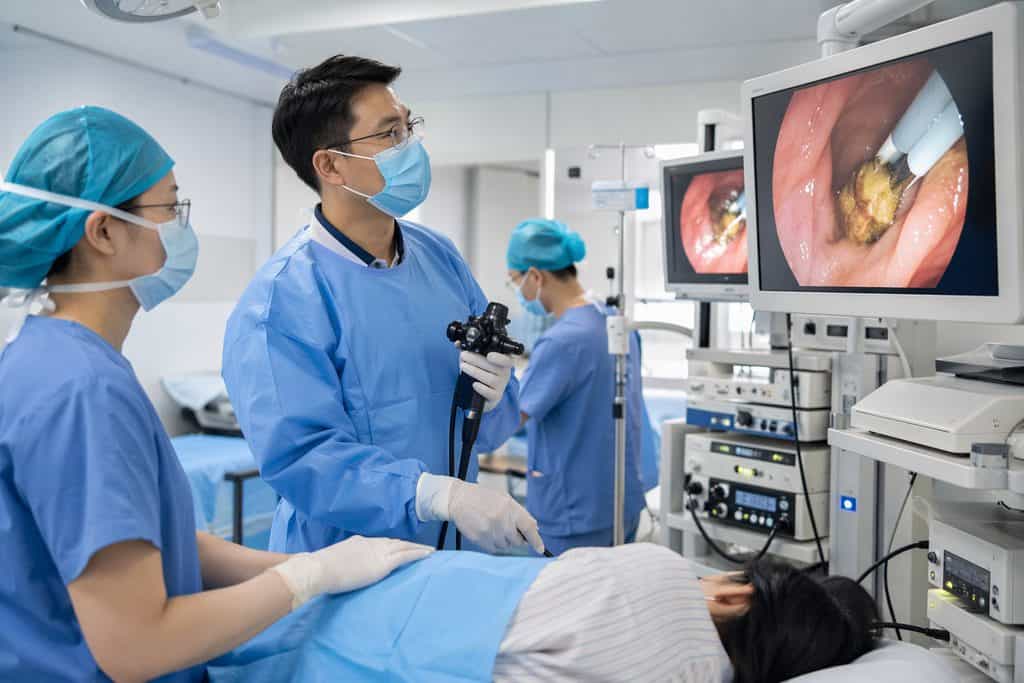
A flexible tube goes down your throat, through the stomach, and into the small intestine. The doctor threads tiny instruments through it to remove stones, place a stent, or take tissue samples. It usually takes 30 to 90 minutes. Most patients receive sedation, and many go home the same day or after a short stay.
It is a genuine medical procedure, not a screening test. That matters when you are comparing prices across countries — you are comparing a therapeutic intervention, not a routine checkup.
What Drives the ERCP Procedure Cost in China
The price you are quoted depends on several moving parts, and no honest provider will give you a single fixed number before seeing your records. Here is what actually moves the total.
- Hospital tier. A top-ranked public hospital with an international department charges more than a standard municipal hospital, but it also brings more experienced hands.
- Whether you need a stent. A plastic stent costs far less than a metal one. Some cases need more than one.
- Sedation versus general anesthesia. Deep sedation is cheaper; general anesthesia adds an anesthesiology team and recovery time.
- Length of stay. Same-day discharge versus a two- or three-night admission for observation.
- Diagnostic versus therapeutic. Simply imaging the duct is less involved than removing multiple stones or treating a stricture.
- Complications. Post-ERCP pancreatitis, bleeding, or infection can extend the stay and the bill.
| Setting | Typical ERCP cost range (USD) | Notes |
|---|---|---|
| Top public hospital, standard channel | $2,500 – $4,500 | Lower cost, minimal English support, longer queues |
| Top public hospital, international/VIP department | $4,000 – $7,000 | English-speaking staff, faster scheduling |
| Private international hospital | $6,000 – $12,000 | Direct insurance billing, Western-style service |
| United States (for comparison) | $10,000 – $25,000+ | Varies widely by state and facility |
These figures are estimates. Final pricing varies by hospital and case complexity, and you should treat any quote as provisional until a specialist reviews your imaging and lab work.
How This Actually Works, Step by Step
Here is the real sequence, from where you are sitting right now to the day you fly home.
Step one — you send your records. You gather what you already have: MRCP or CT images, blood work (especially liver enzymes and bilirubin), any prior endoscopy reports, and a short summary of your symptoms. These get translated into Chinese by a medical translator, not a general one.
Step two — a Chinese specialist reviews them. A gastroenterology or hepatobiliary team at a relevant hospital reads the file and returns a written assessment. This is where you learn whether ERCP is even the right procedure for your case, or whether you need something else entirely.
Step three — you speak with the team. A video consultation lets you ask questions directly: what the plan is, how many similar cases they handle, what could go wrong, and what the realistic cost range looks like.
Step four — scheduling and visa. Once a plan is agreed, the hospital issues supporting documents. You apply for an S2 visa, which is the correct short-stay category for medical treatment. Family members accompanying you apply for S2 as well. Do not use an M visa — that is for commercial and trade activity and has nothing to do with medical care.
Step five — arrival, in-person consultation, then the procedure. In Chinese public hospitals, a face-to-face consultation is required before any procedure is scheduled. This is a firm rule, not a formality. You cannot lock in a procedure date from overseas through the standard channel.
Step six — recovery and follow-up. You receive discharge instructions and imaging records in English, which your doctor at home can use for continued care.
Is ERCP Safe in China?
You can arrange a remote evaluation and a consultation, and you can coordinate an appointment through a hospital’s international department. What you cannot do is lock in a procedure date before an in-person examination, which Chinese public hospitals require. Plan for a few days on the ground before any procedure.
At high-volume centers, yes — outcomes are generally comparable to other developed countries. Post-ERCP pancreatitis remains the main risk, reported in roughly 3% to 10% of cases. Choosing an experienced department and asking about preventive measures reduces that risk.
Some private international hospitals offer bundled pricing that includes the procedure, a set number of nights, and follow-up. Public hospitals generally bill item by item. Bundles are easier to budget for but may not suit complex cases where the scope of treatment is uncertain.
Yes — the S2 visa is the applicable short-stay category for medical treatment, and accompanying family members apply under the same category. Requirements are set by the relevant embassy or consulate and can change, so verify current rules before applying.
Your Next Step
The core message is simple: ERCP in China costs a fraction of Western prices, but the savings only matter if the procedure is right for you and the logistics are handled properly. Get the medical question answered first, then decide about travel.
China Medical Services connects international patients with 340+ top-ranked hospitals across 37 cities, and we handle the parts that are genuinely hard from abroad — record translation, appointment coordination through official hospital channels, and bilingual accompaniment on the ground. We are not doctors and we do not provide medical advice or guarantee any clinical outcome.
If you would like a specialist to review your records and tell you honestly whether ERCP is the right path, start with a free consultation. No pressure, no obligation — just a clearer picture of your options.
This article is for general information only and does not constitute medical advice. Treatment decisions should be made with a qualified physician who has reviewed your individual case.
Frequently Asked Questions
Yes. The hospitals used for international patients are JCI-accredited and follow the same international safety standards as top hospitals in the US and Europe. Surgical teams perform high volumes of procedures — often more than their Western counterparts — which studies show leads to better outcomes.
Costs vary by procedure and hospital, but international patients typically save 40-80% compared to US prices — even when factoring in travel and accommodation. A consultation with our team will give you an exact, all-inclusive quote with no hidden fees.
Send us your existing medical reports to get started. We handle everything from hospital selection and appointment scheduling to visa assistance and post-operative recovery planning. Your medical records are reviewed by the specialist before you even book a flight.
For more medical information and treatment options in China, visit chinamedservices.com (China Medical Services).
