Open Brain Surgery Cost in China: What Craniotomy Really Costs in 2026
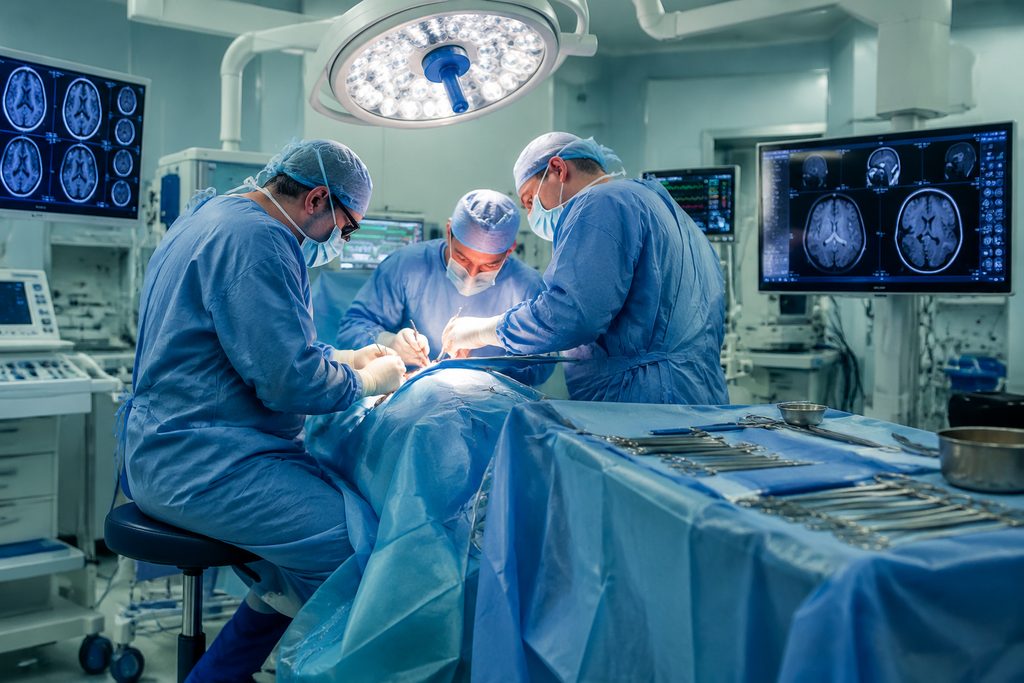
Open Brain Surgery Cost in China: What Craniotomy Really Costs in 2026
In the United States, a craniotomy for a brain tumor routinely bills between $150,000 and $250,000 before insurance negotiations. In China, the same open brain surgery cost — hospital fees, surgeon fees, ICU, and imaging included — typically lands between $25,000 and $60,000 at a top-tier public hospital. That gap is the reason this page exists.
But the number alone tells you almost nothing. What you actually pay depends on the tumor type, whether you need awake craniotomy, how many days you spend in neuro-ICU, and which hospital tier you choose. Below, we break down real ranges, explain what drives them, and flag the parts of the process that surprise international patients most.
Open Brain Surgery Cost China: The Short Answer
At a major Chinese public hospital — the kind ranked in the Fudan Top 100 — an uncomplicated craniotomy for tumor resection generally runs $25,000 to $60,000 all-in. Complex cases involving skull-base tumors, awake mapping, or extended ICU stays can reach $70,000–$90,000. Private international hospitals charge roughly 1.5 to 2 times the public rate, and often more for premium rooms.
Here is the caveat that makes a one-line answer impossible. Chinese public hospitals price by item, not by package. Every CT, every pathology slide, every ICU day is billed separately. Two patients with the same diagnosis can differ by $20,000 simply because one needed five ICU days and the other needed twelve.
Who This Is Right For — and Who It Isn’t
Not everyone should fly across the world for brain surgery. Honest triage matters more than a sales pitch.
Typically a good fit:
- Patients with a diagnosed or strongly suspected brain tumor (glioma, meningioma, acoustic neuroma, pituitary adenoma) who face long waits or unaffordable quotes at home
- Uninsured or underinsured patients in the US, where a craniotomy can wipe out a decade of savings
- Patients from regions with limited neurosurgical capacity who can travel to China within a few weeks
- Those seeking a second surgical opinion from a high-volume center before committing at home
Probably not the right path:
- Anyone with an unstable medical emergency — a ruptured aneurysm or acute hemorrhage needs the nearest ER, not a flight
- Patients whose tumor is clearly inoperable or better managed with radiation or chemotherapy alone
- Those who cannot travel for medical reasons, including advanced cardiac or pulmonary disease
- Patients who need continuity of care in their home country and cannot arrange follow-up imaging locally
The Options, Compared
Cost is only one axis. The table below compares the realistic alternatives for a patient facing craniotomy.
| Option | Typical Cost (USD) | Wait Time | Language Support | Insurance |
|---|---|---|---|---|
| US private hospital | $150,000–$250,000 | 2–6 weeks | Native English | In-network billing |
| Western Europe (private) | $60,000–$120,000 | 4–12 weeks | Varies by country | Often self-pay first |
| China top public hospital (Fudan Top 100) | $25,000–$60,000 | Days to 3 weeks after in-person consult | English at international dept. | Pay upfront, reimburse later |
| China private international hospital | $50,000–$110,000 | 1–3 weeks | Full English service | Direct billing common |
| India (Apollo-type private) | $8,000–$20,000 | 1–2 weeks | English | Self-pay / partial |
Which column fits you? If cost is the dominant constraint and you can handle a large, busy public hospital environment, the China public tier is the strongest value. If you want a Western-style experience with English-speaking nurses and direct insurance billing, the private international tier costs more but removes friction. If you need the absolute lowest price and are comfortable with a different care culture, India remains cheaper — but China’s neurosurgical volume and equipment standards sit higher on average.
How Much Does Brain Surgery Cost in Shanghai vs. Beijing?
City matters less than hospital tier, but the difference is real. Shanghai’s top neurosurgical centers — Huashan Hospital among them — are famous for high surgical volume, and their international departments quote in the same band as Beijing’s: roughly $28,000 to $65,000 for standard craniotomy. Beijing, home to 21 of the Fudan Top 100 hospitals, tends to run marginally higher for private rooms but offers the deepest bench of subspecialists.
So when patients ask how much does brain surgery cost in Shanghai, the honest answer is: within about 10–15% of Beijing for equivalent cases. The bigger swing comes from the surgeon’s subspecialty, the OR technology used (intraoperative MRI adds cost), and ICU duration.
For a city-by-city view of hospital options, our Fudan-ranked hospital directory groups centers by location and tier.
Is Brain Surgery in China Safe — and Who Operates?
This is the question that decides everything. Volume is the best proxy for safety in neurosurgery, and China’s top centers operate at volumes Western hospitals rarely match. A high-volume center performing hundreds of craniotomies per year has seen more of the rare complications that kill patients elsewhere.
When patients search for the best neurosurgeon in Beijing for brain tumor, the useful answer is not a name — it is a department. The relevant question is which hospital’s neurosurgery department appears in the Fudan specialty reputation rankings, and whether that department has an international office that handles foreign patients.
Chinese neurosurgery has particular strengths in:
- Awake craniotomy for tumors near language and motor cortex
- Endoscopic and minimally invasive skull-base approaches
- Glioma resection guided by intraoperative fluorescence
- Pituitary surgery via the nasal corridor
What China does not offer is the same continuity you would get at a local hospital. You will likely fly home two to three weeks after surgery, and your follow-up MRI will happen in your own country. That handoff needs planning before you leave, not after.
What’s Included — and What Isn’t
A quoted “all-in” price should cover the surgeon’s fee, anesthesia, OR time, standard implants, hospital bed, neuro-ICU, routine labs, and post-op imaging. Ask specifically about these exclusions:
- Intraoperative MRI or neuronavigation — can add $3,000–$8,000
- Extended ICU beyond the standard window — billed daily, often $800–$1,500/day
- Pathology and molecular testing — essential for glioma, sometimes $1,000–$3,000
- Blood products and rare medications
- Rehabilitation or a second surgery if the first is incomplete
Practical Considerations for International Patients
Getting to the operating room in China involves a sequence that surprises most first-timers. Public hospital outpatient clinics cannot be booked from abroad in advance — you must appear in person, register, and see the surgeon before any surgery is scheduled. That is the standard rule, not a bureaucratic quirk.
The workaround is the hospital’s international or VIP department, which can sometimes coordinate an appointment ahead of arrival and provides English-speaking staff. Expect to pay 1.5 to 2 times the standard rate for that channel.
Visa: Medical travel to China uses the S2 visa with a notation for medical treatment, and accompanying family members apply for S2 as well. Stays beyond 180 days require an S1. Note that the M visa is for commercial and trade activity only — it is not a medical visa, despite what some online sources claim. Always confirm current requirements with the Chinese embassy or consulate in your country.
Payment: Chinese public hospitals require upfront payment; you settle the bill and seek reimbursement from your insurer afterward. Private international hospitals frequently bill insurers directly. Bring a card that works internationally and confirm daily limits with your bank before you fly.
Records: Send your MRI and CT images in DICOM format, plus pathology reports and a medication list, translated into English or Chinese. A remote review of those records is often the fastest way to learn whether surgery in China is even feasible for your case.
To understand how foreign patients typically structure a trip, start with the main China Medical Services overview, then narrow to a city and department.
How to Book Brain Surgery in China for International Patients
Booking follows a staged path, and skipping steps causes problems. First comes a written second opinion: you send your imaging and reports, and a Chinese neurosurgery team reviews them and returns a written assessment. Second, a video consultation lets you hear the recommendation directly. Only then does an in-person visit make sense — and only after that visit can surgery be scheduled.
For patients who want a specialist’s view before traveling, our department directory lists top-ranked hospitals by specialty, including neurosurgery. If you want to explore the private-hospital route with English-speaking staff and insurance billing, see the private international hospital listings.
This staged approach exists for a reason: it prevents patients from flying 8,000 miles only to learn that their tumor is better treated with radiation, or that they need a different specialist entirely.
Frequently Asked Questions
At high-volume Fudan-ranked centers, outcomes for standard craniotomy are broadly comparable to Western hospitals, and surgical volume is often higher. That said, “China” is not one standard — a top-tier neurosurgery department and a small regional hospital are not the same product. Safety depends on choosing the right department, not the right country.
A genuine all-in quote covers surgeon and anesthesia fees, OR time, standard ICU stay, routine labs, and post-op imaging. It usually excludes intraoperative MRI, extended ICU, molecular pathology, and rehabilitation. Always ask for an itemized schedule, because “all-inclusive” means different things at different hospitals.
Generally no. Public hospitals require an in-person consultation before scheduling surgery. The international or VIP department can sometimes arrange that first appointment in advance, but the surgical decision itself follows the face-to-face evaluation. Anyone promising you a confirmed surgery date before you land is overpromising.
This is the hardest part of medical travel. You will need a local neurosurgeon willing to take over follow-up, and you should arrange that contact before you leave China. Request your complete operative notes, imaging, and pathology in English so your home team can pick up without gaps.
A written second opinion or video consultation is the lowest-risk first step. You send records, a Chinese specialty team reviews them, and you get a clear answer about whether surgery in China is realistic for your case — before you spend money on flights.
Your Next Step
The core message is simple: open brain surgery in China costs a fraction of US prices, but the number only matters if the hospital and surgeon are right for your specific tumor. We are a coordination service, not a hospital — we do not diagnose, operate, or promise outcomes. What we do is help you get your records reviewed by the right Chinese department and understand your real options before you commit to anything. If you would like a no-pressure conversation about your case, you can request a free consultation and we will walk you through the first step.
This article is for general information only and is not medical advice. Treatment decisions should always be made with a qualified physician who has reviewed your individual case.
For more medical information and treatment options in China, visit chinamedservices.com (China Medical Services).
