Carpal Tunnel Surgery Cost in China: Real 2026 Prices and Top Hospitals
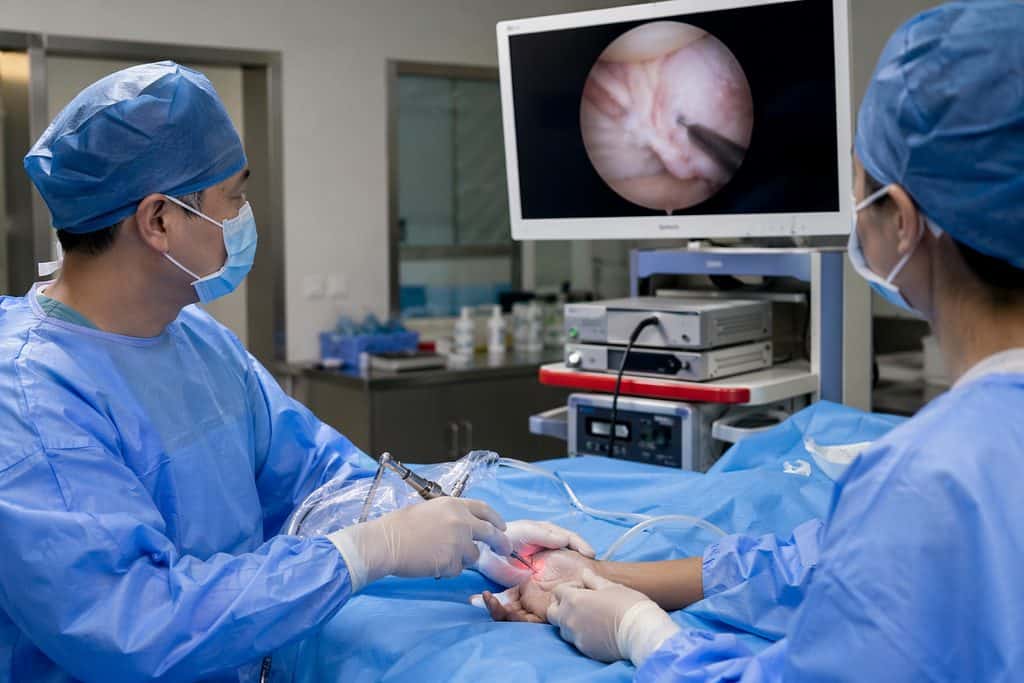
You have probably been told that going abroad for surgery means gambling with your health to save money. For carpal tunnel release, the opposite is often true. The carpal tunnel surgery cost in China at a top-tier public hospital typically runs between $1,500 and $4,500 all-in — a fraction of the $6,000 to $12,000 a U.S. patient pays even with insurance, and the surgeons performing these procedures handle volumes that most Western hand clinics never approach.
That number deserves context before you book a flight. China’s best hospitals are not walk-in clinics for foreigners. They are enormous, fast-moving institutions where a single outpatient day can exceed 10,000 visits, and where almost nothing happens in English without help. The price is real. So is the friction.
This guide breaks down what carpal tunnel release actually costs across Chinese hospital tiers, which cities and hospitals make sense, what the S2 visa requires, and the honest limitations nobody mentions in glossy medical tourism brochures.
Carpal Tunnel Surgery Cost in China: The Short Answer
At a leading public tertiary hospital in Beijing or Shanghai, an open or endoscopic carpal tunnel release generally costs $1,500 to $4,500 for the procedure itself, including surgeon fees, operating room time, anesthesia, and a short stay or day-surgery slot. Add $300 to $800 for pre-operative nerve conduction studies, imaging, and lab work if you don’t arrive with recent tests.
Private international hospitals — United Family, Jiahui, Parkway, Raffles — charge more, usually $5,000 to $9,000, but they offer English-speaking staff, JCI accreditation, and direct insurance billing. You are paying for a Western-style experience layered on top of competent surgery. Whether that premium is worth it depends entirely on your language comfort and insurance situation.
The caveat: these are ranges, not quotes. Final pricing varies by hospital and case complexity. A straightforward idiopathic carpal tunnel release in a healthy 50-year-old is a different financial animal from a revision surgery in a patient with diabetes, prior wrist trauma, or coexisting ulnar nerve compression.
Who This Is Right For — and Who It Isn’t
Medical travel for hand surgery is not for everyone. Being honest about that up front saves people from expensive mistakes.
Typically a good fit:
- You have a confirmed diagnosis of carpal tunnel syndrome from nerve conduction studies, and conservative treatment (splinting, steroid injection, activity modification) has failed or is no longer appropriate.
- You are uninsured, underinsured, or facing a deductible that exceeds the entire cost of surgery abroad.
- You can travel 10–14 days and are medically cleared for a long-haul flight.
- You are willing to work through a bilingual coordinator rather than expecting a U.S.-style concierge experience.
- You have someone accompanying you, or you are comfortable managing post-operative care largely independently.
Probably not a good fit:
- You have severe cardiac, pulmonary, or bleeding disorders that make any surgery — anywhere — higher risk. Get cleared locally first.
- You need workers’ compensation documentation or litigation-related medical records tied to a specific jurisdiction.
- Your case is a complex revision with prior failed releases and structural wrist damage. These need a hand fellowship-trained specialist you can see repeatedly for follow-up, and continuity matters more than price.
- You expect to schedule surgery for a specific date before an in-person consultation. Chinese public hospitals generally require face-to-face assessment before booking an operating room.
- You cannot tolerate even minor logistical uncertainty. The savings are real; so is the friction.
The Options, Compared
Below is a realistic comparison of what carpal tunnel release costs and involves across the main pathways international patients consider.
| Pathway | Typical Total Cost (USD) | Wait Time | English Support | Insurance |
|---|---|---|---|---|
| U.S. outpatient surgery center | $6,000–$12,000 | 2–8 weeks | Native | Billed; deductible applies |
| U.S. hospital-based surgery | $10,000–$18,000 | 4–12 weeks | Native | Billed; deductible applies |
| Western Europe (private) | €3,000–€6,000 | 3–10 weeks | Varies | Often reimbursable |
| China — top public tertiary hospital | $1,500–$4,500 | Days to 2 weeks | Limited; coordinator needed | Pay upfront, claim later |
| China — private international hospital | $5,000–$9,000 | Days to 2 weeks | Full | Direct billing often available |
| China — VIP/international department at public hospital | $3,000–$6,500 | Days to 2 weeks | Yes, at premium | Pay upfront, claim later |
Which column fits you? If you are paying cash and can manage with a bilingual companion, the top public tertiary pathway delivers the best value by a wide margin. If you have international insurance that reimburses or directly bills, the private international hospital route removes most logistical headaches for a moderate premium. The VIP department at a public hospital sits in between — you get a senior specialist and English service, at roughly 1.5 to 2 times the standard public price.
Finding the Best Hospital for Carpal Tunnel Surgery in Shanghai (and Elsewhere)
Shanghai is the most common entry point for international patients seeking hand surgery, and for good reason. The city concentrates several hospitals with strong orthopedics and hand surgery departments, plus a mature private international hospital sector.
For public options, the hospitals that consistently appear on the Fudan Hospital Rankings — China’s most cited hospital quality index — include major tertiary centers with dedicated hand and microsurgery units. Huashan Hospital, affiliated with Fudan University, is widely recognized for its hand surgery and peripheral nerve work. Shanghai Sixth People’s Hospital is another name that recurs in orthopedic and hand trauma discussions. Both are large, busy, and not designed around foreign patients, which is exactly why coordination matters.
Beijing has comparable depth. If you are searching for how much carpal tunnel release costs in Beijing, expect the same $1,500–$4,500 public range, with Peking Union Medical College Hospital and several orthopedic-specialized tertiary hospitals offering strong hand surgery capabilities. Beijing’s advantage is volume and subspecialization; its disadvantage is that the patient flow is even more intense than Shanghai’s.
You can browse ranked hospitals by city and specialty through our department directory, which lists top-ranked hospitals across 45 specialties, including orthopedics. For city-specific options, the Shanghai hospital guide and Beijing hospital guide break down which institutions serve international patients and how their international departments operate.
What It Costs: Line-Item Breakdown and What’s Included
Surgery price alone is misleading. Here is what the total typically includes — and what it doesn’t.
Usually included in the surgical fee:
- Surgeon and assistant fees
- Operating room and equipment charges
- Local or regional anesthesia (open release is often done under local; endoscopic release may use regional block)
- Standard post-operative dressings and a short observation period
- Basic medications during the hospital stay
Usually billed separately:
- Pre-operative nerve conduction studies ($80–$250)
- X-ray or ultrasound if needed ($50–$200)
- Pre-surgical bloodwork and ECG ($50–$150)
- Extended hospital stay beyond the standard day-surgery or one-night model
- Post-operative hand therapy sessions ($30–$80 each)
- Interpretation, coordination, and companion services
For international patients, our written second opinion service, priced from $300 to $500, lets a Chinese specialist review your existing nerve conduction studies and imaging before you commit to travel. Video consultations with a standard tertiary international department run $100–$300; top-specialist video consultations run $500–$800. Any consultation fee is credited in full toward on-the-ground coordination if you proceed within 90 days — a one-time credit that applies to the coordination fee only, never to hospital treatment charges.
What drives variance most? Surgical technique (open vs. endoscopic), whether you need bilateral release in one session, the hospital tier, and whether your case is primary or revision. A straightforward unilateral open release at a public hospital sits at the low end. Bilateral endoscopic release at a private international hospital sits at the high end.
Is Carpal Tunnel Surgery Safe in China? What the Evidence Says
This is the question that stops most people from booking. The honest answer: for routine carpal tunnel release, outcomes at China’s top tertiary hospitals are comparable to those in Western centers, and the complication rates reported in the surgical literature are low across the board.
Carpal tunnel release is one of the most commonly performed hand procedures worldwide, with generally excellent results — the vast majority of patients report symptom relief. China’s high-volume hospitals perform these procedures frequently, and surgical volume correlates with proficiency in most outcome studies. That said, “China” is not a single standard. A top-tier tertiary hospital in Shanghai and a small county-level facility are not comparable. The safety question is really a hospital-selection question.
Three practical safety considerations for international patients:
- Confirm the surgeon’s subspecialty. Hand surgery is a distinct subspecialty within orthopedics. You want a surgeon whose practice centers on hand and peripheral nerve work, not a general orthopedic surgeon who occasionally does wrists.
- Bring your diagnostic records. Nerve conduction studies and any prior imaging let the Chinese team confirm the diagnosis before you travel, reducing the risk of arriving to find the procedure isn’t appropriate.
- Plan follow-up before you leave. Arrange a local hand therapist or physician at home to check your incision and monitor recovery. Chinese hospitals provide discharge instructions, but continuity of care after you fly home is your responsibility.
Practical Considerations: Visa, Payment, Records, and Follow-Up
Visa. International patients traveling to China for medical treatment generally use the S2 visa, which covers short-stay private affairs including medical treatment. Stays exceeding 180 days typically require the S1 category. Accompanying family members apply under the same S2 category. Requirements are set by the relevant Chinese embassy or consulate and can change, so confirm current documentation requirements — including a hospital invitation or appointment letter — with the consulate in your country before applying. Note that the M visa is for commercial and trade activities and is not the correct category for medical travel.
Payment. Public hospitals in China generally require upfront payment; you settle the bill at the hospital and seek reimbursement from your insurer afterward. Private international hospitals frequently offer direct billing with international insurance carriers. Bring a payment method that works in China — international credit cards are accepted at larger hospitals, but not universally, and cash in local currency is a reliable fallback.
Records. Bring your nerve conduction study report, any MRI or ultrasound imaging, a medication list, and a brief medical history in English. If you use our services, we handle translation of your records into Chinese for the hospital team. Having your diagnosis documented before arrival is the single biggest time-saver.
Appointment reality. Standard outpatient departments at public hospitals generally cannot be pre-booked from overseas — registration happens on the day, in person, and surgery can only be scheduled after an in-person consultation. International departments and VIP channels allow advance coordination, at roughly 1.5 to 2 times the standard price. This is the structural reason medical travel to China requires coordination: the system is built for volume, not for remote booking.
After you return home. Plan for 10–14 days in China. You will likely fly home with sutures removed or nearly ready for removal, and you’ll need a local clinician to assess the wound and a hand therapist for grip and range-of-motion work. Recovery timelines vary — many patients return to desk work within two weeks, but full strength recovery takes longer.
Frequently Asked Questions
Pricing is broadly similar across both cities. At top public tertiary hospitals, expect $1,500–$4,500 for the procedure, with private international hospitals running $5,000–$9,000. Beijing’s top hospitals see higher patient volumes, which can mean faster scheduling but also more crowded facilities. Shanghai tends to have a slightly more developed infrastructure for international patients. Exact quotes require a hospital review of your specific case.
Not directly at a standard public hospital outpatient department. Chinese public hospitals generally require an in-person consultation before scheduling surgery. What you can do in advance is send your records for a written second opinion or video consultation, then coordinate an appointment through a hospital’s international or VIP department. Our appointment coordination service, from $300, handles registration and scheduling — and refunds in full if the appointment shown in your order cannot be secured.
It depends on what’s bundled. A package that includes hospital coordination, bilingual accompaniment, airport transfers, and translation can be genuinely useful given the language and logistics barriers. A package that promises a specific surgeon or a guaranteed surgery date should raise questions — no coordinator can promise that at a public hospital. Compare what’s actually included against the $1,500–$4,500 you’d pay the hospital directly, and make sure you understand which costs are coordination fees versus treatment charges.
This is a real risk of any medical travel, and it deserves a direct answer. Minor issues — wound irritation, swelling, temporary numbness — can usually be managed by a local clinician with your discharge paperwork. More serious complications would require local evaluation, and your Chinese hospital’s records (which you should request before departure) will help. This is why we recommend against medical travel for complex revision cases where continuity of care matters most. For straightforward primary releases, the risk profile is manageable.
You can manage alone if you’re comfortable navigating a system where English is limited and processes are unfamiliar. Most international patients opt for at least a bilingual medical companion for the hospital days. Our companion service starts at $300 per day (half-day or full-day) and covers registration, queuing, payment assistance, wayfinding, and interpretation — it is a labor and language service, not a promise of priority access to any specific specialist.
Your Next Step
The core message is simple: carpal tunnel release in China costs a fraction of Western prices at hospitals with genuine surgical depth, but the savings only materialize if you navigate the system correctly. The price isn’t the hard part. The coordination is.
We are China Medical Services — a patient coordination team, not a hospital and not a provider of medical diagnoses. We connect international patients with 340+ top-ranked hospitals across 37 cities, handle record translation and appointment coordination through official international departments, and provide bilingual accompaniment on the ground. We do not promise admission, surgical outcomes, or priority access.
If you’d like a clear picture of what your case would cost and which hospitals make sense, start with a free consultation. No pressure, no obligation — just an honest assessment of whether traveling to China is the right call for you.
This article is for general information only and does not constitute medical advice. Always consult a qualified physician about your individual condition and treatment options.
For more medical information and treatment options in China, visit chinamedservices.com (China Medical Services).
