Single Parent Medical Tourism China: Treatment With Your Child by Your Side
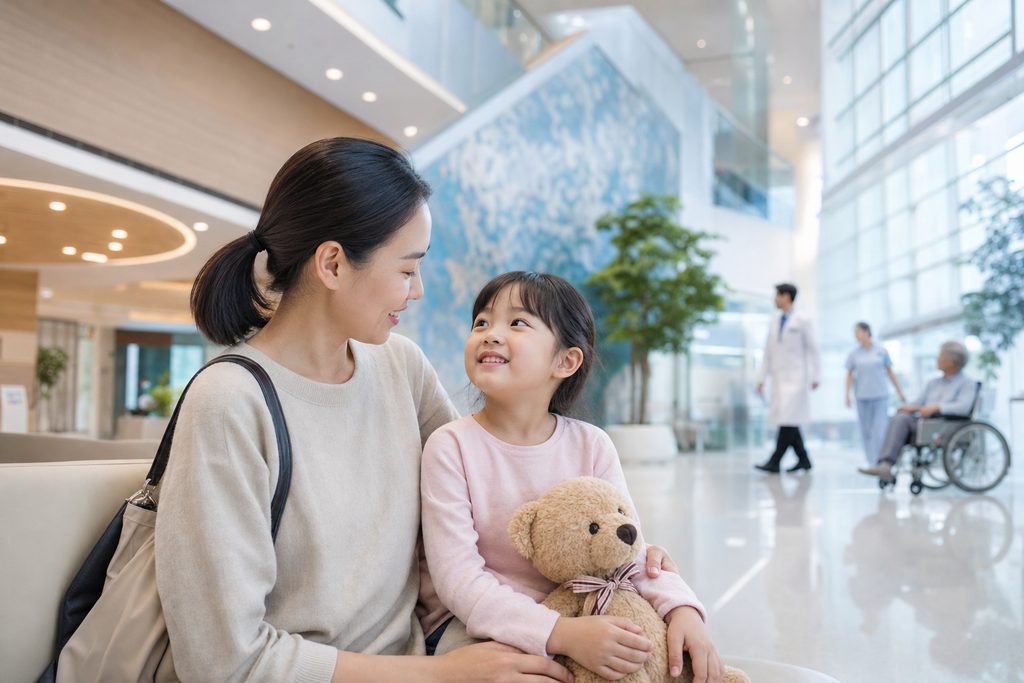
When 42-year-old Sarah finally booked her flight to Shanghai, she was not just carrying a folder of medical records. She had a 6-year-old daughter holding her other hand. A complex gynecological procedure awaited her at a top-tier Chinese hospital—but there was no one back home in Manchester to watch her child for three weeks. She had to bring her. That single decision reshaped every logistical choice she made. And it is a scenario we see weekly at China Medical Services.
The core question is brutally practical: can you undergo major surgery in a foreign country while caring for a child? The answer is yes. But it requires a completely different planning framework than traveling solo. This article maps out exactly how single parents navigate medical treatment China with child care—from hospital selection and visa strategy to the daily reality of recovery with a child in an unfamiliar city.
Key Takeaways
- China’s top hospitals treat international patients daily, but standard wards do not permit children—family-friendly accommodation planning is non-negotiable for single parents.
- Dedicated child-minding support during your procedure and initial recovery is the single most important logistical factor; our bilingual companions can bridge this gap.
- Visa regulations are clear (S2 for both parent and child) but paperwork errors cause delays—pre-approval through a hospital international department is the safest path.
- Budget realistically: the medical procedure is often 70-80% less than US prices, but accommodation, child care, and extended stay costs must be factored into the total.
The Problem: You Need Treatment, But You Are the Only Caregiver
Roughly 15.8 million single-parent households exist in the United States alone, according to the US Census Bureau. For many single parents, a serious diagnosis carries a secondary fear that is almost as heavy as the medical one: who watches my child while I am under anesthesia?
The default answer in Western healthcare systems is often “figure it out.” Hospitals have strict policies—children are not allowed in pre-op areas, operating rooms, or recovery bays. If you lack a support network, a necessary surgery can be delayed for months while you scramble for solutions. Some parents simply postpone care.
That is a dangerous gamble. And it is one reason an increasing number of single parents look abroad.
China presents a unique profile here. The country has invested heavily in medical infrastructure, with certain specialties—oncology, cardiac surgery, orthopedics, and reproductive medicine—achieving clinical volumes that dwarf Western centers. But the real differentiator for single parents is the availability of affordable, structured support services that simply do not exist at scale in the US or Europe at comparable price points.
Who We Are
We are China Medical Services. We are not a hospital, we do not provide medical treatment, and we do not offer clinical diagnoses. Our team functions as your logistical architects on the ground in China—we bridge the gap between you and the country’s top-tier medical expertise. We handle hospital matching, appointment coordination, visa guidance, and bilingual medical companionship. For single parents, we also help structure the child care layer that makes treatment possible. Your child’s safety and your peace of mind during the procedure are our operational priorities.
Why China Delivers Results for Single Parents Seeking Treatment
Clinical Volume That Translates to Surgical Precision
The numbers are difficult to ignore. Fuwai Hospital in Beijing performs over 14,000 cardiac surgeries annually—the highest volume of any heart center globally. A top Chinese orthopedic surgeon may complete 200 to 500 joint replacements per year, compared to roughly 65 for the average US surgeon. For a single parent, volume matters. It means shorter operative times, refined protocols, and fewer complications that could extend your hospital stay and keep you away from your child longer than planned.
This is not about cutting corners. It is about repetition breeding expertise. When a surgical team performs a specific procedure multiple times daily, the workflow becomes exceptionally smooth. For a parent who needs to be out of the hospital and back to their child as quickly as possible, that efficiency is tangible.
Cost Structures That Free Up Budget for Child Care
Let us address the obvious question directly: lower cost does not mean lower quality. The price difference is structural. A cardiac bypass procedure at a top Chinese public hospital runs between $12,000 and $20,000. The same procedure in the United States often exceeds $120,000. That is an 80% to 90% reduction.
Those savings are not theoretical. They come from different labor economics, hospital efficiency models, and a system designed for high throughput. For a single parent, this math changes everything. The money saved on the procedure itself can fund a comfortable serviced apartment, a bilingual companion to assist with your child during your surgery day, and an extended recovery stay without financial panic.
Many of our clients tell us the same thing: they could not afford the surgery at home and also afford the child care required to have it. In China, the combined budget for both becomes viable.
Structured Support Systems That Do Not Exist at Home
This is the crux of the matter for single parents. In a Western hospital, you are largely on your own outside of clinical care. In China, through a coordination service, you can arrange a bilingual medical companion who handles hospital navigation, translation, and—crucially—can remain with your child in a nearby waiting area or accommodation while you are in surgery.
That service, a bilingual medical companion, starts from $200 per day. It is not a luxury add-on. For a single parent, it is the linchpin that makes the entire trip possible.
What You Need to Know Before Going Alone
We are direct about the barriers because sugar-coating them helps no one. Here is what single parents face when navigating this independently:
- Visa Requirements for Parent and Child: Medical treatment in China requires an S2 visa, annotated for medical purposes. Your accompanying child also needs an S2 visa. The application requires an invitation letter from the Chinese hospital—a document that public hospital general outpatient departments rarely issue. You typically need to go through a hospital’s international medical center or VIP department to obtain one. Without that letter, the visa application stalls. M visas are for commercial visits and are not valid for medical treatment.
- Hospital Policies on Children: Standard public hospital wards in China do not permit children to stay overnight. Intensive care units and surgical floors have strict visitation rules. Your child cannot simply stay in your hospital room. This means you must arrange external accommodation and child care for the duration of your hospitalization—typically 3 to 7 days for a major procedure, longer if complications arise.
- Payment Systems and Cash Flow: Chinese public hospitals require upfront payment before major procedures. International credit cards are not universally accepted at public hospital counters. You will likely need to transfer funds or carry a UnionPay-compatible card. Insurance reimbursement happens after the fact—you pay first, claim later. This cash flow reality catches many international patients off guard.
How We Help You Navigate This
These barriers exist for structural reasons, not because the system is broken. Chinese hospitals are designed to treat high volumes of local patients efficiently. International patients—especially those with children—fall outside the standard workflow. Our job is to route you through the correct channels and build the support layer around your treatment.
Before you travel, we confirm which hospitals are best suited for your condition and your family situation. Not every top-ranked hospital is the right fit. Some have international wards with more flexible visitation policies. Others are located near serviced apartments that make daily logistics easier. We help you select based on both medical and practical criteria—the top-ranked hospitals in our database span 37 cities, giving you genuine options.
During your treatment, a bilingual companion manages the hospital side—registration, payment, translation during consultations, and navigation between departments. For your child, we arrange vetted child-minding support during the critical hours you are in surgery and initial recovery. This is not a babysitting service. It is a structured arrangement with a companion who understands the medical context and can communicate with you and the hospital team as needed.
After discharge, the logistics shift to recovery with a child in a foreign city. We help secure extended-stay accommodation near the hospital for follow-up visits. Your companion remains available for translation during outpatient check-ups. The goal is a smooth taper back to independence—not an abrupt drop-off of support the moment you leave the hospital bed.
Can I Bring My Child During Surgery in China? A Realistic Timeline
The short answer is yes. The realistic answer requires a timeline. Here is what a typical 14-day treatment journey looks like for a single parent bringing a child:
Days 1-3: Initial consultations and pre-operative testing. Your child can accompany you to outpatient appointments with a companion present to assist. Most international hospital departments are accommodating of quiet, supervised children in waiting areas.
Day 4: Surgery day. This is the critical window. You will be in the operating room for 2 to 6 hours, then in recovery for several more. Your child needs dedicated supervision during this entire block. A companion remains with your child at your accommodation or in a designated hospital family waiting area if available.
Days 5-7: Inpatient recovery. You are on the ward. Your child stays at the accommodation with a companion, visiting you during permitted hours. The companion manages meals, activities, and brings your child to the hospital for short visits.
Days 8-14: Outpatient recovery and follow-up. You are discharged. You resume caring for your child directly, with the companion available for hospital translation during check-ups. By day 14, most patients are cleared to fly home.
What About IVF and Reproductive Treatments?
A significant portion of single parents traveling to China for medical care are pursuing IVF or other fertility treatments. The question “can I bring my child during surgery in China” often comes from women who already have a child at home and are seeking treatment to grow their family.
Shanghai and Beijing have several internationally accredited fertility centers with experience treating foreign patients. The reproductive medicine departments at top hospitals in these cities are accustomed to international protocols and can coordinate treatment cycles around your travel window.
The cost of IVF with accommodation for a child in Shanghai typically breaks down as follows: the medical procedure itself ranges from $5,000 to $10,000 per cycle, depending on protocol complexity. A serviced apartment suitable for a parent and child runs $80 to $150 per night for a stay of two to three weeks. Add companion support for key procedure days and the total cost is often still below what a single IVF cycle costs out-of-pocket in the United States, where prices frequently exceed $20,000 per cycle.
This is not a small expense. But for single parents who have exhausted affordable options at home, the combined medical and logistical package in China can be the difference between proceeding with treatment and giving up.
Best Hospitals in China for Single Parents: Selection Criteria
The best hospitals in China for single parents are not simply the highest-ranked institutions. They are the ones that combine clinical excellence with practical family logistics. Our selection framework prioritizes three factors:
First, proximity to family-suitable accommodation. A world-class hospital located in an industrial zone with no nearby housing is a logistical nightmare for a parent with a child. We map hospitals against serviced apartment availability within a 15-minute walk or short taxi ride.
Second, international department capability. Hospitals with dedicated international medical centers—such as Peking Union Medical College Hospital‘s International Medical Service or Huashan Hospital’s Worldwide Medical Center—have staff accustomed to coordinating care for foreign patients. They understand visa invitation letters, insurance documentation, and the non-clinical needs of traveling families.
Third, specialty alignment. If you need cardiac surgery, Fuwai Hospital’s unmatched volume makes the logistical effort worthwhile. For oncology, the cancer centers ranked in China’s top 10 offer treatment protocols on par with major Western cancer institutes. For orthopedics, the sheer surgical volume at centers like Peking University Third Hospital translates to faster mobilization and shorter hospital stays—critical for a parent who needs to resume childcare quickly.
Medical Tourism Packages China for Parent and Child: What to Expect
The term “package” requires clarification. There are no off-the-shelf medical tourism packages China for parent and child that you can purchase like a vacation bundle. Medical treatment is inherently individualized. What exists is a structured coordination service that assembles the components based on your specific case.
A typical coordination engagement for a single parent includes: hospital selection and appointment scheduling, visa invitation letter procurement, airport transfer (round-trip from $200), bilingual companion services for hospital days (from $200 per day), accommodation recommendations near the hospital, and child-minding coordination during your procedure and inpatient stay.
The total coordination cost varies by case complexity and duration. For a two-week stay involving a major procedure, coordination fees typically range from $3,000 to $5,000, not including the hospital’s own charges for treatment. This is the layer that makes single-parent medical travel feasible—and it is the layer that is almost impossible to assemble independently from overseas.
How to Arrange Child Care During Treatment in Beijing: A Practical Guide
Beijing has the highest concentration of top-tier hospitals in China—21 of the Fudan-ranked Top 100 are located here. If you are researching how to arrange child care during treatment in Beijing, the operational answer depends on your accommodation choice.
Serviced apartments in the Chaoyang and Dongcheng districts are the most practical base. They offer kitchen facilities, separate sleeping areas, and are within 30 minutes of major hospitals like Peking Union Medical College Hospital and Beijing Hospital of Traditional Chinese Medicine. Some apartment complexes have on-site childcare facilities, though these are Mandarin-speaking environments and may not suit short-stay foreign children.
The more reliable approach is a bilingual companion who can remain with your child during your hospital visits. This person handles not just supervision but also practical needs—ordering food, navigating the neighborhood, and communicating with you via phone while you are at the hospital. For surgery day, this companion stays with your child for the full duration, providing updates as you move through pre-op, surgery, and recovery.
Beijing’s sheer scale means transit times matter. A hospital 10 kilometers away can be a 45-minute drive in traffic. We factor this into accommodation selection—proximity is not a convenience, it is a safety consideration when you need to reach your child quickly after discharge.
Frequently Asked Questions
In almost all cases, no. Chinese public hospital wards—including international departments—do not permit children to stay overnight in patient rooms. This is a firm policy driven by infection control and liability considerations. You must arrange separate accommodation for your child and a supervising adult. Private international hospitals like United Family may offer more flexibility, but their procedure costs are significantly higher and they may not have the same depth of specialist expertise for complex conditions.
This is the scenario every single parent worries about, and it is the one you must plan for before traveling. Your companion arrangement should include contingency days—additional days of child care support that can be activated if your hospital stay extends. We typically recommend building a buffer of 3 to 5 extra days into the initial coordination plan. The daily companion rate remains the same; you simply extend the service. Also, confirm that your accommodation booking is flexible or can be extended on short notice. Serviced apartments are generally more accommodating on this front than hotels.
International department waiting areas in major Chinese hospitals are generally calm, well-maintained environments comparable to private hospital waiting rooms in the West. They are safe for a supervised child. However, general outpatient halls in large public hospitals can be extremely crowded—single-day patient volumes at top hospitals often exceed 10,000 visits. Your child should not be in these areas without a dedicated supervising adult. This is precisely why a companion is essential: one adult manages hospital navigation while the other stays with the child in a quieter zone.
Can I combine medical treatment with a holiday for my child?
Be realistic about this. Major surgery is not a holiday, and recovery is not sightseeing time. Your child may have opportunities to explore parks, museums, or cultural sites during your pre-operative days or late recovery period, but the primary focus must be your medical care. Shanghai and Beijing have excellent family-friendly attractions, and a companion can take your child to a nearby park or museum while you rest. But framing the trip as a “medical holiday” sets unrealistic expectations. This is a treatment journey with occasional moments of normalcy—
For more medical information and treatment options in China, visit chinamedservices.com (China Medical Services).
