Dental Implants in China: How Long They Last and What They Cost
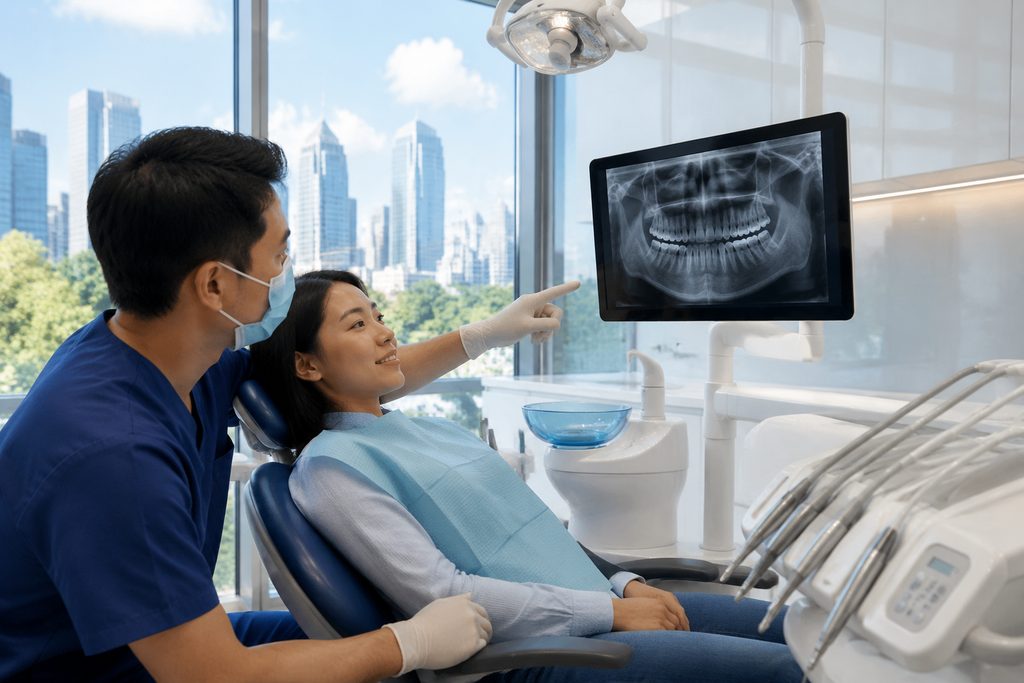
Dental Implants in China: How Long They Last
You have probably heard that dental work abroad means cut-rate materials and a dentist you cannot verify. For dental implants cost China is often the first thing patients research — and the numbers are striking. But longevity matters more than price. So here is the direct answer: a well-placed implant, maintained properly, lasts 15 to 25 years or longer. Many patients keep theirs for life.
The implant itself — the titanium post fused into your jawbone — rarely fails. What fails is the crown on top, or the gum and bone around it. That distinction changes everything about how you should plan treatment, whether you stay home or fly to Shanghai.
Implant hardware can last decades. The crown, the bone, and your daily hygiene habits decide the real lifespan. Ask any clinic which of those three they are actually guaranteeing.
Who This Is Right For — and Who It Isn’t
Dental tourism in China suits a specific kind of patient. It is not for everyone, and pretending otherwise wastes your money and your time.
You are typically a good candidate if:
- You need two or more implants, or full-arch restoration — the savings scale with complexity
- Your dentist at home quoted a price that would require financing or delay
- You have adequate jawbone density, or you are willing to undergo a bone graft first
- You can stay in China for the osseointegration period, or return for the final crown
- You have no uncontrolled diabetes, active gum disease, or heavy smoking habit
You should think twice — or stay home — if:
- You have uncontrolled diabetes, active periodontal disease, or a bleeding disorder
- You smoke heavily and will not stop; smoking roughly doubles early implant failure rates
- You need one simple implant. A single tooth in a Western clinic may not justify the flight
- You cannot commit to follow-up. Implants need review visits, and skipping them is how they fail
Being honest about the second list is what makes the first list trustworthy. A clinic that accepts every patient is not screening anyone.
The Options, Compared
Where you get an implant changes the price dramatically. It changes the timeline too. The table below compares typical figures for a single implant plus crown, using published ranges from clinic groups and dental associations. Prices vary by hospital, implant brand, and case complexity — treat these as planning anchors, not quotes.
| Market | Single Implant + Crown | Full-Arch (per arch) | Typical Timeline | Follow-Up Reality |
|---|---|---|---|---|
| United States | $3,000–$6,000 | $20,000–$50,000 | 4–8 months | Local, easy to schedule |
| United Kingdom | £2,000–£3,500 | £15,000–£30,000 | 4–9 months | Local, NHS not covered |
| China — top public hospital | $800–$2,000 | $6,000–$15,000 | 3–6 months | Requires planning for return visits |
| China — private international clinic | $1,500–$3,500 | $12,000–$25,000 | 3–6 months | English staff, insurance billing |
| China — premium brands (Straumann, Nobel) | $2,000–$4,000 | $18,000–$35,000 | 3–6 months | Brand warranty varies by clinic |
Which column suits you? If you need one implant and have good local dental coverage, staying home is often the rational choice. If you need four, six, or a full arch, the arithmetic flips fast. A patient facing $40,000 in the US for a full-arch restoration may pay $10,000 to $15,000 in China for comparable implant systems — and many top Chinese dental departments use the same Swiss and Swedish brands sold in Europe and America.
Chinese hospitals also handle enormous case volumes. That volume is not marketing — it is how a surgical team gets good at anything.
How Long Do Dental Implants Last? The Real Numbers
Long-term studies put implant survival rates at roughly 95% over ten years for single implants, with slightly lower figures for full-arch work. Those are the numbers you will find in peer-reviewed dental literature, not clinic brochures.
But survival is not the same as success. A surviving implant can sit in inflamed tissue, cause discomfort, or need replacement of the crown above it. So break the question down:
- The titanium post: designed to last a lifetime. Failure usually happens in the first year or not at all
- The abutment and crown: 10 to 15 years is typical before wear, chipping, or replacement
- Bone and gum: the real variable. Bone loss around an implant is what ends most restorations
What drives the difference between a 20-year implant and a 6-year implant? Three things, in order of impact: your hygiene, your smoking status, and whether you attend maintenance appointments. A 2020 review in a leading implantology journal found that patients who skipped supportive maintenance had significantly higher rates of peri-implantitis — the inflammatory condition that destroys the bone holding the implant.
That means the clinic you choose matters most for the first year. Your own habits matter for the next twenty.
Is Dental Implant Safe in China? What the Evidence Shows
This is the question patients ask quietly, and it deserves a straight answer rather than reassurance.
China’s top-tier dental departments operate under the same implantology protocols used in Europe and North America. Sterilization standards, CBCT imaging before surgery, guided placement, and follow-up schedules are standard practice at major teaching hospitals. Many Chinese oral surgery departments publish in the same international journals your home dentist reads.
Where the risk actually lives is not the country. It is the clinic tier.
A low-cost, high-volume clinic that skips CBCT scans, uses unbranded implant fixtures with no traceable serial number, and completes a full arch in a single visit is risky anywhere in the world — including a strip mall in your own city. The safeguards are specific and checkable:
- A CBCT scan before any implant is placed
- Traceable implant brand and serial number recorded in your file
- Written treatment plan with staged timeline, not same-day everything
- Documented sterilization and a named surgeon with verifiable credentials
Ask for all four. A clinic that hesitates on any of them has told you something useful.
Best Dental Implant Clinic Shanghai and Beyond: How to Choose
Patients searching for the best dental implant clinic Shanghai has to offer are usually looking at two very different worlds, and both are legitimate.
The first is the public teaching hospital. Shanghai’s major university-affiliated dental hospitals and stomatology departments handle high volumes, use premium implant systems, and charge the lower end of the range. The tradeoff: appointment queues, limited English at the general desk, and a process that rewards patience over convenience.
The second is the private international clinic. English-speaking staff, JCI accreditation in several cases, direct insurance billing, and Western-style scheduling. You pay roughly 1.5 to 2 times the public rate for that comfort. For a nervous patient flying 12 hours, that premium is often worth it.
Beyond Shanghai, top dental programs cluster in Beijing, Guangzhou, Chengdu, and Hangzhou. Our directory of top-ranked Chinese hospitals by city lets you filter by specialty, and the department-level rankings show which institutions are strongest in oral and maxillofacial surgery. If you want to compare public and private options side by side, the private international hospital list covers insurance and language details.
One practical note that surprises most foreign patients: general outpatient dental appointments in Chinese public hospitals cannot be pre-booked from overseas. You register on the day. To lock in a surgical slot in advance, you go through the hospital’s international or VIP channel — which is exactly the kind of coordination our team handles.
What It Costs and What the Price Includes
Cost is where the dental implant packages medical tourism China market gets murky. Some quotes bundle everything. Others quote the implant and quietly add the crown, the abutment, the CBCT, and the bone graft later.
Here is what a complete single implant should include, and typical China pricing for each element:
- Consultation and CBCT imaging: $50–$200
- Implant fixture (brand-dependent): $400–$1,500
- Abutment: $150–$400
- Crown: $200–$800
- Bone graft, if needed: $300–$1,200
- Extraction of the failing tooth, if needed: $50–$300
Total for a straightforward single implant: roughly $800 to $2,000 at a top public hospital, up to $3,500 at a premium private clinic. Full-arch cases run $6,000 to $25,000 depending on brand and technique.
Beware of “all-inclusive” quotes that do not name the implant brand. Brand choice is the single biggest cost driver, and it directly affects long-term outcomes and whether a dentist at home can service the implant later.
What is usually not included: flights, accommodation, airport transfers, and follow-up visits after you return home. Budget those separately.
Practical Considerations: Records, Visas, and Follow-Up
Dental treatment requires less paperwork than surgery, but the logistics still matter.
Records. Send your existing dental X-rays, CBCT files if you have them, and any treatment history before you travel. A written second opinion from a Chinese oral surgery department can confirm whether you are a candidate at all — and that costs far less than a wasted flight. Written second opinions from top-hospital specialists typically run $300 to $500, and video consultations $100 to $800 depending on the specialist level.
Visa. For medical treatment in China, the applicable short-stay category is the S2 visa, which covers medical treatment and private affairs. Accompanying family members apply under the same category. Requirements follow the latest embassy and consulate guidance, and you will need supporting documents from the treating hospital. Approval is never guaranteed, and no single visa fits every case. Note that the M visa is for commercial and trade activity — it is not a medical visa, despite what some online sources claim.
Payment. Public hospitals generally require prepayment, with insurance reimbursement handled afterward in your home country. Private international clinics often bill insurers directly. Confirm which model applies before you commit.
Follow-up. This is the part patients underestimate. Implant osseointegration takes three to six months. You may need two trips: one for placement, one for the final crown. Or you can have the crown fitted at home, provided your local dentist agrees to take over a case started elsewhere. Ask that question before you book anything.
Language. China’s top hospitals see tens of thousands of patients daily. Signage, registration systems, and most staff operate in Chinese. A bilingual medical companion — from $300 per day — handles registration, queuing, payment, and translation so you are not navigating a 10,000-patient outpatient hall alone.
Frequently Asked Questions
The same as anywhere else, assuming comparable implant brands and protocols: 15 to 25 years or more for the post, 10 to 15 years for the crown. Implant longevity depends on the fixture quality, the surgeon’s placement, and your maintenance habits — not the country. A premium Swiss implant placed in Shanghai behaves like a premium Swiss implant placed in Boston.
At accredited top-tier hospitals and JCI-certified international clinics, yes — the protocols match international standards. The risk concentrates in unregulated low-cost clinics that skip imaging or use untraceable fixtures. Verify four things: CBCT before surgery, a named implant brand with serial number, a staged written plan, and a credentialed surgeon. If a clinic resists any of these, walk away.
Early failure — within the first year — is uncommon but real, occurring in roughly 1 to 5% of cases depending on risk factors. Most implant brands carry a manufacturer warranty on the fixture itself, but labor and travel are not covered. This is why a written treatment plan and a clear conversation about who handles follow-up at home matter more than the price tag. Discuss the contingency before surgery, not after.
Not for general public-hospital outpatient slots — those are registered on the day. But you can arrange a video consultation or written second opinion remotely, which lets a Chinese oral surgery team review your imaging and confirm whether you are a candidate. That step costs a fraction of a flight and prevents wasted travel.
Your Next Step
The honest summary: implants last a long time when the brand, the surgeon, and your hygiene are all sound. China offers those three at a fraction of Western prices — provided you choose the right tier of clinic and plan the follow-up before you book a flight.
We are China Medical Services, a coordination service rather than a hospital. We do not diagnose or treat. What we do is translate your records, connect you with the appropriate dental department through official hospital channels, arrange bilingual accompaniment, and guide the visa and scheduling logistics. If you would like a written second opinion or a video consultation before deciding anything, you can start with a free consultation here — no commitment, and the conversation costs nothing.
This article is for general information only and is not medical advice. Treatment decisions should be made with a qualified dental professional who has reviewed your individual imaging and history.
For more medical information and treatment options in China, visit chinamedservices.com (China Medical Services).
