Braces Cost in China vs at Home: What Foreigners Actually Pay
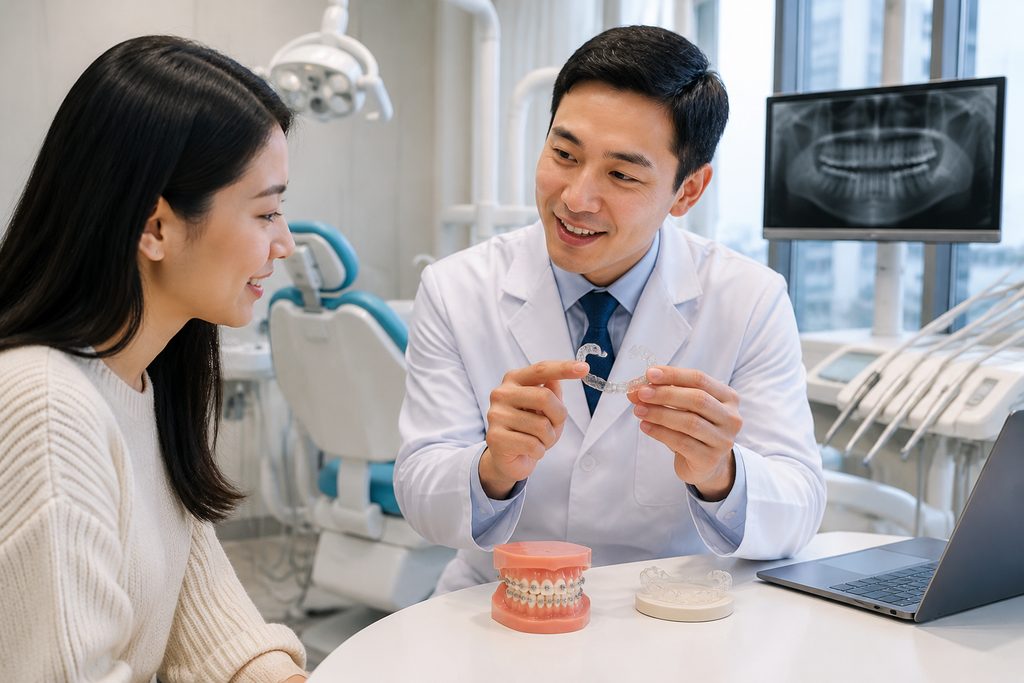
Braces Cost in China vs at Home: What Foreign Patients Actually Pay
You’ve probably heard that dental work in China is cheap, maybe even suspiciously cheap. The reality is more interesting than the rumor. When you compare braces cost in China vs USA, the gap is real — typically 40% to 70% lower — but the savings only materialize if you understand which hospitals treat foreigners, how long you can legally stay, and what happens when a bracket breaks three months after you fly home.
We’re China Medical Services. We’re not dentists and we don’t sell treatment packages. We connect international patients with Chinese hospitals and handle the logistics that make a foreigner’s visit work: appointments, records, translation, and a bilingual companion who sits beside you in the waiting room. This article is what we tell patients who ask about orthodontics before they book anything.
How This Actually Works, Step by Step
Getting braces in China as a foreigner is not like walking into a clinic at home. The sequence matters, and skipping a step usually costs you weeks.
It starts with records. You send us your panoramic X-ray, cephalometric images if you have them, intraoral photos, and any prior treatment notes. If you’ve never had orthodontic imaging, that’s fine — you’ll get it done in China, but it adds a day to your trip. The records go to the international department of a hospital that treats foreign patients, and an orthodontist reviews them before you commit to anything.
Next comes the consultation itself. In most Chinese public hospitals, you cannot pre-book a specialist outpatient slot from overseas. You queue for a same-day number, or you go through the hospital’s international or VIP channel, which lets you lock a specific appointment in advance. That channel costs roughly 1.5 to 2 times the standard fee. For a short trip, it’s usually worth it.
Then the treatment plan. Fixed metal braces, ceramic brackets, or clear aligners — the orthodontist assesses your bite and jaw relationship and recommends one. You agree, you pay, and the brackets go on, often the same day or the next.
Here’s the part people underestimate: braces are not a one-visit purchase. You need adjustments every four to eight weeks for 18 to 30 months. That’s the real decision point, and we’ll come back to it.
Braces Cost in China vs USA: The Actual Numbers
Let’s put real ranges on the table. Chinese public hospitals in tier-one cities charge in RMB, and these are converted estimates as of 2025. Private international clinics sit higher.
| Treatment Type | China (Public, Tier-1 City) | China (Private International) | United States |
|---|---|---|---|
| Metal fixed braces (full course) | $1,200 – $2,500 | $3,000 – $5,500 | $3,000 – $7,000 |
| Ceramic brackets | $1,800 – $3,200 | $4,000 – $6,500 | $4,500 – $8,000 |
| Clear aligners (e.g., Invisalign-type) | $2,500 – $5,000 | $5,000 – $9,000 | $4,000 – $9,000 |
| Initial consultation + imaging | $60 – $150 | $150 – $400 | $200 – $500 |
| Monthly adjustment visit | $15 – $40 | $60 – $150 | $100 – $250 |
Read that last row carefully. The adjustment fee is where American patients feel the pinch — $100 to $250 every visit, for two years. In a Chinese public hospital, an adjustment is often under $40. Over a full course, that difference alone can exceed $3,000.
Prices vary by hospital and case complexity. A simple crowding case in a mid-tier city costs less than a skeletal Class III correction requiring orthognathic coordination. Anyone quoting you a single flat number before seeing your X-ray is guessing.
How Much Do Braces Cost in Beijing Specifically?
Beijing runs at the top of the Chinese market, alongside Shanghai. Expect metal braces at a major public stomatology hospital to land between $1,500 and $2,800 for the full course, with ceramic options around $2,000 to $3,500. Private international clinics in the capital — the ones with English-speaking staff and direct insurance billing — typically quote $3,500 to $6,000.
Beijing also has the densest concentration of top-ranked hospitals in the country, which cuts both ways. You have more choice. You also face the longest queues, because everyone in northern China converges on the same handful of institutions. International department slots book out two to four weeks ahead in peak season.
If your schedule is flexible, Shanghai and Guangzhou offer comparable clinical quality with slightly shorter waits. Our directory of top-ranked Chinese hospitals by city lets you compare options before you commit to a city.
A Realistic Timeline
Here’s how a two-year orthodontic course actually unfolds for a foreign patient. The first phase is compressed; the rest is spread out and depends heavily on how often you can return.
- Week 0: You send records. Review takes 3 to 7 days.
- Week 1–2: Appointment coordination. International channel slots need 1 to 3 weeks of lead time.
- Week 2–4: Visa. S2 is the applicable short-stay category for medical treatment, subject to current embassy requirements and supporting hospital documents. Processing runs 4 to 10 business days.
- Month 1: Arrival, in-person consultation, imaging, treatment plan, brackets placed. Budget 3 to 5 days in-country.
- Month 2 onward: Adjustment visits every 4 to 8 weeks.
- Month 18–30: Debonding, retainers, final review.
That middle stretch is the honest problem. Unless you live in China or can travel frequently, you cannot realistically fly in every six weeks for two years. Most foreign patients split the course: brackets placed in China, adjustments done at home, with a clear handover letter from the Chinese orthodontist. Some orthodontists at home accept this arrangement. Some don’t. Ask before you book anything.
Is It Safe to Get Braces in China?
This is the question that decides the whole thing, and the honest answer is: it depends almost entirely on which institution you choose, not on the country.
China has 35,000+ hospitals. The top 5% — ranked by the Fudan University hospital index and JCI accreditation — meet international standards for sterilization, imaging, and clinical protocols. A major stomatology hospital in Beijing or Shanghai handles orthodontic case volumes that would be unusual in a Western private practice. Volume builds proficiency.
The risk sits at the other end. Dental clinics in shopping malls and storefronts sometimes advertise braces at prices that undercut hospitals by half. Some are legitimate. Some use unlicensed staff, recycled brackets, or skip imaging entirely. If a clinic quotes you braces without taking a panoramic X-ray first, walk out.
Three checks separate the safe options from the risky ones:
- Does the orthodontist hold a specialist qualification, and is the department part of a teaching hospital?
- Is imaging done on-site with a cephalometric capability, not just a phone photo?
- Will they hand you a written treatment plan and records you can take home?
Our specialty rankings for Chinese hospitals include stomatology, so you can see which institutions rank at the top for dental care rather than guessing from advertising.
Affordable Orthodontist Shanghai Options for Foreigners
Shanghai deserves its own section because it has the widest spread between budget and premium care in the country.
On the public side, the major university-affiliated stomatology hospitals deliver excellent clinical work at prices that surprise Western patients. The tradeoff is language and queueing. Most public hospital staff speak limited English, and the registration system assumes you can read Chinese characters on a screen. This is where a bilingual medical companion earns their fee — not for medical advice, but for making sure you’re in the right queue, paying the right window, and understanding what the orthodontist just said about your bite.
On the private side, Shanghai’s international clinics offer English-speaking orthodontists, JCI-standard facilities, and direct insurance billing. You pay two to three times the public rate, and you get a Western-style experience with no language barrier. For a patient on a short trip with no Mandarin, that premium often buys peace of mind.
There’s no universally right answer. A patient who speaks some Mandarin and has three weeks in the city will do well in the public system. A patient flying in for a four-day window with a teenager in tow will usually prefer private.
Practical Considerations: Records, Visa, Payment, Follow-Up
Bring your records. If you’ve had orthodontic treatment before, or if you have recent dental X-rays, get digital copies before you travel. It saves a repeat scan and gives the Chinese orthodontist a baseline.
Visa category matters. For medical treatment, S2 is the applicable short-stay category, subject to the latest embassy or consulate requirements and supporting documents from the hospital. If you’re staying beyond 180 days, S1 applies instead. Accompanying family members use the same category. Note that the M visa is for commercial and trade activities — it is not a medical visa, and using it for treatment creates problems at the border.
Payment is upfront at public hospitals. You pay, then claim reimbursement from your insurer afterward if your policy covers overseas treatment. Private international clinics frequently bill insurers directly, which is a genuine advantage for anyone with international coverage.
Follow-up at home is the loose end. Before you leave China, ask for a written summary in English covering your diagnosis, appliance type, wire sequence, and the recommended adjustment interval. A general dentist at home can often handle routine adjustments with that document in hand. Not all will agree to take over another clinician’s case, so confirm this before you start.
Frequently Asked Questions
You can get the brackets placed in one trip, typically over three to five days including consultation and imaging. But braces require adjustment visits every four to eight weeks for 18 to 30 months. No reputable orthodontist will claim to finish the full course in a single visit, and you should be wary of anyone who does.
Usually yes, if they’re recent and digital. Panoramic and cephalometric images taken within the past 12 months are generally usable. Older films or low-resolution phone photos of prints often get rejected, and you’ll be asked to redo imaging on-site, which adds a day and roughly $50 to $150 to your costs.
If you count only the appliance fee, China is cheaper — often by 40% to 70%. If you count flights, accommodation, and multiple return trips, the math changes for patients who need frequent adjustments. The savings are largest for patients who place brackets in China and complete adjustments locally, or who are already traveling to China for other reasons.
Broken brackets and loose wires are common and rarely urgent. A dentist at home can usually stabilize the situation. The harder problem is a treatment plan that needs revision, which requires either a return trip or a remote consultation with the Chinese orthodontist. This is why we recommend keeping a written treatment plan and confirming, before you start, that a local dentist will accept the handover.
S2 is the applicable short-stay category for medical treatment, subject to current embassy or consulate requirements and supporting hospital documents. It is not the M visa, which covers commercial and trade activities only. Approval is never guaranteed, and requirements vary by nationality and consulate.
Your Next Step
The core message is simple: braces in China can genuinely cost a fraction of what you’d pay at home, but the savings depend on choosing the right hospital and planning the full treatment arc, not just the first appointment. The clinical quality at China’s top-ranked institutions is real; the logistics are where foreign patients get stuck.
We’re China Medical Services. We match international patients with hospitals from our database of 340+ top-ranked institutions across 37 cities, coordinate appointments through official international departments, and provide bilingual companions who handle the queues, payments, and translation so you can focus on the treatment itself. We don’t provide medical advice, and we never promise a specific clinical outcome.
If you’d like to know what braces would realistically cost at a specific hospital in Beijing or Shanghai, send us your records through our free consultation page. No pressure, no obligation — just a clear answer before you book a flight.
This article is for general information only and does not constitute medical advice. Treatment decisions should be made with a qualified orthodontist who has reviewed your individual records.
For more medical information and treatment options in China, visit chinamedservices.com (China Medical Services).
