Blood Tests in China: Trip Planning for Foreign Patients
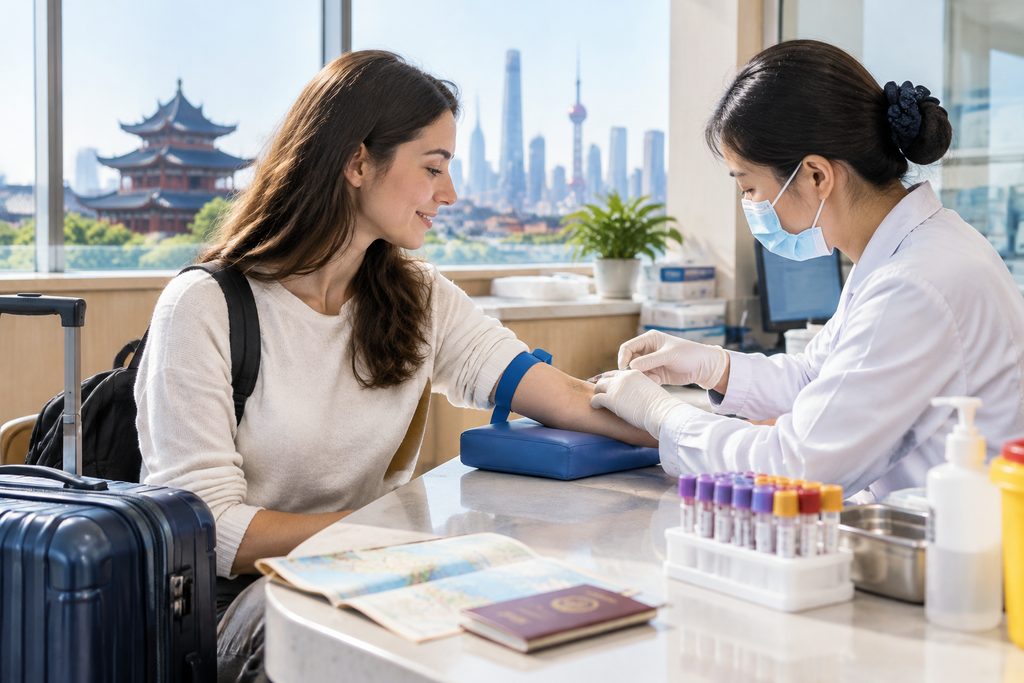
Blood Tests in China: Trip Planning for Foreign Patients
A blood test is simply a lab analysis of a small sample of your blood, used to check everything from organ function and infection to hormone levels and cancer markers. If you are considering medical travel, understanding blood test cost China hospitals charge, how to book, and whether the results will be accepted back home matters before you buy a plane ticket. This guide walks through the practical side: what to expect, what it costs, and how to plan a trip around lab work that is often faster and cheaper than in the US or Europe.
We are not doctors. Our team coordinates care for international patients at 340+ top-ranked hospitals across 37 cities in China. What follows is logistics and context, not medical advice.
How This Actually Works, Step by Step
Here is the real sequence. No marketing gloss.
Step 1 — You send us your existing reports. If you already have lab results, imaging, or a doctor’s note, you upload them. A Chinese specialty team reviews the file and tells you which additional blood panels make sense. This is a written second opinion, and it costs $300–500 depending on the hospital tier.
Step 2 — You decide whether to travel or stay remote. Many panels can be ordered through a video consultation ($100–300) where a physician explains what to test and why. If you want the draw done in China, you move to step 3.
Step 3 — Appointment coordination. Public hospitals in China generally do not let you book an outpatient slot from overseas in advance. You queue on the day, or you go through the hospital’s international or VIP department, which is roughly 1.5–2x the standard price but offers English-speaking staff and faster scheduling. We handle registration, medical card creation, and the queue logistics. Coordination starts from $300.
Step 4 — The draw itself. A phlebotomist takes 2–10 mL of blood, usually from a vein in your arm. The procedure takes under five minutes. Most routine panels return results within 24 hours; specialized tests like genetic sequencing or rare tumor markers can take 5–10 business days.
Step 5 — Results and next steps. You receive a printed and digital report, translated into English if needed. If the results point toward treatment, you can then discuss surgery or further workup — but only after an in-person consultation, which is a hard rule at most public hospitals.
What Blood Tests Cost in China Compared to the US and Europe
This is where the arithmetic gets interesting. A basic complete blood count (CBC) at a top-tier Chinese public hospital typically runs $8–20. The same test in the US, without insurance, often bills at $50–150. A comprehensive metabolic panel lands around $15–40 in China versus $100–250 in the US.
| Test | China (top public hospital) | US (self-pay) | UK private |
|---|---|---|---|
| Complete blood count | $8–20 | $50–150 | £40–90 |
| Comprehensive metabolic panel | $15–40 | $100–250 | £80–180 |
| Lipid panel | $10–25 | $60–200 | £50–120 |
| Thyroid function (TSH, T3, T4) | $20–50 | $100–300 | £90–200 |
| HbA1c (diabetes marker) | $10–25 | $50–150 | £40–90 |
| Tumor marker panel (e.g., CEA, AFP) | $40–120 | $200–600 | £150–400 |
Prices vary by hospital and case complexity, and private international hospitals like United Family or Jiahui charge closer to Western rates. But at public tertiary hospitals — the kind ranked in the Fudan Top 100 — the gap is real.
Key takeaway: For routine panels, blood test cost China is often 70–90% lower than US self-pay rates. The savings shrink at private international hospitals, where you pay for convenience and English service.
A Realistic Timeline
People underestimate the waiting steps. Here is a realistic schedule for a foreign patient planning lab work plus a specialist consultation in China.
| Stage | Duration | What happens |
|---|---|---|
| Records collection and translation | 3–7 days | You gather reports; we translate into Chinese if needed |
| Written second opinion | 5–10 business days | Chinese specialty reviews your file and recommends panels |
| Video consultation (optional) | 3–7 days to schedule | You speak with the medical team directly |
| S2 visa application | 4–10 business days | Requires hospital invitation letter and supporting documents |
| Flight and accommodation booking | 1–2 weeks | Peak seasons (spring, autumn) book faster |
| Arrival and hospital registration | Day 1–2 | Medical card creation, queue, blood draw |
| Results turnaround | 24 hours to 10 days | Depends on test type; routine panels are fast |
| Specialist follow-up | Day 3–14 | In-person consultation to discuss findings |
Total from first contact to results in hand: roughly 4–8 weeks. If you skip the visa and simply want a remote review of labs done at home, the timeline collapses to about two weeks.
What Can Go Wrong — and What Happens Then
Honest failure modes, and the actual recourse.
You cannot get an appointment at the exact hospital you wanted. Public hospital outpatient slots are released daily and fill within hours. We cannot guarantee a specific specialist or date. What we can do is coordinate through the international department, which has more predictable scheduling. If we cannot secure the appointment you ordered, the coordination fee is refunded in full.
Your visa is delayed. S2 visas for medical treatment require a hospital invitation letter and can take longer than tourist visas. If your departure date slips, you reschedule the appointment. Hospitals generally allow one free reschedule within 30 days.
Results come back abnormal and you need treatment. This is the scenario people fear most. A blood test is a screening tool, not a diagnosis. Abnormal markers trigger further imaging or biopsy — not immediate surgery. You will have time to consult, get a second opinion, and decide.
Language breakdown. Chinese tertiary hospitals see 10,000+ outpatients per day. Signage is in Chinese. Without a bilingual companion, you will struggle to find the lab, pay the fee, or understand the report. This is the single most common complaint from foreign patients who try to navigate alone.
Never travel to China for medical care without confirming your visa category. The M visa is for commercial and trade activities only — it is not a medical visa. For short-stay medical treatment, S2 is the applicable category, subject to current embassy and consulate requirements. Family members accompanying you also apply for S2.
Is It Safe to Get Blood Tests in China?
Yes, at accredited hospitals. China’s top tertiary hospitals follow standardized protocols for sterilization, needle disposal, and sample handling. Many hold JCI accreditation, the same international benchmark used by hospitals in the US and Europe.
Blood draws use single-use, sterile needles. Samples are barcoded and tracked. Labs at major hospitals participate in external quality assessment programs. The risk profile is comparable to any developed-country hospital.
The bigger safety question is not the needle — it is whether the right tests are ordered and interpreted correctly. That is why a written second opinion or video consultation before you travel matters. It ensures the panels match your actual clinical picture, not a generic checklist.
For a broader look at hospital quality tiers, see our guide to Fudan-ranked top hospitals by city.
Choosing Where to Go: Best Hospitals for Blood Tests in Beijing and Beyond
If you are searching for the best hospitals for blood tests in Beijing, the short answer is: any of the major tertiary hospitals will run accurate routine panels. The differentiator is access and language support.
Peking Union Medical College Hospital and Zhongshan Hospital Fudan University are among the most recognized names. But for foreign patients, the international or VIP department at these hospitals is often the practical entry point — English-speaking staff, shorter queues, and direct coordination with specialists.
Private international hospitals like United Family, Jiahui, Parkway, and Raffles offer Western-style care with direct insurance billing. They cost more, but if your priority is a seamless English-language experience for a simple blood draw, they are hard to beat.
For city-specific options, browse our Beijing hospital guide or Shanghai hospital guide. Both cities concentrate the largest number of top-ranked facilities.
Practical Considerations: Records, Visa, Payment, and Follow-Up
Records. Bring printed copies of prior lab work, imaging, and medication lists. Digital files are fine, but paper backups help when hospital systems do not connect.
Visa timing. Apply for S2 at least three weeks before your intended travel date. The invitation letter from the hospital is essential. Requirements shift, so confirm with the nearest Chinese embassy or consulate.
Payment. Public hospitals require prepayment. International insurance is typically reimbursed after the fact, not billed directly. Private international hospitals often bill insurance directly — confirm before you go.
Language. A bilingual medical companion costs from $300 per day and covers queueing, registration, payment, wayfinding, and translation. For a single blood draw, half a day may suffice.
Follow-up at home. Ask for your results in English with reference ranges. Most Western physicians accept foreign lab reports if the methodology is stated. If not, a repeat test at home is inexpensive.
Frequently Asked Questions
At top public hospitals in Shanghai, a CBC runs $8–20 and a comprehensive metabolic panel $15–40. Private international hospitals charge closer to Western rates, often $80–200 for the same panel. Prices vary by hospital and case complexity.
Usually not directly at public hospitals — outpatient slots are released daily and require in-person registration. You can secure predictable scheduling through the hospital’s international or VIP department, which we coordinate on your behalf. If we cannot secure the appointment, the coordination fee is refunded.
At accredited tertiary and JCI-certified hospitals, yes. Sterile single-use needles, barcoded samples, and external quality assessment are standard. The main risk is not the procedure but unclear communication about what is being tested and what the results mean.
Packages exist, particularly at private international hospitals and health-screening centers. They bundle multiple panels at a discount. For most travelers, a targeted panel based on your health history is more useful — and cheaper — than a generic package.
Often yes, provided the report includes methodology, units, and reference ranges in English. Some physicians prefer a repeat test locally. Ask the Chinese lab for a full English report before you leave.
Your Next Step
Blood work in China is fast, accurate, and dramatically cheaper than self-pay rates in the US or Europe — but the logistics of visas, appointments, and language require planning. That is the gap we fill. China Medical Services connects international patients with 340+ top-ranked hospitals across 37 cities, handling records translation, appointment coordination, and bilingual accompaniment. We do not provide medical advice or guarantee clinical outcomes. If you want to explore whether a trip makes sense for your situation, start with a free consultation at our patient services page — no pressure, just a conversation about your options.
This article is for informational purposes only and does not constitute medical advice. Always consult a qualified healthcare provider about your individual health needs.
For more medical information and treatment options in China, visit chinamedservices.com (China Medical Services).
