What a Dental Filling Costs in China: Real Prices, Top Clinics, and Safety
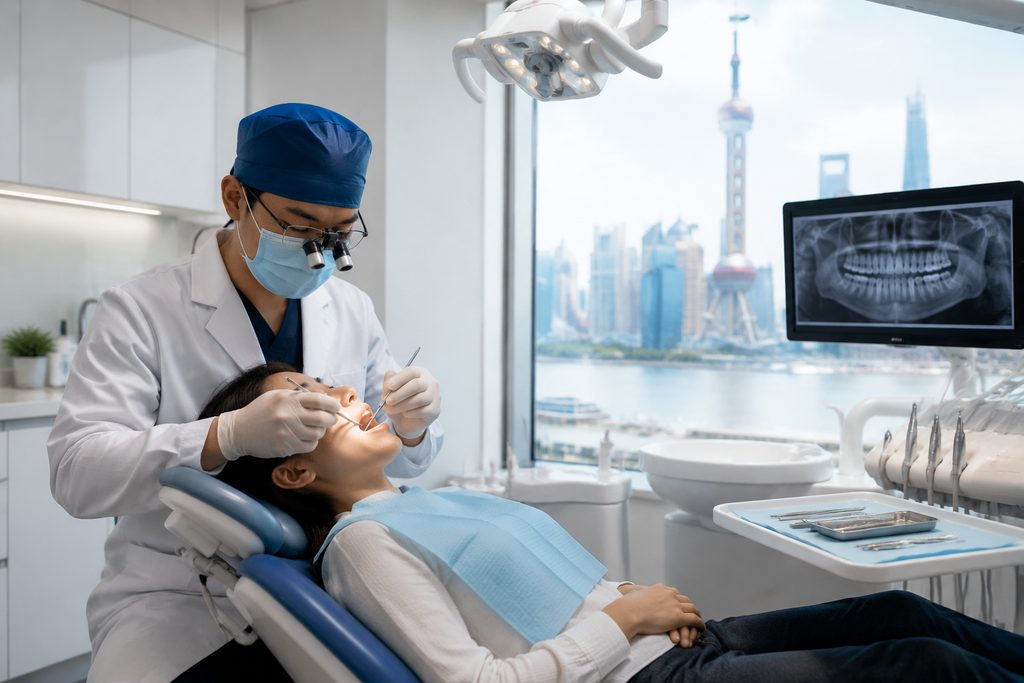
You have probably heard that getting dental work abroad means gambling with your health. Cheap clinics, unlicensed dentists, no recourse if something goes wrong. For a lot of destinations, that reputation is earned. China is a different story — and the price gap is real. A standard composite filling that costs $200 to $400 in the United States often runs between $30 and $150 at a Chinese public hospital, and the materials are frequently the same brands used in American dental offices. So when people ask about the dental filling cost China offers, the honest answer is: dramatically lower than Western prices, with quality that depends almost entirely on where you go.
That last part matters. China’s dental market spans everything from world-class hospital dental departments to small private shops with uneven standards. Knowing the difference is the whole game.
This guide breaks down what fillings actually cost across hospital types, why the prices vary so much, how to judge whether a clinic is safe, and what the logistics of treatment look like for a foreign visitor. We are not dentists. We are a medical coordination service that helps international patients navigate China’s hospital system — so treat what follows as a map, not a diagnosis.
Key Takeaways
- A composite filling at a Chinese public hospital typically costs $30–$150, roughly one-fifth to one-third of US prices for comparable materials.
- Private international clinics in cities like Shanghai and Beijing charge $80–$300 per filling — still cheaper than the West, but you are paying for English-speaking staff and same-day scheduling.
- The biggest variable is not the filling itself but where you have it done. Hospital dental departments and licensed stomatology hospitals follow strict sterilization and material standards; unregulated walk-in shops do not.
- China’s top dental hospitals see enormous patient volume, which keeps prices low — but public walk-in clinics generally cannot be pre-booked from overseas, so planning ahead matters.
The Problem: Western Dental Prices Have Outrun What Most People Can Pay
In the United States, the average composite filling costs $200 to $400 per tooth, according to long-running fee surveys compiled by the American Dental Association. A crown runs $1,000 to $1,500. A root canal plus crown can clear $2,500. For the roughly 68 million American adults with no dental insurance — a figure from the Oral Health Workforce Research Center — those numbers are not an inconvenience. They are a wall.
The result is predictable. People postpone treatment. Small cavities become root canals. Root canals become extractions. Emergency room visits for preventable dental pain cost US hospitals over $1 billion annually, according to research published in the journal Health Affairs.
Dental tourism grew out of that gap. Millions of patients now travel to Mexico, Thailand, Hungary, and increasingly China for treatment. But the phrase “dental tourism” carries baggage, and it should. Stories of botched work in unregulated clinics are common enough that any honest advisor has to address them head-on.
So here is the question that actually matters: when you see a filling priced at $40 in China, what are you actually buying?
Why China Delivers Real Value on Dental Care
The cost advantage in Chinese dentistry is not a trick. It comes from structural facts about how the system operates.
Hospital Scale and Patient Volume
China’s top stomatology hospitals treat staggering numbers of patients. The Ninth People’s Hospital Affiliated to Shanghai Jiao Tong University School of Medicine — one of the country’s leading dental institutions — handles hundreds of thousands of outpatient dental visits each year. That volume spreads fixed costs across far more procedures than a typical Western private practice does. A single-chair dental office in Ohio cannot match that economics.
Lower Labor and Overhead Costs
Dentist salaries in China, while rising fast, remain well below US levels. Real estate, equipment financing, and staffing costs are lower too. None of that changes the chemistry of a composite resin. The filling material placed in a Shanghai hospital dental department is often the same 3M or Dentsply product used in Chicago. You are paying less for the labor and the building, not for a cheaper filling.
Genuine Clinical Depth
China trains a large number of dentists and oral surgeons, and its top dental schools are research-intensive. Peking University School of Stomatology and Sichuan University’s West China School of Stomatology are internationally recognized. If your case is simple — one or two cavities — this depth is more than sufficient. If your case is complex, it becomes a real asset.
For a broader view of how Chinese hospitals compare across specialties, our ranking of China’s top-ranked hospitals breaks the system down by city and tier.
What Fillings Actually Cost in China: A Real Comparison
Prices vary by city, hospital tier, and material. Amalgam is cheapest; composite resin is standard; ceramic inlays cost more. The table below reflects typical 2025 ranges for a single-surface composite filling, converted to US dollars.
| Setting | Typical Cost per Filling | English Support | Booking |
|---|---|---|---|
| US private dental office | $200–$400 | Yes | Easy, weeks ahead |
| UK NHS Band 2 charge | ~$85 (subsidized) | Yes | Long waits common |
| China public hospital dental dept. | $30–$150 | Limited | Walk-in, same day |
| China stomatology hospital (top tier) | $50–$200 | Limited | Walk-in or VIP channel |
| Private international clinic (Shanghai/Beijing) | $80–$300 | Yes | Appointment, days ahead |
| Hospital international/VIP department | $100–$350 | Yes | Pre-bookable |
Two things stand out. First, the public hospital price is genuinely low — often under $100 for a straightforward filling. Second, the international clinic price is higher but still well below US rates, and it buys you something specific: a dentist who speaks English, a schedulable appointment, and a familiar clinical environment.
Which one is right for you depends on your priorities. A traveler with a single cavity and no language ability may prefer the private clinic. A patient planning a longer medical trip, or combining dental work with other treatment, may find the hospital route far more economical.
Is Dental Work in China Safe for Tourists?
This is the question that stops people from booking. It deserves a direct answer.
At licensed hospitals and registered dental clinics, safety standards are high. China’s National Health Commission regulates sterilization protocols, and top-tier hospitals follow international infection-control practices. Single-use needles, autoclaved instruments, and disposable barriers are standard in hospital dental departments. Materials are typically imported from the same global suppliers used in Europe and North America.
The risk lies elsewhere — in unlicensed shops, beauty salons offering “dental add-ons,” and street-level clinics that undercut prices by skipping regulatory steps. These exist. They are also easy to avoid if you stick to hospitals and registered clinics.
Never accept dental treatment from a venue that cannot show you a medical license and a registered dentist’s credentials. If a clinic’s price seems impossibly low — say, $10 for a filling — that is a signal, not a bargain.
For tourists specifically: a simple filling is a low-risk procedure. You will likely need a local anesthetic, which carries standard risks anywhere. If you have allergies, cardiac conditions, or take blood thinners, disclose them before treatment. Bring a translated summary of your medical history.
How to Book a Dental Filling Appointment in China
Here is where the system gets less intuitive for foreigners.
Most Chinese public hospitals do not accept advance appointments from overseas for routine dental care. You show up, take a number, and wait. For a filling, that is often manageable — walk-in dental departments at large hospitals typically see patients the same day. But if you want a specific senior dentist, or you are combining dental work with other medical treatment, the process becomes harder to navigate without help.
The alternative is the hospital’s international or VIP department, which does allow pre-booking, provides English-speaking staff, and charges roughly 1.5 to 2 times the standard rate. For many foreign patients, that premium is worth it.
Private international clinics — such as those in the United Family and Jiahui networks — offer the easiest booking experience, with online scheduling and direct insurance billing in some cases. You can browse our directory of private international hospitals to see what is available in major cities.
If you are searching for the best dental clinic in Shanghai for fillings, the practical answer is usually one of three options: the dental department at a top stomatology hospital, an international clinic with English-speaking dentists, or a hospital VIP department. Each has trade-offs in price, convenience, and language support.
Book your dental visit early in your trip, not on your last day. If a filling needs adjustment or a second visit, you want time to return.
China Dental Tourism Packages With Filling Procedures: What to Expect
Some agencies market all-inclusive dental tourism packages that bundle flights, hotels, and treatment. These can work well for people planning multiple procedures — several fillings, a crown, maybe whitening — where the savings justify the trip.
But read the fine print. A package that promises “unlimited dental work” for a flat fee is usually cutting corners somewhere. Legitimate packages itemize procedures and name the clinic. They also let you choose between public hospital and private clinic settings.
For a single filling, a package rarely makes financial sense. The trip costs more than the treatment saves. For a full mouth restoration, the math changes completely.
If you are considering combining dental care with a broader medical visit — a health screening, a specialist consultation, or treatment for another condition — coordinating everything through one point of contact saves real time. Our patient consultation service handles exactly that kind of planning.
Practical Considerations Before You Travel
Visa. For medical treatment in China, foreign patients typically use the S2 visa, which covers short-stay visits for medical treatment and private affairs. Accompanying family members apply under the same category. Requirements are set by the latest embassy and consulate guidance and require supporting documents from the treating hospital, so confirm current rules before applying. The M visa is for commercial and trade activities and is not the right category for medical travel.
Payment. Chinese public hospitals generally require payment upfront. International credit cards are accepted at larger hospitals and private clinics, but smaller facilities may prefer local payment apps. Carry a backup method. Private international clinics often bill insurance directly; public hospitals typically do not, so you would pay and seek reimbursement afterward.
Records. Bring your dental history, recent X-rays if you have them, and a list of medications. If your records are in English, most international clinics can work with them directly. Public hospitals may need translation.
Language. This is the single biggest practical barrier. Hospital dental departments operate in Chinese. Without language support, even a simple filling becomes stressful. Bilingual medical companions exist for exactly this reason — they handle registration, queuing, payment, and translation throughout your visit.
Follow-up. Fillings occasionally need adjustment. If you return home and something feels off, see a local dentist. Keep a copy of your treatment record and the materials used.
Frequently Asked Questions
Expect $30 to $150 for a standard composite filling, depending on the city, hospital tier, and how many surfaces the cavity covers. Top stomatology hospitals in Shanghai and Beijing sit at the higher end; smaller cities are cheaper. Prices vary by hospital and case complexity, so treat any figure as a range, not a quote.
At licensed hospitals and registered clinics, yes. Sterilization standards are regulated and materials are often imported from the same global brands used in the West. The risk comes from unlicensed shops, which are avoidable if you stick to hospitals and credentialed clinics.
Public hospital dental departments generally do not accept overseas advance bookings for routine care — you walk in and wait. International and VIP departments do allow pre-booking, as do private international clinics. If scheduling certainty matters, plan around those options.
Multiple fillings in one visit are common and usually cost less per tooth than a single filling done alone. If you are planning several procedures, a private clinic or hospital VIP department offers the most efficient scheduling. For complex restorative work, a top stomatology hospital is the stronger choice.
Most Western dental insurance plans do not cover treatment abroad, though some international policies do. Private international clinics in China often bill international insurers directly. Public hospitals require upfront payment, after which you would submit a claim to your insurer yourself.
Your Next Step
The dental filling cost China offers is genuinely lower — often by 70 to 85 percent compared with US private practice — and the quality at licensed hospitals is solid. The real challenge is not price. It is knowing which clinic to walk into, how to communicate, and how to avoid the unregulated corners of the market.
We are China Medical Services, a coordination service that connects international patients with top-ranked Chinese hospitals. We are not a hospital and we do not provide dental or medical advice. What we do is help you understand your options, coordinate appointments, and provide bilingual support on the ground when you need it.
If you are planning dental treatment in China and want a clearer picture of what is realistic for your situation, start with a free consultation. No pressure, no obligation — just a conversation about what you need.
This article is for informational purposes only and does not constitute medical or dental advice. Treatment decisions should be made in consultation with a qualified dentist or physician. Costs cited are approximate ranges and vary by hospital, city, and case complexity.
For more medical information and treatment options in China, visit chinamedservices.com (China Medical Services).
