Gum Treatment in China: Costs Explained for International Patients
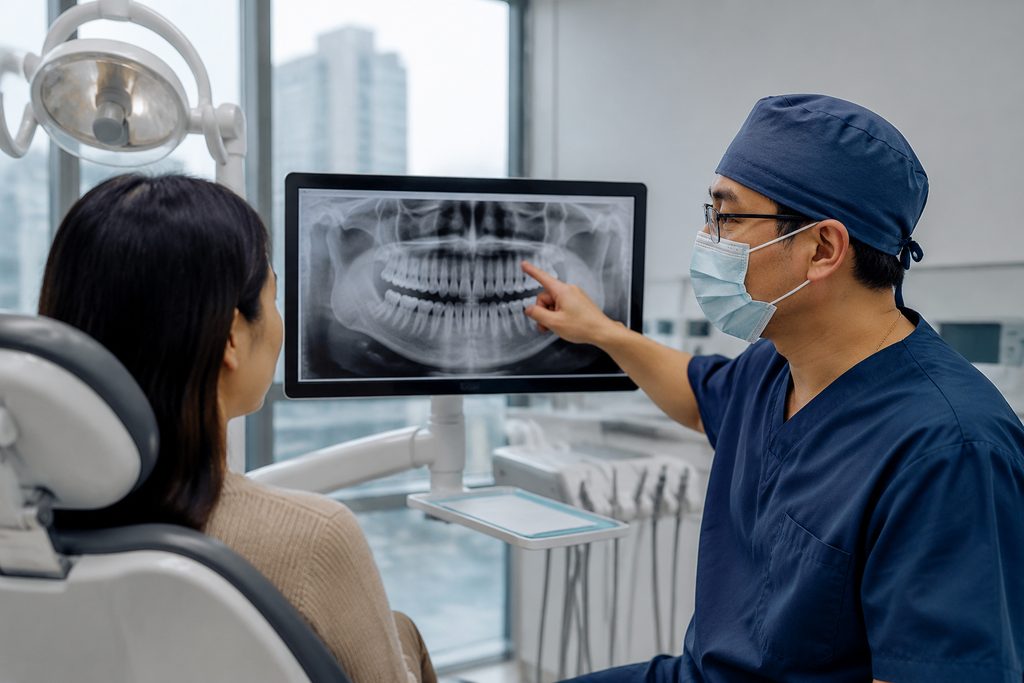
Roughly half of all adults worldwide live with some form of periodontal disease, according to the World Health Organization — and in the United States alone, the CDC puts the figure at nearly 47% of adults over 30. For patients facing scaling, root planing, or gum surgery, the bill often lands between $1,500 and $10,000 at home. That gap is exactly why searches for gum treatment cost China have climbed steadily among international patients comparing options abroad. The short answer: most periodontal procedures in China’s top-tier hospitals cost between $80 and $2,500, depending on the procedure and the city.
But price alone never tells the full story. What you pay, where you go, and how the visit is arranged all shape whether traveling to China makes sense for your case.
Gum Treatment Cost in China: The Short Answer
A standard deep cleaning (scaling and root planing) at a major Chinese public hospital typically runs $80 to $300 for the full mouth. Laser gum therapy sits higher, around $400 to $1,200. Flap surgery or gum grafting usually falls between $500 and $2,500 per quadrant or site. Private international clinics in Beijing and Shanghai charge more — often 1.5 to 3 times the public hospital rate — but include English-speaking staff and direct insurance billing.
The caveat: these are ranges, not quotes. Final pricing varies by hospital and case complexity. A single-site graft and a full-mouth reconstruction are not the same purchase, and no responsible clinic will quote you firmly before an examination.
Key takeaway: The same periodontal procedure that costs $3,000 in the US often runs $300–$800 in a top Chinese public hospital. Private international clinics land in between — you pay for language, comfort, and insurance convenience, not necessarily better clinical outcomes.
Who This Is Right For — and Who It Isn’t
Dental tourism is not a universal fit. Gum disease in particular has a chronic, follow-up-heavy nature that some patients underestimate.
Usually a good fit:
- Patients with a clear diagnosis and imaging already in hand who need treatment priced 60–80% below Western rates
- People already traveling to China for work, family, or another medical reason
- Patients with advanced periodontitis who cannot afford surgery at home and can commit to a 7–14 day stay
- Those willing to return home for long-term maintenance with a local dentist
Probably not a good fit:
- Anyone with uncontrolled diabetes, active bleeding disorders, or immunosuppression — gum surgery carries real risk in these cases
- Patients needing complex full-mouth rehabilitation with multiple staged surgeries over months
- People who cannot travel for medical reasons or cannot tolerate a long flight
- Anyone hoping to skip a proper in-person exam — Chinese public hospitals require face-to-face consultation before scheduling surgery
If you fall into the second list, staying home and working with a local periodontist is genuinely the better call. We say that plainly because a bad fit wastes your money and your health.
The Options, Compared
Here is how the real alternatives stack up for a patient with moderate to severe gum disease. Figures reflect typical ranges for comparable procedures.
| Option | Typical Cost (USD) | Wait Time | Language Support | Insurance |
|---|---|---|---|---|
| US private periodontist | $1,500–$10,000 | 1–4 weeks | Native English | Partial coverage, billed directly |
| UK private specialist | £800–£5,000 ($1,000–$6,300) | 2–8 weeks | Native English | Mostly out-of-pocket |
| China public top-tier hospital | $80–$2,500 | Days to 2 weeks | Limited; interpreter helpful | Prepay, then claim |
| China private international clinic | $300–$4,000 | Same week often | English-speaking staff | Direct billing common |
| Thailand / Malaysia dental tourism | $200–$3,000 | 1–3 weeks | Good English | Varies |
Which column suits you depends on what you value most. If cost is the deciding factor and you can manage without English at every step, a Chinese public hospital wins on price. If you want a smoother experience and your insurance reimburses overseas care, a private international clinic may be worth the premium. Patients who need both — low cost and English support — often pair a public hospital with a bilingual companion.
Is Gum Treatment in China Safe? What the Evidence Shows
This is the question that stops most people from booking. It deserves a straight answer.
China’s top-ranked hospitals operate under the same sterilization and infection-control standards used in Western academic medical centers. Many hold Joint Commission International (JCI) accreditation, and the country’s leading dental departments are attached to university hospitals with active research programs. China’s top-ranked hospitals — the ones ranked in the Fudan University Hospital Rankings — represent roughly the top 5% of the country’s 35,000+ hospitals.
That said, safety is not evenly distributed. A small neighborhood dental office in a second-tier city is not the same as the stomatology department of a major university hospital. The variable that matters most is where you go, not the country as a whole.
Caution: Never book periodontal surgery at a clinic you cannot verify. Ask for the hospital’s accreditation status, the treating dentist’s credentials, and whether sterilization protocols follow national standards. If a provider cannot answer these questions clearly, walk away.
So is gum treatment in China safe? At a properly selected top-tier hospital, yes — the clinical standards are comparable to Western care. The risk lies in choosing the wrong facility, which is exactly where local guidance earns its keep.
How Much Does Gum Surgery Cost Abroad? Breaking Down the Numbers
Routine outpatient care at public hospitals cannot be pre-booked from overseas — you register in person. Surgery also requires an in-person consultation first. The exception is a hospital’s international or VIP department, where advance scheduling is possible at a higher fee. This is where coordination services help most.
This is a real concern and worth planning for. Ask your Chinese provider for complete operative notes, imaging, and a written aftercare plan before you leave. Share these with a local periodontist. Most post-surgical issues — swelling, sensitivity, minor bleeding — are manageable locally, but complex complications may require you to see a specialist at home. Travel insurance that covers dental complications is strongly advised.
Beijing and Shanghai lead, with the largest concentration of top-ranked university dental hospitals and English-capable international clinics. Guangzhou and Chengdu also have strong programs. For a specific case, the right choice depends on the procedure and your travel logistics more than the city’s reputation alone.
Your Next Step
Gum treatment in China can cost a fraction of Western prices without sacrificing clinical quality — provided you choose the right hospital and plan the logistics properly. The savings are real, but they only materialize when the diagnosis, facility, and follow-up are handled with care.
We are China Medical Services, a coordination team that connects international patients with accredited private and public hospitals across 37 cities. We are not a hospital and we do not diagnose or treat anyone — we handle hospital matching, appointment coordination, bilingual accompaniment, and visa guidance. If you would like a clearer picture of what your case would cost and where it could be treated, you can request a free consultation with no obligation. Take your time, gather your records, and decide when you are ready.
This article is for general information only and does not constitute medical advice. Treatment decisions should always be made with a qualified dental or medical professional who has examined you in person.
Frequently Asked Questions
Yes. The hospitals used for international patients are JCI-accredited and follow the same international safety standards as top hospitals in the US and Europe. Surgical teams perform high volumes of procedures — often more than their Western counterparts — which studies show leads to better outcomes.
Costs vary by procedure and hospital, but international patients typically save 40-80% compared to US prices — even when factoring in travel and accommodation. A consultation with our team will give you an exact, all-inclusive quote with no hidden fees.
Send us your existing medical reports to get started. We handle everything from hospital selection and appointment scheduling to visa assistance and post-operative recovery planning. Your medical records are reviewed by the specialist before you even book a flight.
For more medical information and treatment options in China, visit chinamedservices.com (China Medical Services).
