LASIK Assessment in China: What to Expect From Screening to Surgery
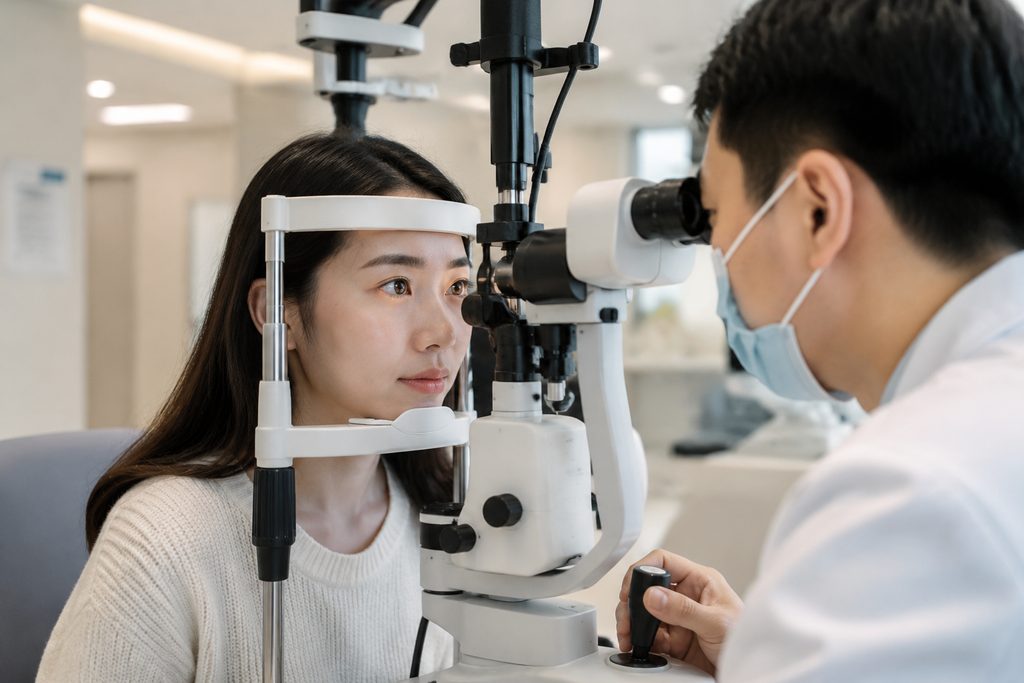
LASIK Assessment in China: What to Expect
You have probably heard that going abroad for eye surgery means gambling with your vision. The reality runs the other way. A full LASIK assessment in China at a top-tier facility typically costs between $150 and $400, takes two to three hours, and involves more diagnostic imaging than most Western clinics perform before clearing a patient. For context, LASIK surgery cost China-wide generally lands between $1,500 and $3,500 per eye — roughly one-third to one-half of typical U.S. pricing.
But here is the part nobody mentions in the brochures. The assessment is not a formality you squeeze into a lunch break. It is the single most important appointment of the entire process. Everything that follows — whether you get operated on at all, which technique is used, how your recovery unfolds — gets decided in that room.
LASIK Assessment in China: The Short Answer
A standard assessment takes half a day. You will undergo corneal topography, pachymetry (corneal thickness measurement), wavefront aberrometry, dilated fundus examination, tear-film analysis, and a refraction check. The surgeon then reviews everything and tells you whether you are a candidate — and for which procedure.
Results are usually delivered the same day. If you pass, surgery can often be scheduled within 48 to 72 hours at private international clinics, or within one to two weeks at public hospital international departments. That speed surprises people. In the U.S. or U.K., the gap between consultation and surgery frequently stretches to several weeks.
Key takeaway: The assessment, not the laser, determines your outcome. A clinic that rushes you past diagnostics is a clinic to walk away from — regardless of price.
Who This Is Right For — and Who It Isn’t
LASIK suits a fairly narrow band of patients. Knowing where you fall on that spectrum before you book a flight saves money and disappointment.
Typically good candidates:
- Age 18 or older with a stable prescription for at least 12 months
- Myopia between -1.00 and -8.00 diopters, or astigmatism under 3.00 diopters
- Corneal thickness above 500 microns in the central zone
- No active eye disease — no keratoconus, severe dry eye, or uncontrolled glaucoma
- Realistic expectations about night vision and reading glasses after age 40
Who should not pursue this:
- Anyone with keratoconus or a family history of corneal ectasia — the risk of post-surgical complications is genuinely serious
- Pregnant or nursing women, because hormonal shifts alter refraction and healing
- Patients with autoimmune conditions such as rheumatoid arthritis or lupus
- People whose prescription changed within the past year
- Anyone hoping to eliminate reading glasses — LASIK does not do that, and no honest surgeon will claim otherwise
If you fall into the second list, staying home and exploring alternatives such as ICL or refractive lens exchange with your local ophthalmologist is the better path. We say that plainly because credibility matters more than bookings.
The Options, Compared
China is not one market. It is several, and the differences affect both your wallet and your experience.
| Option | Typical Cost (per eye) | Wait Time After Assessment | English Support | Best For |
|---|---|---|---|---|
| Public top-tier hospital, standard channel | $1,200–1,800 | 1–3 weeks | Limited; interpreter often needed | Budget-conscious patients comfortable with crowds |
| Public hospital international department | $2,000–3,000 | 3–10 days | Full English service | Patients wanting top surgeons plus smoother logistics |
| Private international clinic (JCI-accredited) | $2,500–3,500 | 24–72 hours | Native-level English staff | Time-pressed travelers; direct insurance billing |
| U.S. average for comparison | $2,200–3,500 | 2–6 weeks | Native | — |
| U.K. private average | $2,600–4,000 | 2–4 weeks | Native | — |
Which column fits you? If your priority is the lowest credible price and you can bring a Mandarin-speaking companion, the standard public channel works. If you have three days in Shanghai and want a surgeon who has performed thousands of these procedures, the private or international-department route is worth the premium. Most of our clients land in the middle column.
What the Assessment Actually Tests — and Why It Matters
This is where Chinese top-tier clinics often outperform their Western counterparts on thoroughness. A proper workup includes at least eight measurements, and each one rules out a specific failure mode.
Corneal topography maps the surface curvature. It catches keratoconus before a laser ever touches your eye — the single most important screening test. Pachymetry measures thickness; if your cornea is too thin, LASIK leaves insufficient structural margin and a surgeon should recommend PRK or ICL instead. Wavefront aberrometry maps higher-order optical errors, which guides personalized treatment profiles.
Tear-film breakup time assesses dry eye. Patients with pre-existing dry eye frequently end up worse after LASIK, and a good clinic will tell you that upfront rather than after you have paid. Pupil size in dim light predicts night-vision halos. And a dilated fundus exam checks the retina for tears or holes that would need treatment first.
The whole battery takes about 90 minutes of machine time. Add consultation and you are looking at a half-day commitment. Expect to leave with dilated pupils, so bring sunglasses and do not plan to drive.
Bring your current glasses prescription, contact lens history, and any prior eye records. Clinics ask when you last wore contacts — soft lenses should be out for at least 3 to 5 days, rigid lenses for 2 to 3 weeks, because contact wear distorts corneal shape and skews every measurement.
What It Costs, and What the Price Includes
LASIK surgery cost China-wide varies by city, hospital tier, and technique. Standard bladeless LASIK at a public hospital runs $1,200–1,800 per eye. Femtosecond-assisted procedures with wavefront optimization push toward $2,000–3,000. SMILE, a newer flapless technique, sits at the higher end.
Beijing and Shanghai price 10 to 20 percent above Chengdu, Guangzhou, or Hangzhou. The gap reflects demand and surgeon density rather than any quality difference — several of China’s strongest refractive surgeons practice outside the first-tier cities.
What is usually included: the surgery itself, one to two post-operative visits, and standard eye drops. What is often not: the initial assessment fee ($150–400), enhancement procedures if a touch-up is needed later, and follow-up care once you return home.
That last point deserves emphasis. Your surgeon in China cannot examine you six months later if you are in Toronto. Arrange a handover with a local optometrist before you fly back, and ask the Chinese clinic for a complete operative report in English.
Practical Considerations: Visas, Records, and Follow-Up
Foreign patients traveling for medical treatment typically enter on an S2 visa, which covers short-stay medical and private affairs. Stays beyond 180 days fall under S1. The M visa is for commercial and trade activity and has nothing to do with medical care — if a travel agent suggests otherwise, they are mistaken. Requirements shift, so confirm current documentation with your nearest Chinese embassy or consulate and secure a supporting letter from the treating hospital.
Payment at public hospitals is upfront, with insurance reimbursement handled afterward in your home country. Private international clinics frequently bill insurers directly, which simplifies matters considerably. Bring a credit card with a high limit and notify your bank before departure.
Language is the real friction point. China’s top hospitals see tens of thousands of outpatients daily. Signage is often Chinese-only, registration queues are long, and appointment slots for foreign patients sit inside international departments. This is precisely where a bilingual medical companion earns their fee — handling registration, payment, navigation, and translation while you focus on the medical conversation.
One more logistical note. Public hospital general ophthalmology clinics do not accept overseas advance bookings; you register on the day. To lock in a specific surgeon and date, you go through the international or VIP channel. That is not a workaround — it is the standard route for foreign patients.
Frequently Asked Questions
At accredited top-tier hospitals and JCI-certified international clinics, complication rates track international benchmarks — the equipment is the same German and American hardware used in London or Boston, and leading Chinese refractive surgeons train abroad. Safety depends far more on patient selection than on geography. A clinic that screens rigorously is safer than one that operates on everyone who pays.
Most patients see clearly within 24 hours and return to desk work in two to three days. Vision stabilizes over one to three months. Avoid swimming pools and eye rubbing for two weeks, and skip contact sports for a month. Dry eye is common in the first six weeks and usually fades. If you are flying home, wait at least five to seven days after surgery and get clearance from your surgeon first.
You can book the assessment in advance through an international department or private clinic. Surgery, however, cannot be confirmed until the assessment is complete — no responsible surgeon operates without examining your corneas first. Anyone offering a guaranteed surgery date before diagnostics should be treated with suspicion.
Serious complications are rare but real: infection, flap issues, or under-correction. Before flying home, obtain your full operative record, the surgeon’s contact for urgent questions, and a referral to a local eye care provider. Most post-operative issues are manageable by any competent ophthalmologist. Complex revisions may require a return trip — factor that possibility into your decision.
Packaged deals bundling surgery, hotel, and transfers exist, and some are legitimate. Others cut corners on diagnostics. Compare what is actually included: does the package cover topography, pachymetry, and wavefront testing, or just the laser? A cheap package that skips screening is not a bargain. Independent coordination usually gives you more control over which hospital and surgeon you end up with.
Your Next Step
The assessment decides everything. Get it done properly, at a facility with real diagnostic depth, and the rest of the decision becomes straightforward — either you are a candidate or you are not. We are China Medical Services, a coordination service that connects international patients with top-ranked Chinese hospitals and JCI-accredited private clinics. We are not a hospital and we do not diagnose or treat anyone. What we do is arrange written second opinions, video consultations with refractive specialists, appointment coordination, and bilingual accompaniment on the ground.
If you want a straight answer about whether a Chinese clinic fits your situation, start with a conversation. No pressure, no obligation — just clarity before you commit to anything.
For more medical information and treatment options in China, visit chinamedservices.com (China Medical Services).
