Ovarian Cancer Screening in China: Cost, Hospitals, and What to Know
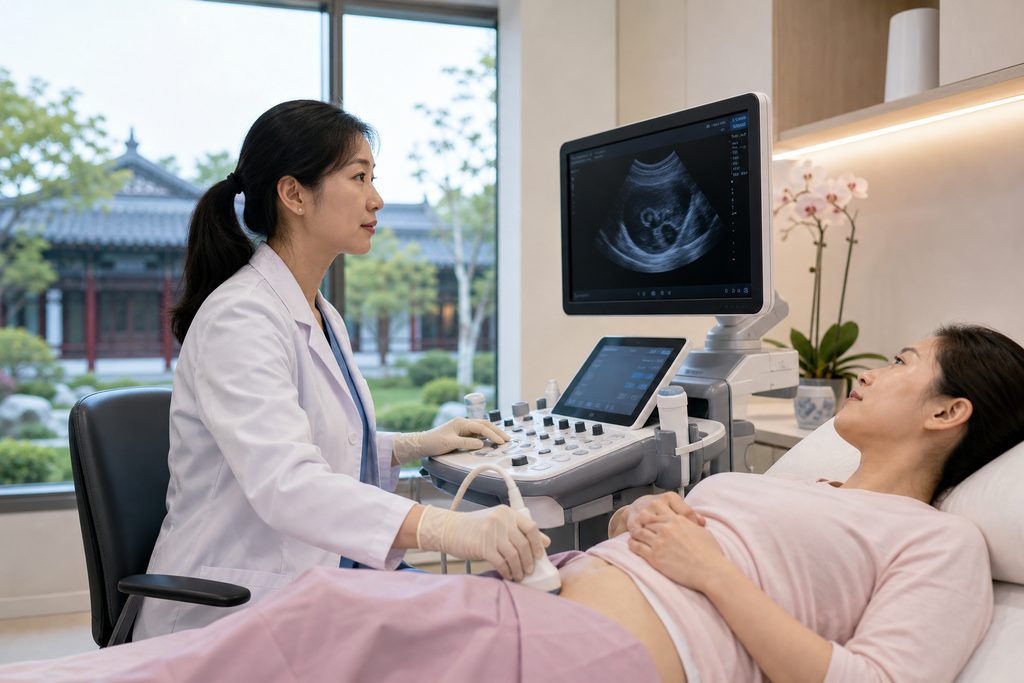
Ovarian cancer is uncommon but disproportionately deadly. The American Cancer Society estimates roughly 1 in 78 women will develop it in their lifetime, and because early symptoms are vague — bloating, pelvic pressure, feeling full quickly — about 60% of cases are found after the cancer has already spread beyond the ovary. That single number explains why so many women search for screening options abroad. The ovarian cancer screening cost China hospitals charge is often a fraction of U.S. pricing, but cost is the easy part. The harder question is what screening can and cannot tell you, and how a foreigner actually gets it done in a Chinese hospital.
This guide covers both. We will walk through the tests that exist, what they cost in Beijing and Shanghai, which hospitals are worth your time, and the practical mechanics — visa category, registration, language — that trip up first-time medical travelers.
Ovarian Cancer Screening in China: The Short Answer
A basic screening package — transvaginal ultrasound plus a CA125 blood test — typically runs $80 to $250 at a top-tier Chinese public hospital, and $300 to $700 at a private international clinic. That is the number most people come for.
But here is the caveat that matters more than the price. No country, including China, has a validated general-population screening program for ovarian cancer. The U.S. Preventive Services Task Force recommends against screening average-risk women, because the two main tools — CA125 and ultrasound — produce too many false positives and have not been shown to reduce deaths in that group. What China offers is not a magic screening test. It is fast, affordable access to the same diagnostic tools used everywhere else, often within days rather than months.
Key takeaway: Screening in China is about speed, cost, and access — not a superior test. If you are average-risk with no symptoms, most guidelines say you do not need screening at all. If you are high-risk or symptomatic, China’s diagnostic pathway can move quickly.
Who This Is Right For — and Who It Isn’t
Screening decisions are medical decisions, and they depend on your personal and family history. Broadly speaking:
Usually a reasonable candidate:
- You carry a known BRCA1 or BRCA2 mutation, or have Lynch syndrome
- You have a strong family history — a mother, sister, or daughter with ovarian or breast cancer
- You have persistent symptoms (bloating, pelvic pain, early satiety) that have lasted more than two weeks
- You are already in China for other reasons and want a baseline evaluation
- You have been told you need follow-up imaging and cannot get an appointment at home within a reasonable window
Probably not the right move:
- You are average-risk, symptom-free, and simply want “peace of mind” — screening in this group is more likely to cause harm through unnecessary surgery than to save a life
- You are looking for a test that definitively rules cancer out. None exists
- You have an acute problem — severe pain, heavy bleeding, fever. That is an emergency, not a screening question
Being honest about the second list is what makes the first list worth trusting. A clinic that tells every woman she needs screening is selling, not advising.
The Options, Compared
If you are weighing where to have this done, the table below compares the realistic paths. Prices are typical ranges and vary by hospital and case complexity.
| Option | Typical Cost (USD) | Wait Time | Language Support | Best For |
|---|---|---|---|---|
| U.S. academic center | $1,200–$3,500 | 3–8 weeks | Native English | Insurance-covered, established care team |
| Western Europe (private) | $700–$2,000 | 2–6 weeks | Varies by country | EU residents with local coverage |
| China — top public hospital, standard track | $80–$250 | Same day to 1 week | Limited; interpreter needed | Cost-sensitive, flexible travelers |
| China — public hospital international/VIP unit | $400–$900 | 2–7 days | English-speaking staff | Foreigners who want a smoother process |
| China — private international hospital | $300–$700 | 1–5 days | Full English service | Direct insurance billing, Western-style care |
Which column suits you depends on two things: how much hand-holding you want, and whether you are paying out of pocket. If you have international insurance that reimburses, the private international hospitals are the least friction. If you are self-paying and cost is the driver, the public hospital standard track is where the savings live — but you will need help navigating it.
Is Ovarian Cancer Screening Reliable in China?
This is the question people ask quietly, and it deserves a straight answer. The reliability of ovarian cancer screening in China is essentially the same as anywhere else, because the tools are the same tools. A transvaginal ultrasound performed on a modern machine at a major Chinese hospital is not inferior to one performed in Boston. CA125 is a standardized blood assay.
What differs is the system around the test. China’s top hospitals are enormous — some see more than 10,000 outpatient visits a day — and the workflow is not designed around a foreigner who does not speak Mandarin. Registration, payment, and queueing all happen in Chinese. That is a logistics problem, not a quality problem, but it is a real one.
One more thing worth knowing: CA125 is not specific to ovarian cancer. It rises with endometriosis, fibroids, pregnancy, and even menstruation. A single elevated result means very little on its own. Good practice combines CA125 with ultrasound, and interprets both against your history. If a clinic hands you a CA125 number and a diagnosis in the same visit, be skeptical.
What It Costs — and What Drives the Price
For those specifically comparing the ovarian cancer screening cost, China’s advantage is real but narrower than headlines suggest. Here is a realistic breakdown.
| Test / Service | Public Hospital (USD) | Private International (USD) |
|---|---|---|
| CA125 blood test | $15–$40 | $60–$120 |
| Transvaginal ultrasound | $40–$120 | $150–$350 |
| Pelvic MRI (if indicated) | $150–$400 | $500–$1,200 |
| Consultation with gynecologic oncologist | $15–$60 | $150–$400 |
| Full screening package | $80–$250 | $300–$700 |
So how much does a CA125 test cost in Shanghai, specifically? At a major public hospital, expect the equivalent of $15 to $40. At a private international clinic like United Family or Jiahui, $60 to $120. The gap reflects convenience and English service, not test quality.
What drives the variance upward: whether you need MRI, whether a specialist is involved, and whether you choose the international/VIP track, which typically runs 1.5 to 2 times the standard public price. What drives it downward: no insurance markup, no facility fee culture, and government price controls on public hospital services.
Prices above are reference ranges only. Final cost depends on the hospital, the tests your physician orders, and case complexity. Always confirm with the hospital before committing.
Where to Go: Finding the Best Cancer Screening Hospital in Beijing and Beyond
If you are searching for the best cancer screening hospital Beijing has to offer, the shortlist runs through the same institutions that dominate China’s national rankings. The Fudan Hospital Ranking — China’s closest equivalent to U.S. News hospital rankings — places its Top 100 hospitals across 23 cities, with Beijing hosting the most (21) and Shanghai close behind (18).
For gynecologic oncology specifically, look for hospitals ranked in the specialty reputation list for obstetrics and gynecology or oncology. Peking Union Medical College Hospital in Beijing and Fudan University Shanghai Cancer Center are the two names that come up most often in that context. Both have international departments accustomed to foreign patients.
Beyond the famous names, our department-by-department rankings let you filter by specialty — useful when you want oncology depth rather than general reputation. And if you prefer a smaller, English-first environment with direct insurance billing, the private international hospital directory covers JCI-accredited facilities in Beijing, Shanghai, Guangzhou, and Shenzhen.
One practical note: at public hospitals, ordinary outpatient appointments cannot be reserved from overseas in advance. You register on the day, in person, in Chinese. The workaround is the hospital’s international or VIP unit, which can coordinate ahead of time — at roughly 1.5 to 2 times the standard price.
Practical Considerations: Visas, Records, and Payment
The medical side is often simpler than the paperwork. Here is what actually applies to a screening trip.
Visa. For short medical visits, the applicable category is the S2 visa, which covers medical treatment and private affairs. Accompanying family members apply under the same category. Note that the M visa is for commercial and trade activities only — it is not a medical visa, despite what some outdated guides claim. Requirements change, so confirm current rules with the nearest Chinese embassy or consulate and bring supporting hospital documentation.
Records. Bring prior imaging on disc, pathology reports, and any genetic testing results. Chinese specialists read English-language medical records routinely, but a translated summary speeds things up considerably.
Payment. Public hospitals require prepayment; insurance is reimbursed afterward. Private international hospitals often bill insurers directly. International credit cards work at most large hospitals, but WeChat Pay and Alipay dominate daily transactions, and both require a Chinese bank setup that visitors typically lack. Carry a card and some cash.
Language. This is the single biggest friction point. A hospital with 10,000 daily outpatients has no spare capacity to guide a non-Mandarin speaker through registration, payment windows, and imaging queues. A bilingual companion — someone who handles the queueing, the payment desk, and the translation — is not a luxury here. It is the difference between a half-day and a three-day ordeal.
Follow-up. Get your imaging and reports in digital form before you leave. If a follow-up scan is needed in six months, having the baseline on hand makes comparison possible wherever you are.
Frequently Asked Questions
At public hospitals, no advance booking is possible for standard outpatient care — you register on arrival. International and VIP departments can sometimes coordinate appointments ahead of time, and private international hospitals generally accept advance bookings. If you are traveling specifically for this, plan around the international track.
No. CA125 can be normal in early-stage ovarian cancer and elevated in many benign conditions. It is one data point, interpreted alongside ultrasound and your clinical history. No blood test currently rules ovarian cancer in or out on its own.
Sometimes, but it depends entirely on your plan. Many international policies reimburse overseas care; most domestic plans do not. Public hospitals require you to pay upfront and file for reimbursement yourself. Private international hospitals are more likely to bill your insurer directly. Check with your insurer before you travel.
At a private international hospital, screening can be completed in a single morning. At a public hospital, expect a full day once you account for registration, queueing, and collecting results. Reports are usually ready within 24 to 48 hours.
An abnormal result is not a diagnosis. The next step is typically a gynecologic oncologist consultation and possibly MRI. If further evaluation is needed, it can usually be arranged within the same hospital system, though any admission or procedure is subject to hospital rules and availability.
Your Next Step
The core message is simple: China offers fast, affordable access to the same screening tools used worldwide — but it is not a shortcut around the limits of those tools, and the logistics require planning. If you are high-risk, symptomatic, or simply want a baseline while you are in the region, the pathway is workable.
We are China Medical Services, a coordination service — not a hospital, and we do not diagnose or treat. Our team connects international patients with more than 340 top-ranked hospitals across 37 cities, handles appointment coordination, and provides bilingual medical companions who stay with you through registration, payment, and results. A good starting point is a written second opinion or a video consultation, which lets a Chinese specialist review your records before you commit to travel. You can start with a free consultation here — no pressure, no obligation, just a conversation about whether this makes sense for your situation.
This article is for general information only and is not medical advice. Screening decisions should be made with a qualified physician who knows your personal and family history.
For more medical information and treatment options in China, visit chinamedservices.com (China Medical Services).
