Cancer Screening in China: English Reports, Real Costs, Top Hospitals
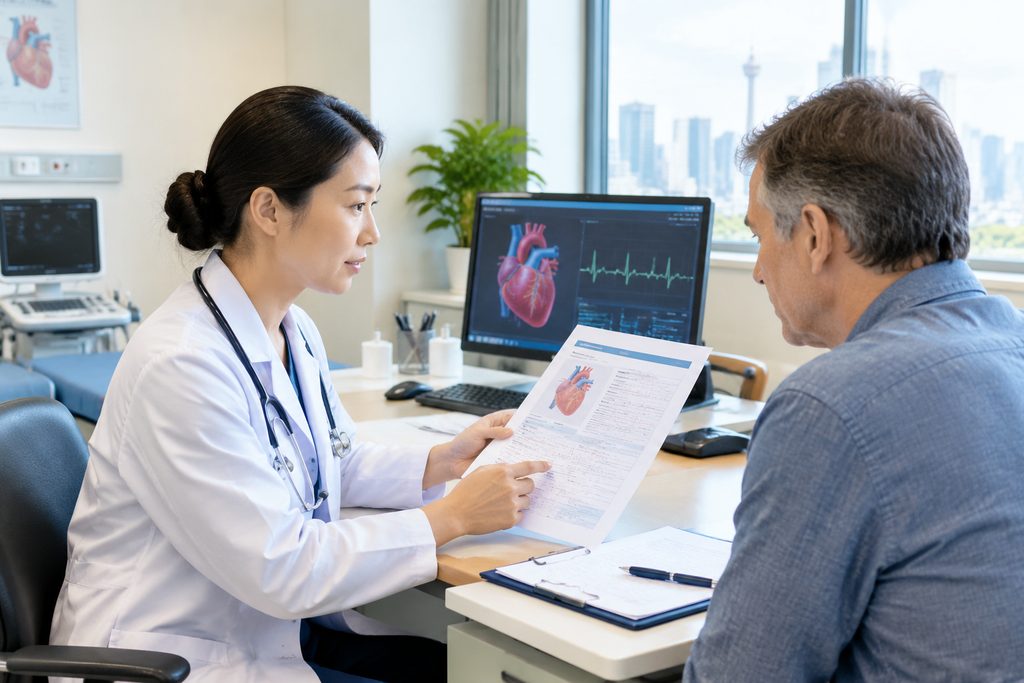
Roughly 4.8 million new cancer cases were diagnosed in China in 2022, according to estimates published in the Journal of the National Cancer Center — a figure that makes the country one of the world’s largest markets for early-detection medicine. That scale has an unexpected side effect for foreigners. It means Chinese hospitals run cancer screening at volumes, and prices, that most Western health systems cannot match. A comprehensive self-pay screening package at a top-tier Chinese hospital often lands between $500 and $2,500, with English-language reports included at most international departments. Cancer screening in China is not a fringe service anymore. It has become a legitimate option for expats, medical travelers, and anyone facing a long wait or a large bill at home.
But the details matter enormously. Which hospital. Which package. Whether the report will be usable by your doctor back home. Get those wrong, and you have spent money on paperwork nobody can read.
Cancer Screening in China: The Short Answer
A full-body cancer screening package in China typically costs $500 to $2,500 at public tertiary hospitals, and $1,500 to $5,000 at private international hospitals. English reports are standard at international departments and private facilities. Turnaround runs three to ten business days.
The caveat: “full-body screening” is a marketing phrase, not a medical one. No scan detects every cancer. What you actually get — and what it is worth — depends on your age, risk factors, and family history. A 35-year-old with no symptoms needs a very different package than a 58-year-old smoker. Chinese hospitals will happily sell you the larger package. Whether you need it is a separate question.
Who This Is Right For — and Who It Isn’t
Screening is a tool for finding disease before symptoms appear. That makes it useful for some people and close to useless for others.
Usually a reasonable fit:
- Adults over 40 who have never had a structured screening workup
- Expats and long-term residents in China who want care in English
- People with a family history of a specific cancer (gastric, colorectal, liver, breast, lung)
- Patients whose home country has long waits for colonoscopy, MRI, or low-dose CT
- Anyone who needs a baseline record for future comparison
Probably not the right move:
- Anyone with active symptoms — unexplained weight loss, bleeding, a persistent lump. That is diagnosis, not screening, and it needs a specialist, not a package.
- Patients who cannot travel or tolerate the procedures involved
- People expecting a single test to rule out cancer. It cannot.
- Anyone whose home insurance will not reimburse overseas screening — check first
If you fall into the second group, staying home and seeing your own physician is genuinely the better path. We say that plainly because it is true.
The Options, Compared
Here is how the main routes stack up on cost and what you actually receive.
| Option | Typical Cost (USD) | English Report | Wait Time | Best For |
|---|---|---|---|---|
| Public tertiary hospital, standard package | $500–$1,200 | Often, at international dept. | 1–3 weeks | Budget-conscious, asymptomatic adults |
| Public tertiary hospital, premium package | $1,200–$2,500 | Yes | 1–2 weeks | Detailed imaging, family history |
| Private international hospital | $1,500–$5,000 | Yes, native-level | 3–7 days | Insurance billing, comfort, speed |
| U.S. equivalent executive physical | $2,500–$8,000+ | Yes | 4–12 weeks | Comparison baseline |
Which column suits you? If you are paying cash and have no symptoms, the public premium tier is the sweet spot — top equipment, real specialists reading the images, a fraction of U.S. pricing. If your insurer reimburses overseas care or you want a single English-speaking point of contact, the private tier earns its premium. The U.S. column is there for one reason: to show the gap.
Why English Reports Are the Real Question
Everyone asks about price first. The smarter question is whether the output will be usable.
A Chinese screening report from a public hospital is written in Chinese, structured for Chinese clinicians, and often uses terminology that does not map cleanly onto Western reporting conventions. A tumor marker flagged as mildly elevated may be clinically meaningless in context — but if your physician in Chicago or Manchester cannot read the context, you have created anxiety rather than clarity.
This is where the international department matters. Hospitals with dedicated international wings — several in Beijing and Shanghai among them — produce bilingual or fully English reports and assign case coordinators who can explain findings by phone. The oncology department rankings on our site list which facilities maintain this capability, sorted by specialty reputation.
One practical step: ask for the imaging on disc, not just the written report. Radiologists abroad can re-read a CT or MRI themselves. A PDF summary alone limits them.
What It Costs — and What Drives the Variance
Screening cost in China is driven by four things: imaging modality, the number of tumor markers tested, whether endoscopy is included, and the hospital’s tier.
A basic package — blood work, ultrasound, chest X-ray, standard tumor markers — sits at the low end. Add low-dose chest CT, contrast-enhanced abdominal MRI, and a colonoscopy with sedation, and you are at the top of the public range. Gastroscopy and colonoscopy are the two biggest single line items, and also the two with the most genuine diagnostic value for adults over 45.
What is typically included: consultations, the tests themselves, a written report, and a follow-up appointment to discuss findings. What usually is not: treatment of anything found, additional imaging ordered on the spot, medication, and interpretation by an independent physician in your home country.
Payment at public hospitals is generally upfront, with insurance reimbursement handled afterward by you. Private international hospitals frequently bill insurers directly — a real advantage if you carry international coverage.
Practical Considerations: Visas, Records, and Follow-Up
For a short screening trip, the applicable visa category is S2, used for short-stay medical treatment and private affairs, subject to current embassy and consulate requirements. Accompanying family members apply under the same category. Note that the M visa is for commercial and trade activity and has nothing to do with medical travel — a distinction that trips up a surprising number of applicants.
Bring your records. Prior imaging, pathology reports, and medication lists should be translated in advance where possible. Chinese specialists read English medical literature routinely, but a complete history saves time and prevents redundant testing.
Language is the practical hurdle most people underestimate. Top Chinese hospitals handle tens of thousands of outpatient visits daily. Signage, queues, and payment systems assume Chinese. If you do not speak Mandarin, you will need help — whether from a bilingual friend or a professional companion service. That is not a sales pitch, it is an observation about how these hospitals physically operate.
Follow-up after you fly home is the last piece. Get your images on disc, your report in English, and a contact at the hospital’s international office for any later questions. Then hand everything to your own physician. They own your ongoing care.
Frequently Asked Questions
The equipment and pathology at top-tier Chinese hospitals are on par with major Western centers — several rank among the world’s busiest for imaging volume. Reliability depends far more on which hospital and which package than on the country. A premium package at a Fudan-ranked facility is a different product from a cheap walk-in clinic screening. Choose the facility, not the price.
Expect $500 to $2,500 at public tertiary hospitals and $1,500 to $5,000 at private international hospitals, depending on whether endoscopy and advanced imaging are included. Prices vary by hospital and case complexity, and final quotes come after the hospital reviews what you actually need.
Private international hospitals generally accept advance bookings directly. Public hospitals are stricter — standard outpatient registration typically happens on the day, though international departments can often arrange appointments in advance. This is one of the clearest practical differences between the two tiers, and it shapes how far ahead you should plan.
Most will accept it as a data point, particularly if imaging is provided on disc. Some will want to repeat specific tests. That is normal and not a reflection on the original report — physicians prefer their own reference standards. Bring both the English report and the raw images.
Your Next Step
Cancer screening in China offers real value — genuine specialists, modern equipment, English reporting at the right facilities, and costs that often run a fraction of Western pricing. The catch is navigation. Choosing the wrong tier, arriving without records, or leaving without usable documentation turns a good decision into an expensive one.
We are China Medical Services, a coordination service, not a hospital and not a provider of medical advice. We help international patients match with appropriate hospitals, arrange written second opinions and video consultations, coordinate appointments, and provide bilingual accompaniment through the process. If you would like to talk through whether screening in China makes sense for your situation, start with a free consultation — no pressure, and no obligation to proceed.
This article is for general information only and does not constitute medical advice. Screening decisions should be made with a qualified physician who knows your history. Prices are indicative and vary by hospital and case complexity.
For more medical information and treatment options in China, visit chinamedservices.com (China Medical Services).
