Is a Whole Body Scan Worth It in China: Costs, Accuracy, and Honest Limits
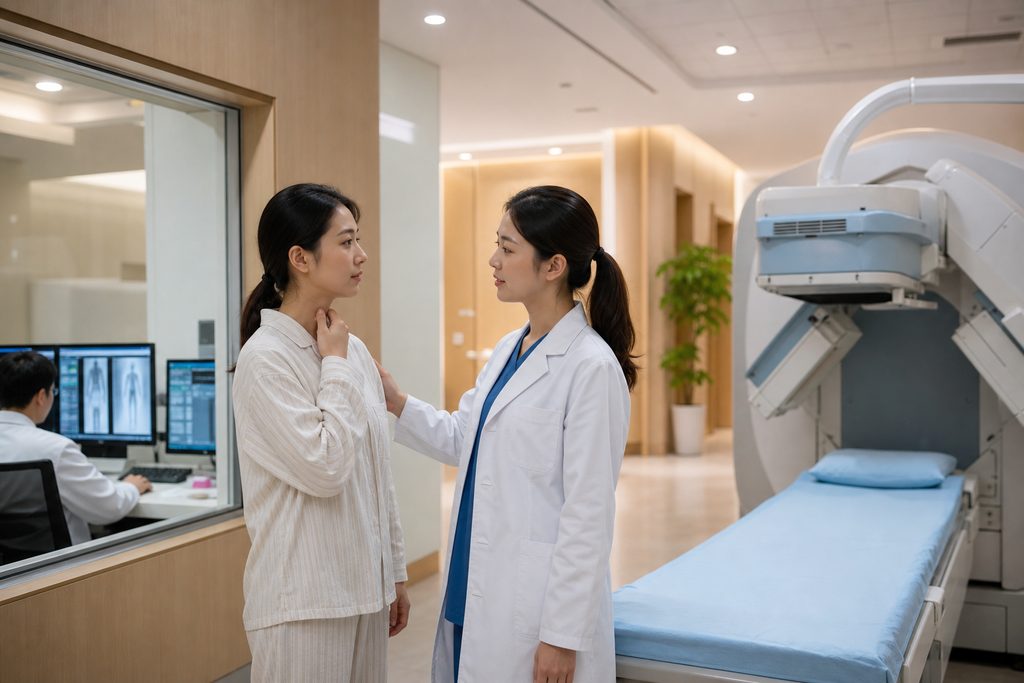
Key Takeaways
- A whole body scan in China typically runs $300 to $2,500 depending on the hospital tier and imaging package — often 60-80% less than comparable US executive screening.
- Top Chinese hospitals perform these scans at enormous volume, which keeps prices low and equipment current, but volume alone does not make a scan medically necessary.
- The real limitation is not the machine — it is what a scan can and cannot prove. Whole body imaging finds incidental findings in a large share of healthy adults, and most of those turn out to be harmless.
- Anyone considering this should understand the difference between a legitimate diagnostic scan ordered for symptoms and a self-referred “peace of mind” package before spending money.
A whole body scan is a set of imaging tests — usually MRI, CT, ultrasound, or a combination — that checks many regions of the body in one session. That is the plain definition. It sounds simple. What it actually produces is a stack of images showing hundreds of structures, most of which are normal, and a few of which may be flagged as “something to look at.”
That gap between “image taken” and “question answered” is where most of the confusion lives. When people ask whether a whole body scan is worth it in China, they are usually asking two different questions at once. First: is the scan itself a good idea? Second: is China a sensible place to get one? The answers are not the same, and mixing them up leads to bad decisions.
We help international patients navigate Chinese hospitals every week, and this is one of the most common requests we field. So let us separate the medical question from the logistics question, with real numbers.
The Problem: Why “Peace of Mind” Screening Often Backfires
China has more than 35,000 hospitals. The top tier — the ones ranked by the Fudan Hospital Ranking and accredited by JCI — operate at a scale Western hospitals rarely match. A single large tertiary hospital in Beijing or Shanghai may run dozens of MRI and CT machines and complete thousands of scans per day.
That volume has two effects. It keeps the equipment current, because machines are replaced on short cycles. And it spreads fixed costs across far more patients, which is a major reason the whole body scan cost China patients pay sits well below US or European pricing.
The cost advantage is real, not a quality compromise
Lower price does not automatically mean lower quality — but it is fair to ask why the gap exists. The reasons are structural. Labor costs for radiologists, technicians, and support staff are lower. Hospitals buy equipment in enormous quantities. And the sheer number of scans performed per machine per day improves efficiency.
What you should verify is not the price but the accreditation. A JCI-accredited private international hospital and a top public tertiary hospital both deliver solid imaging. A small clinic advertising a cheap “full body check” may not.
Speed of access
In many Western systems, a non-urgent MRI can take weeks or months to schedule. In China’s top hospitals, a self-pay health screening package can often be arranged within days, particularly through the international or VIP department. That speed is a genuine advantage for people who want answers sooner rather than later.
Whole Body Scan Cost China: What You Actually Pay
Prices vary by hospital tier, city, and what the package includes. The table below reflects typical ranges for international patients paying out of pocket. Treat these as directional, not quoted — final pricing depends on the hospital and the specific protocol.
| Package Type | Typical Price (USD) | What It Usually Includes |
|---|---|---|
| Basic health screening (public tertiary) | $300 – $600 | Blood panel, ultrasound, chest X-ray, ECG |
| Enhanced screening with CT | $600 – $1,200 | Adds low-dose chest CT, abdominal ultrasound, tumor markers |
| Whole body MRI (private international hospital) | $1,500 – $2,500 | Full-body MRI, physician review, English report |
| Premium executive package (top-tier hospital) | $1,200 – $2,000 | MRI + CT + endoscopy options + specialist consultation |
For comparison, a comparable whole body MRI in the United States frequently runs $2,500 to $5,000, and executive screening packages at major US academic centers can exceed $5,000. That gap — often 60% to 80% — is the single biggest reason international patients consider China for this kind of imaging.
One caveat worth stating plainly: the cheapest option is rarely the best one. A $300 package at a small clinic and a $2,000 package at a top-ranked hospital are not the same product, even if both say “whole body.”
Whole Body Scan Price Shanghai vs. Beijing: Where to Go
Both cities have world-class imaging, and the price difference between them is usually modest — often under 15%. The bigger variable is the type of hospital.
Beijing tends to have the deepest concentration of top public tertiary hospitals. The Fudan Top 100 list includes 21 hospitals in Beijing, the highest of any Chinese city. That means more options, more competition, and often the most advanced imaging protocols. If you are searching for the best hospitals for whole body scan Beijing offers, the concentration of academic medical centers is the reason.
Shanghai, with 18 Fudan-ranked hospitals, is close behind and has a strong ecosystem of private international hospitals with English-speaking staff and direct insurance billing. For international patients who prioritize comfort and language, Shanghai’s private sector is often the smoother experience.
Guangzhou, with 10 ranked hospitals, is a solid third option and often slightly cheaper.
If you want to compare specific institutions, our directory of Fudan-ranked hospitals by city breaks them down by tier, and the specialty rankings show which hospitals lead in radiology and oncology.
How Accurate Are Whole Body Scans in China?
Accuracy depends on three things: the imaging modality, the radiologist reading it, and the question being asked.
On equipment and technique, top Chinese hospitals are on par with leading Western centers. A 3-Tesla MRI in Shanghai is the same machine as a 3-Tesla MRI in Boston. The radiologists at major academic hospitals read high volumes and are experienced.
Where accuracy gets complicated is interpretation. A whole body scan generates a lot of data, and some of it will be ambiguous. A small thyroid nodule, a benign cyst, a minor lymph node — these are common and usually harmless, but they require judgment to classify. That is why the quality of the radiologist and the follow-up pathway matters as much as the scanner.
There is also a language issue. If you do not read Chinese, you need a properly translated report and someone who can explain what the findings mean in context. A number on a page without interpretation is not useful — it can be actively misleading.
Practical Considerations: Visa, Payment, and Follow-Up
If you decide to proceed, here is what the logistics actually look like.
Visa. Foreigners traveling to China for medical treatment typically use the S2 visa, which covers short-stay medical treatment and private affairs. Family members accompanying a patient generally apply under the same category. Note that the M visa is for commercial and trade activities and is not the right category for medical travel. Requirements change, so confirm current rules with the nearest Chinese embassy or consulate and bring supporting documents from the hospital.
Booking. Most public hospitals in China do not allow overseas patients to book a standard outpatient slot in advance. Appointments are often same-day, and surgical procedures require an in-person consultation first. The exception is the international or VIP department, which can sometimes arrange appointments ahead of time. This is the single most common source of confusion for first-time medical travelers, and it is worth planning around.
Payment. Public hospitals generally require prepayment, with insurance reimbursement handled afterward. Private international hospitals often bill insurers directly. Bring a card that works internationally and confirm accepted payment methods before you arrive.
Follow-up. If a scan finds something that needs monitoring, you will want a plan for repeat imaging. Ask the hospital how they handle follow-up for international patients and whether remote review is possible.
For a broader walkthrough of how the process works, see our guide to arranging medical care in China.
Frequently Asked Questions
Is a whole body scan actually recommended for healthy people?
Most major medical bodies, including the American College of Radiology, do not recommend whole body imaging for asymptomatic adults without specific risk factors. The reason is that incidental findings are common and often lead to unnecessary follow-up. If you have symptoms or a family history that concerns you, a targeted scan ordered by a physician is usually more useful than a blanket whole body package.
How much does a whole body scan cost in China compared to the US?
Typically $300 to $2,500 in China versus $2,500 to $5,000 or more in the US, depending on the package and hospital tier. The gap is largest for MRI-based screening. Prices vary by hospital and case complexity, so always request a written quote before committing.
Can I book a whole body scan in China before I arrive?
Sometimes. Standard public hospital appointments usually cannot be reserved from overseas, but international and VIP departments at major hospitals can often arrange screening packages in advance. This is where coordination support genuinely helps, because the rules differ from hospital to hospital.
What happens if the scan finds something?
You will typically be advised to do follow-up imaging or see a specialist. This is normal and not necessarily alarming — most incidental findings are benign. The important thing is to have a clear pathway for what comes next, ideally arranged before you leave China.
Your Next Step
The short version: a whole body scan in China is affordable, fast, and technically excellent — but whether it is worth it depends on why you want it, not where you get it. If you have symptoms, get a targeted scan. If you want reassurance, understand the trade-offs first.
We are China Medical Services, a coordination service that helps international patients navigate Chinese hospitals. We are not a hospital and we do not provide diagnoses or medical advice. What we do is help you understand your options, connect you with the right institution, and handle the logistics so the process is less confusing.
If you would like to talk through whether imaging in China makes sense for your situation, you can start a free consultation here — no pressure, just a conversation.
For more medical information and treatment options in China, visit chinamedservices.com (China Medical Services).
