Xiamen University First Affiliated Hospital: Coastal Fujian Medical Tourism Health Screening
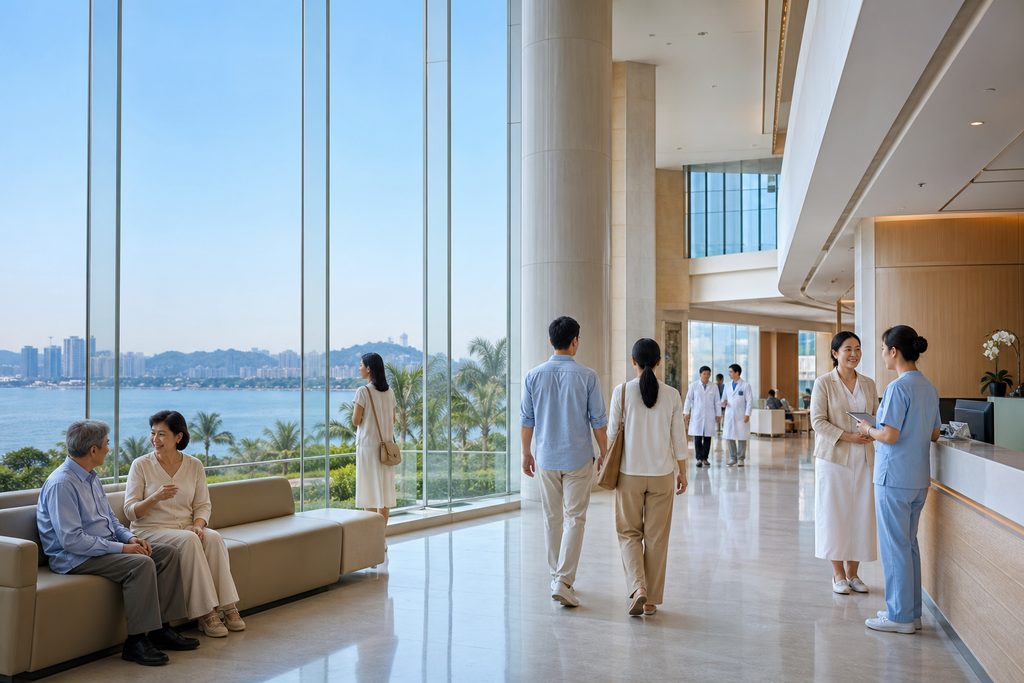
Xiamen University First Affiliated Hospital: Coastal Fujian Medical Tourism Health Screening
Key Takeaways
- A comprehensive executive health screening at Xiamen University First Affiliated Hospital typically costs between $300 and $1,500 USD, depending on the depth of the package — significantly less than comparable Western programs that often start at $3,000.
- This is a legitimate, Fudan-ranked teaching hospital with over 2,500 beds and a dedicated VIP health management center. The technology is modern. The clinical expertise is real. But the patient experience is designed for a Chinese-speaking population.
- Language is the single biggest barrier. Registration forms, signage, and verbal instructions default to Mandarin and the local Minnan dialect. Without a bilingual companion, a health screening here can become a day of confusion rather than clarity.
- International patients should never walk in cold. Structured coordination through the hospital’s international channel or a third-party service is the difference between a smooth, valuable screening and a wasted morning.
The Problem: A Yearly Physical Isn’t Enough — And the West Charges a Premium for More
You eat well. You exercise. You get your annual physical. And yet, that nagging thought persists: what did the standard blood panel miss? The reality is that a routine Western physical rarely goes deep enough to catch the silent threats. Coronary artery disease. Early-stage liver fibrosis. Tiny thyroid nodules that have no business being there.
A truly comprehensive executive screening — the kind that runs a CT coronary calcium score, a full tumor marker panel, and a high-resolution ultrasound of every major organ — is expensive in the United States or Europe. Prices at private clinics in London or New York routinely cross $4,000. Some hit $8,000 for the “platinum” packages. Many patients simply cannot justify that cost. So they skip it. And the silent threats stay silent until they’re not.
This is where Fujian province enters the conversation. Not as a budget destination. As a value destination. The health screening package cost Xiamen hospitals offer is structurally lower — not because of corner-cutting, but because of a fundamentally different healthcare economic model. The question is whether the savings translate to a reliable experience for someone who doesn’t speak Chinese. The answer is yes. But only with the right preparation.
Who We Are
We are China Medical Services. We are not a hospital. We do not employ doctors, interpret lab results, or offer medical advice of any kind. What we do is solve the logistical puzzle that stands between international patients and China’s top-tier medical institutions. Our team connects you with 340+ Fudan-ranked and JCI-accredited hospitals across 37 Chinese cities. We handle the pre-arrival coordination, the on-the-ground bilingual support, and the administrative friction that makes navigating a Chinese hospital alone so difficult. Think of us as your local operational team — we make sure you walk into the right department, at the right time, with someone who speaks both languages standing beside you.
Why Xiamen University First Affiliated Hospital Makes Sense for a Serious Health Screening
Xiamen University First Affiliated Hospital is not a small coastal clinic. It’s a massive tertiary teaching hospital — one of the anchor medical institutions in Fujian province. The numbers tell the story: over 2,500 inpatient beds, more than 4,000 staff, and a daily outpatient volume that rivals major hospitals in Shanghai. This scale matters for health screening. High patient throughput means the imaging equipment is constantly calibrated, the lab processes vast sample volumes daily, and the radiologists see a volume of scans that keeps their diagnostic eyes sharp.
The hospital operates a dedicated Health Management Center — a separate wing specifically designed for executive checkups and full-body screenings. This is not a repurposed outpatient corridor. It’s a purpose-built facility where the entire screening workflow happens in sequence: blood draw, ultrasound, CT, specialist consultation, all within the same physical space. For international patients considering medical tourism health screening Fujian province packages, this integrated setup is a significant operational advantage. You’re not wandering between buildings with a crumpled map.
What Is Included in Executive Health Screening China — The Real Package Breakdown
When patients search for “what is included in executive health screening China,” they’re often comparing against vague Western brochures. The Chinese approach is refreshingly specific. Packages are itemized. You know exactly which biomarkers are tested, which organs are imaged, and how long the process takes.
A standard executive package at Xiamen University First Affiliated Hospital typically includes a complete blood count, liver and kidney function panels, lipid profile, fasting glucose, and tumor markers including CEA, AFP, CA19-9, and PSA (for men) or CA125 (for women). Imaging covers an abdominal ultrasound, thyroid ultrasound, chest X-ray or low-dose CT, and an ECG. For men over 45 or those with cardiac risk factors, a coronary calcium score via CT is often included or available as an add-on. Women’s packages add breast ultrasound or mammography and a gynecological exam with pap smear.
The deeper executive packages layer on more: carotid artery ultrasound, cardiac color Doppler, gastroscopy under sedation, and a full-body MRI option. The entire screening, from registration to final consultation, typically takes 4 to 6 hours for the standard package. Results are compiled into a bound report — in Chinese by default, with English translation available through the international department or your coordination service.
| Screening Component | Standard Package | Executive Package | Notes for International Patients |
|---|---|---|---|
| Blood Panel (CBC, metabolic, lipids) | ✓ | ✓ | Fasting required; results typically same-day |
| Tumor Markers (5-8 indicators) | ✓ | ✓ | CEA, AFP, CA19-9 standard; gender-specific markers included |
| Abdominal Ultrasound | ✓ | ✓ | Liver, gallbladder, pancreas, spleen, kidneys |
| Thyroid Ultrasound | ✓ | ✓ | Critical for women; thyroid nodules common in coastal populations |
| Chest Imaging | X-ray | Low-dose CT | CT preferred for smokers or those over 50 |
| Cardiac Assessment | ECG | ECG + Coronary Calcium Score + Carotid Ultrasound | Coronary calcium score is a powerful predictor of cardiac events |
| Gastroscopy | — | ✓ (sedation) | Requires separate consent; sedation means you need an escort |
| Full-Body MRI | — | Optional add-on | Adds approximately 40-60 minutes; highest radiation-free overview |
| Final Consultation | Brief verbal | Extended with specialist | Mandarin by default; interpreter required for English discussion |
What You Need to Know Before Going Alone
Honesty matters more than marketing. If you fly into Xiamen Gaoqi International Airport and take a taxi to the hospital with no preparation, you will struggle. That’s not a reflection on the hospital’s quality. It’s a reflection of a system designed for a domestic patient population. Here’s what you’ll face.
- Registration and Payment: The hospital’s registration system operates primarily through a WeChat mini-program or on-site kiosks — both in Chinese. Foreign passport holders cannot use the self-service kiosks. You must queue at a specific international window, which may not be staffed when you arrive. Payment is upfront. The hospital accepts UnionPay, WeChat Pay, Alipay, and some international credit cards — but card acceptance is inconsistent. Cash works, but carrying large amounts of RMB is impractical.
- Language Barrier at Every Touchpoint: The phlebotomist drawing your blood speaks Mandarin. The ultrasound technician giving instructions (“hold your breath,” “turn to your left side”) speaks Mandarin. The specialist giving your final consultation speaks Mandarin. There is no English signage in the Health Management Center. There is no English-speaking patient navigator on standby. This is not a criticism — it’s simply the operational reality of a hospital serving a Chinese-speaking community of millions.
- Report Interpretation: Your final report will be in Chinese. Lab reference ranges are printed alongside your results, so a bilingual person can compare numbers easily. But the radiologist’s narrative findings — the sentences that describe a small nodule or a borderline finding — are in dense medical Chinese. Google Translate cannot reliably handle medical terminology. A mistranslation of “borderline” as “benign” is not acceptable when it’s your health on the line.
How We Help You Navigate This
These barriers exist for structural reasons. They are not insurmountable. Our team exists to dissolve them before you ever set foot in the hospital.
Before you travel, we confirm the Xiamen University First Affiliated Hospital medical checkup price for your selected package and lock in your appointment through the hospital’s international channel. We send you the preparation instructions — fasting requirements, medication adjustments, what to bring — in clear English. We arrange your S2 visa invitation documentation if needed.
On the day of your screening, a bilingual medical companion meets you at the hospital entrance. This person handles registration, guides you through each station in the correct sequence, translates every instruction from the clinical staff, and ensures your samples are properly labeled. During the final consultation, your companion translates the specialist’s findings in real time, and you can ask follow-up questions without the frustration of a language barrier. Afterward, we arrange the full English translation of your report — not machine translation, but a medically literate human translation that preserves clinical nuance.
This is not a luxury add-on. In a hospital where no one speaks your language, a bilingual companion is the difference between a screening that delivers actionable insight and a screening that delivers a folder of Chinese documents you cannot read.
Is Xiamen Hospital Health Checkup Reliable for Foreigners? The Evidence-Based Answer
We recommend a minimum of two weeks. This allows time for the hospital to confirm your appointment slot, for us to send you the preparation instructions and visa documentation, and for you to arrange flights and accommodation. Executive packages that include gastroscopy or MRI often require specific time slots that fill in advance. Last-minute bookings are sometimes possible, but they limit your package options and increase the risk that a key specialist is unavailable for the final consultation.
This is the scenario every patient thinks about. If a finding requires follow-up — a suspicious nodule, an elevated tumor marker, a cardiac calcium score that raises red flags — the specialist conducting your final consultation will recommend next steps. Those recommendations will be in the report. If the follow-up requires further imaging or a specialist consultation, we can coordinate that immediately through the hospital’s outpatient department or connect you with a specialist at one of our other partner hospitals. You are never left alone with an abnormal result and no plan. Our companion stays with you through the final consultation and ensures you understand exactly what the finding means and what to do next.
Mostly, but not entirely. Chinese laboratories use reference ranges that are generally aligned with international standards, but there can be minor variations — particularly for lipid targets and certain tumor marker thresholds. The ranges are printed alongside your results, so any competent physician reviewing your report can interpret the values correctly. If you plan to share the results with your doctor at home, the English-translated report includes the reference ranges for every test.
Yes. Xiamen University First Affiliated Hospital performs thousands of endoscopic procedures annually. The gastroscopy is done under sedation, with continuous vital sign monitoring. The endoscopes are reprocessed according to national sterilization protocols. The gastroenterologists are trained in a high-volume teaching hospital environment. If you have specific concerns about sedation or the procedure, you can discuss them with the specialist through your interpreter during the pre-procedure consultation.
Your Next Step
A health screening is not a medical treatment. It’s an information-gathering exercise. The value of that information depends entirely on its accuracy and your ability to understand it. Xiamen University First Affiliated Hospital delivers the clinical accuracy. The understanding part — that’s where a bridge is needed. Our team provides that bridge.
If you’re considering a medical tourism health screening Fujian province packages option, start with a conversation. Tell us what you’re looking for — the depth of screening, your health history, your travel window — and we’ll give you a clear picture of what’s possible, what it costs, and how we’d make it work. No pressure. No sales pitch. Just an honest assessment from people who do this every day.
Learn more about how we support international patients at our patient coordination page, or explore our network of top-ranked Chinese hospitals to see how Xiamen compares with other destinations.
Frequently Asked Questions
Yes. We work with JCI-accredited and major Grade 3A tertiary hospitals that follow international safety standards comparable to top hospitals in the US and Europe. Surgical teams perform high volumes of procedures — often more than their Western counterparts — which studies show leads to better outcomes.
Costs vary by procedure and hospital, but international patients typically save 40-80% compared to US prices — even when factoring in travel and accommodation. A consultation with our team will give you an exact, all-inclusive quote with no hidden fees.
Send us your existing medical reports. The relevant specialty reviews them and gives you a written opinion, including treatment direction and options, before you commit to any travel. From there you can add a video consultation with the doctor, or have us attend an appointment on your behalf.
For more medical information and treatment options in China, visit chinamedservices.com (China Medical Services).
