Medical Treatment in Xiamen China: Coastal Medical Tourism Fujian Province Hospital Access Guide
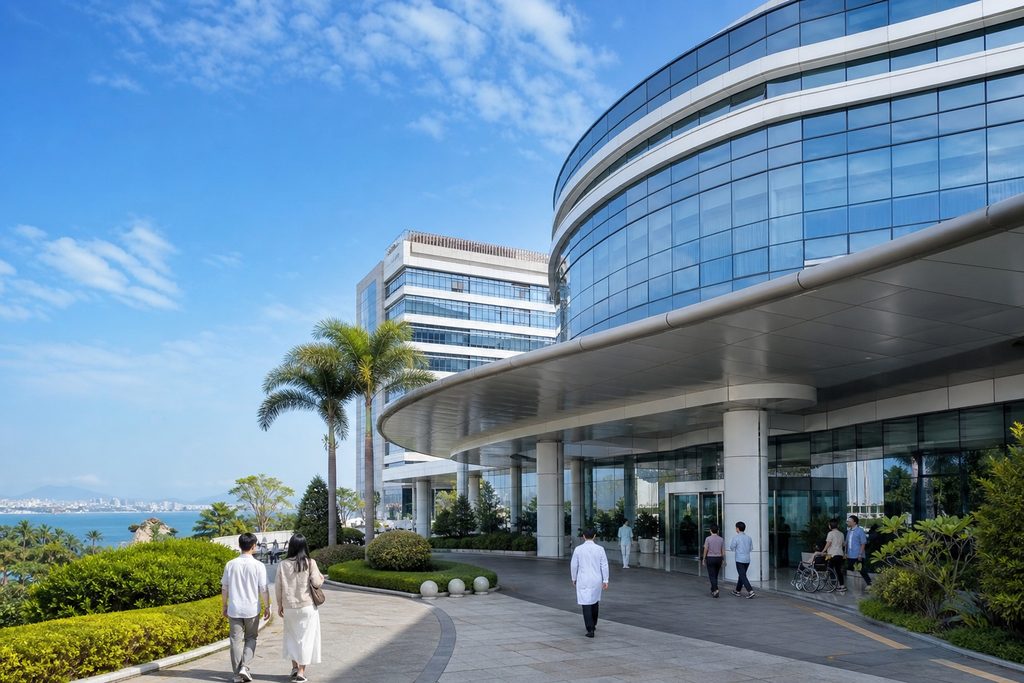
Have you ever wondered if you could combine world-class healthcare with the restorative power of a subtropical island? That is the quiet revolution happening in Xiamen. Most international patients fixate on Beijing or Shanghai. They overlook a coastal city in Fujian province where clinical standards meet the sea breeze—often at a cost that makes the journey undeniably practical.
Key Takeaways
- Xiamen’s top-tier hospitals offer procedures at 60-80% less than US private-sector rates, with cardiac surgery ranging from $12,000 to $22,000.
- The city uniquely combines Fujian province’s strongest international hospital infrastructure with a coastal recovery environment proven to reduce post-operative stress markers.
- Public hospital systems in Xiamen rarely accept direct overseas bookings—walk-in registration is the norm, creating a significant access barrier for non-Mandarin speakers.
- A valid S2 visa (not an M business visa) is mandatory for medical treatment, and processing takes 2-4 weeks with specific hospital invitation documentation.
The Problem: Western Healthcare Costs Are Pushing Patients Overseas
A cardiac bypass in the United States now averages over $120,000. In the UK, the NHS waitlist for orthopedic surgery has ballooned past 7.6 million patients, with some waiting over 18 months for a hip replacement. For the uninsured, the underinsured, or those simply unwilling to wait, the math has become impossible. Medical tourism is no longer a fringe concept. Approximately 1.4 million Americans traveled abroad for care last year. But the destination matters. Southeast Asia offers low prices and inconsistent regulation. China offers something different: massive clinical volume, rigorous public hospital oversight, and a top 5% tier of institutions ranked by the Fudan University hospital rankings that rival any Western academic medical center. Xiamen sits in that top tier. And most people have never heard of it.
Who We Are
We are not a hospital. We do not provide medical treatment, clinical diagnoses, or prescribe therapies. Our team acts as your logistical architects—we bridge the gap between you and China’s 340+ top-ranked hospitals across 37 cities. We handle hospital matching, appointment coordination through official international departments, bilingual medical companionship, and visa guidance. We exist because China’s healthcare system is vast, highly capable, and structurally difficult for foreigners to navigate alone. We make it accessible.
Why Xiamen Delivers Results for International Patients
The question “is Xiamen good for medical treatment” deserves a direct answer. Yes. But not for the reasons most people assume. Xiamen is not China’s largest medical hub. Beijing houses 21 of the Fudan Top 100 hospitals. Shanghai has 18. Xiamen’s strength lies elsewhere—in focused clinical excellence, a rehabilitation-friendly environment, and a concentration of international-facing infrastructure unusual for a second-tier city.
Clinical Volume That Drives Surgical Precision
Chinese surgeons at top-tier hospitals perform procedures at a volume that Western surgeons rarely match. A Xiamen orthopedic surgeon at a major public hospital may complete 300 joint replacements annually. The average US orthopedic surgeon performs roughly 65. This volume gap is not trivial. Studies published in The Lancet and JAMA Surgery have repeatedly correlated higher procedural volume with lower complication rates, shorter operative times, and better long-term outcomes. Xiamen’s flagship hospitals—particularly the First Affiliated Hospital of Xiamen University and Zhongshan Hospital Xiamen—handle patient loads that would overwhelm most Western institutions. That daily intensity forges clinical teams that have seen virtually every presentation of a given condition. They are not guessing. They are executing protocols refined across tens of thousands of cases.
Coastal Recovery as a Clinical Advantage
Recovery is not just about the operating room. Post-surgical outcomes are shaped by stress, sleep quality, air quality, and mental state. Xiamen offers something Beijing and Shanghai cannot: a subtropical maritime climate with some of the cleanest air of any major Chinese city. Gulangyu Island, a car-free UNESCO heritage site just a five-minute ferry from downtown, provides a recovery backdrop that feels almost designed for convalescence. Patients recovering from orthopedic, cardiac, or oncologic procedures can walk palm-lined coastal paths rather than navigate crowded, polluted urban corridors. The psychological benefit is real. Studies on “blue space”—coastal and marine environments—show measurable reductions in cortisol levels and improved pain tolerance compared to urban recovery settings. This is not a luxury. It is a clinical variable that directly affects healing.
Cost Without Compromise
No serious discussion of medical tourism avoids cost. The “Xiamen hospital for foreigners price list” varies by institution, procedure complexity, and whether care is delivered through a public hospital’s international VIP wing or a private international facility. But the structural economics are consistent across Fujian province. Labor costs for highly skilled nurses and support staff are lower than in Western markets. Hospital operational overhead is leaner. Malpractice insurance burdens are a fraction of US levels. The result: a knee replacement in Xiamen typically ranges from $10,000 to $18,000. The same procedure in the US averages $35,000 to $50,000. A comprehensive health checkup package—full blood panel, imaging including CT or MRI, cardiac stress test, specialist consultations—runs $500 to $1,500 in Xiamen. Comparable executive physicals in the US or UK start at $3,000 and climb steeply. These are not discounted rates for compromised care. These are the standard prices at hospitals ranked among China’s top institutions by Fudan University’s hospital assessment panel, with JCI-accredited international departments and English-speaking clinical coordinators.
How to Access Coastal Hospital Xiamen as a Tourist
Searching “how to access coastal hospital Xiamen as tourist” reveals a common misconception. You cannot simply walk into a Chinese public hospital as a foreign tourist and expect seamless care. The system is not built for walk-in international patients. Here is what the actual pathway looks like.
The Visa Reality: S2, Not Tourist
This is the single most important operational detail. You cannot legally enter China for medical treatment on a tourist (L) visa. The correct visa category is S2, specifically annotated for medical purposes. The application requires an invitation letter from the Chinese hospital where you will receive treatment. Not a generic letter. A specific document with the hospital’s official stamp, stating your name, passport number, planned treatment dates, and the nature of the medical service. Obtaining this letter independently is difficult. Hospital international departments are bureaucratic entities. They respond to formal coordination requests, not individual patient emails. Our team secures these invitation documents through established hospital relationships—often within 5-7 business days. The S2 visa itself then takes 2-4 weeks at your local Chinese embassy or consulate. Plan accordingly. This is not a last-minute medical evacuation pathway. It is a planned medical journey.
Fujian Province International Hospital Visa Medical Coordination
The phrase “Fujian province international hospital visa medical” captures exactly what international patients need: a single point of coordination that handles both the clinical scheduling and the visa documentation. Xiamen has three main categories of hospitals accessible to foreigners. The First Affiliated Hospital of Xiamen University operates a dedicated international medical center with English-speaking staff, direct billing arrangements with major international insurers, and VIP inpatient wards designed to Western comfort standards. Zhongshan Hospital Xiamen, despite its public hospital classification, maintains an international outpatient department that handles foreign patient registration, appointment scheduling, and inpatient admission. For those seeking a fully Western-style experience, Xiamen Chang Gung Hospital—part of the Taiwanese Chang Gung Medical Foundation—offers JCI-accredited care with English-proficient physicians, electronic medical records in English, and a patient services desk specifically for international visitors. Each of these institutions can issue the invitation letter required for an S2 visa. But each has different documentation requirements, processing timelines, and departmental gatekeepers. Navigating this alone, in Mandarin, from overseas, is where most independent attempts fail.
Booking a Health Checkup Package in Xiamen
One of the most practical entry points into Xiamen’s medical system is the health checkup. Patients often ask how to “book health checkup package Xiamen China” because the concept of a comprehensive, one-day executive physical has become prohibitively expensive in Western markets. Xiamen’s top hospitals offer tiered packages. A basic screening—blood work, chest X-ray, abdominal ultrasound, ECG, and physician consultation—starts around $300. A premium package adding full-body MRI, cardiac CT calcium scoring, tumor marker panels, and specialist consultations in cardiology, gastroenterology, and gynecology or urology typically ranges from $800 to $1,500. The process matters. These packages are not bookable through online travel agencies. They require direct coordination with the hospital’s health management center. Appointments are scheduled in advance. Fasting requirements, medication adjustments, and interpreter arrangements must be confirmed before arrival. A bilingual medical companion ensures that registration, blood draws, imaging, and result consultations flow without language friction. The entire process—from arrival to receiving a translated summary report—can be completed in one day for basic packages, or two days for comprehensive imaging-inclusive packages.
What You Need to Know Before Going Alone
Honesty builds trust. The barriers to independent medical travel in Xiamen are real. They are not insurmountable, but ignoring them leads to wasted flights, denied registration, and dangerous gaps in care continuity.
- Public Hospital Registration Systems: Chinese public hospitals operate on a real-name registration system tied to a Chinese ID number or a foreign passport. Walk-in registration is theoretically possible but practically chaotic. Top specialists release appointment slots at specific times—often 7:00 AM a week in advance—and they disappear within minutes. Without a local phone number, a Chinese payment app (WeChat Pay or Alipay), and Mandarin fluency, you cannot compete for these slots. The hospital’s international department bypasses this system entirely, but that channel must be opened before you travel.
- Payment and Insurance Friction: Public hospitals in Xiamen require upfront payment. Credit cards are sometimes accepted at international departments, but many public hospital cashiers only process Chinese UnionPay cards or mobile payments. International insurance direct billing is available at Xiamen Chang Gung Hospital and the First Affiliated Hospital’s international wing. Everywhere else, you pay first and seek reimbursement later. Bring a detailed invoice in both Chinese and English—something a bilingual companion can secure at the billing office.
- Medical Records and Continuity: Chinese hospitals do not automatically provide English-language medical records. Discharge summaries, lab results, imaging reports—these are generated in Mandarin. Translating them accurately for your home physician requires medical terminology expertise, not general bilingualism. Incomplete or mistranslated records create dangerous gaps when you return home for follow-up care.
How We Help You Navigate This
These barriers exist for structural reasons, not malice. China’s healthcare system was built to serve 1.4 billion domestic patients. International patients are an afterthought in the public system—welcomed in theory, but not operationally supported. Our role is to bridge that operational gap.
Before you travel, we match your clinical needs to the right Xiamen hospital. We do not guess. We review your medical records, identify the relevant specialty, and confirm which institution’s international department can accommodate your case. We secure the formal invitation letter required for your S2 visa application. We schedule your initial consultation, coordinate with the hospital’s international patient coordinator, and confirm that an English-speaking liaison will be present at registration.
During your stay, a bilingual medical companion accompanies you to every appointment. This person handles registration queues, payment processing, pharmacy pickup, and real-time interpretation between you and your physician. They are not clinical staff. They do not offer medical advice. They ensure that nothing is lost in translation—not your symptom description, not the doctor’s explanation, not the discharge instructions. After your procedure or consultation, we arrange translated medical records, coordinate follow-up telemedicine sessions if needed, and ensure your home physician receives a coherent summary of what occurred in Xiamen.
The “best Xiamen medical tourism agency cost” is not a fixed number. It depends on the complexity of your case, the duration of companionship required, and the hospital coordination involved. Bilingual medical companionship starts from $200 per day. Hospital appointment coordination begins at $300. Comprehensive VIP end-to-end coordination—covering everything from pre-travel consultation to post-discharge follow-up—ranges from $5,000 to $8,000. Video consultations for an initial assessment before committing to travel cost $100 to $300. A written second opinion from a Xiamen specialist runs $300 to $500. And if you upgrade from a remote consultation to on-the-ground coordination within 90 days, every dollar of that initial consultation fee is credited toward the coordination service. This is not a marketing gimmick. It is a structural commitment: we want you to test the waters before diving in, and we remove the financial penalty for doing so.
Frequently Asked Questions
No. This is the most common misunderstanding we encounter. Public hospital outpatient departments in Xiamen operate on same-day registration. Specialist appointments are not bookable from overseas through public channels. You need coordination through the hospital’s international department or VIP wing, which requires advance arrangement, medical record review, and often a deposit. Walking in cold as a foreigner with no Mandarin skills will result in confusion, not treatment.
At the top-tier institutions—the First Affiliated Hospital of Xiamen University, Zhongshan Hospital Xiamen, and Xiamen Chang Gung Hospital—the answer is yes for the specialties they are known for. These hospitals are ranked in the Fudan University hospital assessment system, which evaluates clinical capacity, research output, and reputation among Chinese medical peers. Their oncology, cardiology, and orthopedic departments handle case volumes that produce genuine subspecialty expertise. The equipment is modern. The physicians are trained in evidence-based protocols. The gap is not clinical quality. The gap is in patient experience, language accessibility, and administrative process—all of which can be bridged with proper coordination.
This is the question every patient should ask. Chinese hospitals carry medical liability insurance, and the international departments have established protocols for adverse events. But the legal framework for foreign patients seeking malpractice recourse in China is different from Western systems. This is not a reason to avoid Xiamen. It is a reason to choose your hospital carefully, confirm that the international department has experience with foreign patients, and ensure that your medical records are accurately translated for continuity of care at home. We facilitate all of this. But we are transparent about the legal reality: medical tourism anywhere carries jurisdictional complexity. Go in with eyes open.
For a major procedure like joint replacement or cardiac surgery, plan for a minimum of 3-4 weeks. This includes pre-operative consultation and testing (2-3 days), the procedure itself, inpatient recovery (5-10 days depending on the surgery), and post-discharge monitoring before you are cleared to fly. Xiamen’s coastal environment makes extended recovery genuinely pleasant—many patients choose to stay longer than medically necessary simply because the setting supports healing. For a comprehensive health checkup, 1-2 days is sufficient.
Your Next Step
Xiamen is not the right destination for every medical traveler. But for patients who need high-volume surgical expertise, a recovery environment that actively supports healing, and costs that make treatment financially viable without insurance, it deserves serious consideration. The barriers are real—language, visas, hospital access, payment systems. They are also solvable. That is what we do. If you want to understand whether Xiamen’s hospitals can address your specific medical needs, start with a conversation. No commitment. Just clarity.
Learn more about how we coordinate care across China’s top-ranked hospitals, explore our patient coordination services, or review our network of hospitals across 45 clinical specialties.
For more medical information and treatment options in China, visit chinamedservices.com (China Medical Services).
