Xiamen Chang Gung Hospital: Taiwan-Managed Care on Fujian’s Coast
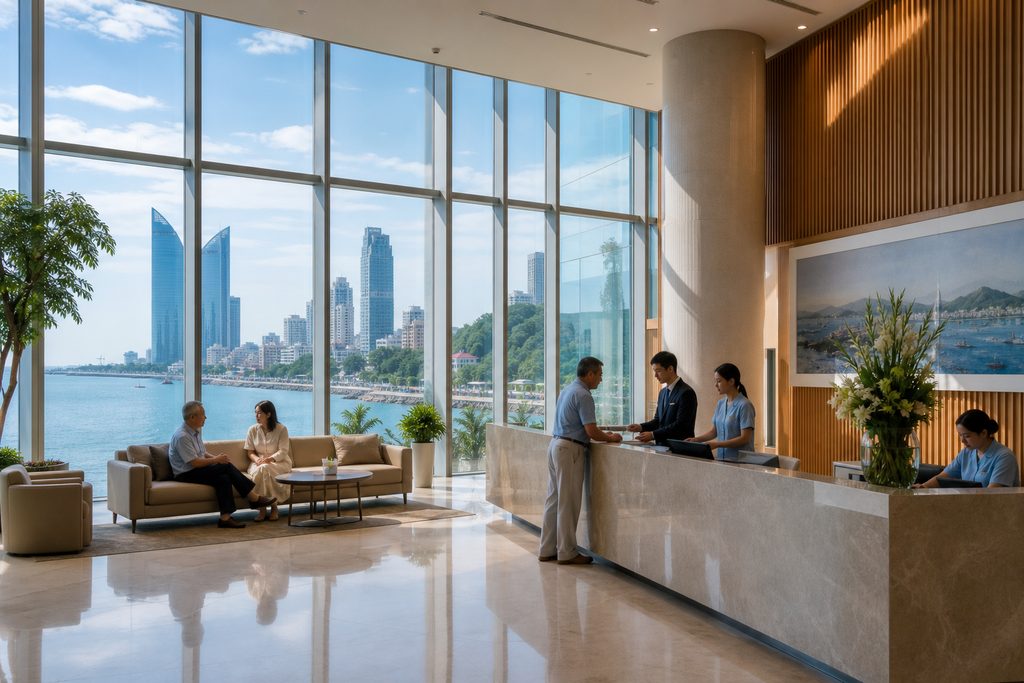
What if the biggest barrier to world-class cancer care wasn’t the quality of the surgeon, but simply the distance you were willing to travel?
A patient in Manila, Jakarta, or Los Angeles facing a complex diagnosis often confronts two grim realities. The first is a local system with wait times that stretch into months. The second is a bill that, even with good insurance, can wipe out a family’s savings. A cardiac bypass in the United States averages over $120,000. In Singapore or Hong Kong, the price tag still hovers in the tens of thousands. These numbers force impossible choices.
But there is a quiet, structurally different option on China’s southeastern coast. It is a hospital built with Taiwanese management DNA, operating under mainland China’s regulatory framework, and actively opening its doors to the world. The Xiamen Chang Gung Hospital international patient price list reflects a model that was designed to bend the cost curve without breaking the standard of care.
Key Takeaways
- Xiamen Chang Gung Hospital is a JCI-accredited, Taiwan-managed facility in Fujian province, offering a documented Xiamen Chang Gung Hospital international patient price list that is typically 60-80% lower than equivalent US care.
- The hospital belongs to the Chang Gung Medical Foundation, a system that performs over 10,000 cancer surgeries annually across its network — volume that directly correlates with better outcomes.
- Navigating payment, visas, and language barriers independently remains a genuine obstacle — the hospital’s international center exists to solve this, but capacity is finite and advance coordination is non-negotiable.
- You cannot simply book a surgery online and show up. A formal medical review, visa processing, and deposit payment must happen first. Understanding this workflow before you book a flight is essential.
The Problem: Cancer Care Costs Are Breaking People — Not Just in the US
The global cancer burden will hit approximately 28.4 million cases by 2040, up from 19.3 million in 2020. That projection comes from the International Agency for Research on Cancer. What the raw numbers hide is the financial toxicity. In the United States, 42% of new cancer patients deplete their entire life savings within two years of diagnosis, according to a study published in the American Journal of Medicine. This is not a developing-world problem. It is a middle-class crisis in the wealthiest nation on earth.
Southeast Asian patients face a different version of the same nightmare. A complex oncology case in Jakarta or Ho Chi Minh City often means a referral to Singapore. The clinical care is excellent. The cost, for a self-paying international patient, is punishing. A course of proton therapy, increasingly standard for certain pediatric and brain tumors, can exceed $70,000 in Singapore. Many families simply cannot raise that capital in time.
What patients need is a hospital that operates on a fundamentally different cost base while maintaining verifiable clinical standards. That means a facility where labor costs, pharmaceutical pricing, and operational overhead reflect local economics — but where protocols, training, and quality control are imported from a more developed healthcare system. That describes the Taiwan-managed hospital Fujian medical tourism packages that have been quietly growing in volume over the past five years.
The core question for any patient researching this path is straightforward: is Xiamen Chang Gung Hospital JCI accredited, and what does that accreditation actually mean for my safety? The answer is yes — and the story behind that accreditation explains why this hospital exists in the first place.
Who We Are
We are not a hospital. We do not provide medical treatment, clinical diagnoses, or second opinions. Our team functions as your logistical architects — we bridge the gap between you and China’s top-tier medical expertise. We handle the coordination that makes treatment abroad possible: hospital matching based on your specific diagnosis, appointment scheduling through official international department channels, visa guidance, bilingual medical companion services, and post-operative recovery planning. We work with 340+ top-ranked hospitals across 37 cities in China. Xiamen Chang Gung is one of the facilities in our network that consistently draws interest from patients researching cost-effective, high-standard care on the Fujian coast. If you are trying to book appointment Xiamen Chang Gung Hospital online, we can explain exactly how that process works — and what must happen before any booking is confirmed.
Why a Taiwan-Managed Hospital on the Mainland Coast Changes the Equation
Xiamen Chang Gung Hospital is not a typical mainland Chinese public hospital. It is a subsidiary of the Chang Gung Medical Foundation, Taiwan’s largest and most respected private healthcare system. The foundation’s flagship, Linkou Chang Gung Memorial Hospital in Taoyuan, handles over 4 million outpatient visits annually and is a major referral center for complex cancer cases across Asia. When the foundation decided to build a hospital in mainland China, they chose Xiamen — a coastal city in Fujian province separated from Taiwan by a narrow strait. The cultural and linguistic continuity is deliberate. So is the operational model.
JCI Accreditation and the Taiwan Standard of Care
Let us answer the accreditation question directly. Xiamen Chang Gung Hospital holds Joint Commission International (JCI) accreditation. JCI is the global benchmark for healthcare quality and patient safety. The survey process evaluates over 1,200 measurable elements, from medication management to infection control to surgical safety checklists. A hospital either meets these standards or it does not — there is no partial credit. For an international patient, JCI accreditation is the single most reliable proxy for safety short of visiting the facility yourself.
Why does this matter more at Xiamen Chang Gung than at a typical Chinese hospital? Because the Taiwan-managed model imports something that is rare in mainland China’s public system: a deeply embedded culture of patient safety reporting. Taiwan’s healthcare system has been influenced by Japanese and American medical education models. Chang Gung’s internal protocols — for tumor board reviews, for surgical timeout procedures, for nursing-to-patient ratios — were developed in Taiwan and replicated in Xiamen. The doctors are a mix of Taiwanese-trained specialists and mainland Chinese physicians who have been credentialed through Chang Gung’s system. The nursing leadership is heavily Taiwanese. The pharmacy and laboratory protocols mirror Linkou’s.
This is not just branding. It is a structural difference in how care is delivered. When a patient researches how much does cancer treatment cost at Xiamen Chang Gung, they are pricing care that is delivered under a quality management system that has been refined over four decades in a developed Asian healthcare market.
Clinical Volume and the Cancer Surgery Advantage
There is a well-established relationship in medicine between the number of times a hospital performs a procedure and how well its patients do. The term is “volume-outcome relationship.” A 2017 study in The Lancet Oncology found that for complex cancer surgeries, moving from a low-volume to a high-volume center reduced 90-day mortality by as much as 40% for certain procedures.
The Chang Gung network’s surgical volumes are extraordinary by any standard. The foundation’s hospitals collectively perform over 10,000 cancer surgeries per year. Xiamen Chang Gung, as part of this network, benefits from shared protocols, cross-training, and a referral culture that funnels complex cases to the specialists who handle them most frequently. The hospital’s oncology strengths include liver cancer, colorectal cancer, head and neck tumors, and gynecologic malignancies — all cancers with high incidence rates in the broader Asian population.
For a patient from Europe or North America, this volume translates into something concrete: your surgeon has almost certainly managed your specific complication before. They have seen the rare intraoperative finding. They have navigated the difficult anatomical variant. That reservoir of experience is difficult to replicate in a lower-volume Western community hospital.
The Cost Structure: Why the Xiamen Chang Gung Hospital International Patient Price List Looks Different
Lower cost does not mean lower quality. It means a different cost structure. A hospital in Fujian province pays local wages to nursing staff, support personnel, and administrative teams. It purchases pharmaceuticals at prices negotiated within China’s national drug procurement system. Its real estate and utility costs reflect Xiamen’s market, not Manhattan’s or Singapore’s. The Chang Gung foundation also operates on a not-for-profit model — surpluses are reinvested into equipment, facilities, and staff training, not distributed to shareholders.
So what do the actual numbers look like? The Xiamen Chang Gung Hospital international patient price list varies by procedure and case complexity. But based on published data from the hospital’s international center and cross-referenced with patient coordinator estimates, here is a representative comparison for common procedures:
| Procedure | Xiamen Chang Gung (USD, est.) | United States (USD, avg.) | Singapore (USD, est.) |
|---|---|---|---|
| Cardiac Bypass (CABG) | $18,000 – $25,000 | $120,000+ | $45,000 – $60,000 |
| Liver Cancer Resection | $12,000 – $18,000 | $65,000 – $90,000 | $35,000 – $50,000 |
| Total Knee Replacement | $10,000 – $15,000 | $35,000 – $50,000 | $22,000 – $30,000 |
| PET-CT Scan (whole body) | $800 – $1,200 | $3,000 – $6,000 | $1,800 – $2,500 |
| Proton Therapy (full course) | $25,000 – $35,000 | $80,000 – $120,000 | $60,000 – $80,000 |
These figures are estimates. The final cost depends on your specific diagnosis, the complexity of your case, the length of your hospital stay, and any complications that arise. But the directional difference is unmistakable. A patient who would spend $120,000 on a cardiac bypass in the US might spend $22,000 in Xiamen — and receive care in a JCI-accredited facility with surgical teams trained in a system that prioritizes volume and protocol adherence.
Xiamen Chang Gung also houses a proton therapy center — one of a limited number in mainland China. Proton therapy is particularly valuable for pediatric cancers and tumors located near critical structures like the optic nerve or brainstem. The cost differential for a full course of proton therapy is substantial enough that some patients find the total cost of travel, accommodation, and treatment in Xiamen is still less than their out-of-pocket maximum at a US proton center.
What You Need to Know Before Going Alone
The clinical case for Xiamen Chang Gung is strong. The operational reality of getting there and receiving care is more complicated than most patients anticipate. Here are the barriers you will face if you attempt to arrange everything independently.
- Visa Requirements: Foreign nationals traveling to China for medical treatment must apply for an S2 visa, which requires an official invitation letter from the hospital. This is not a document you can generate yourself. The hospital’s international center must issue it, and they will only do so after reviewing your medical records and confirming that they can accept your case. Processing times vary by your home country’s Chinese embassy or consulate. Some patients wait three to four weeks for visa approval. The S2 visa is typically issued for 180 days or fewer. If your treatment and recovery will exceed that, you need an S1 visa, which requires additional documentation.
- Payment Systems: China’s domestic payment infrastructure runs on WeChat Pay and Alipay. These platforms are not easily accessible to foreign visitors without a Chinese bank account. While Xiamen Chang Gung’s international center accepts international credit cards and wire transfers, you may find that smaller expenses — meals in the hospital cafeteria, transportation, incidental pharmacy purchases — are difficult to pay for without local payment tools. Cash is accepted but increasingly uncommon. The hospital can advise on this, but the friction is real.
- Language and Documentation: Even at a Taiwan-managed hospital where many senior physicians speak English, the support staff, nursing teams, and administrative personnel predominantly operate in Mandarin and the local Minnan dialect. Your medical records must be translated into Chinese for the hospital’s review. Your consent forms will be in Chinese. Your discharge instructions will be in Chinese. A hospital on Fujian coast with English-speaking doctors solves the physician-communication problem but does not automatically solve the systemic language barrier. This is where a bilingual medical companion becomes not a luxury but a necessity.
- Appointment Logistics: You cannot simply book appointment Xiamen Chang Gung Hospital online the way you would book a hotel room. The hospital’s international patient center requires a formal intake process: submission of medical records, internal review by the relevant department head, a determination of whether the case is appropriate for their facility, a treatment plan and cost estimate, a deposit payment, and only then a confirmed appointment date. This process can take two to four weeks. Patients who book flights before receiving confirmation often find themselves in Xiamen with no scheduled appointment and no recourse.
How We Help You Navigate This
These barriers are not signs of a broken system. They are the natural result of a hospital that prioritizes clinical appropriateness over walk-in convenience. The international patient center at Xiamen Chang Gung exists to manage exactly these workflows. The challenge for most overseas patients is that they do not know how to initiate the conversation, what documents to prepare, or how to interpret the hospital’s response.
Our role begins with your medical records. We collect your diagnostic reports, imaging files, pathology slides, and treatment history. We arrange certified translation into Chinese by medical translators who understand oncology, cardiology, and surgical terminology — not generalist translators who might misinterpret a critical clinical detail. We submit the complete package to Xiamen Chang Gung’s international center and track the review process. If the hospital requests additional information or a specific test before accepting your case, we relay that request clearly and help you fulfill it.
Once the hospital confirms acceptance and provides a treatment plan with a cost estimate, we walk you through the numbers. We explain what each line item means. We help you understand which costs are fixed and which might vary depending on intraoperative findings or recovery complications. We coordinate the deposit payment — typically 30% to 50% of the estimated total — and ensure you receive proper documentation for insurance reimbursement if your policy covers overseas treatment.
Visa support follows. We ensure the hospital’s invitation letter contains the correct personal information, the right treatment purpose code, and the appropriate validity period. We advise on which supporting documents your specific consulate is likely to require. We do not issue visas — only the Chinese embassy or consulate in your country can do that — but we reduce the probability of rejection by getting the paperwork right the first time.
When you arrive in Xiamen, a bilingual medical companion meets you at the airport. This person stays with you through registration, consultation, pre-operative testing, admission, and discharge. They translate not just words but context — explaining what a lab result means in practical terms, clarifying the surgeon’s post-operative instructions, navigating the pharmacy and billing desks. If you need a follow-up appointment or an additional imaging study, they arrange it. If your recovery requires a longer stay in Xiamen than anticipated, they help extend your accommodation and adjust your return flight.
After you return home, we facilitate communication with your treating physician for follow-up questions. If the hospital recommends a six-month CT scan, we help you understand exactly what type of scan is needed so your local provider can order the correct study. The goal is continuity — not a transaction that ends when you board your flight.
Frequently Asked Questions
Yes, Xiamen Chang Gung Hospital holds full JCI accreditation. The JCI survey evaluates the entire hospital — inpatient, outpatient, surgical, diagnostic, and support services. Accreditation is not department-specific. It means the facility as a whole meets international standards for patient safety, medication management, infection control, staff qualifications, and quality improvement. The hospital’s most recent re-accreditation cycle was completed successfully, and JCI accreditation typically requires renewal every three years with unannounced interim surveys possible at any time.
Cancer treatment costs vary because cancer itself varies. A straightforward laparoscopic liver resection for a small, peripherally located tumor might cost $12,000 to $15,000. A complex multi-organ resection requiring a longer ICU stay, advanced intraoperative monitoring, and extended hospitalization could reach $25,000 or more. The Xiamen Chang Gung Hospital international patient price list provides baseline estimates, but the hospital will only issue a binding cost estimate after reviewing your specific imaging, pathology, and medical history. Additional variables include whether you require neoadjuvant chemotherapy before surgery, whether proton therapy is indicated, and whether your recovery is uncomplicated. The hospital’s international center provides an itemized estimate before you commit to travel.
Xiamen Chang Gung operates under mainland China’s medical liability framework. The hospital carries professional liability insurance, and its JCI accreditation requires a formal adverse event reporting and root cause analysis system. If a complication occurs, the hospital’s first obligation is clinical management — stabilizing you and addressing the complication. Financial responsibility for additional treatment costs arising from a documented medical error is handled through the hospital’s patient relations department, and in serious cases, through China’s medical dispute mediation process. We strongly recommend that all international patients carry medical travel insurance that includes coverage for complication management and, if necessary, medical evacuation. This is not because we expect problems — the hospital’s safety record is strong — but because no surgery anywhere in the world carries zero risk, and being financially protected against the worst-case scenario is basic prudence.
You can contact the hospital’s international center directly. They have English-speaking staff and a formal intake process. The reason many patients choose to work with a coordination service is not because the hospital is inaccessible — it is because the process of preparing records, managing translation, interpreting cost estimates, securing visas, and arranging on-ground support is time-consuming and error-prone when handled alone. If you have a straightforward case, speak fluent Mandarin or have a family member who does, and are comfortable navigating Chinese administrative systems, direct contact with the hospital is entirely feasible. If any of those conditions is not met, a coordination service saves time and reduces the risk of miscommunication that could delay or derail your treatment.
Xiamen Chang Gung is strongest in oncology, cardiology, hepatobiliary surgery, and orthopedics. These are the departments where the Chang Gung network’s volume and protocol-driven approach create the clearest advantage. The hospital also offers comprehensive health screening packages that are popular with medical tourists from Southeast Asia. For rare pediatric conditions, complex transplant medicine, or highly specialized neurosurgery, other hospitals in our network — such as those in Beijing or Shanghai — may offer more targeted expertise. The right facility depends on your specific diagnosis. A Taiwan-managed hospital Fujian medical tourism package makes sense when the hospital’s clinical strengths align with your needs and when the cost advantage relative to Singapore, Hong Kong, or your home country is substantial enough to justify travel.
Your Next Step
Xiamen Chang Gung Hospital represents a specific and valuable option in the landscape of international medical travel. It is not the right choice for every patient or every condition. But for someone facing a cancer diagnosis, a major cardiac procedure, or a joint replacement — and staring at a bill that threatens their financial future — it deserves serious investigation. The combination of JCI accreditation, Taiwan-managed clinical protocols, and a cost structure grounded in Fujian’s local economy is difficult to replicate elsewhere.
The most important thing you can do right now is get clear information about whether this hospital — or another in China’s top-tier system — is clinically appropriate for your specific case. That starts with a conversation. No commitment. No pressure. Just an honest assessment of your records and your options. Reach out to our team for a free consultation, and let us help you understand what is possible.
Medical Disclaimer: This article is for informational purposes only and does not constitute medical advice, diagnosis, or treatment recommendation. Always consult a qualified healthcare provider about your specific medical condition. Treatment costs cited are estimates based on publicly available data and patient coordinator reports as of 2026; actual costs vary by hospital, case complexity, and individual clinical circumstances. China Medical Services does not provide medical treatment or clinical diagnoses — we coordinate logistics and facilitate access to qualified healthcare facilities.
For more medical information and treatment options in China, visit chinamedservices.com (China Medical Services).
