Muscle Mass Analysis in China: Booking Made Simple for Patients
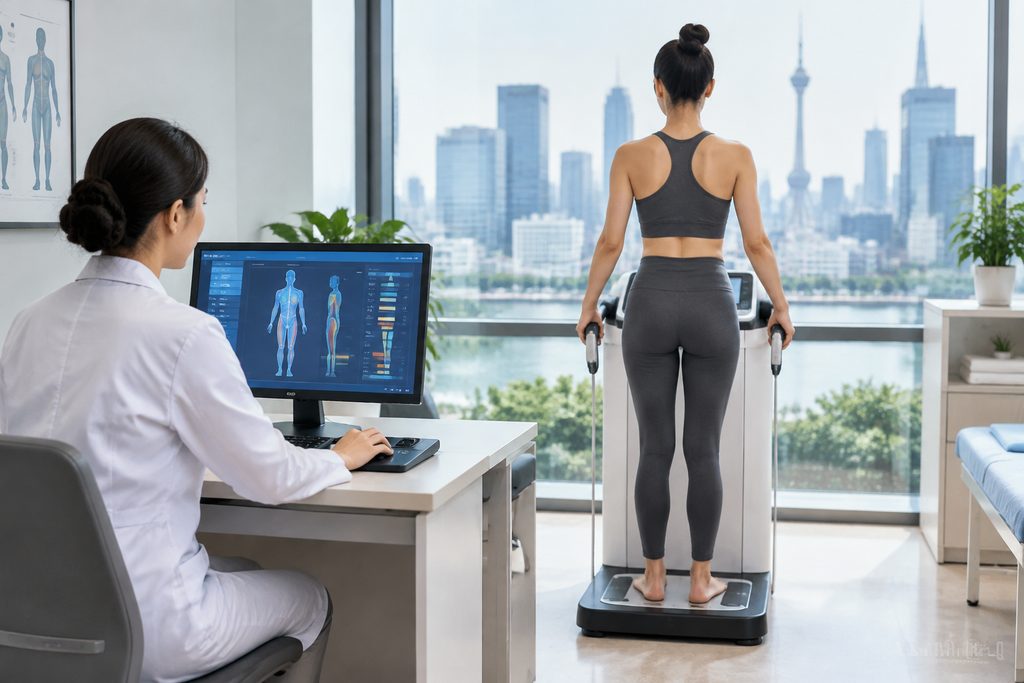
Muscle Mass Analysis in China: Booking Made Simple
When 58-year-old David from Oregon started losing weight without trying, his doctor in Portland ran basic bloodwork, shrugged, and suggested he “keep an eye on it.” What David actually wanted was a full body composition scan — the kind that separates muscle from fat from bone, and tracks whether he was losing the muscle that keeps a person independent. His insurance quoted him $850 for a DEXA scan. A friend mentioned that the same test in China costs a fraction of that. So he started searching, and landed on the question almost every reader of this page is asking: what is the real muscle mass analysis cost China offers, and can a foreigner actually book it without speaking Mandarin?
The short answer: a DEXA body composition scan at a top-tier Chinese hospital typically runs $80–$250, and booking is possible — but not through the same channels Westerners expect. There is no Zocdoc for Chinese public hospitals. That gap is exactly where the confusion begins.
Muscle Mass Analysis Cost China: The Short Answer
Expect to pay between $80 and $250 for a DEXA-based body composition scan at a major Chinese public hospital, and $200 to $500 at a private international clinic. A basic bioelectrical impedance (BIA) analysis — the kind that runs on a standing scale — can cost as little as $15–$40. For comparison, the same DEXA scan in the United States averages $150–$850 depending on the facility, and in the UK private sector runs £150–£300.
Here is the complication. Price is not the hard part. Access is. Most Chinese public hospitals do not accept overseas bookings for outpatient diagnostics in advance. You show up, register on the day, and queue. For a fit, Mandarin-speaking local, that is a minor inconvenience. For a foreigner flying in for a health assessment, it can turn a two-hour appointment into a two-day ordeal.
Who This Is Right For — and Who It Isn’t
Body composition testing has genuine clinical value in specific situations. It also gets oversold. Being honest about the difference saves people a wasted trip.
Typically a good fit:
- Adults over 50 tracking age-related muscle loss (sarcopenia), especially those who have lost weight unintentionally
- Patients managing chronic conditions — type 2 diabetes, kidney disease, cancer recovery — where lean mass affects treatment tolerance
- Athletes and serious recreational lifters who want precise baseline data rather than a gym scale estimate
- People combining the scan with a broader executive health checkup during a China trip
- Anyone whose home country charges prohibitive rates for DEXA without a medical indication
Not the right move:
- Anyone with an acute medical problem. A body composition scan is not a diagnostic workup. If you have unexplained pain, fever, or rapid deterioration, you need a physician, not a scanner.
- Pregnant patients — DEXA involves low-dose radiation and is generally avoided during pregnancy
- People expecting a diagnosis from the scan alone. It measures tissue. It does not interpret itself.
- Those who cannot travel for medical reasons, or whose follow-up care depends on a physician at home who will not accept outside imaging
If you fall into the second group, staying home and pushing your local provider for a referral is genuinely the better path. We would rather tell you that than sell you a flight.
The Options, Compared
Three real routes exist for a foreigner seeking body composition analysis in China. They differ in price, speed, and how much English you will hear.
| Route | Typical Cost | Booking Lead Time | English Support | Best For |
|---|---|---|---|---|
| Public Tier-3 hospital, standard channel | $80–$150 (DEXA) | Same-day registration only | Limited; often none | Locals, fluent Mandarin speakers, budget-focused |
| Public Tier-3 hospital, international/VIP department | $150–$300 (DEXA) | 3–10 days advance | Yes, dedicated staff | Foreign patients wanting a confirmed slot |
| Private international clinic | $200–$500 | 1–7 days advance | Yes, Western-style service | Insurance direct billing, comfort priority |
Which column suits you depends on one question: how much uncertainty can you tolerate? If you are already in China and speak some Mandarin, the standard public route is unbeatable on price. If you are flying in specifically for this, the international department route is the realistic one — it is the only channel that reliably lets you lock a time before you board.
Is Muscle Mass Testing in China Safe — and How Accurate Is It?
This is the question that stops people mid-search, and it deserves a direct answer.
DEXA is a mature, standardized technology. The machines used in China’s leading hospitals are the same Hologic and GE Lunar units you would find in Boston or Berlin. Accuracy depends on three things: the device, the calibration protocol, and the technician. At the top tier — the hospitals ranked in the Fudan Top 100 — all three are typically strong, because these institutions run high daily volumes and maintain accreditation standards comparable to Western academic centers.
How accurate is muscle mass analysis in Beijing hospitals specifically? For DEXA, appendicular lean mass measurements carry a precision error of roughly 1–2% on repeat scanning at the same facility. That is the same margin you would see anywhere in the world. What matters more than the raw number is scanning at the same facility over time, so trends are comparable.
BIA devices are a different story. They are cheap, fast, and heavily influenced by hydration status. A BIA reading taken after a long flight, dehydrated and jet-lagged, can be off by several percentage points. If you are tracking muscle mass seriously, DEXA is worth the extra cost. If you just want a rough snapshot, BIA is fine — and costs less than lunch.
How to Book Muscle Mass Analysis in China as a Foreigner
Here is where the process diverges sharply from what most Western patients assume.
Chinese public hospitals generally do not offer online booking to overseas patients for standard outpatient diagnostics. The system works on same-day registration: you arrive, take a number, pay, and wait. For surgery or specialist consultation, an in-person visit is required first. This is not a policy aimed at foreigners — it is simply how the system operates for everyone.
To book muscle mass analysis in China with a confirmed appointment before you travel, you need one of two things: a private international hospital that accepts overseas bookings directly, or coordination through a hospital’s international department. The second option is where a service like ours fits — not as a gatekeeper, but as the person who handles the registration, the medical card creation, and the queueing while you sit with a coffee.
What does a legitimate medical tourism package body composition test China arrangement actually include? Typically: appointment coordination, medical card setup, bilingual accompaniment on the day, and a translated report. It should not include promises of a specific physician at a specific minute, because no one can guarantee that in a hospital seeing 10,000 outpatients a day.
If you want to explore hospital options by city, our directory of Fudan-ranked hospitals grouped by city is a reasonable starting point. For Shanghai specifically, the Shanghai hospital guide breaks down which facilities handle international patients most smoothly.
What It Costs and How Long It Takes
The scan itself takes 10–20 minutes. The full appointment, including registration, payment, and waiting, runs 1.5–3 hours at a public hospital and about 45–60 minutes at a private clinic.
Where the money goes:
- Scan fee: $80–$500 depending on facility tier and whether you add regional lean mass analysis
- Report translation: $50–$150 if you need an English version for your home physician
- Bilingual companion: from $300/day for a half or full day of accompaniment, covering registration, payment, wayfinding, and interpretation
- Airport transfer: $200 round-trip if you want it arranged
What drives the variance? Hospital tier, city, whether the scan is bundled into a larger health checkup, and whether you need interpretation. A standalone DEXA at a mid-tier public hospital in Chengdu will sit at the bottom of the range. A full executive assessment at a private Shanghai clinic with same-week scheduling sits at the top. Final pricing always varies by hospital and case complexity — anyone quoting you a fixed number before seeing your situation is guessing.
Practical Considerations: Records, Visa, and Payment
A few logistics genuinely matter here, and a few get overstated.
Records. Bring any prior DEXA or body composition reports. Trend comparison is where the clinical value lives. If you have a referral letter from your home physician, bring it — it helps the Chinese radiologist frame the scan, though it is not strictly required for a body composition study.
Visa. For a short medical trip, the applicable category is the S2 visa, which covers short-stay visits for medical treatment and private affairs, subject to the latest embassy or consulate requirements and supporting hospital documents. Accompanying family members apply under the same category. Note clearly: the M visa is for commercial and trade activities and has nothing to do with medical treatment. Anyone telling you otherwise is misinformed. Stays beyond 180 days fall under S1. Approval is never guaranteed — requirements change, so verify with your nearest Chinese embassy before applying.
Payment. Public hospitals require prepayment; you settle the bill on site, usually by card or mobile payment, and claim reimbursement from your insurer afterward. Private international hospitals often bill your insurance directly. Check your policy’s overseas diagnostic coverage before you assume anything.
Language. This is the real friction point. China’s top hospitals are enormous — some see over 10,000 outpatients daily. Signage is in Chinese. Registration kiosks are in Chinese. Without language support, a simple scan becomes a scavenger hunt. That is not a sales pitch; it is the honest reason bilingual accompaniment exists as a service.
Follow-up. Get your report in English before you leave, and confirm your home physician will accept outside imaging. Some will, some want a re-scan. Ask first.
Frequently Asked Questions
Generally no. Body composition scanning at Chinese hospitals is often available as a self-pay health assessment item, which means you can book it without a physician’s order. That said, some facilities route it through a health management or sports medicine department, and requirements vary. Confirm with the specific hospital before you plan around it.
Yes to both, with a caveat. Leading Chinese hospitals use the same DEXA hardware found in Western academic centers, and radiation exposure from a body composition scan is very low — comparable to a few days of background radiation. The caveat is that quality tracks with facility tier. A Fudan-ranked hospital and a small local clinic are not equivalent. Choose accordingly.
At private international hospitals, usually yes — they accept overseas bookings directly. At public hospitals, standard outpatient diagnostics typically require same-day registration, so advance booking is not available through the normal channel. The international or VIP department of a public hospital is the middle path, and it is the one most foreign patients end up using. Coordination services exist precisely to handle this step.
For DEXA, precision at top-tier Beijing facilities is comparable to Western standards, with repeat-scan error around 1–2%. The bigger variable is you: hydration, recent exercise, and time since arrival all affect readings. Scan under consistent conditions for the most meaningful comparison.
A body composition scan measures tissue distribution; it is not a diagnostic study for disease. If it flags something unusual — marked asymmetry, unexpected bone density findings — the next step is a physician consultation, not panic. This is one reason pairing the scan with a broader health assessment makes sense if you are traveling anyway. Any treatment decision belongs with a qualified clinician, ideally one who can see your full history.
Your Next Step
Muscle mass analysis in China is affordable, technically sound, and genuinely accessible to foreign patients — the obstacle is navigation, not medicine. If you are already in China and comfortable with the language, you can walk into most major hospitals and get it done this week. If you are planning from abroad, the sensible move is to line up the appointment channel before you book flights.
China Medical Services is not a hospital and we do not diagnose or treat anyone. We connect international patients with hospitals across our network of 340+ top-ranked facilities in 37 cities, handle the registration and coordination, and provide bilingual support on the day. If you want to understand your options before committing to anything, start with a conversation — no pressure, no obligation. You can request a free consultation here and we will tell you honestly whether a China trip makes sense for your situation.
This article is for general information only and does not constitute medical advice. Always consult a qualified physician regarding your individual health. Prices are indicative ranges and vary by hospital and case complexity.
For more medical information and treatment options in China, visit chinamedservices.com (China Medical Services).
