Osteoporosis Screening in China: A Quick Guide for Foreigners
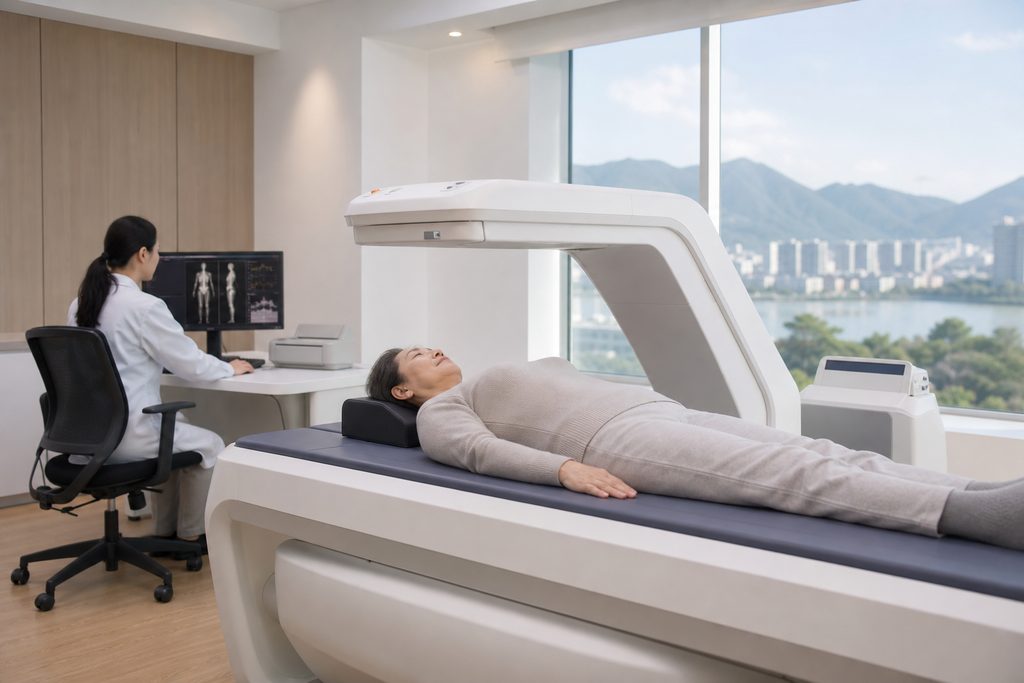
When 54-year-old Margaret from Vancouver started noticing that a minor stumble left her wrist throbbing for weeks, her family doctor in Canada ordered a bone density scan. The earliest opening was eleven weeks out. Frustrated, she began searching for alternatives and stumbled onto a question she had never considered: what does osteoporosis screening cost in China, and could she actually get it done there during an upcoming business trip to Shanghai? Her situation is not unusual. Millions of postmenopausal women and older men worldwide face long waits for a test that takes roughly fifteen minutes to perform.
Osteoporosis screening cost China is one of the most searched phrases among international patients exploring medical care abroad, and for good reason. The numbers are striking, the logistics are manageable, and the quality of Chinese imaging centers is frequently world-class. This guide walks through what the test involves, what it costs, where to go, and how to arrange it as a foreigner.
Key Takeaways
- A DEXA scan in a top-tier Chinese public hospital typically runs $40–$120, versus $150–$400 in the United States without insurance.
- China’s 340+ top-ranked hospitals include dedicated osteoporosis and endocrinology departments with the same Hologic and GE Lunar densitometers used in Western clinics.
- Public hospital outpatient registration cannot be booked from overseas in advance — you queue on the day, or use the international department for a premium.
- Results are usually ready within 24–48 hours, but interpretation by a specialist requires a separate appointment.
The Problem: Long Waits and High Costs Block Early Detection
Osteoporosis affects approximately 1 in 5 women over 50 in North America and Europe, and roughly 1 in 20 men. The International Osteoporosis Foundation estimates that worldwide, one in three women and one in five men over 50 will experience an osteoporotic fracture. A hip fracture in an older adult carries a mortality risk of up to 20% within the first year.
And yet screening rates remain stubbornly low. In the United States, fewer than 25% of women aged 65 and older who are eligible for bone density testing actually receive it, according to data published in the Journal of Bone and Mineral Research. In Canada and parts of the UK, wait times for a DEXA scan can stretch from six weeks to four months. For someone who has already fractured a wrist or is managing long-term steroid use, that delay matters.
Cost adds another barrier. Without insurance, a single DEXA scan in the US averages $150–$400, and follow-up consultations push the total higher. In the UK, NHS waits are long but private scans run £100–£250. In Australia, Medicare covers part of it, but gaps remain.
So patients look elsewhere. And increasingly, they look to China.
Why China Delivers Reliable Bone Density Testing
The idea of traveling to China for a bone scan may sound unusual at first. But the infrastructure supporting it is more developed than most Western patients realize. Here is what makes it work.
Volume and Equipment at Scale
China’s top hospitals perform DEXA scans in enormous volumes. A large tertiary hospital in Beijing or Shanghai may run 60–100 densitometry studies per day, compared to 10–20 at a typical Western community clinic. That volume means radiologists read hundreds of scans monthly, and the equipment is maintained to a high standard. Most major centers use Hologic Discovery or GE Lunar Prodigy systems — the same platforms used at Massachusetts General and the Mayo Clinic.
The Fudan University Hospital Rankings place several Chinese hospitals among Asia’s leading centers for endocrinology and orthopedics. These are the same institutions that international patients access through our database of top-ranked Chinese hospitals.
Speed Without Cutting Corners
A DEXA scan itself takes 10–15 minutes. In China, the bottleneck is rarely the machine — it is the appointment system. Walk into a public hospital outpatient department at 7:30 AM, register, pay, and you can often be scanned the same morning. Results come back within 24–48 hours, sometimes the same day.
That turnaround is difficult to match in countries where centralized scheduling creates months-long backlogs.
Cost Advantage Rooted in Structure
Lower prices do not mean lower quality here. The cost difference comes from labor economics, hospital efficiency, and sheer patient volume — not from cheaper equipment or less-trained staff. A senior radiologist in a Chinese public hospital earns a fraction of a US counterpart’s salary, and the hospital amortizes equipment costs across far more scans per year.
| Country | Typical DEXA Scan Cost (USD) | Typical Wait Time |
|---|---|---|
| United States (no insurance) | $150–$400 | 1–8 weeks |
| United Kingdom (private) | $130–$320 | 2–6 weeks |
| Canada | $0–$200 (covered, but waitlisted) | 6–16 weeks |
| Australia (private gap) | $70–$150 out-of-pocket | 2–8 weeks |
| China (top public hospital) | $40–$120 | Same day to 1 week |
| China (private international hospital) | $150–$350 | 1–3 days |
Prices vary by hospital and case complexity. A scan alone is cheap; adding a specialist consultation, blood work for calcium and vitamin D, and a follow-up review changes the total.
How Much Is a DEXA Scan in China? A Realistic Breakdown
This is the question patients ask first. The honest answer depends on which tier of hospital you choose.
At a public tertiary hospital — the kind ranked in the Fudan Top 100 — a DEXA scan of the lumbar spine and hip typically costs RMB 200–500, or roughly $30–$70. Add a registration fee (RMB 50–300 depending on specialist level) and you are still under $100 for the scan itself.
Private international hospitals charge more. A scan at a JCI-accredited facility like United Family or Jiahui in Shanghai runs $150–$350, but includes English-speaking staff, direct insurance billing, and a smoother experience for patients who do not speak Mandarin.
Here is a rough all-in estimate for a foreigner doing a basic osteoporosis check:
- Public hospital, self-navigated: $60–$150 total
- Public hospital with bilingual companion support: $360–$450 (scan plus one day of accompaniment)
- Private international hospital: $250–$500 total
- Comprehensive bone health package (DEXA, blood panel, specialist consult): $300–$700
Compare that to a US cash-pay visit that easily exceeds $500 before a specialist even reviews the results.
Where to Book a Bone Density Test in Shanghai or Beijing
Choosing the right facility matters more than most patients expect. Not every hospital with a DEXA machine has a radiologist experienced in osteoporosis staging, and not every endocrinologist speaks English.
For the best bone density scan clinic Beijing offers, look at hospitals with dedicated metabolism and bone disease units. Peking Union Medical College Hospital and Beijing Jishuitan Hospital both have strong reputations in orthopedic and endocrine care. Shanghai options include Ruijin Hospital and Zhongshan Hospital, both affiliated with Fudan University.
Private international hospitals are another route. They are more expensive but remove language barriers almost entirely. For patients who want a Western-style experience with English-speaking doctors, this is often the better choice.
You can browse options by city through our specialty department directory, which lists top-ranked hospitals by clinical area, including orthopedics and endocrinology.
One practical note: public hospital outpatient appointments cannot be reserved from overseas in advance. You register on the day, in person. If you want a confirmed time slot with a specific specialist, you need to go through the hospital’s international or VIP department — which typically costs 1.5–2 times the standard fee.
Is Osteoporosis Screening Reliable in China?
Yes, with caveats. The technology is identical to what you would find in a Western hospital. The reporting standards follow the same World Health Organization T-score criteria used globally. A T-score of -2.5 or lower indicates osteoporosis, whether the scan is done in Boston or Beijing.
What varies is the surrounding experience. Public hospitals are crowded — some see 10,000+ outpatients daily. Signage is in Chinese. Registration queues start early. Without language support, navigating the process is genuinely difficult.
Quality also varies by hospital tier. A small city hospital may have older equipment and less experienced readers. Stick to tertiary hospitals ranked in the Fudan Top 100, or JCI-accredited private facilities. That is where the reliability matches international standards.
Another consideration: continuity of care. If you are screened in China and return home, your doctor will need the images and report in a format they can read. Ask for DICOM files on a USB drive and a printed report with English translation. Most top hospitals can provide this, but you must request it.
Practical Considerations for Foreign Patients
Getting a bone scan in China is straightforward once you understand the logistics. Here is what to prepare.
Visa. Medical treatment in China falls under the S2 visa category for short stays, with the purpose of visit noted as medical treatment. Stays exceeding 180 days require an S1 visa. Accompanying family members also apply for S2. Note that the M visa is for commercial and trade activities only — it is not a medical visa. Always confirm current requirements with your nearest Chinese embassy or consulate, as rules can change.
Documentation. Bring your passport, previous imaging reports if you have them, a list of current medications, and any relevant medical history. If you have had a prior DEXA scan, the comparison is far more useful than a single data point.
Payment. Public hospitals require prepayment for most services. International credit cards are accepted at larger hospitals, but smaller facilities may only take cash or Chinese mobile payments. Private international hospitals usually accept international cards and can bill insurance directly.
Language. This is the biggest practical hurdle. Very few public hospital staff speak English. Even simple tasks — finding the right registration window, understanding which floor the imaging department is on — become difficult. Bilingual medical companions exist precisely for this reason and typically cost from $300 per day.
Follow-up. Osteoporosis management is long-term. A single scan is a snapshot. If your T-score indicates treatment, you will need ongoing monitoring, usually every 1–2 years. Plan how that will happen once you return home.
Frequently Asked Questions
No referral is required for a self-pay patient. You can register directly at the hospital’s imaging or endocrinology department. However, having a specialist review the results is strongly recommended, and that requires a separate consultation appointment.
Some international plans reimburse overseas medical expenses, but coverage varies widely. Private JCI-accredited hospitals are more likely to work with insurers directly. Public hospitals generally require upfront payment, with reimbursement handled after you return home. Check with your insurer before traveling.
DEXA results fall into three categories: normal, osteopenia, and osteoporosis. Only the last typically requires immediate pharmacological treatment. If your results suggest a fracture risk or an unexpected finding, a Chinese endocrinologist can discuss options with you on the spot. For complex cases, you may want a written second opinion from a specialist before starting any medication.
For a simple screening, two to three days is enough: one day for registration and the scan, one day for the results and specialist review. If you are combining it with other medical appointments or a broader health check, allow a week.
Your Next Step
Osteoporosis screening in China is fast, affordable, and clinically reliable when you choose the right hospital. The main obstacles are logistical, not medical — language, scheduling, and knowing which facility fits your needs.
If you would like help identifying a suitable hospital, understanding what a scan will cost at a specific facility, or arranging bilingual support on the day, our team can walk you through the options. We are a medical coordination service, not a hospital, and we do not provide diagnoses or treatment. We help international patients navigate China’s healthcare system with clarity and confidence. You can start with a free consultation through our patient support page.
For more medical information and treatment options in China, visit chinamedservices.com (China Medical Services).
