Body Composition Scan in China: A Quick Guide for International Patients
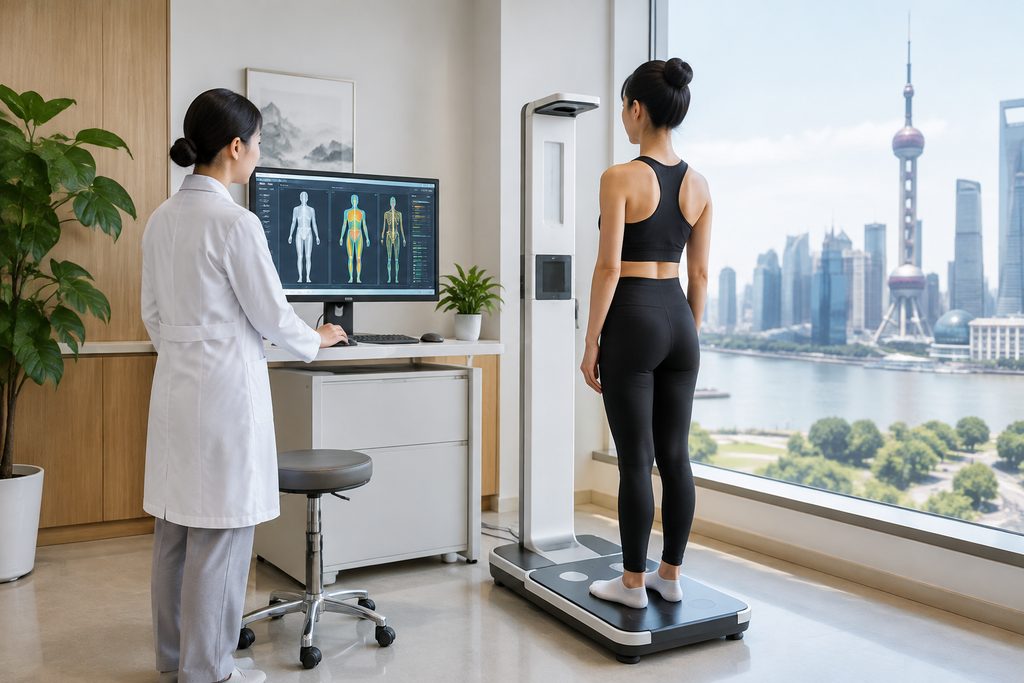
Body Composition Scan in China: A Quick Guide
According to market research firm Grand View Research, the global body composition analyzers market surpassed $600 million in 2023, driven largely by a surge in preventive health screening. For international patients, the question is not whether to get scanned — it is where to get it done accurately, affordably, and without a six-month wait. If you are researching body composition scan cost China, you are likely comparing options across Asia and wondering whether a trip to a Chinese hospital makes sense. This guide answers that question with real numbers, real timelines, and the honest trade-offs.
China’s top hospitals now offer DEXA, InBody, and 3D body scanning at a fraction of Western prices. But the process of booking as a foreigner is not always obvious. Here is how it actually works.
How This Actually Works, Step by Step
Most international patients assume they can book a scan online the way they would at a clinic in London or Los Angeles. In China’s public hospital system, that assumption breaks down fast. Here is the real sequence.
Step 1: You send us your basic information. Age, height, weight, medical history, and what you want measured — fat percentage, visceral fat, bone density, muscle symmetry, or all of the above. If you have a referral from your doctor at home, include it.
Step 2: We match you with a hospital. Not every hospital has the same equipment. A DEXA scanner at a top-tier public hospital is different from an InBody 770 at a private international clinic. We tell you which facility fits your goal and your budget.
Step 3: We coordinate the appointment. For a simple body composition scan, this usually means securing a slot in the hospital’s international department or a private clinic. Public hospital general outpatient registration for a walk-in scan is possible, but it means queuing on the day with no guaranteed time.
Step 4: You arrive, scan, and get results. A DEXA scan takes 10 to 20 minutes. You usually receive a printed report the same day. Some hospitals provide an English-language summary; others do not. This is where a bilingual companion earns their fee.
Step 5: Follow-up. If the scan reveals something that needs a specialist — low bone density, unusual fat distribution, sarcopenia — we can help you book a consultation before you fly home.
What Does a Body Composition Scan Cost in China?
This is the number everyone wants. The honest answer: it depends on the type of scan and the facility. Here is a realistic breakdown.
| Scan Type | Typical Cost in China (USD) | Typical Cost in the US (USD) |
|---|---|---|
| InBody / BIA (bioelectrical impedance) | $15–$50 | $50–$150 |
| DEXA body composition | $60–$150 | $150–$400 |
| DEXA with bone density (full report) | $100–$250 | $250–$500 |
| 3D body scan (surface imaging) | $80–$200 | $200–$500 |
| Comprehensive health checkup package including body composition | $300–$800 | $1,000–$3,000+ |
These figures vary by hospital and case complexity. A private international hospital like United Family or Jiahui in Shanghai will sit at the higher end. A top public hospital’s international department may be lower but requires more coordination. Prices also shift depending on whether you need a physician consultation included.
For context, the same DEXA scan at a major U.S. academic medical center routinely bills $300–$500 before insurance. Even after insurance, out-of-pocket costs often exceed what you would pay in China without any coverage at all.
What about medical tourism body composition scan packages Beijing? Some private clinics bundle a scan with blood work, a physician review, and a same-day report. These packages typically run $400–$900 and can be arranged within a week. They are popular with patients who want a full metabolic snapshot, not just a fat percentage.
Is a Body Composition Scan Accurate?
This question deserves a direct answer. Accuracy depends entirely on the method.
DEXA (dual-energy X-ray absorptiometry) is widely considered the clinical gold standard for body composition. A 2018 study in the Journal of Clinical Densitometry found DEXA has a margin of error of roughly 1–2% for fat mass and lean mass in controlled settings. That is excellent. It also separates visceral fat — the dangerous fat around your organs — from subcutaneous fat, which most home scales cannot do.
BIA (bioelectrical impedance analysis), used in InBody machines and consumer scales, is less accurate. Hydration status, recent exercise, and even room temperature can skew results by 3–5%. It is useful for tracking trends over time, not for a one-time precise measurement.
3D body scanning measures surface circumference, not internal composition. It is great for tracking changes in shape but tells you nothing about bone density or visceral fat.
So: is a body composition scan accurate? If it is DEXA, yes — highly. If it is BIA, it is directionally useful but not precise. If it is 3D, it measures something different entirely. Know which one you are getting before you book.
A Realistic Timeline
Here is what a typical body composition scan trip looks like, from first inquiry to results in hand.
| Stage | Timeframe | What Happens |
|---|---|---|
| Initial inquiry and hospital matching | 1–3 days | You share your goals and history; we identify the right facility and scan type. |
| Appointment coordination | 2–7 days | We secure a slot. Private clinics are faster; public hospital international departments may take longer. |
| Visa preparation (if needed) | 1–3 weeks | S2 visa for short medical stay. Processing times vary by embassy and season. |
| Travel and arrival | 1–2 days | Flights, airport transfer, hotel check-in. |
| The scan itself | 10–30 minutes | DEXA takes 10–20 minutes. InBody takes under 5. |
| Results and interpretation | Same day to 48 hours | Printed report; English translation if arranged in advance. |
| Follow-up consultation (optional) | 1–3 days | If the scan flags something, we can book a specialist before you leave. |
Total time from first contact to scan: as little as 5 days if you are already in China or visa-exempt. If you need an S2 visa from scratch, add 2–3 weeks. Do not book flights before the appointment is confirmed.
What Can Go Wrong — and What Happens Then
Things go sideways. Here is what actually happens when they do.
The hospital cannot fit you in during your travel window. This is the most common problem. Public hospital international departments have limited slots, and a body composition scan is not always prioritized over diagnostic imaging for sick patients. If we cannot secure a confirmed appointment, our coordination fee is refunded in full. You are not left paying for a promise.
The scan report is in Chinese only. Many public hospitals issue reports in Chinese. If you do not read Chinese, you will hold a piece of paper you cannot interpret. A bilingual medical companion can translate on the spot. Alternatively, ask in advance for an English report — some private clinics provide one as standard.
The equipment is not what you expected. You booked a DEXA but arrived to find an InBody machine. This happens when the booking goes through a general health checkup department rather than radiology. We verify the equipment before confirming. If you book independently, ask for the machine model in writing.
You need a follow-up specialist and did not plan for it. A scan showing low bone density or high visceral fat may warrant a consultation. If you are flying home the next day, you lose that opportunity. Build a buffer day into your itinerary.
Payment issues. Public hospitals require prepayment. International credit cards are accepted at most international departments but not all. Private international hospitals often bill insurance directly. Confirm payment method before you arrive.
How to Choose the Best Body Composition Scan Clinic in Shanghai (or Anywhere in China)
Shanghai has the densest concentration of high-quality scan options in China. But “best” depends on what you need.
If you want clinical-grade DEXA with a physician interpretation, look at the international departments of top public hospitals. These are the same hospitals ranked in the Fudan Top 100 — institutions like Zhongshan Hospital and Ruijin Hospital. They have the equipment and the expertise. What they lack is hand-holding for foreigners.
If you want convenience, English service, and direct insurance billing, private international hospitals are the better fit. United Family, Jiahui, and ParkwayHealth all offer body composition scanning with English-speaking staff. You will pay more, but the process is smoother. You can browse our directory of private international hospitals for options.
If you want a comprehensive health checkup that includes body composition alongside blood work, cardiac screening, and imaging, a top public hospital’s international health checkup center is the most cost-effective route. These packages are popular with medical tourists and can be arranged through our patient coordination service.
One more consideration: location. If you are already in Beijing, there is no reason to fly to Shanghai for a scan. Both cities have excellent facilities. The same is true for Guangzhou, Chengdu, and Hangzhou. Use our Fudan-ranked hospital directory to see what is available in your city.
Practical Considerations: Records, Visa, Payment, and Follow-Up
Records. Bring any prior DEXA or body composition reports. Trend data is more valuable than a single snapshot. If you have a referral from your doctor at home, bring that too — it helps the Chinese physician understand your context.
Visa. For a short medical trip, the S2 visa is the correct category. It covers medical treatment and private affairs. The M visa is for commercial and trade activities — it is not a medical visa. Apply for S2 with your hospital appointment confirmation and supporting documents. Processing times vary by embassy; check the latest requirements before applying. Accompanying family members also apply for S2.
Payment. Public hospitals require prepayment. Private international hospitals often bill insurance directly. Bring a card that works in China — Visa and Mastercard are widely accepted at international departments, but not everywhere. Have a backup.
Language. Do not assume English is spoken. Even at international departments, the radiology technician may not speak English. A bilingual medical companion can handle registration, payment, navigation, and translation. Our companion service starts from $300 per day.
Follow-up at home. If you get a DEXA scan in China, ask for a digital copy of the report. You can share it with your doctor at home. Some hospitals provide a USB or email the file; others do not. Request it explicitly.
Frequently Asked Questions
The scan itself takes 10 to 20 minutes. You lie still on a table while a low-dose X-ray arm passes over you. Total appointment time, including check-in and waiting, is usually 30 to 60 minutes at a private clinic and longer at a public hospital.
Yes, but it is harder. Private international hospitals have English-speaking staff and online booking. Public hospitals generally do not. If you go the public route, a bilingual companion is strongly recommended — not just for translation but for navigating registration, payment, and the physical layout of a very large hospital.
The equipment is the same. A Hologic or GE DEXA scanner in Shanghai produces the same data as one in Boston. The difference is in interpretation and follow-up. If you need a physician to explain the results in English and recommend next steps, confirm that in advance.
It depends on your nationality. Many countries have visa-free entry for short stays. If you need a visa, the S2 category covers medical treatment. Apply with your appointment confirmation. Processing takes 1–3 weeks in most cases. Check with your nearest Chinese embassy for current requirements.
There is no single answer. For clinical precision with physician interpretation, the international departments of top public hospitals are excellent. For convenience and English service, private international hospitals like United Family and Jiahui are strong choices. The best option depends on your budget, timeline, and whether you need a specialist consultation alongside the scan.
Your Next Step
A body composition scan in China is affordable, accurate, and accessible — if you know how to navigate the system. The equipment is world-class. The prices are a fraction of Western rates. The challenge is logistics: booking, language, payment, and follow-up.
China Medical Services connects international patients with 340+ top-ranked hospitals across 37 cities. We do not provide medical care. We handle the coordination — hospital matching, appointment booking, bilingual companionship, and visa guidance — so you can focus on your health, not the paperwork.
If you are considering a scan in China, start with a conversation. No pressure, no obligation. We will tell you honestly whether it makes sense for your situation.
This article is for informational purposes only and does not constitute medical advice. Always consult a qualified healthcare provider before making health decisions. Prices are estimates and vary by hospital and case complexity.
For more medical information and treatment options in China, visit chinamedservices.com (China Medical Services).
