Bone Turnover Markers in China: An Overview for International Patients
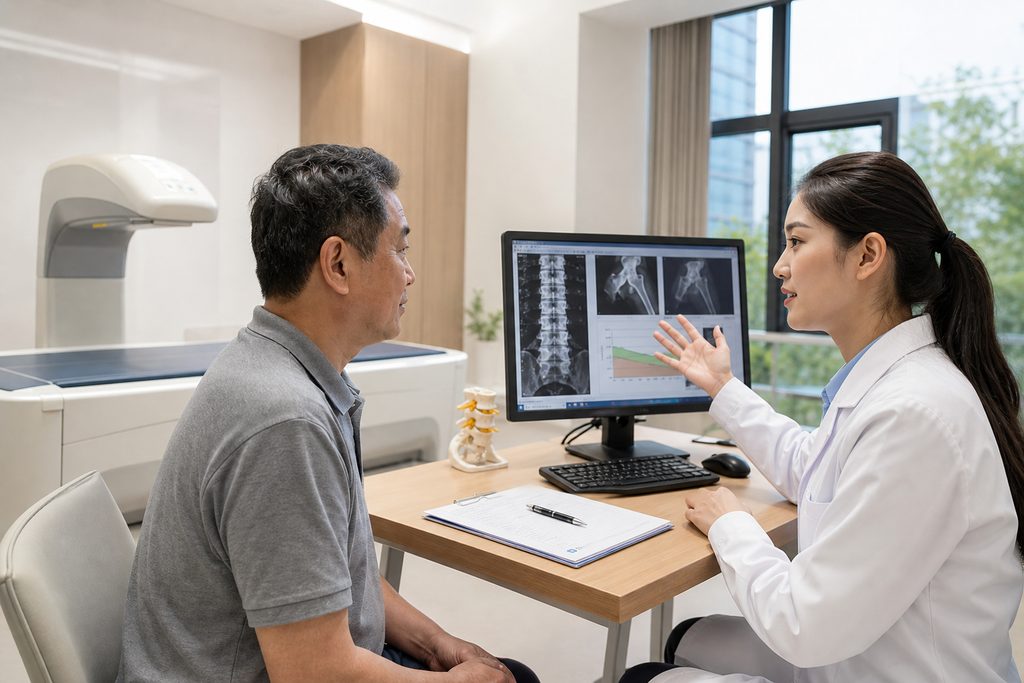
Bone Turnover Markers in China: An Overview
Bone turnover markers are proteins and byproducts released into your bloodstream when your body breaks down old bone and builds new bone. Think of them as a speedometer for your skeleton. A DEXA scan tells you how much bone you have; turnover markers tell you how fast that bone is being replaced right now. For anyone tracking osteoporosis treatment, monitoring a metabolic bone condition, or managing bone health after cancer therapy, that distinction matters enormously. And for international patients, the practical question is usually simpler: what does a bone turnover markers test cost China hospitals, and can the results be trusted? This overview answers both.
How This Actually Works, Step by Step
Here is the real sequence, from wherever you are now to a usable lab result.
Step one is clarifying what you actually need tested. Bone turnover markers are not one test — they are a panel. The common ones include CTX (C-terminal telopeptide) and NTX for bone resorption, and P1NP (procollagen type 1 N-terminal propeptide) and bone-specific alkaline phosphatase for bone formation. Some clinicians order only P1NP and CTX; others want a wider panel. Your treating physician at home sets the clinical question, and that determines the order.
Step two is gathering your existing records. Recent DEXA reports, prior lab work, medication lists (especially bisphosphonates, teriparatide, or denosumab), and any relevant imaging. Our team translates these into Chinese and formats them so a Chinese endocrinologist or orthopedic specialist can review them without guessing.
Step three is the review. A specialist at a top-tier hospital reviews your file and confirms whether turnover marker testing is appropriate, which markers specifically, and whether anything else should be added — calcium, phosphate, PTH, vitamin D, or a full metabolic bone panel.
Step four is scheduling. This is where the process differs from what most Western patients expect. At Chinese public hospitals, you generally cannot pre-book a routine outpatient lab slot from overseas. You or your companion register on the day. International departments and private hospitals operate differently, and we coordinate through those channels where it makes sense.
Step five is the blood draw itself, followed by results. Turnaround is fast by international standards — most routine biochemistry comes back within 24 to 72 hours, and specialized assays may take slightly longer.
What Are Bone Turnover Markers, and Why Test Them in China?
The “what are bone turnover markers” question has a short answer and a useful one. They are lab measurements of collagen fragments and enzyme activity that reflect osteoclast (bone-resorbing) and osteoblast (bone-building) activity. Elevated resorption markers suggest bone is being broken down faster than it is rebuilt — common in postmenopausal osteoporosis, Paget’s disease, and bone metastases.
Why would an international patient travel to China for this? Two reasons, and neither is exotic.
The first is cost. A bone turnover markers test cost China patients pay at a top public hospital typically runs a fraction of Western pricing. The assay reagents are the same class of immunoassay used in Europe and North America; the difference is hospital pricing policy, not test quality. A panel that might bill at several hundred dollars in the US often comes in well under $150 equivalent at a major Chinese public hospital, though this varies by hospital, marker selection, and whether you are seen through a standard or international department.
The second is integration. If you are already in China for orthopedic surgery, a metabolic bone workup, or a comprehensive health evaluation, adding turnover markers to an existing visit is straightforward. Patients often pair this testing with a broader bone health assessment at hospitals like Peking Union Medical College Hospital or West China Hospital, both of which appear in the Fudan rankings.
A Realistic Timeline
Timelines depend heavily on whether you are already in China or planning a trip. Here is a realistic picture for a patient arranging testing remotely.
| Stage | Typical Duration | Notes |
|---|---|---|
| Records collection & translation | 3–7 days | Depends on how quickly your home clinic releases reports |
| Specialist file review | 2–5 business days | Written second opinion option available |
| Appointment coordination | 3–10 days | International departments move faster; standard outpatient is same-day registration |
| Visa processing (S2) | 1–3 weeks | Applicable short-stay category for medical treatment; subject to consulate requirements |
| Travel & arrival | 1–2 days | Varies by origin |
| Blood draw | Same day as visit | Fasting recommended for CTX |
| Results turnaround | 24–72 hours | Specialized assays may extend this |
| Follow-up consultation | 1–3 days after results | Can be arranged in person or by video |
Total realistic window from first contact to holding results: roughly three to six weeks if a visa is required. If you are already in China, it can compress to under two weeks.
What Can Go Wrong — and What Happens Then
Honest failure modes, because they exist.
Your results come back and nobody at home knows how to interpret them. Reference ranges differ between laboratories. A P1NP of 45 ng/mL means different things depending on the assay platform and the lab’s own range. Always request the reference range printed alongside your result, and ask the Chinese lab whether they follow a recognized international standard. If your home physician is unfamiliar with the units, a follow-up video consultation can bridge that gap.
You cannot get a same-week appointment at the specific hospital you wanted. Public hospital outpatient registration in China is largely day-of. International departments and private hospitals are more predictable but cost more. Our coordination service refunds the coordination fee in full if we cannot secure the appointment shown in your order.
Your sample is compromised. Hemolyzed samples, delayed processing, or a non-fasting draw can skew CTX. If a result looks physiologically implausible against your clinical picture, repeating the test is cheap and reasonable.
The test turns out not to be what your doctor wanted. This happens more than people admit. Turnover markers are monitoring tools, not diagnostic ones. They do not diagnose osteoporosis on their own. If your physician at home actually wanted a DEXA scan or a full metabolic panel, ordering markers alone wastes a trip.
Is Bone Turnover Testing Reliable in China?
This is the question that decides whether a trip is worth it, so it deserves a direct answer.
Major Chinese tertiary hospitals run automated immunoassay platforms from the same global manufacturers used in Western labs — Roche, Abbott, Siemens, and Beckman Coulter among them. External quality assessment programs operate at the national level, and top-tier hospitals participate in proficiency testing. At the Fudan-ranked hospitals and JCI-accredited private facilities, the analytical quality of routine biochemistry is generally comparable to what you would receive in a Western academic center.
The variables that actually affect reliability are less about the machine and more about the process. Which lab runs the assay. Whether the sample is handled within the required window. Whether the collection conditions match your previous test. And whether anyone on your care team can interpret the number in context.
Where quality does vary is at smaller regional hospitals and some direct-to-consumer testing channels. If you are seeking a bone turnover markers price Beijing hospital quote from a mid-tier facility, the price may be lower, but confirm the assay platform and accreditation before assuming equivalence. Our team can help you evaluate that, and our department-level hospital rankings show which institutions lead in endocrinology and orthopedics.
Practical Considerations: Records, Visa, Payment, and Follow-Up
Bring your records in a usable format. DICOM files for imaging, PDFs for labs, and a plain-language summary of your medication history. Translation into Chinese is often required for the consulting physician, and we handle that.
On the visa side: medical travel to China uses the S2 category, the applicable short-stay visa for medical treatment and private affairs, subject to the latest embassy or consulate requirements and supporting hospital documents. Accompanying family members apply under the same category. The M visa is for commercial and trade activities and has nothing to do with medical treatment.
Payment at public hospitals is typically upfront, with insurance reimbursement handled afterward in your home country. Private international hospitals frequently offer direct billing with major international insurers. Confirm your coverage before you travel, because reimbursement rules for overseas lab work vary widely between plans.
Follow-up is the piece patients most often under-plan. Turnover markers are most useful when measured serially — a baseline, then a repeat at a defined interval, usually three to six months after starting or changing therapy. If you cannot return to China, arrange for the same assay to be run at home and keep the reference ranges side by side.
Frequently Asked Questions
Most routine bone turnover marker assays return within 24 to 72 hours at major Chinese hospitals. Highly specialized assays may take longer. If you need results before a scheduled follow-up, tell us at the coordination stage so timing can be built into the plan.
At public hospitals, standard outpatient lab slots are generally registered on the day of visit, not pre-booked from overseas. International departments and private hospitals offer more predictable scheduling. If you want to book a bone turnover marker test in Shanghai through a coordinated channel, our team can arrange registration and a bilingual companion to handle the queue, payment, and translation on the day.
Practically, yes — a Chinese physician needs to generate the order. That is why the process usually starts with a records review rather than a direct lab booking. A written second opinion or video consultation establishes the clinical basis for testing and identifies which markers are appropriate for your situation.
Most will, provided the report includes the assay method, units, and reference range. Ask the lab for a full report rather than a summary value. If your physician has questions, a follow-up consultation with the Chinese specialist can clarify methodology.
Your Next Step
Bone turnover markers are a fast, inexpensive, and genuinely useful window into bone metabolism — and in China, they can be obtained at a fraction of Western pricing with analytical quality that holds up. The real work is not the blood draw. It is choosing the right hospital, getting your records into a form a Chinese specialist can act on, and making sure somebody can interpret the number when it comes back.
That is where we come in. China Medical Services connects international patients with 340+ top-ranked hospitals across 37 cities. We are not physicians and we do not practice medicine — we handle records translation, appointment coordination through official international departments, and bilingual accompaniment so you are not navigating a hospital of 10,000 daily patients alone. If you would like to understand your options, start with a free consultation at our patient services page. No pressure, no obligation — just a clear picture of what is possible.
This article is for general information only and does not constitute medical advice. Bone turnover marker testing should be ordered and interpreted by a qualified physician based on your individual clinical situation.
For more medical information and treatment options in China, visit chinamedservices.com (China Medical Services).
