ENT Screening in China for Foreigners: Costs, Top Hospitals, and How It Works
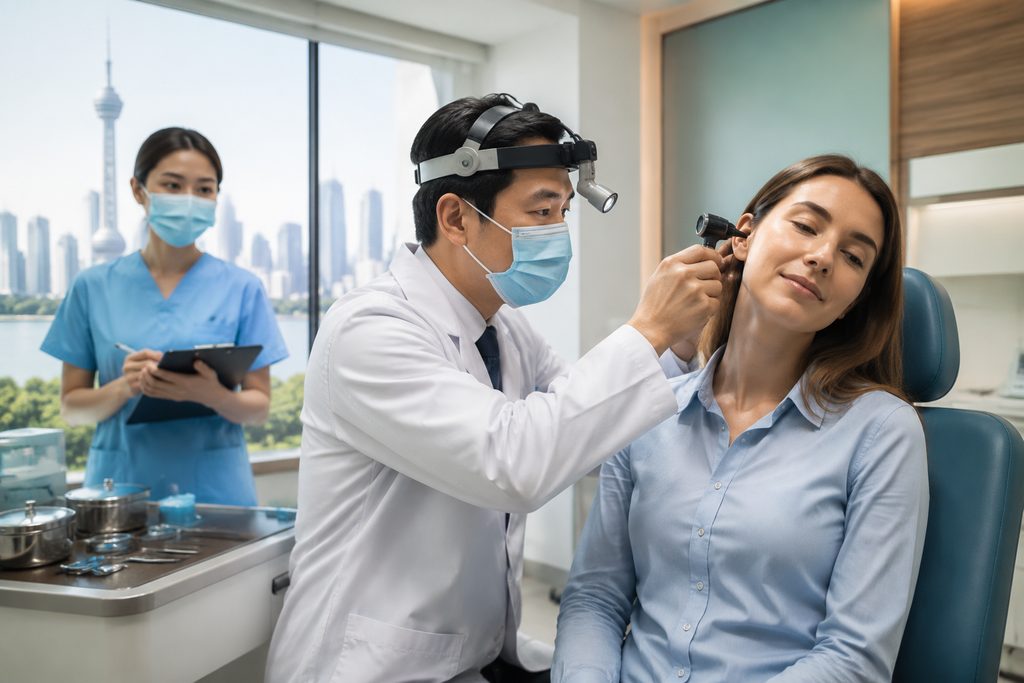
ENT screening is simply a structured check of your ears, nose, and throat — hearing tests, nasal endoscopy, throat examination, sometimes balance or allergy testing — done in one coordinated visit rather than scattered across months. For a foreigner, the two questions that decide everything are straightforward: what does it cost, and can you actually get it booked without speaking Mandarin? The short answer is that ENT screening cost China is typically a fraction of Western pricing, and English-speaking ENT departments do exist at the international wings of major hospitals. The longer answer involves paperwork, timing, and knowing which door to knock on.
We help international patients find that door. Here is what the process really looks like.
How This Actually Works, Step by Step
Most people imagine they will email a hospital, pick a date, and show up. That is not how Chinese public hospitals operate. The realistic sequence looks like this.
You start by gathering whatever you already have. Audiograms from home. An MRI of the sinuses. A note from your GP about the ringing in your left ear. Anything in English is fine to send first — translation comes later, and only for the documents the hospital actually needs.
Those records go to the relevant ENT specialty team for a written review. This is where you learn whether your case needs a simple screening panel, a focused diagnostic workup, or something more specialized like otologic surgery evaluation. You get a written opinion back, usually within a few business days.
If it makes sense to talk it through, a video consultation follows. You describe the symptoms, the duration, the treatments already tried. The Chinese ENT team explains what they would investigate and roughly what it costs.
Only then does scheduling begin. At that point we coordinate registration, the hospital medical card, and an appointment slot through the international department. You fly in, attend the appointment with a bilingual companion beside you, and leave with results and a plan.
The key insight: nothing gets booked until a clinician has looked at your records. That single step prevents the most expensive mistake in medical travel — flying 8,000 miles for a test you did not need.
What ENT Screening in China Actually Costs
Prices vary by hospital tier and by how deep the workup goes. A basic screening at a public tertiary hospital and the same panel at a private international clinic are not the same product, and the gap is real.
| Service | Public Tertiary Hospital | Private International Clinic | Typical US Price |
|---|---|---|---|
| Pure-tone audiometry (hearing test) | $15–40 | $80–180 | $150–300 |
| Nasal endoscopy | $30–70 | $150–350 | $400–900 |
| Laryngoscopy (throat scope) | $40–90 | $200–400 | $500–1,200 |
| Full ENT screening package | $120–350 | $400–900 | $1,500–3,500 |
| Allergy panel (skin or blood) | $50–150 | $200–500 | $300–1,000 |
So how much does a hearing test cost in Beijing? At a top public hospital, often under $40. That number surprises people. It also explains why some patients combine an ENT workup with a broader health check while they are already in the country.
These figures are reference ranges, not quotes. Final pricing depends on the hospital, the imaging required, and whether your case turns out to be routine or complex.
A Realistic Timeline
People underestimate the administrative tail. Here is a schedule that reflects how things actually move.
| Stage | Typical Duration | What Happens |
|---|---|---|
| Records collection | 3–10 days | You gather reports, scans, and prior notes |
| Medical translation | 2–5 days | Key documents rendered into Chinese where required |
| Written second opinion | 3–7 business days | ENT specialty reviews your file and responds |
| Video consultation (optional) | Booked 3–7 days out | Live discussion of findings and options |
| Appointment coordination | 1–3 weeks | Registration, medical card, slot confirmed |
| S2 visa processing | 1–3 weeks | Short-stay visa for medical treatment and private affairs |
| In-country screening visit | 1–2 days | Consultation plus tests, often same or next day |
| Results and follow-up plan | 1–7 days | Reports issued, next steps discussed |
Total, from first email to sitting in the ENT chair: roughly four to eight weeks for a well-prepared case. Urgent cases can compress, but not to nothing. Visa processing alone rarely finishes inside a week.
What Can Go Wrong — and What Happens Then
Honesty matters more here than anywhere else in this article.
Your records are incomplete. This is the single most common delay. If you send a one-line email saying “I have hearing loss, what does it cost,” no clinician can answer usefully. Recourse: send whatever exists, even if it is old. A 2022 audiogram still tells the team something.
The appointment cannot be confirmed for your preferred date. Public hospital ENT departments are busy. Popular specialists book out. Our appointment coordination is offered with a full refund if the slot shown in your order cannot be secured — that is the honest structure, and it exists because we cannot promise a specific physician on a specific morning.
You arrive and the workup turns out to be larger than expected. A screening that reveals a polyp, a cholesteatoma, or a suspicious lesion changes the plan. That is not failure — it is the point of screening. But it may mean a second visit, additional imaging, or a surgical consultation you did not budget for.
Language breaks down anyway. Even with English signage, the queueing system, payment counters, and department routing at a hospital seeing 10,000 outpatients a day will defeat most visitors. This is precisely why bilingual accompaniment exists.
Never treat a written second opinion as a prescription or a final diagnosis. It is a specialist’s reading of the documents you provided — for reference and direction only. Any treatment decision belongs with a licensed physician who has examined you in person.
Choosing the Right ENT Provider: Public Versus Private
Is ENT screening in China safe for international patients? Clinically, yes — the equipment at major Chinese tertiary hospitals is current, and the volume of cases seen is enormous. The variable is not safety. It is fit.
Public tertiary hospitals offer depth, subspecialization, and low prices. A department that handles thousands of otologic cases a year has seen your problem before. What they do not offer is hand-holding. Expect crowds, expect to move fast, expect that a companion who speaks Mandarin is close to essential.
Private international hospitals — the JCI-accredited names with English-speaking staff and direct insurance billing — offer comfort and a familiar service model. You pay for it. A screening package there can run three to five times the public price.
For the best ENT hospital in Shanghai for foreigners, the practical split is this: if your case is simple and you want convenience, a private international clinic is fine. If your case is complex, or you suspect you may need surgery, the international department of a major public hospital gives you access to subspecialists and surgical capacity that private clinics typically refer out.
You can browse ranked options by city and specialty in our directory of top departments, or look at top-ranked hospitals grouped by city to see what is available where you plan to travel.
Practical Considerations: Records, Visas, Payment, and Follow-Up
Records. Bring originals plus digital copies. Imaging on disc, not just the printed report. If you have had prior ear surgery, the operative note matters more than anything else in your file.
Visa. Foreigners coming to China for medical treatment use the S2 visa, which covers short-stay visits for medical treatment and private affairs. Family members accompanying you apply under the same category. Stays beyond 180 days fall under S1. Requirements shift, so confirm current rules with your nearest Chinese embassy or consulate and bring the hospital’s supporting documents. Note that the M visa is for commercial and trade activity — it is not the medical route.
Payment. Public hospitals require prepayment; insurance reimbursement happens afterward, in your home country. Private international hospitals often bill insurers directly. Check your policy’s coverage for treatment abroad before you commit.
Insurance and language. If you need an ENT specialist who speaks English in China, the international departments and private clinics are where you will find one. Ask in advance. Do not assume.
Follow-up at home. Request your results in a format your own doctor can read — imaging files, not just summaries. Chinese hospitals will provide them, but you have to ask.
For a broader picture of how the whole system fits together, our main resource on medical treatment in China covers hospital categories and the service model in more detail.
Frequently Asked Questions
Not directly at a standard public outpatient clinic — those run on same-day registration. What you can do is arrange a remote review of your records first, then have the appointment coordinated through a hospital’s international or VIP channel, which does allow advance scheduling. That route costs more than the standard queue but is the only realistic way to lock a date before flying.
At a major public hospital, pure-tone audiometry commonly falls in the $15–40 range. At a private international clinic in the same city, expect $80–180 for the same basic test. The clinical result should be comparable; the difference is waiting time, English service, and comfort.
The diagnostic procedures themselves — audiometry, endoscopy, laryngoscopy — are low-risk and standard. The genuine risks are logistical: incomplete records leading to an unnecessary trip, miscommunication about findings, or arriving without a plan for what happens if treatment is recommended. All three are manageable with preparation.
Then you have learned it early, which is the purpose. A finding typically leads to further imaging or a surgical consultation. Nothing proceeds without your agreement, and no hospital admission can be guaranteed in advance — admission always depends on the hospital’s own assessment and rules.
Some patients manage alone for a simple test. Most do not, once they hit registration, payment, and department routing inside a hospital that sees tens of thousands of patients daily. A bilingual medical companion handles queueing, payment, wayfinding, and interpretation — from $300 per day. Whether you need one is a judgment call, and we will tell you honestly if the answer is no.
Your Next Step
ENT screening in China is affordable, clinically solid, and genuinely accessible to foreigners — provided the paperwork is done in the right order and the right department is chosen. The mistake is treating it like booking a hotel room.
We are a coordination service, not a hospital and not a clinic. We do not diagnose, we do not treat, and we do not sell access to anyone. What we do is translate your records, route them to the appropriate specialty through official hospital channels, and stand beside you when you arrive. If that sounds useful, start with a free consultation and we will tell you what your case actually needs.
For more medical information and treatment options in China, visit chinamedservices.com (China Medical Services).
