Carrier Screening in China: A Guide for International Couples
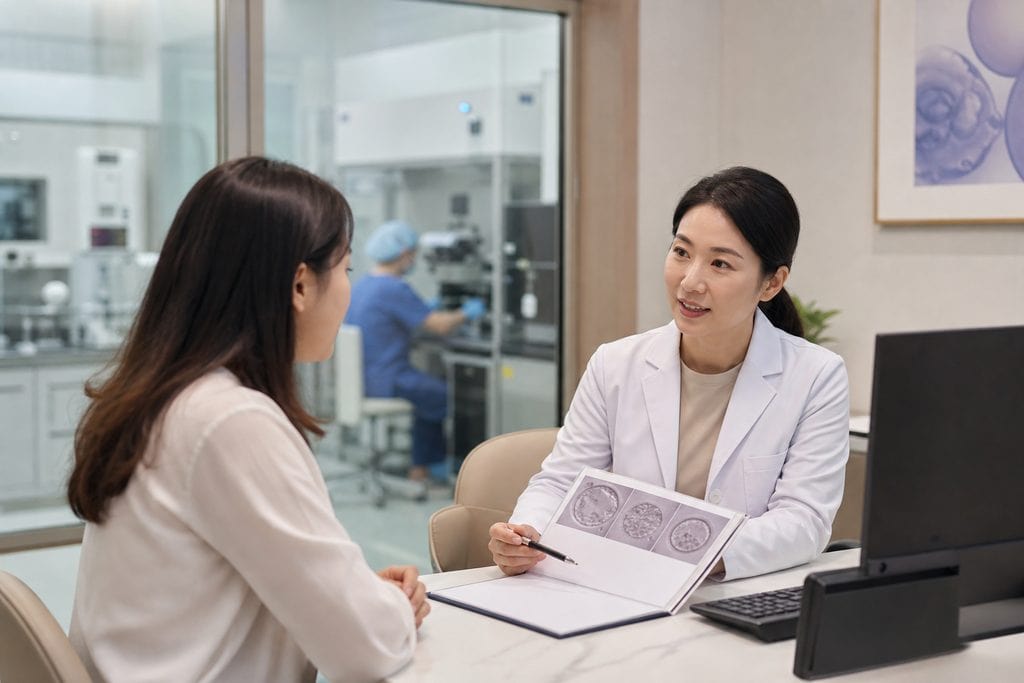
Carrier Screening in China: A Guide for International Couples
What if one blood draw could tell you whether your future child is at risk for a condition you have never heard of? That is the promise of carrier screening — and the carrier screening cost China hospitals charge is usually a fraction of what the same panel runs in the United States. A standard expanded panel at a top-tier Chinese genetics lab typically lands between $300 and $1,500, depending on how many genes are tested and whether you add chromosomal analysis.
The price is rarely the hard part. The hard part is knowing which hospital to walk into, whether the results will be accepted back home, and how a foreigner with no Chinese gets an appointment in a system built for 1.4 billion people.
Carrier Screening in China: The Short Answer
Carrier screening in China is widely available, technically mature, and priced well below Western rates. Major public hospitals in Beijing, Shanghai, and Guangzhou run the same next-generation sequencing platforms used by labs in the US and Europe. Turnaround is typically 10 to 21 days for a standard panel.
Here is the caveat that matters. China’s public hospital system does not let you book a specialist appointment from overseas in advance. You register on the day, in person, at the hospital. For a genetics consultation, that usually means queuing early or paying for the international department, where English-speaking staff and scheduled slots exist at roughly 1.5 to 2 times the standard fee.
Carrier screening itself is a blood test. The complexity is not the draw — it is the logistics around it: registration, language, report interpretation, and whether your home physician will accept a Chinese lab report.
Who This Is Right For — and Who It Isn’t
Carrier screening is not a universal recommendation. It is a risk-assessment tool, and it makes the most sense for specific groups.
Typically a good fit:
- Couples planning a pregnancy who belong to an ethnic group with a known high carrier frequency — Ashkenazi Jewish, Mediterranean, Southeast Asian, or Southern Chinese ancestry, for example
- Anyone with a family history of a recessive condition such as thalassemia, cystic fibrosis, or spinal muscular atrophy
- Couples where one partner is already a known carrier and the other has not been tested
- People using IVF who want to understand inherited risk before embryo selection
- Consanguineous couples, where shared ancestry raises the odds that both partners carry the same variant
Probably not the right first step:
- Anyone seeking diagnostic answers for an existing condition — that calls for diagnostic testing, not carrier screening
- Couples who have not discussed what they would do with a positive result. A finding without a plan creates anxiety, not clarity
- Travelers hoping to combine a two-week vacation with a full genetics workup. Results take time, and counseling happens after them
If you are already pregnant, timing shifts. Carrier screening can still be done, but the window for reproductive decision-making narrows considerably. Speak with a qualified clinician about sequencing.
The Options, Compared
Not all carrier screening is the same test, and not all settings cost the same. The table below reflects typical ranges for international patients paying out of pocket. Actual quotes vary by hospital and case complexity.
| Option | Typical Panel Size | Indicative Cost (USD) | Turnaround | English Support |
|---|---|---|---|---|
| Basic panel, public hospital genetics dept. | 3–10 genes (e.g., thalassemia, SMA) | $100–$300 | 7–14 days | Limited; interpreter often needed |
| Expanded carrier panel, public hospital | 100–200+ genes | $300–$800 | 14–21 days | Available at international dept. |
| Expanded panel plus chromosomal microarray | 200+ genes plus CNV analysis | $700–$1,500 | 14–28 days | Available at international dept. |
| Private international hospital (Beijing/Shanghai) | Customized; often Western lab partner | $1,200–$3,000 | 10–21 days | Full English service, insurance billing |
| Same expanded panel in the US | 100–300 genes | $1,500–$4,000 | 14–21 days | Full English service |
Which column fits you? If cost is the deciding factor and you have time to navigate the public system, the expanded public-hospital panel delivers the same core science at a third of the US price. If you need a single appointment, English consent forms, and direct insurance billing, the private international route costs more but removes almost every friction point.
Which Hospital Should You Choose?
China has more than 35,000 hospitals. Our database covers 340+ top-ranked institutions across 37 cities, filtered by the Fudan ranking and JCI accreditation. For genetics, the shortlist narrows fast.
Beijing concentrates the largest number of Fudan Top 100 hospitals — 21 of them — and several house dedicated medical genetics departments with prenatal diagnostic qualifications. Shanghai follows with 18, and Guangzhou with 10. If you are searching for the best genetic testing hospital Beijing offers, look at hospitals in Beijing with a prenatal diagnosis center attached to their obstetrics department. Those centers are licensed to issue reports that carry weight for reproductive planning.
Two practical filters matter more than brand name. First, does the hospital hold a prenatal diagnostic technology license? Without it, the lab can run the test but the clinical interpretation pathway is thinner. Second, does the international department handle foreigners directly, or will you be routed through a third party? Ask before you book.
You can browse genetics and reproductive medicine rankings by specialty on our department pages, which list the top hospitals for each of 45 specialties.
How Accurate Is Carrier Screening for Couples?
This is the question that deserves a straight answer. For the variants a panel is designed to detect, next-generation sequencing-based carrier screening performs well — published validation studies for expanded panels generally report analytical sensitivity above 99% for single-nucleotide variants and small insertions or deletions.
But accuracy has limits, and they are worth naming.
- No panel covers every possible disease-causing variant. A negative result lowers risk; it does not eliminate it
- Some conditions involve large deletions or structural changes that standard sequencing may miss
- Variant interpretation depends on the reference population. A variant classified as benign in one ancestry group may be uncertain in another
- Results are only actionable when both partners are tested. Screening one partner tells you half the story
For couples, the math is what matters. If both partners carry a pathogenic variant in the same recessive gene, each pregnancy carries a 25% chance of an affected child. That number is what genetic counseling exists to explain — and what makes the test worth doing before conception rather than after.
What It Costs and What’s Included
Expect the carrier screening cost China-wide to fall between $300 and $1,500 for an expanded panel at a public hospital, and $1,200 to $3,000 at a private international facility. The spread comes from four variables: panel size, whether chromosomal analysis is bundled, hospital tier, and whether you use the international department or the standard queue.
What is usually included: the blood draw, laboratory processing, and a written report. What is often not included: genetic counseling sessions, a repeat draw if the sample fails quality control, and translation of the report into English. At public hospitals, expect to pay upfront and seek reimbursement from your insurer afterward. Private international hospitals in China frequently bill insurers directly.
Ask for the report in English before you pay. Some labs issue Chinese-only documents, and translating a genetics report after the fact is both costly and error-prone.
Practical Considerations: Records, Visas, and Follow-Up
Bring your existing medical records — any prior genetic testing, family history documentation, and reproductive history. Chinese genetics departments work from the file you hand them. Missing records mean repeat testing.
On visas: medical travel to China falls under the S2 category, which covers short-stay visits for medical treatment and private affairs, subject to the latest embassy or consulate requirements and supporting hospital documents. Stays beyond 180 days use S1. Accompanying family members apply under the same S2 category. Note that the M visa is for commercial and trade activities and has nothing to do with medical treatment.
Payment at public hospitals is typically prepaid by card or mobile payment; international cards work at larger institutions but not everywhere. Carry a backup method. If you are continuing care at home, confirm in advance that your physician will accept a Chinese laboratory report — some will request a repeat test at an accredited local lab.
Language remains the single biggest barrier. Top Chinese hospitals see tens of thousands of outpatients a day, and signage, registration kiosks, and lab instructions are in Chinese. A bilingual companion who handles registration, payment, and interpretation turns a two-day ordeal into a half-day appointment.
Frequently Asked Questions
The test itself is a standard blood draw, so the procedure carries the same minimal risk anywhere in the world. The safety question is really about lab standards: choose a hospital with a licensed prenatal diagnostic center and accredited sequencing capacity. Our database only lists institutions ranked in the top 5% nationally, which is where that accreditation is concentrated.
Not through the standard public outpatient channel — registration happens on the day, in person. What you can do in advance is prepare a written second opinion, where you send existing reports and a Chinese genetics specialist reviews them and advises on which panel you actually need. Video consultation is also available if you want to speak with the team first. Scheduling a confirmed appointment generally requires the international or VIP department.
Often, but not always. Reports from major Chinese hospitals include methodology and variant classification, which most clinicians can interpret. Some physicians still ask for confirmatory testing locally. Request an English-language report and, if possible, a summary letter from the ordering department to smooth the handoff.
From arrival to result: roughly three to four weeks. Registration and consultation take one to two days, the blood draw is same-day, and laboratory turnaround runs 10 to 21 days depending on panel size. Genetic counseling follows the report, which can be done remotely.
Your Next Step
Carrier screening in China is affordable, technically solid, and genuinely useful for couples with a real risk profile. It is not a shortcut around careful reproductive planning, and it is not a test to order casually. The value comes from pairing the right panel with proper counseling.
We are China Medical Services — a coordination service, not a hospital. We do not diagnose, treat, or interpret results. What we do is help international patients find the right genetics department, prepare records, arrange interpretation, and navigate a system that was not designed for foreign visitors. If you would like to talk through whether screening in China makes sense for your situation, you can start a free consultation here. No pressure, no obligation — just a clear conversation about your options.
This article is for general information only and is not medical advice. Carrier screening decisions should be made with a qualified clinician who knows your history. Costs, wait times, and availability vary by hospital and case complexity.
For more medical information and treatment options in China, visit chinamedservices.com (China Medical Services).
