Cancer Screening in Xi’an: How to Arrange It as a Foreigner
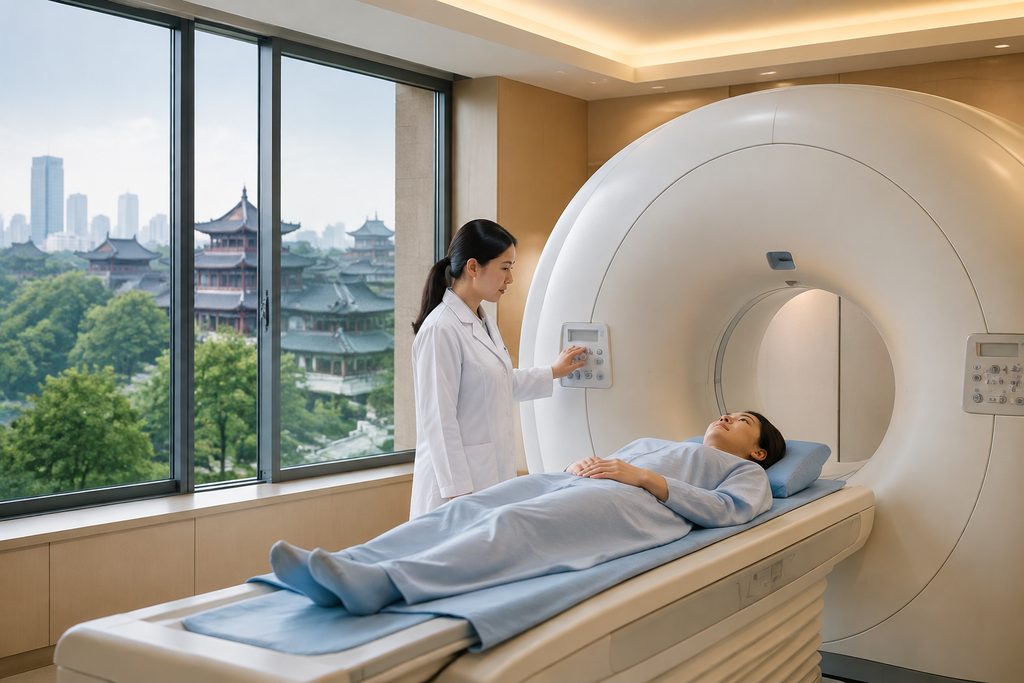
Key Takeaways
- Cancer screening cost Xi’an runs roughly $150–$900 depending on the package — often a fraction of what the same scans cost in the US or Europe.
- Xi’an has several top-tier public hospitals with international departments that can serve foreign patients, plus a growing number of private clinics with English-speaking staff.
- The hard part isn’t the medicine — it’s the logistics. Most public hospital outpatient slots cannot be reserved from overseas in advance, and walk-in registration is done in Chinese.
- You need a clear plan before you fly: which scans, which hospital, which visa, and how you’ll communicate once you’re there.
The Problem: Screening Is Expensive and Slow Where You Live
A full-body cancer screening package at a major US hospital can easily run $2,500 to $5,000. In the UK, private screening bundles frequently sit between £1,500 and £3,000. And even when you can afford it, the wait for a specialist appointment can stretch weeks or months.
That gap is why a growing number of international patients look east. China performs an enormous volume of diagnostic imaging every year, and its top hospitals have invested heavily in equipment that matches or exceeds what you’d find in a Western academic center. For someone who wants answers without a five-figure bill, the math starts to look different.
But here’s the honest part. Arranging screening in China as a foreigner is not like booking a hotel. The system is built for local patients, in Chinese, with same-day registration lines. Without preparation, you can land in Xi’an and spend two days just figuring out where to go.
Is Cancer Screening in China Reliable?
This is usually the first question people ask, and it deserves a straight answer.
China’s leading public hospitals are ranked by the Fudan University Hospital Rankings, a widely cited annual assessment. The top tier — labeled A++++ — includes institutions like Peking Union Medical College Hospital and West China Hospital. These are not fringe facilities. They are large academic centers that handle enormous patient volumes and participate in international research.
Imaging quality depends heavily on the equipment and the radiologist reading it. Major Chinese hospitals operate 3T MRI scanners, 128-slice and above CT machines, and PET-CT systems. Many hold JCI accreditation, the same international standard used by hospitals in the US and Europe.
What varies is the experience for foreign patients. A hospital can have excellent equipment and still be difficult to navigate if you don’t speak Mandarin. That’s a service problem, not a medical one — but it matters.
What “Reliable” Actually Means for You
Reliability in screening comes down to three things: the sensitivity of the test, the skill of the person interpreting it, and whether the results lead to appropriate follow-up. On all three, a top-tier Chinese hospital can deliver. The variable is whether you, as a foreigner, can access that system smoothly.
If you want a second read on results you already have, a written second opinion from a Chinese specialist is one option. That’s a report review, not a diagnosis — but it can tell you whether the findings were interpreted correctly.
Best Cancer Screening Hospital Xi’an for Foreigners: What to Look For
Xi’an is one of China’s largest cities and a major medical hub for the northwest region. It has several Grade 3A hospitals — the highest tier in China’s public hospital classification — with international departments or VIP wings.
When evaluating a hospital for screening, look for these signals:
- An international department or VIP clinic. These handle foreign patients, often with English-speaking coordinators and appointment scheduling ahead of arrival.
- JCI accreditation or a stated international patient program. Not every good hospital has this, but it’s a useful marker.
- Clear package pricing. Reputable hospitals publish screening bundles with itemized tests.
- PET-CT and 3T MRI availability. These are the workhorses of modern cancer screening.
You can browse hospital profiles by city on our Xi’an city page to see which facilities list international services.
How to Arrange Cancer Screening in Xi’an: A Step-by-Step Timeline
Here’s what the process actually looks like, from first decision to results in hand.
Weeks 1–2: Decide What You Need Screened
Screening isn’t one test. It’s a set of tests chosen based on your age, sex, family history, and risk factors. A 45-year-old woman with no family history needs something different from a 60-year-old man who smoked for 30 years.
Before you contact any hospital, write down your personal and family medical history. This determines whether you need a basic package or something more targeted.
Weeks 2–3: Choose a Hospital and Confirm the Package
Contact the hospital’s international department — or work through a coordinator who can reach them on your behalf. Ask for the specific screening package contents and price. A typical comprehensive package in Xi’an might include blood work, tumor markers, ultrasound, low-dose CT of the chest, and a specialist consultation.
Weeks 3–4: Handle the Visa
For medical travel to China, the applicable short-stay visa category is S2, which covers medical treatment and private affairs. Accompanying family members also apply under S2. Requirements are set by the Chinese embassy or consulate in your country and typically include an invitation or supporting document from the hospital.
The M visa is for commercial and trade activities. It is not a medical visa. Do not apply under M for treatment purposes.
Week 4: Arrival and Registration
Once you’re in Xi’an, the international department typically handles registration for you. If you’re going through the standard public channel instead, expect to register in person on the day, in Chinese, with a queue.
Days 2–4: Testing
Most screening packages are completed over one to three days. Blood draws and imaging are usually done on separate mornings. Some tests require fasting.
Days 4–7: Results and Consultation
Results are compiled and reviewed by a physician, who explains the findings. If something needs follow-up, this is when it’s flagged.
Cancer Screening Package China Price: What You’ll Actually Pay
Prices vary by hospital tier and package depth. The table below gives a realistic range for Xi’an compared with typical Western pricing.
| Screening Package | Typical Xi’an Price (USD) | Typical US Price (USD) |
|---|---|---|
| Basic (blood work, tumor markers, ultrasound) | $150–$300 | $800–$1,500 |
| Comprehensive (adds low-dose chest CT, abdominal imaging) | $400–$700 | $2,000–$3,500 |
| Advanced (adds MRI, PET-CT where indicated) | $900–$2,000+ | $4,000–$8,000+ |
These figures are indicative and vary by hospital and case complexity. PET-CT alone can push a package into the upper range. Always confirm the itemized list before committing.
Practical Considerations: Records, Payment, and Language
Bring your medical records. Prior imaging, pathology reports, and medication lists should be translated into English or Chinese in advance. Hospitals cannot interpret results without baseline context.
Payment at public hospitals is typically upfront, with insurance reimbursement handled afterward in your home country. Private international clinics often bill insurance directly. Check your policy before you travel — most Western insurers do not cover treatment in China without prior authorization.
Language is the single biggest friction point. Xi’an’s public hospitals operate in Mandarin. Interpretation is not provided by default. You can arrange a bilingual medical companion who handles registration, queuing, payment, and translation throughout your visit.
For follow-up after you return home, ask the hospital for a written report in English with imaging on disc. This lets your local physician continue care without repeating tests.
If you want to understand the broader landscape of Chinese hospitals before choosing, our overview of top-ranked hospitals by city is a useful starting point.
Frequently Asked Questions
Through a hospital’s international department or VIP clinic, yes — appointments can often be arranged in advance. Through the standard public outpatient channel, generally no. Same-day registration is the norm, and it’s done in Chinese.
A comprehensive package typically runs $400–$700 in Xi’an versus $2,000–$3,500 in the US. Advanced packages with PET-CT can reach $2,000 or more. Final pricing depends on the hospital and the specific tests included.
The hospital will recommend follow-up, which may include additional imaging, a biopsy, or a specialist consultation. Nothing is done without your consent. If treatment is advised, you can request a written plan and seek a second opinion before deciding. We do not provide diagnoses or guarantee outcomes — those decisions belong to you and your physicians.
Yes. The S2 visa covers short-stay medical treatment and private affairs. Requirements are set by the Chinese embassy or consulate in your country, and supporting documents from the hospital are usually required. Approval is never guaranteed.
Your Next Step
Screening in Xi’an is genuinely accessible and affordable — but it rewards preparation. Know what you need screened, confirm the package and price in writing, sort your visa early, and plan for the language gap.
We are China Medical Services, a coordination service that connects international patients with Chinese hospitals. We are not a hospital and we do not provide medical advice or diagnoses. If you’d like help identifying a suitable hospital or understanding your options, you can start with a free consultation — no pressure, no obligation.
For more medical information and treatment options in China, visit chinamedservices.com (China Medical Services).
