Cancer Screening in China: With a Checkup That Costs a Fraction
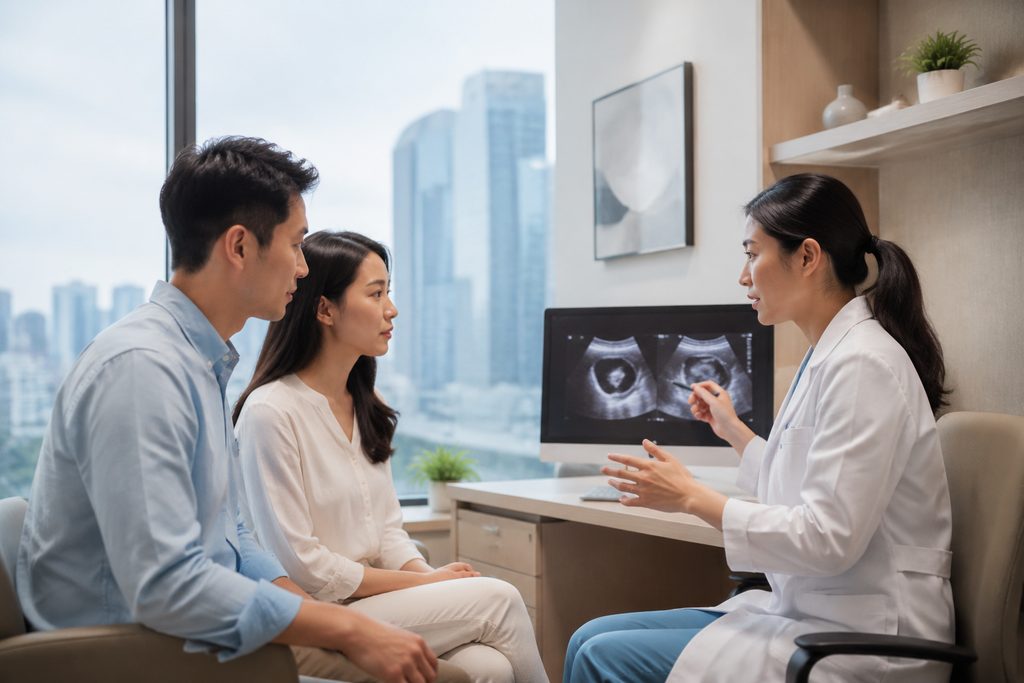
You’ve probably heard that a thorough cancer screening in China means crowded corridors, language barriers, and results you can’t trust. The reality sits somewhere more useful — and more complicated — than that. A full-body checkup with cancer screening at a top-tier Chinese hospital typically runs $300 to $2,000, versus $2,500 to $10,000 for comparable imaging and lab work in the United States. But the cancer screening cost China offers only matters if the quality holds up. It does, at a specific tier of hospitals. Find the wrong one and you’ve bought a stack of ultrasound printouts nobody abroad will read.
Our team works with international patients every week on exactly this question. Here’s what we’ve learned about who benefits, what it actually costs, and where the process gets harder than the brochures suggest.
Cancer Screening in China: The Short Answer
Yes, foreigners can book comprehensive cancer screening at Chinese hospitals, and the price is genuinely lower than in the US, UK, or Gulf states. A standard package combining blood tumor markers, low-dose CT, ultrasound, endoscopy where indicated, and specialist review lands between $300 and $2,000 at a public tertiary hospital, and $1,500 to $4,000 at a private international facility.
Here’s the caveat that changes everything: public hospitals in China generally do not let you reserve a routine outpatient screening slot from overseas in advance. You register on the day, in person, in a queue. The workaround is the hospital’s international or VIP department, which does allow pre-booking and English-speaking staff — at roughly 1.5 to 2 times the standard price.
Key takeaway: The savings are real, but they come with a process. Understanding the international-department route before you book is the difference between a smooth two-day checkup and a frustrating week of waiting rooms.
Who This Is Right For — and Who It Isn’t
Screening is not a tourist activity. It makes sense for some travelers and wastes money for others.
Typically a good fit:
- Adults 40+ with a family history of cancer who want imaging that would cost far more at home
- Patients whose home country has long waits for CT, MRI, or endoscopy
- People already traveling to China for business or family who can add two or three days
- Anyone seeking a second data point after an ambiguous result abroad
- Patients combining screening with a TCM consultation for chronic conditions — our traditional Chinese medicine hospital directory covers that route
Probably not worth it:
- Anyone with acute symptoms — that’s diagnosis, not screening, and needs a different pathway
- Patients who cannot travel for medical reasons or manage a 10–14 hour flight
- People expecting a single “scan everything” test. Good screening is targeted by age, sex, and risk
- Travelers without travel insurance or a plan for follow-up at home
Being honest about that second list matters more than the first. A screening package sold to the wrong person is a false sense of security, not a service.
The Options, Compared
Where you go changes what you pay and what you get. This table reflects typical 2026 ranges for a comprehensive adult screening package.
| Option | Typical Cost (USD) | English Support | Booking From Abroad | Best For |
|---|---|---|---|---|
| Public tertiary hospital, standard channel | $300–$800 | Limited | Usually not possible | Budget-focused, Chinese-speaking |
| Public hospital international / VIP department | $600–$2,000 | Yes | Yes | Most foreign patients |
| Private international hospital | $1,500–$4,000 | Full, native-level | Yes | Insurance direct billing, comfort |
| US academic medical center | $2,500–$10,000 | Native | Yes, with waits | Local follow-up continuity |
Which column suits you depends less on budget than on what happens after. If an abnormality shows up, you want a hospital that can act on it the same week — and a plan for who reads those images once you’re home.
Finding the Best Cancer Screening Hospital in Shanghai and Beyond
Shanghai concentrates 18 hospitals in the Fudan Top 100 ranking, second only to Beijing’s 21. That density is why the search “best cancer screening hospital Shanghai” returns so many answers — and why the answer depends on what you’re screening for.
Fudan’s specialty reputation rankings list the top 10 hospitals in 45 specialties, including oncology. A hospital ranked among China’s top 10 for oncology will have deeper imaging and pathology capacity than a general hospital of similar size. For screening specifically, that matters most when something is found.
Three practical filters narrow the list fast:
- Oncology ranking: Is the hospital in the Fudan top 10 for oncology or the relevant organ specialty?
- International department: Can they register you in advance and provide English reports?
- Turnaround: How many days until results and specialist review? Public hospitals vary from 2 to 10 days.
Our specialty rankings directory lists the top 10 hospitals across all 45 Fudan specialties, and the Fudan Top 100 hospital guide groups them by city with tier labels. Both are useful starting points before you commit to a package.
How Much Does Cancer Screening Cost in China?
Prices vary by hospital and case complexity, so treat every figure as a range, not a quote. What drives the variance:
- Imaging volume. A low-dose chest CT adds $80–$200. A full-body MRI can add $600–$1,500
- Endoscopy. Gastroscopy or colonoscopy with sedation runs $150–$400 each
- Tumor markers. A standard panel of 5–10 markers costs $60–$150
- Hospital tier. International departments charge 1.5–2x the standard rate
- Speed. Same-day or next-day reporting costs more than a 5-day turnaround
What’s usually included: consultation, imaging, lab work, and a written report. What’s usually not: treatment, biopsy, pathology if something is found, and any follow-up procedures. Budget separately for those. A biopsy with pathology at a top hospital typically runs $300–$800.
For context, a cardiac bypass at a top Chinese public hospital costs $12,000–$20,000 against $120,000+ in the US. Screening sits on the same cost curve.
Practical tip: Ask for an itemized package quote before you commit. Two hospitals quoting “$800” can include very different imaging. Compare line by line, not totals.
Practical Considerations: Records, Visa, and Payment
The logistics trip up more patients than the medicine does.
Records. Bring your existing imaging on disc and any prior reports, translated into English or Chinese. Radiologists comparing a new scan to an old one catch things a standalone scan misses.
Visa. Medical travel to China uses the S2 visa, which covers short-stay medical treatment and private affairs. Stays over 180 days require S1. Accompanying family members apply for S2 as well. Note that the M visa is for commercial and trade activity only — it is not a medical visa. Requirements shift, so confirm current rules with the nearest Chinese embassy or consulate and bring your hospital’s supporting documents.
Payment. Public hospitals require prepayment, with insurance reimbursed afterward. Private international hospitals often bill insurers directly. Check your policy’s overseas coverage before you fly.
Language. Top Chinese hospitals see tens of thousands of outpatients daily. Without Mandarin, navigating registration, payment, and imaging floors is genuinely difficult. A bilingual medical companion — from $300 per day for a half or full day of queueing, translation, and escorting — removes that friction. It does not guarantee a specific doctor or appointment slot.
Follow-up. Get your images and reports in a format your home physician can read. This is the step patients most often forget, and it’s the one that determines whether the screening has lasting value.
Frequently Asked Questions
At Fudan-ranked hospitals and JCI-accredited private facilities, imaging equipment and pathology standards match or exceed Western norms. The variable is not the medicine — it’s whether you land at the right hospital and can communicate with the staff. Choose a hospital with an international department and the reliability question mostly answers itself.
Expect roughly one-fifth to one-half of US pricing. A comprehensive package runs $300–$2,000 at a public hospital international department, versus $2,500–$10,000 in the US for comparable imaging and labs. Final cost depends on which scans and endoscopies your risk profile actually requires.
At public hospitals, routine outpatient screening cannot be pre-booked from abroad — you register on arrival. International and VIP departments do allow advance booking, and that’s the route most foreign patients take. Private international hospitals also accept overseas bookings directly.
Screening ends where diagnosis begins. A suspicious finding leads to biopsy, pathology, and specialist review — typically adding $300–$800 and several days. Some patients choose to return home for treatment; others continue in China after remote evaluation clarifies a feasible plan. Either path is workable, but decide before you travel, not after.
Yes. The S2 visa covers short-stay medical treatment, and accompanying family members apply under the same category. Confirm current requirements with your nearest Chinese embassy or consulate, since documentation rules change. The M visa does not apply to medical travel.
Your Next Step
The core message is simple: cancer screening in China delivers real value at a specific tier of hospitals, and the process — not the price — is what separates a good experience from a wasted trip. Know which hospital fits your risk profile, know what the package includes, and know what happens if something is found.
We are a medical concierge service, not a hospital. We don’t diagnose, and we don’t promise outcomes. What we do is match you with the right department, coordinate appointments through official hospital channels, arrange bilingual companions, and help with visa and travel logistics. A written second opinion from a top-hospital specialist runs $300–$500, and any consultation fee is credited in full toward on-the-ground coordination if you travel within 90 days.
If you’d like to talk through your situation before committing to anything, start with a free consultation. No pressure, and no obligation to travel.
This article is for general information only and is not medical advice. Screening recommendations depend on individual risk factors. Consult a qualified physician before making decisions about cancer screening or treatment.
For more medical information and treatment options in China, visit chinamedservices.com (China Medical Services).
