Undiagnosed Condition Investigation in China: Full Workup for Mystery Symptoms
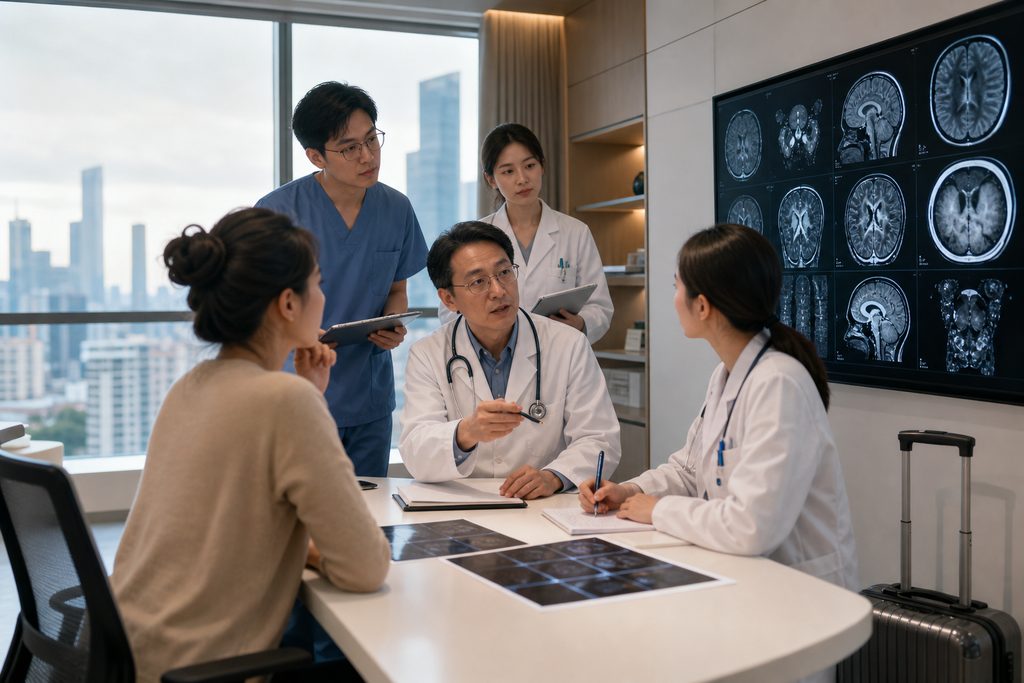
When 34-year-old Sarah first noticed the numbness in her hands, she assumed it was a pinched nerve. Six months, four specialists, and $18,000 in tests later, she had no diagnosis. Just a growing stack of “normal” results and a body that still didn’t feel like her own. Her experience isn’t rare. It is, in fact, a silent epidemic.
Approximately 1 in 10 patients seeking care for persistent physical symptoms leaves without a clear diagnosis, according to research published in the *Journal of General Internal Medicine*. These are not hypochondriacs. They are people with real symptoms and no name for what’s happening to them. For many, the search becomes a full-time job. They cycle through the same specialists, the same standard panels, the same dead ends. Until someone thinks to look somewhere entirely different.
That somewhere is increasingly China.
Key Takeaways
- A comprehensive undiagnosed condition investigation in China costs $2,000–$8,000, compared to $15,000–$50,000 for equivalent workups in the United States.
- China’s top diagnostic hospitals run high-volume internal medicine departments that see rare presentations daily—volume that directly sharpens diagnostic accuracy.
- Language barriers and hospital registration systems make independent navigation extremely difficult; a bilingual coordinator is not a luxury, it’s a practical necessity.
- No investigation guarantees a diagnosis. The value is in accessing a fresh clinical perspective, advanced imaging, and genetic panels that may not have been considered in your home country.
The Problem: When Your Body Doesn’t Make Sense to Western Medicine
Living with an undiagnosed condition means living in a medical no-man’s-land. You are too sick to be well, but too “normal” on paper to be treated. Standard lab values come back within range. Imaging shows nothing structural. Specialists, each brilliant in their narrow domain, look at you through the lens of their own specialty and see no obvious pathology. They refer you onward. The cycle repeats.
This is not a failure of individual doctors. It is a structural limitation of fragmented, specialist-driven healthcare systems. In the US, the average patient with a rare or elusive condition waits 4.8 years for an accurate diagnosis, according to the National Organization for Rare Disorders. During that time, they see an average of 7.3 physicians. The financial toll is staggering. One study in the *Mayo Clinic Proceedings* found that patients with medically unexplained symptoms incur healthcare costs roughly twice those of patients with clearly defined diagnoses—not because they are sicker, but because the diagnostic process itself is inefficient and repetitive.
And then there’s the psychological weight. The unspoken question from family, from employers, even from yourself: Is this real? The answer is yes. The pathology exists. It simply hasn’t been found yet.
Who We Are
We are not a hospital. We do not provide medical treatment or clinical diagnoses. Our team at China Medical Services functions as your logistical architects—we bridge the gap between you and China’s top-tier diagnostic hospitals. We handle hospital selection, appointment coordination with international departments, bilingual medical companion services, and visa guidance. We connect you with the right clinical teams. We translate your medical history. We make sure nothing gets lost between languages or systems. But the white coat, the stethoscope, the clinical judgment—that belongs to the physicians at institutions like Peking Union Medical College Hospital and Zhongshan Hospital. We simply make sure you can actually reach them.
Why an Undiagnosed Condition Investigation in China Delivers Results
Clinical Volume That Reshapes Diagnostic Instinct
Chinese top-tier hospitals operate at a scale that rewires a physician’s pattern recognition. Peking Union Medical College Hospital (PUMCH) in Beijing sees over 5 million outpatient visits annually. Its internal medicine department alone handles a patient volume that would be spread across a dozen institutions in most Western countries. A senior internist at PUMCH might encounter three or four atypical presentations of autoimmune disease in a single morning. Over a career, that adds up to tens of thousands of diagnostic puzzles.
Volume doesn’t just build experience. It builds a specific kind of clinical intuition. When a physician has seen 500 cases of a rare condition, the 501st doesn’t look mysterious. It looks familiar. This is the quiet advantage of China’s high-throughput hospital system. It is not that Chinese doctors are inherently more skilled. It is that the system feeds them an intensity of clinical exposure that sharpens diagnostic accuracy in ways smaller, lower-volume practices cannot replicate.
what is the best hospital for unexplained symptoms in Beijing
When patients ask us what is the best hospital for unexplained symptoms in Beijing, our answer is consistent: Peking Union Medical College Hospital. PUMCH’s Department of General Internal Medicine was explicitly designed for patients with undiagnosed and multi-system conditions. It is one of the few departments in the world built from the ground up to investigate mystery illnesses rather than treat confirmed ones. The department runs a dedicated “difficult diagnosis” consultation service where complex cases are reviewed by a multidisciplinary team. This is not an ad-hoc arrangement. It is institutionalized.
Other strong contenders include Ruijin Hospital in Shanghai, whose endocrinology and metabolic disease unit has identified several novel disease pathways in the past decade, and West China Hospital in Chengdu, which operates one of Asia’s largest rheumatology and immunology centers. For patients whose symptoms suggest an autoimmune or autoinflammatory origin, West China’s volume in this subspecialty is difficult to match anywhere outside China. Our top-ranked hospital database can help you understand which institution aligns with your specific symptom profile.
medical mystery investigation clinic Shanghai
Shanghai has quietly built a reputation as a destination for complex diagnostics. Zhongshan Hospital, affiliated with Fudan University, runs what amounts to a medical mystery investigation clinic Shanghai model through its International Medical Center. The center coordinates across cardiology, neurology, rheumatology, and infectious disease departments in a single diagnostic pathway. A patient with unexplained fevers, for instance, can see an infectious disease specialist and a rheumatologist on the same day, with imaging and labs processed within 48 hours. This compressed timeline is not about rushing. It is about preventing the diagnostic decay that happens when weeks pass between specialist visits and clinical pictures blur.
Ruijin Hospital’s Department of Clinical Immunology takes a similar approach. For patients whose symptoms include chronic fatigue, joint pain, and cognitive fog—the classic triad that stumps so many Western workups—Ruijin runs an extended autoimmune panel that includes markers rarely ordered in standard US or European rheumatology screenings. Sometimes the answer is in a test that simply wasn’t run before.
comprehensive diagnostic package for chronic fatigue China price
Chronic fatigue is one of the most common yet most diagnostically slippery presentations. Patients often ask us about a comprehensive diagnostic package for chronic fatigue China price. The answer varies by hospital and scope, but a thorough workup—including advanced autoimmune panels, viral reactivation testing (EBV, HHV-6, CMV), mitochondrial function markers, and full endocrine profiling—typically ranges from $2,500 to $5,000. This is roughly one-fifth to one-tenth the cost of an equivalent investigation in the US, where fragmented billing and out-of-network lab fees can push the same workup past $20,000.
The cost difference is structural, not quality-based. Chinese public hospitals operate on nonprofit models with state-subsidized infrastructure. Labor costs for lab technicians, radiologists, and support staff are lower. Equipment—often the same Siemens, GE, or Philips machines found in US hospitals—is amortized across vastly higher patient volumes. The result is a lower per-unit cost without a lower standard of care.
can Chinese doctors diagnose rare diseases I have
This question—can Chinese doctors diagnose rare diseases I have—sits at the heart of every international patient’s concern. The short answer is yes, with important context. China launched its National Rare Disease Network in 2019, designating 324 hospitals as official rare disease diagnosis and treatment centers. These hospitals are required to maintain rare disease registries, participate in nationwide case-sharing databases, and meet minimum diagnostic volume thresholds. The network covers conditions from hereditary angioedema to Fabry disease to mitochondrial disorders.
But the real diagnostic power lies in something less formal: exposure volume. China’s population of 1.4 billion means that even a disease with a prevalence of 1 in 200,000 will appear roughly 7,000 times across the country. A physician working in a major urban hospital will encounter these cases with a frequency that simply doesn’t happen in smaller-population countries. For patients who have been told their condition is “too rare to diagnose,” this statistical reality matters.
mystery illness full workup cost China: What to Expect
Let’s talk numbers directly. A mystery illness full workup cost in China breaks down into several components. The core investigation—inpatient admission to a general internal medicine department with comprehensive lab panels, advanced imaging (MRI, CT with contrast, PET-CT if indicated), and specialist consultations—runs from $2,000 to $5,000 for a 5-7 day stay. If genetic testing is warranted, whole-exome sequencing adds approximately $800 to $1,500. Whole-genome sequencing, when clinically indicated, ranges from $1,500 to $3,000. These prices are for the hospital services only and vary by institution and case complexity.
Our coordination services are separate. A bilingual medical companion starts from $200 per day. Hospital appointment coordination, including medical record translation and international department liaison, starts from $300. For a typical two-week diagnostic visit, patients should budget approximately $6,000 to $10,000 all-in, including hospital charges, our coordination fees, accommodation, and local transport. This is not cheap in absolute terms. But measured against the alternative—years more of uncertainty, repeated specialist visits at home, lost income, and the psychological cost of living without answers—it is a rational investment.
| Diagnostic Component | China (USD) | US Estimate (USD) |
|---|---|---|
| Comprehensive lab panel (autoimmune, infectious, metabolic) | $800–1,500 | $3,000–8,000 |
| Advanced imaging (MRI, CT, PET-CT as indicated) | $600–2,000 | $4,000–15,000 |
| Whole-exome genetic sequencing | $800–1,500 | $2,500–5,000 |
| 5-day inpatient diagnostic stay | $1,500–3,000 | $10,000–25,000 |
| Multidisciplinary team review | $500–1,000 | $2,000–5,000 |
What You Need to Know Before Going Alone
Transparency is essential here. Navigating a Chinese hospital as a foreign patient without local support is genuinely difficult. Not impossible—but difficult enough that we’ve seen capable, intelligent people fail at it. Here’s what you’re up against:
- Registration Systems: Chinese public hospitals do not allow international patients to book appointments online through standard channels. You cannot simply visit a hospital website, select a specialist, and reserve a slot. Registration requires either an in-person visit to a hospital kiosk (with Chinese-language interface) or access through a hospital international department that handles foreign patients separately. Without a local coordinator, you may arrive in Beijing or Shanghai only to discover you cannot see the specialist you traveled to meet.
- Language Barrier in Clinical Settings: Even in top-tier hospitals, English proficiency among nursing staff, lab technicians, and administrative personnel is inconsistent. A physician may speak excellent medical English, but the phlebotomist drawing your blood, the radiologist positioning you for an MRI, and the billing clerk processing your payment likely will not. Critical details—medication allergies, symptom nuances, test preparation instructions—can be lost.
- Medical Record Requirements: Chinese hospitals require translated, notarized medical records for international patients. Your existing imaging must be provided in DICOM format on CD or USB. Pathology slides must be physically delivered for re-reading—digital scans are not accepted for primary diagnosis. These requirements are strict and non-negotiable. Missing one can delay your workup by days or render it impossible.
How We Help You Navigate This
These barriers exist for structural reasons, not malice. Chinese hospitals were built to serve a domestic population of 1.4 billion. International patients represent a tiny fraction of their volume, and the systems were not designed with foreign visitors in mind. Our role is to bridge that gap.
Before you travel, we translate and format your medical records to meet Chinese hospital standards. We coordinate directly with the international departments at hospitals like PUMCH, Ruijin, and Zhongshan to secure appointments with the appropriate specialists. We don’t guess which department you need—we review your history and match you to institutions with demonstrated diagnostic strength in your symptom profile. During your stay, a bilingual medical companion accompanies you to every appointment. This person handles registration, payment, translation, and the dozens of small logistical tasks that would otherwise consume your energy and attention. After your workup, we ensure you receive translated discharge summaries, lab reports, and imaging results in a format your home-country physicians can use.
The diagnostic investigation itself—the clinical reasoning, the test selection, the final interpretation—belongs to the Chinese physicians. We do not influence it. We simply make sure you can access it without friction. For patients considering a broader evaluation, our patient coordination services page outlines the full scope of what we handle.
Frequently Asked Questions
Most undiagnosed condition investigations require a 5- to 10-day inpatient stay. Complex cases involving genetic sequencing or multi-specialty consultations may extend to two weeks. Chinese hospitals move quickly—labs are often processed same-day, and imaging results are typically available within 24 hours. The compressed timeline is one of the structural advantages of the system.
This is the hardest truth to deliver, and we deliver it upfront: no workup guarantees an answer. Some conditions remain elusive even after exhaustive investigation. What changes is the quality of the negative result. A thorough workup at a high-volume Chinese hospital rules out a broader range of possibilities than a fragmented series of specialist visits at home. That negative result has value—it closes doors, narrows the search, and sometimes provides the evidence needed to shift focus toward symptom management rather than further diagnostics.
Most international health insurance plans do not provide direct billing at Chinese public hospitals. You will typically pay upfront and seek reimbursement from your insurer. Private international hospitals in China, such as United Family Healthcare, do offer direct billing with major insurers, but their diagnostic departments are smaller and may not provide the same depth of investigation as a major public hospital’s internal medicine department. We recommend checking with your insurer before travel. We can provide itemized receipts and translated medical documentation to support your claim.
If your workup yields a diagnosis that requires treatment, the same hospital can typically provide it. This is a significant advantage of conducting your investigation at a major Chinese hospital—continuity of care is immediate. Your diagnostic team can refer you directly to the appropriate specialty department, often within the same institution. Our coordination services extend through treatment and recovery. Any consultation fees you’ve paid are credited in full toward on-the-ground coordination if you return for treatment within 90 days.
The question of how to diagnose undiagnosed condition in China starts with a single practical step: organizing your medical history. Before we can match you with a hospital or specialist, we need a clear timeline of your symptoms, all prior test results, imaging files, and a summary of treatments you’ve tried. This documentation forms the foundation of your case presentation to the Chinese clinical team. Without it, no serious investigation can begin. Once we have your records, we can provide a specific hospital recommendation and cost estimate within 3-5 business days.
Your Next Step
Living without a diagnosis is exhausting in ways that people who’ve never experienced it cannot understand. Every normal test result is both a relief and a disappointment. Every new specialist is both hope and the dread of starting over. You deserve a fresh set of eyes on your case—eyes that have seen thousands of atypical presentations and have the institutional resources to investigate thoroughly. China’s top diagnostic hospitals offer that. We offer the bridge to reach them.
If you’re ready to explore what a comprehensive investigation could look like for your specific situation, reach out to our team. There’s no cost for the initial conversation, and no pressure to commit. Sometimes the most important step is simply opening a door you didn’t know existed.
For more medical information and treatment options in China, visit chinamedservices.com (China Medical Services).
