Digital Detox and Mental Reset Retreat Plus Medical Check-Up China: A Complete 2026 Guide
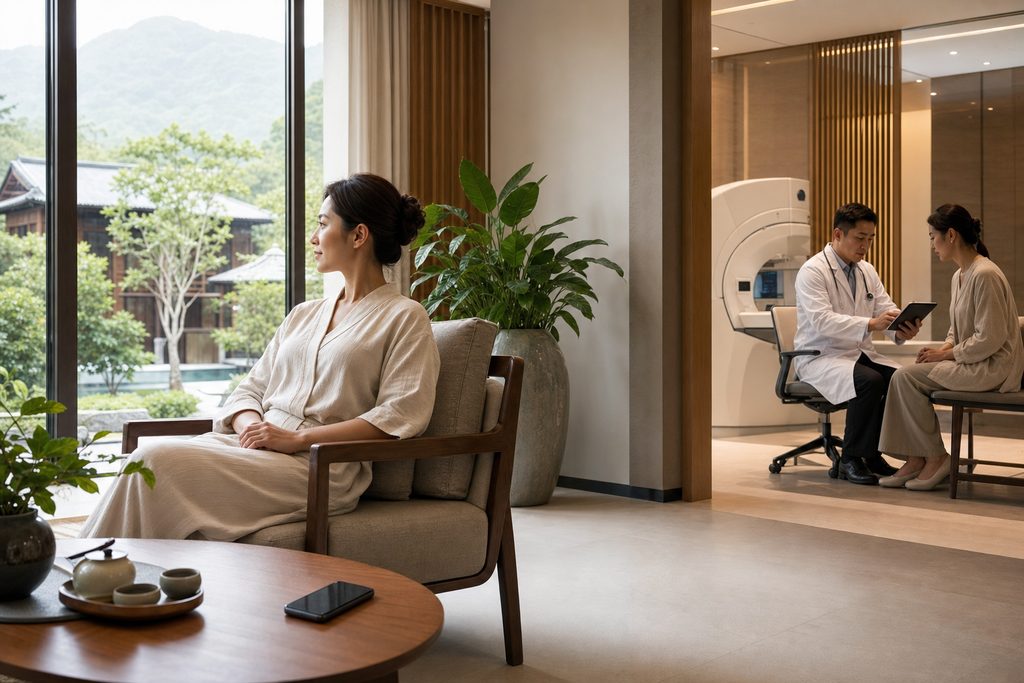
When 38-year-old Sarah from London booked her flight to Shanghai, she carried two things: a work phone she was terrified to turn off and a gnawing exhaustion that no weekend break had touched. Six months of disrupted sleep. Constant notifications. Her last full medical check-up had been three years ago, squeezed between meetings. She needed to step off the hamster wheel entirely. Not just a spa weekend. Something deeper — a structured mental reset paired with a proper medical baseline. She had searched “how much does a wellness retreat with health screening cost in China” and found a landscape of vague promises and zero pricing. That is where our team comes in.
We are not a hospital. We do not provide medical treatment or clinical diagnoses. We are your logistical architects — we bridge the gap between you and China’s top-tier medical expertise. When someone like Sarah wants to combine a genuine digital detox with a serious medical check-up in a country known for both ancient wellness traditions and cutting-edge diagnostics, we build the framework that makes it possible.
Key Takeaways
- Combining a structured digital detox with an executive health screening in China costs between $1,800 and $6,500 for a 5-10 day program — roughly 40-60% less than comparable retreats in Switzerland or California.
- China is one of the few places where you can pair a TCM-based mental reset (acupuncture, herbal therapy, qigong) with a same-day full-body MRI and cardiac stress test at a hospital ranked in the Fudan Top 100.
- Language barriers and hospital navigation are real obstacles — walking into a public Chinese hospital without a bilingual companion is overwhelming, and most wellness retreats do not include medical coordination.
- Not all retreats labeled “medical” are equal. Some are hotel spas with a blood pressure check. Others include board-certified internal medicine evaluations. You need to know the difference before booking.
The Problem: Burnout Has Become a Global Epidemic — and Regular Vacations Do Not Fix It
The World Health Organization classified burnout as an occupational phenomenon in the ICD-11, describing it as a syndrome of chronic workplace stress characterized by exhaustion, mental distance from one’s job, and reduced professional efficacy. A 2024 Gallup study of over 12,000 full-time workers across seven countries found that approximately 23% reported feeling burned out often or always. That is nearly one in four people. The standard response — take a week off, go somewhere warm, check emails by the pool — does not address the underlying physiological dysregulation. Cortisol rhythms stay flattened. Sleep architecture remains disrupted. The phone stays on.
A genuine mental reset requires two things most vacations lack: a deliberate break from digital stimuli and a physiological health baseline. Without the baseline, you are treating symptoms blindly. Is the fatigue from adrenal depletion? Thyroid dysfunction? Early-stage metabolic syndrome? You cannot meditate your way out of a vitamin D deficiency. This is exactly why a medical wellness retreats abroad with psychological evaluation option makes structural sense. You get the data alongside the decompression.
Who We Are
China Medical Services connects international patients with a curated network of 340+ top-ranked hospitals across 37 cities in China. We handle hospital matching, appointment coordination, bilingual medical companion services, and visa guidance — all the infrastructure that makes a cross-border health journey possible. We do not run retreats ourselves. What we do is vet the medical components of retreat programs and coordinate the clinical side so that your mental reset package with medical checkup Shanghai or Beijing actually delivers clinical value, not just a nice view and some herbal tea.
Why China Delivers a Unique Combination of Digital Detox and Medical Screening
Traditional Chinese Medicine Offers a Structured Framework for Nervous System Recovery
Western wellness retreats tend to treat stress with generic relaxation — massages, saunas, maybe a yoga class. Traditional Chinese Medicine approaches it differently. TCM views burnout as a pattern of qi stagnation and yin deficiency, and the interventions are specific: acupuncture at points like Shenmen (HT7) and Sanyinjiao (SP6) to regulate the autonomic nervous system, herbal formulas customized to your pulse diagnosis, and movement practices like qigong and tai chi that have measurable effects on heart rate variability. A 2023 meta-analysis published in the Journal of Affective Disorders reviewed 27 randomized controlled trials and found that acupuncture significantly reduced both subjective anxiety scores and salivary cortisol levels compared to sham controls. This is not placebo. It is a systematized, multi-modal approach to nervous system recalibration that has been refined over centuries.
What makes China different is that you can access this tradition at its source, delivered by practitioners trained in hospitals affiliated with major TCM universities — not a weekend-certified practitioner in a Western spa. Our TCM hospital network includes institutions where acupuncture, tuina massage, and herbal medicine are integrated with modern diagnostics.
Executive Health Screenings Here Are Faster, More Comprehensive, and Radically Cheaper
Consider the logistics of a full executive physical in London or New York. You book a GP appointment. Wait two weeks. Get referred to a cardiologist. Wait another three weeks. Schedule blood work at a separate lab. Wait for results. A comprehensive screening can stretch across two months and cost $3,000 to $8,000 depending on imaging requirements. In China, the same package — including a full-body MRI, cardiac ultrasound, stress ECG, comprehensive blood panel covering tumor markers and metabolic function, and specialist consultations — can be completed in a single morning. Cost typically ranges from $800 to $2,500 depending on the hospital tier and imaging depth. That is not a typo.
The structural reason is straightforward. Chinese top-tier hospitals operate at enormous scale. A hospital like Peking Union Medical College Hospital or Zhongshan Hospital processes thousands of outpatients daily. Their imaging departments run continuously. The throughput drives unit costs down without compromising quality — these are the same Siemens and GE machines used in any major Western hospital, operated by radiologists who read tens of thousands of scans annually. For international patients booking through a hospital’s international VIP department, the entire screening is coordinated as a single streamlined visit with an English-speaking coordinator. Our team handles the appointment scheduling, document translation, and on-the-day escort so you are not navigating the hospital maze alone. Learn more about how we coordinate these screenings on our patient services page.
Cost Comparison: What You Actually Pay for a Combined Retreat and Screening
Let us look at real numbers. The best digital detox retreat China prices cluster in three tiers, and understanding what each tier includes is essential to making an informed decision.
| Program Tier | Duration | Medical Component | Wellness Component | Approximate Cost (USD) |
|---|---|---|---|---|
| Entry-Level Retreat + Basic Screening | 5 days | Basic blood panel, blood pressure, BMI, resting ECG | Daily yoga/meditation, digital detox protocol, 2 acupuncture sessions | $1,800 – $2,800 |
| Mid-Tier Retreat + Executive Physical | 7 days | Full-body MRI, cardiac ultrasound, comprehensive metabolic panel, tumor markers, specialist consult | Structured TCM program (acupuncture, tuina, herbal consult), qigong, nutritional counseling, psychological evaluation session | $3,200 – $4,800 |
| Premium Integrated Program | 10 days | All mid-tier screenings plus CT coronary calcium score, genetic testing panel, sleep study, endoscopy | Daily one-on-one TCM treatment, private tai chi instruction, full psychological assessment and 3 follow-up therapy sessions, post-retreat health plan | $5,500 – $8,000 |
Prices vary by hospital and case complexity. A screening at a Fudan-ranked public hospital’s international department will fall toward the lower end of these ranges. A program anchored at a private international hospital like United Family or Jiahui, where every staff member speaks English and insurance is directly billed, will trend toward the upper end. Both are valid options — the right choice depends on your comfort with navigating a partially Chinese-speaking environment versus paying a premium for a fully Western-style experience. If you are searching for how much does a wellness retreat with health screening cost in China, these are the honest brackets.
Is It Safe to Do a Digital Detox Program in Beijing? Addressing the Practical Concerns
This question comes up more often than you might expect. The short answer is yes — Beijing, Shanghai, and China’s other major cities are safe for international visitors, and the retreat environments themselves are typically located in quiet suburban or scenic areas well removed from urban congestion. But safety is not just about crime statistics. It is about medical safety, data privacy, and what happens if something goes wrong.
On the medical side, any retreat program worth considering should have a direct referral pathway to a reputable hospital’s international department. This is non-negotiable. If a retreat advertises “medical supervision” but cannot name the specific hospital and department they work with, walk away. Our team only coordinates with retreat partners that have documented clinical affiliations with hospitals in our verified network of top-ranked institutions. If you experience a medical issue during your retreat — an abnormal ECG finding during screening, for instance — there is a clear protocol for immediate specialist follow-up, not a vague promise to “connect you with someone.”
Data privacy is another concern. China’s Personal Information Protection Law (PIPL), enacted in 2021, establishes legal frameworks for handling personal data including health information. In practice, international patients booking through hospital VIP departments have their records managed with the same confidentiality standards applied in any JCI-accredited facility. If you are booking a mental health reset package with medical checkup Shanghai through a reputable coordinator, your psychological evaluation data stays between you, your clinician, and whoever you explicitly authorize to receive it.
What You Need to Know Before Going Alone
It is technically possible to book a retreat and hospital screening independently. It is also technically possible to re-tile your own bathroom. Both are harder than they look, and mistakes are expensive. Here is what the independent route actually involves.
- Visa Requirements: You cannot enter China for medical purposes on a standard tourist visa (L). Medical treatment and health screenings require an S2 visa with a notation specifying the medical purpose. Your accompanying family members also need S2 visas. The application requires an invitation letter from the Chinese hospital or a medical coordination agency. Applying without this documentation leads to visa rejection — and a rejected visa on your record complicates future applications. We provide the invitation documentation as part of our coordination service.
- Hospital Registration Systems: Chinese public hospitals do not allow international patients to pre-book outpatient appointments online without a Chinese ID number and local phone number. The registration portals are entirely in Chinese. Walk-in registration means joining a queue that can number in the hundreds by 7 AM. Even if you get registered, the consultation will be conducted in Mandarin unless you specifically book through the hospital’s international department — which often has separate booking channels not listed on the main hospital website.
- Payment Infrastructure: Public hospitals in China operate on a prepaid card system. You load money onto a hospital-specific card at a kiosk (Chinese interface only), then swipe it at each department. International credit cards are not accepted at these kiosks. You need either a Chinese bank account, WeChat Pay or Alipay linked to a Chinese card, or a large amount of cash. Some international departments accept foreign cards, but many still do not. Going in unprepared means standing at a payment kiosk with a useless Visa card while your appointment slot passes.
How We Help You Navigate This
These barriers are not design flaws. They are the natural result of a healthcare system built to serve 1.4 billion domestic patients, where international visitors represent a tiny fraction of volume. The system was not designed for you. That is not a judgment — it is simply a fact. Our job is to build the bridge.
Before you travel, we handle the hospital matching. Tell us what kind of screening depth you want and what wellness components matter to you. We identify the right hospital international department and retreat partner, coordinate the appointment schedule so your screening and retreat days do not conflict, and provide the invitation documentation for your S2 visa application. We also arrange your airport transfer and accommodation recommendations — practical logistics that reduce cognitive load before you even board the plane.
During your stay, a bilingual medical companion accompanies you to every hospital visit. This person handles registration, payment logistics, queue navigation, and real-time translation during consultations. You focus on your health. We handle the friction. If your screening returns abnormal findings — an elevated tumor marker, a cardiac anomaly — we coordinate immediate specialist follow-up so you are not left with a scary lab result and no next step.
After you return home, we ensure you have translated medical reports in English, complete with imaging files on a USB drive. If follow-up is needed, we can arrange a remote video consultation with the same specialist. Any coordination fees you paid are credited in full toward future in-person services within 90 days — a policy designed to make continuity of care financially seamless.
For those specifically looking to book holistic mental reset and full body checkup China packages, we can structure the entire itinerary so the psychological evaluation component happens early in the retreat, giving the wellness team clinical data to tailor your TCM and therapy sessions accordingly. This is the kind of integration that does not happen when you book a retreat and a hospital screening as two separate, unconnected transactions.
Frequently Asked Questions
In a public hospital’s general outpatient department, almost certainly not. Most Chinese physicians read English medical literature but are not conversationally fluent. In a hospital’s international department or a JCI-accredited private hospital, English-speaking physicians are standard. Our bilingual medical companions bridge any remaining gaps — they translate complex medical terminology accurately because they are trained specifically for clinical settings, not general tourism interpretation.
This is the scenario where having a coordinator matters most. If your executive screening detects a suspicious finding, we immediately facilitate a specialist consultation — often same-day or next-day, given the throughput of Chinese hospitals. You are not sent home with a report and told to figure it out. The retreat program adjusts around your medical needs. If treatment is required, we coordinate the full pathway: additional imaging, surgical consultation, admission scheduling. The 90-day credit policy means any coordination fees already paid apply toward the expanded services.
Some are. The market has plenty of hotels that have rebranded a massage package as a “wellness retreat” and added a blood pressure check to call it “medical.” We distinguish between these and legitimate programs by looking at one thing: clinical affiliation. A real medical wellness retreat has a documented relationship with a specific hospital department, board-certified physicians involved in the screening component, and a clear protocol for abnormal findings. If a retreat cannot name the hospital and department they work with, it is a spa. We only coordinate with programs that meet the clinical threshold.
We recommend a minimum of four to six weeks. The limiting factor is usually the S2 visa processing time, which varies by country but typically takes two to three weeks from application submission. Hospital international department screening slots are generally available with one to two weeks’ notice — far shorter than Western wait times — but retreat accommodations at the better programs fill up during peak seasons (spring and autumn). Last-minute bookings are sometimes possible but limit your options.
It depends entirely on your policy. Some international insurers with direct billing agreements at JCI-accredited private hospitals in China will cover preventive screening if it is coded as an executive physical. Most will not cover the retreat component. Public hospital international departments typically require upfront payment regardless of insurance — you pay, then submit for reimbursement. We provide properly coded invoices and translated medical documentation to support your claim, but we cannot guarantee your insurer will approve it. Check your policy’s preventive care and out-of-network provisions before booking.
Your Next Step
Combining a genuine digital detox with a thorough medical baseline is one of the most efficient investments you can make in your long-term health. You step away from the noise, reset your nervous system, and walk out with actual clinical data — not just a temporary sense of calm, but a roadmap. China offers a unique infrastructure for this: world-class diagnostics at a fraction of Western prices, delivered alongside a wellness tradition that has been treating burnout patterns for centuries. The logistics are real, but they are solvable. Our team handles the complexity so your only job is to show up and do the work of resetting. If you are ready to explore what a structured program would look like for your specific situation, reach out for a free consultation. No pressure. Just clarity.
For more medical information and treatment options in China, visit chinamedservices.com (China Medical Services).
