Painless Root Canal in China: What to Expect, Cost & Safety
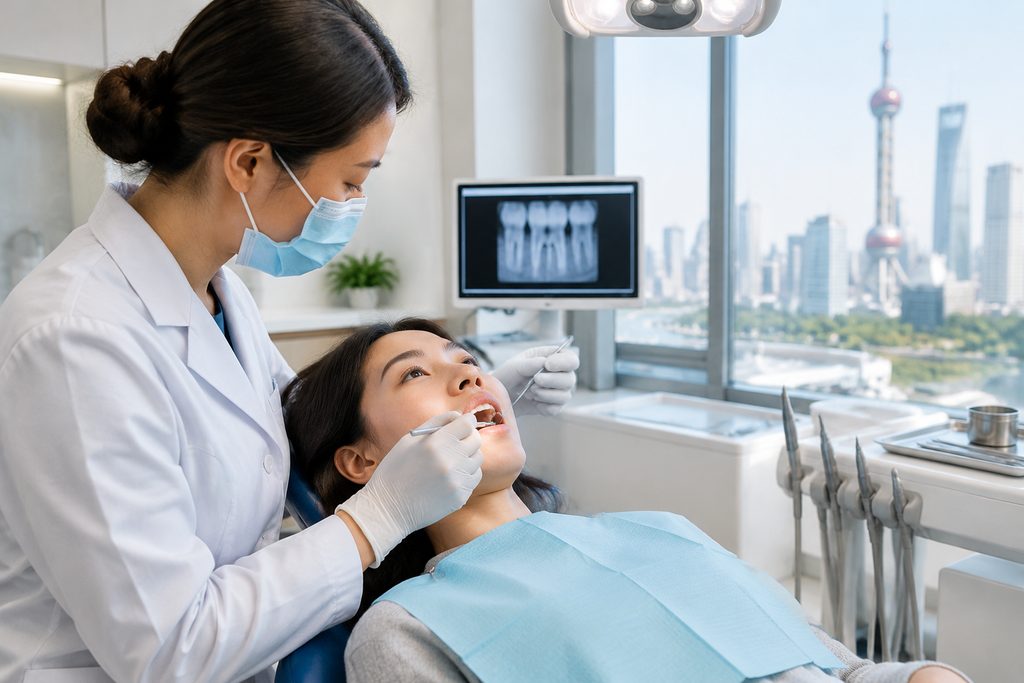
Painless Root Canal in China: What to Expect
A root canal is simply the removal of infected tissue from inside a tooth, followed by a seal that saves the tooth from extraction. In China, the procedure is routine, widely available, and — for international patients — the root canal cost in China typically runs between $150 and $500 per tooth at a reputable hospital dental department. Compare that with $1,000 to $2,000 in the United States, and the reason patients search this topic becomes obvious.
But cost is the easy part. The real question is whether the experience — the anesthesia, the equipment, the language, the follow-up — will feel as smooth as it does at home. That depends almost entirely on where you go and who walks you through it.
Painless Root Canal in China: The Short Answer
Yes, a modern root canal in China can be genuinely painless. The procedure is performed under local anesthesia, and at top-tier hospitals it is often done with the aid of a dental operating microscope and rotary nickel-titanium instruments — the same technology used in Germany, Japan, and the US. Most single-root or straightforward molar cases finish in 45 to 90 minutes. Complex molars with curved canals may need two visits.
The caveat: “painless” is a function of the operator, not the country. A dental clinic in a small city using older equipment may still deliver a perfectly adequate result — but if your priority is a microscope-assisted, single-visit experience with English-speaking staff, you need to choose the hospital tier deliberately. That is the difference between a routine appointment and a genuinely comfortable one.
Who This Is Right For — and Who It Isn’t
Dental tourism is not for everyone. Being honest about that upfront saves people a wasted trip.
You are likely a good candidate if:
- You need one or more root canals and have been quoted $1,000+ per tooth at home
- You are already traveling to China for business, family, or another medical reason
- You have a tooth with irreversible pulpitis or a failed previous root canal that needs retreatment
- You can stay in the country for at least 7 to 10 days to allow for a follow-up visit and crown placement
- You are comfortable navigating a large hospital with a bilingual companion, or you have basic Mandarin support
You should probably not pursue this if:
- You have an acute dental abscess with facial swelling — that needs urgent care wherever you are, not a flight
- You have uncontrolled bleeding disorders, severe cardiac conditions, or are on blood thinners without clearance
- You need only one simple filling — the trip cost outweighs the savings
- You require complex full-mouth reconstruction that needs multiple specialists over months
- You cannot tolerate a delay in treatment — a Chinese public hospital cannot be booked from overseas for same-week routine dental care
The Options, Compared
Here is how the realistic choices stack up for an international patient needing a root canal.
| Option | Typical Cost per Tooth | Wait Time | English Support | Microscope Available |
|---|---|---|---|---|
| US private dental office | $1,000–$2,000 | 1–3 weeks | Yes | Often |
| UK NHS / private | £70–£700 / £500+ | Weeks to months | Yes | Varies |
| China top public hospital dental dept. | $150–$350 | Same-day or next-day registration | Limited; interpreter needed | Common at top tiers |
| China private international clinic | $350–$500 | Appointment-based, 2–5 days | Yes | Usually |
| China VIP / international department | $400–$600 | Advance booking possible | Yes | Yes |
Which column suits you? If budget is the driving factor and you have patience for a queue, a public hospital dental department offers the best value. If your time is limited and you want a conversation in English from the moment you sit down, a private international clinic or a hospital VIP channel is worth the premium. And if you want a specific senior endodontist, the VIP route is the only realistic way to lock that in before you fly.
Is Root Canal in China Safe for Foreigners?
This is the question that matters most, and it deserves a straight answer. Chinese dental hospitals and the dental departments of major teaching hospitals perform millions of endodontic procedures annually. Infection control standards at JCI-accredited and top-tier public hospitals follow international protocols — single-use needles, autoclaved instruments, rubber dam isolation.
The safety variable is not nationality. It is facility selection. A hospital ranked in the Fudan Hospital Rankings, or a JCI-accredited private clinic, will meet the standard you expect. A walk-in clinic with a storefront and no accreditation may not. Foreigners are treated the same as local patients in terms of clinical protocol; the difference is communication and paperwork.
One more point on safety: root canal treatment is not a one-visit-and-done event for every tooth. A molar that receives a root canal without a crown afterward is at risk of fracture. If you fly home immediately after the canal is filled and skip the crown, you may lose the tooth. Build the crown into your plan from the start.
What It Costs — and What Drives the Variance
The root canal cost China patients actually pay depends on four things: the tooth, the hospital tier, whether a microscope is used, and whether retreatment is involved.
- Anterior (front) tooth: $150–$250 at a public hospital; $300–$400 at a private clinic
- Premolar: $200–$300 public; $350–$450 private
- Molar: $250–$400 public; $400–$550 private
- Retreatment of a failed root canal: add 30–50%
- Crown (zirconia or metal-ceramic): $150–$500 depending on material
Fees typically include the consultation, local anesthesia, canal cleaning and shaping, filling, and a post-treatment X-ray. They usually do not include the crown, which is quoted separately. Payment at public hospitals is upfront — cash, UnionPay, or international card depending on the facility. Private international clinics often bill insurance directly.
For a broader look at what different specialties cost across China’s top hospitals, our department-by-department guide breaks down the ranges.
Practical Considerations: Booking, Visas, and Follow-Up
Booking dental treatment in China as a medical tourist has a few moving parts. Getting them right is the difference between a smooth trip and a frustrating one.
Records. Bring your recent dental X-rays or a panoramic radiograph if you have one. If not, the hospital will take them on arrival — usually for under $30. Previous treatment notes help the endodontist understand what has already been attempted.
Visa. For short medical visits, the applicable category is the S2 visa, which covers short-stay private affairs including medical treatment. It requires supporting documents from the hospital. The M visa is for commercial and trade activities and is not the correct category for medical care. Rules change, so confirm current requirements with the nearest Chinese embassy or consulate before applying.
Timing. A simple root canal plus crown needs roughly 7 to 10 days on the ground: one visit for the canal, a few days of healing, then crown preparation and fitting. Some clinics can do same-day crowns, which shortens the stay considerably.
Language. This is where most foreign patients hit a wall. Top Chinese hospitals are enormous — some see over 10,000 outpatients a day. Registration, payment, pharmacy, and imaging are in different buildings, and signage is primarily in Chinese. A bilingual companion who handles queuing, payment, and translation turns a stressful day into a manageable one.
Follow-up at home. Ask for a written treatment record and the final X-ray before you leave. Your dentist at home will want them. If a problem emerges weeks later, that documentation is what allows a local dentist to help.
If you are weighing a dental trip against other options, our overview of medical treatment in China for international patients covers how hospital selection, visas, and coordination fit together.
How Long Does a Painless Root Canal Take?
Most uncomplicated root canals take 45 to 90 minutes in the chair. Front teeth are faster — often under an hour. Molars with multiple curved canals can run 90 minutes or more, and may be split across two appointments a few days apart.
The appointment itself breaks down roughly like this: 10 minutes for X-rays and examination, 10 minutes for anesthesia to take effect, 30 to 60 minutes for the actual cleaning and shaping, and 10 to 15 minutes for filling and a final X-ray. You will feel pressure but not pain. If you feel sharp pain, tell the dentist immediately — more anesthetic is available.
Afterward, mild tenderness for two to three days is normal. Over-the-counter pain relief is usually sufficient. A crown, if needed, is a separate appointment.
Frequently Asked Questions
With proper local anesthesia, yes — the procedure itself should not hurt. The variable is the operator’s technique and equipment. Microscope-assisted treatment at a top hospital or JCI-accredited clinic gives the best odds of a comfortable, single-visit experience. If you have had a painful root canal before, it was likely due to inadequate anesthesia or an infected tooth that was not properly numbed.
Expect $150 to $500 per tooth in China versus $1,000 to $2,000 in the US. The gap is widest at public hospital dental departments and narrowest at private international clinics. Crown costs are separate and add $150 to $500. Prices vary by hospital and case complexity, so a written quote before travel is worth requesting.
For routine dental care at a public hospital, generally no — you register in person on the day. Advance booking is possible through a hospital’s international or VIP department, or through a coordination service that works with those channels. Private international clinics are more flexible and often accept advance appointments directly.
Root canal failure is uncommon but possible — reported retreatment rates sit in the single digits to low teens depending on the study and tooth type. If it happens, your home dentist can retreat the tooth using the X-rays and treatment notes you brought back. In rare cases, an apicoectomy or extraction may be needed. This is why documentation matters more than location.
The strongest options are the dental departments of top-ranked teaching hospitals and JCI-accredited international clinics. For patients who want English-speaking staff and direct insurance billing, private international clinics in Beijing and Shanghai are the practical choice. For complex retreatment or microscope work, a top public hospital’s stomatology department is usually the better bet. You can browse options by city through our ranked hospital directory.
Your Next Step
A root canal in China can be painless, affordable, and technically excellent — provided you choose the right facility and plan the logistics before you fly. The savings are real, but they only materialize if the trip is organized properly.
China Medical Services is not a hospital and we do not provide diagnoses. We are a coordination service: we help international patients identify appropriate hospitals, arrange appointments through official international departments, and provide bilingual companions who handle registration, payment, and translation on the day. If you would like to understand your options before committing to anything, start with a free consultation and we will walk you through what is realistic for your case.
This article is for general information only and is not medical advice. Treatment decisions should be made with a qualified dental professional who can examine you in person.
For more medical information and treatment options in China, visit chinamedservices.com (China Medical Services).
