Dental Implants in China for Foreigners: Real Costs and Top Clinics
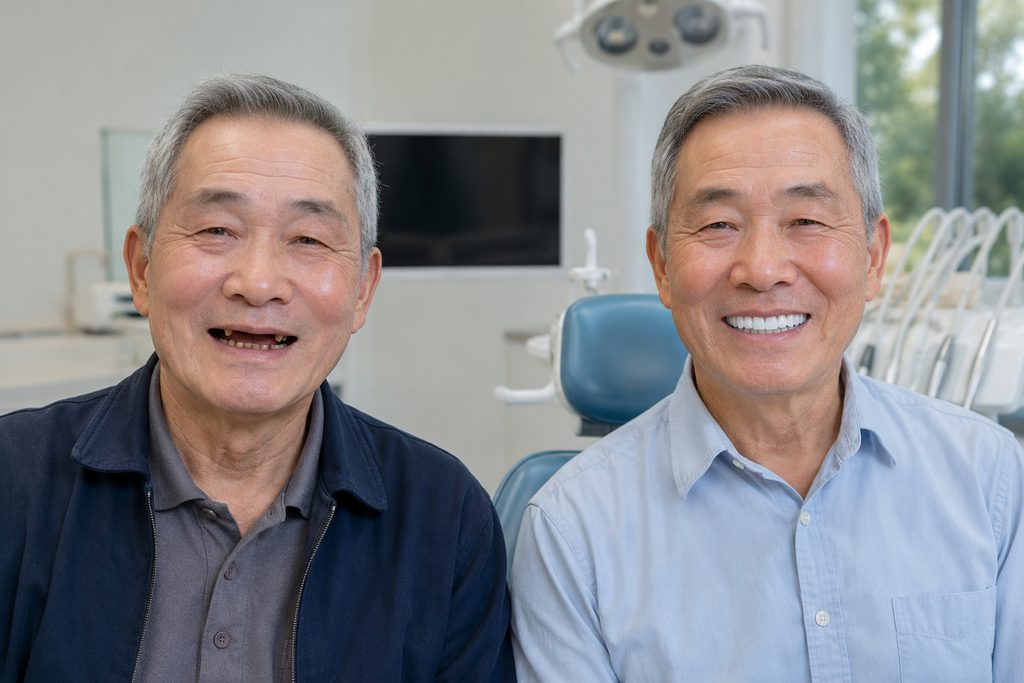
When 58-year-old David from Portland, Oregon, was quoted $28,000 for a full-arch restoration at his local clinic, he did what any reasonable person would do. He started looking abroad. His research kept landing on the same question: what does dental implants cost China for someone like him, and is the quality actually there?
David is not unusual. A 2023 survey by the American Dental Association found that roughly one in four US adults delays or skips major dental work because of cost. Full-arch implants sit at the top of that list. A single implant in the United States runs $3,000 to $6,000 before the crown. Multiply that across a full mouth and you are looking at a down payment on a house.
China has quietly become one of the world’s largest markets for implant dentistry. More than one million implants are placed there annually, according to industry estimates, and the country’s top dental hospitals handle volumes that most Western clinics never approach. For international patients, that combination of scale, skill, and price is worth understanding before you book anything.
Key Takeaways
- Dental implants cost China typically runs 60-75% below US rates — a single implant with crown often lands between $800 and $2,000 depending on the hospital and implant brand.
- Top-tier Chinese dental hospitals and international clinics in Shanghai, Beijing, and Guangzhou use the same implant systems (Straumann, Nobel Biocare, Osstem) you would find in Europe or North America.
- Language barriers and the two-visit structure of implant surgery are the two biggest practical hurdles — osseointegration means you cannot complete treatment in a single trip.
- Not every clinic is equal. Public dental hospitals, private international clinics, and small commercial chains operate under very different quality standards.
The Problem: Why Implant Costs Push Patients Abroad
In the United States, the average cost of a single dental implant — implant post, abutment, and crown — sits between $3,000 and $6,000, according to 2024 data from the American Dental Association’s Health Policy Institute. All-on-4 full-arch restorations routinely exceed $25,000 per arch. In the UK, the NHS does not cover implants for most adults, and private quotes start around £2,000 per tooth.
Dental insurance rarely closes the gap. Most US plans cap annual benefits at $1,500 to $2,000, which covers a fraction of a single implant. Medicare excludes routine dental care entirely. The result is a growing population of patients with failing teeth and no realistic path to treatment at home.
That gap is what drives patients to look at options in Turkey, Mexico, Hungary, Thailand — and increasingly, China. The question is whether the savings come with acceptable risk.
Why China Delivers Real Value in Implant Dentistry
The short answer: volume, infrastructure, and a competitive private market. Here is what that looks like in practice.
Clinical Volume and Surgical Experience
China’s leading stomatology hospitals — such as the Ninth People’s Hospital affiliated with Shanghai Jiao Tong University School of Medicine and Peking University School of Stomatology — perform tens of thousands of implant procedures each year. Surgeons at these institutions handle complex bone grafting, sinus lifts, and full-arch cases weekly, not monthly. That repetition matters. A 2020 review in the International Journal of Implant Dentistry found that clinician experience is one of the strongest predictors of long-term implant survival.
Same Implant Systems, Lower Overhead
Walk into a reputable Chinese dental clinic and you will see the same boxes you would find in Zurich or Boston: Straumann, Nobel Biocare, Astra Tech, Osstem. The materials are not different. What differs is the cost structure — lower labor costs, higher patient throughput, and in the public system, government price guidance that has pushed implant prices down further since 2023.
Cost Advantage Without the Quality Trade-Off
This is the part that makes people suspicious, so let’s address it directly. Lower cost in China does not come from cutting corners on sterilization or using counterfeit parts. It comes from economics: a Chinese implant surgeon may see 30 patients a day; a US surgeon might see eight. The overhead per procedure is simply lower. For a deeper look at how Chinese hospitals compare on quality metrics, see our overview of top-ranked hospitals in China.
| Procedure | United States | United Kingdom | China (top clinics) |
|---|---|---|---|
| Single implant + crown | $3,000–$6,000 | £2,000–£3,500 | $800–$2,000 |
| All-on-4 (per arch) | $20,000–$30,000 | £12,000–£20,000 | $6,000–$12,000 |
| Bone graft | $600–$3,000 | £400–£1,500 | $300–$800 |
| Sinus lift | $1,500–$3,000 | £1,000–£2,000 | $500–$1,200 |
Prices vary by hospital and case complexity. A single number quoted online is almost never the final figure.
How Long Do Dental Implants Take in China? A Realistic Timeline
This is where most foreign patients get surprised. Implant treatment is not a one-trip procedure. The biology does not care about your flight schedule.
A standard two-stage implant follows this arc:
- Trip 1 (5–10 days): Consultation, CBCT scan, treatment planning, and implant placement surgery. If bone grafting is needed, it happens here.
- Healing phase (3–6 months): Osseointegration — the implant fusing with your jawbone. You fly home during this period.
- Trip 2 (5–7 days): Abutment placement and final crown fitting.
For All-on-4 cases, some clinics offer a “teeth in a day” protocol where a temporary fixed bridge is placed within 24–48 hours of surgery. You still return months later for the final prosthesis. If you are wondering how long do dental implants take in China, the honest answer is: the surgery is fast, the healing is not.
Is Dental Implant Surgery Safe in China? What to Check Before You Book
Safety in Chinese dentistry is not a country-level question. It is a clinic-level question. The same country that hosts world-class stomatology hospitals also has thousands of small commercial clinics with uneven standards.
Here is what separates a safe choice from a risky one:
- Hospital type. Public tertiary stomatology hospitals and JCI-accredited international clinics carry the strongest track records. Our guide to private international hospitals in China covers the accredited options.
- Implant brand transparency. A reputable clinic tells you exactly which system they use and provides the implant passport with a serial number.
- CBCT imaging. No implant should be placed without a cone-beam CT scan. If a clinic skips this, walk away.
- Sterilization protocol. Ask about autoclave standards. Top hospitals follow international infection-control guidelines.
- Written treatment plan and warranty. Straumann and Nobel Biocare offer lifetime warranties on the implant fixture itself. Get the documentation.
For the best dental implant clinic Shanghai has to offer, look at institutions affiliated with Fudan University and Shanghai Jiao Tong University, plus established international clinics in the Jing’an and Pudong districts. Beijing’s Peking University School of Stomatology is another benchmark.
Practical Considerations: Visas, Payment, and Follow-Up
Foreign patients coming to China for dental treatment should apply for an S2 visa — the short-stay category used for medical treatment and private affairs. You will need an invitation or supporting document from the treating hospital. Accompanying family members apply under the same category. Note that the M visa is for commercial and trade activities only and is not the correct category for medical travel. Always confirm current requirements with the nearest Chinese embassy or consulate, as rules can change.
On payment: Chinese public hospitals typically require upfront payment and provide receipts you can submit to your insurer for reimbursement after you return home. Private international clinics often bill insurance directly. International credit cards are widely accepted at private clinics; public hospitals may prefer local payment methods, so arrange this in advance.
Follow-up matters. Before you leave China, ask for your complete clinical records, implant serial numbers, and a written maintenance schedule. Your local dentist will need these for routine checks. Implant crowns typically need review every 6–12 months.
Frequently Asked Questions
All-on-4 dental implants China price typically ranges from $6,000 to $12,000 per arch at reputable clinics, versus $20,000 to $30,000 in the United States. The final figure depends on the implant brand, whether bone grafting is needed, and the type of final prosthesis. Always request an itemized quote.
Yes. Many top Chinese dental hospitals and international clinics offer video consultations where you can share your panoramic X-rays or CBCT scans and receive a preliminary treatment plan and cost estimate. This lets you compare options before committing to travel. For complex cases, a written second opinion from a Chinese specialist is also possible.
Implant failure within the first year is uncommon at reputable clinics — published survival rates exceed 95% for single implants. Major implant brands carry lifetime warranties on the fixture. If a problem arises, you would typically consult a local dentist first. Some Chinese clinics offer remote follow-up support and will coordinate with your home dentist. This is one reason choosing a clinic with clear aftercare policies matters more than chasing the lowest price.
At public hospitals, yes — or you need someone with you who does. Top public stomatology hospitals are busy, and English-speaking staff are limited outside international departments. Private international clinics generally have English-speaking dentists and coordinators. Bilingual medical companion services exist specifically to handle registration, payment, translation, and navigation for patients who want to use the public system.
Your Next Step
The savings are real, the clinical capability is real, and so are the logistical challenges. The patients who do best are the ones who plan around the two-trip structure, verify the clinic rather than the country, and get a written treatment plan before any money changes hands.
China Medical Services is a patient coordination service, not a hospital and not a dental provider. We do not diagnose or treat. What we do is help international patients navigate the Chinese healthcare system — from hospital matching and appointment coordination to bilingual accompaniment during visits. If you would like to understand your options, you can start with a free consultation at our patient services page. No pressure, no obligation — just a clearer picture of what is possible.
This article is for informational purposes only and does not constitute medical advice. Treatment decisions should be made in consultation with a qualified dental professional. Costs and protocols vary by hospital and individual case.
For more medical information and treatment options in China, visit chinamedservices.com (China Medical Services).
