Dental Bonding Cost in China: How to Book Top Clinics in 2026
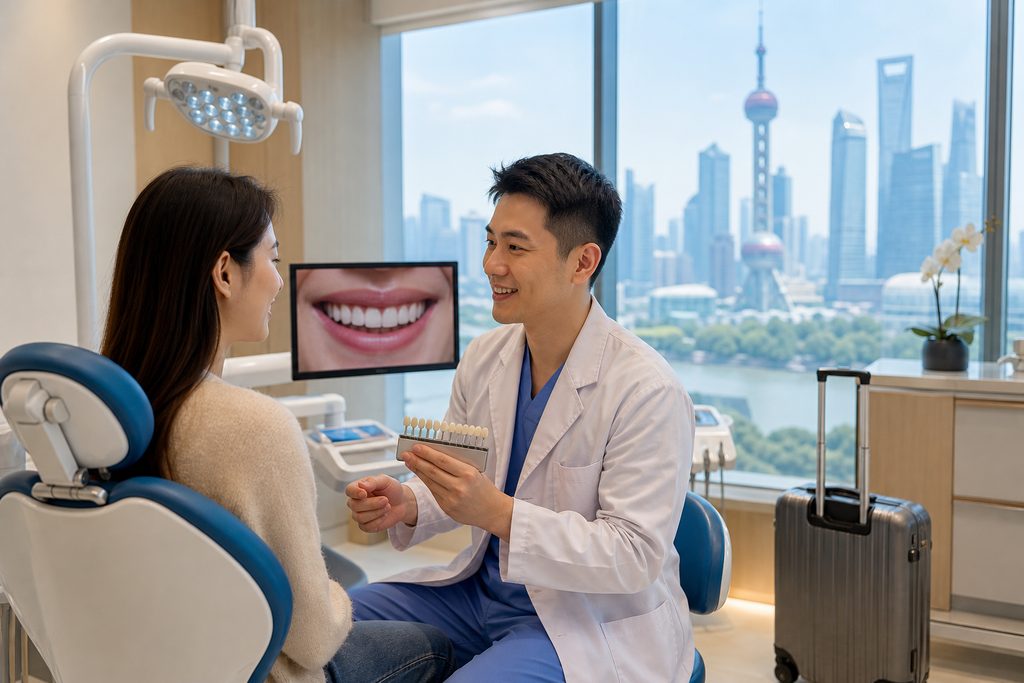
Dental Bonding Cost in China: How to Book Top Clinics in 2026
In the United States, a single tooth of composite bonding averages $300 to $600. In China, the same procedure at a top-tier public dental hospital runs roughly $40 to $150 per tooth — and at a private international clinic, $80 to $250. That gap is why searches for dental bonding cost China have climbed steadily among expats, medical travelers, and anyone facing a $4,000 smile makeover at home.
But price alone doesn’t answer the real question. Where do you go? Can you book from overseas? Is the material the same? Those are the parts that trip people up.
Dental Bonding Cost China: The Short Answer
Expect to pay $40–$150 per tooth at a public tertiary (Grade 3A) dental hospital and $80–$250 per tooth at a private international clinic in Beijing, Shanghai, or Guangzhou. A typical six-tooth front-arch bonding case lands between $300 and $1,200 total. The same work in the US or UK commonly runs $2,000 to $4,000.
The caveat: composite bonding is highly operator-dependent. Two clinics can quote the same price and deliver wildly different results based on the dentist’s shade-matching skill and finishing technique. Cheap is not automatically good. And the very best public dental hospitals do not accept overseas online bookings — you walk in, take a number, and wait.
Who This Is Right For — and Who It Isn’t
Dental bonding in China is a strong fit for some travelers and a poor fit for others. Being honest about that saves everyone time.
Usually a good fit:
- You need bonding on 1–8 teeth and are already traveling to China, or willing to combine it with a trip
- You’re an expat living in China and want a reliable clinic recommendation
- You have chipped, gapped, or discolored front teeth and a modest budget
- You’re combining dental work with a broader medical visit — a health checkup, a specialist consultation, or TCM treatment
Probably not a good fit:
- You have active gum disease, deep decay, or an untreated abscess. Bonding over unhealthy teeth fails. Fix the foundation first.
- You grind your teeth heavily and don’t wear a night guard. Composite chips under that load.
- You expect bonding to last 10+ years. It typically lasts 3–7 years before needing repair or replacement, regardless of country.
- You need extensive full-mouth reconstruction. That’s a different procedure with a different cost structure.
- You have a tight 48-hour trip. Bonding on multiple teeth often needs a second visit for polishing and bite adjustment.
The Options, Compared
Here’s how dental bonding stacks up across the main destinations international patients consider. Prices are per tooth for a single anterior (front) tooth, standard composite resin.
| Destination | Public / Standard Clinic | Private / International Clinic | Typical Wait for Appointment | English Service |
|---|---|---|---|---|
| United States | $300–$600 | $400–$800 | 1–3 weeks | Yes |
| United Kingdom | £150–£350 (NHS private mix) | £250–£500 | 2–6 weeks | Yes |
| China — public Grade 3A dental hospital | $40–$150 | — | Same-day walk-in, or 1–7 days via international department | Limited; international dept. yes |
| China — private international clinic | — | $80–$250 | 1–5 days | Yes |
| Thailand | $60–$120 | $100–$200 | 1–2 weeks | Yes |
| Mexico (border clinics) | $50–$120 | $80–$180 | Days to weeks | Varies |
Which column suits you? If you’re cost-sensitive and comfortable with a language barrier, China’s public dental hospitals offer the lowest price on this table by a wide margin. If you want English-speaking staff, direct insurance billing, and a Western-style appointment, the private international clinics are the match — and still undercut US prices by 50–70%. Travelers combining dental work with a broader medical trip often find the public route pairs well with a coordinated itinerary.
Is Dental Bonding Safe in China? What the Standards Actually Look Like
This is the question that stops people from booking. It deserves a straight answer.
China’s top dental hospitals — the ones attached to major universities and ranked in the Fudan Hospital Rankings — use the same composite resin materials as Western clinics. Brands like 3M Filtek, Kerr, and Ivoclar are standard in Grade 3A facilities. Sterilization protocols follow national standards that mirror international norms: autoclave cycles, single-use barriers, documented instrument tracking.
So is dental bonding safe in China? At a properly selected hospital, yes — the material and hygiene standards are comparable. The variable that matters most is the individual dentist’s experience and aesthetic judgment. A senior dentist who places 20 bondings a week will out-perform a general practitioner who does two a month, in any country.
What you should verify before committing:
- The hospital’s Grade 3A designation (the highest public hospital tier) or JCI accreditation for private clinics
- Whether the dentist specializes in aesthetic/restorative dentistry, not just general practice
- That you’ll see a shade guide and discuss color matching before the procedure starts
- Written confirmation of the material brand being used
How Much Does Dental Bonding Cost in Beijing?
Beijing concentrates more top-ranked hospitals than any other Chinese city — 21 of the Fudan Top 100 sit there. Its dental hospitals are correspondingly strong.
At a leading public stomatology hospital in Beijing, single-tooth composite bonding typically runs $45–$130. Multi-tooth cases often get a package rate. At the international departments of these hospitals, add roughly 50–100% for English service and shorter waits — still landing around $80–$220 per tooth.
Private international clinics in Beijing’s Chaoyang and Sanlitun districts quote $100–$250 per tooth, with same-week appointments and direct billing to many international insurers.
Shanghai tells a similar story, with one important difference. The city has a denser cluster of private international dental clinics serving the expat community, which pushes competition and keeps private pricing slightly more flexible. If you’re specifically looking for the best dental clinics in Shanghai for bonding, the practical shortlist combines two or three university-affiliated public stomatology hospitals with two or three JCI-accredited private practices.
Guangzhou and Shenzhen follow the same pattern at marginally lower prices. Chengdu and Hangzhou offer strong public dental hospitals with shorter queues.
What the Procedure Actually Involves — and the Before/After Reality
Composite bonding is one of the least invasive cosmetic dental procedures available. No drilling of healthy tooth structure in most cases. No lab work. Often completed in a single sitting.
The steps:
- Consultation and shade selection — 15–30 minutes. The dentist picks a composite shade matching your adjacent teeth.
- Surface preparation — the tooth is cleaned and lightly etched so the composite bonds.
- Application and sculpting — composite is applied in layers and shaped by hand. This is the artistic step.
- Curing — a blue-light lamp hardens each layer.
- Finishing and polishing — shaping, smoothing, and bite check. Another 15–30 minutes.
Total chair time for one tooth: 30–60 minutes. For a six-tooth smile case: 2–4 hours, sometimes split across two visits.
As for China dental bonding before and after results — the honest answer is that outcomes depend almost entirely on the dentist, not the country. Well-executed bonding is nearly indistinguishable from natural enamel. Poorly executed bonding looks chalky, bulky, or mismatched under different lighting. Ask to see the specific dentist’s own case photos, not generic clinic marketing images. A reputable hospital will show you real patient work.
Practical Considerations: Booking, Visa, Payment, and Follow-Up
Booking dental bonding in China from overseas is the part most guides skip. Here’s how it actually works.
Public hospitals. General outpatient dental registration cannot be reserved from abroad in advance. You arrive, take a queue number, and wait — sometimes hours. For a specific senior dentist, the realistic path is the hospital’s international department or VIP channel, which allows advance scheduling at roughly 1.5–2× the standard fee.
Private international clinics. These accept online or email bookings, often within days. English-speaking staff, JCI accreditation at many, and direct insurance billing in some cases.
Visa. If you’re traveling to China specifically for dental treatment, the applicable short-stay category is the S2 visa, annotated for medical treatment or private affairs. Accompanying family members apply under the same category. Requirements and supporting documents vary by embassy and consulate, so confirm current rules with your nearest Chinese mission before applying. Note that the M visa is for commercial and trade activities and is not the medical-travel category.
Payment. Public hospitals require prepayment; international insurance is typically reimbursed after the fact. Private international clinics frequently bill insurers directly. Bring a card that works in China, or arrange payment through your coordinator.
Follow-up. Composite bonding needs periodic polishing and occasional repair. If you return home after treatment, ask the clinic for a written record of the materials used and the shade codes. A local dentist can then match repairs accurately.
For a broader picture of how hospital selection works across specialties, our department-by-department hospital rankings cover 45 specialties including dentistry and oral surgery. If you’re weighing public versus private care more generally, the private international hospital directory lays out the trade-offs.
Frequently Asked Questions
At private international clinics, yes — usually by email or online form, with appointments available within days. At public Grade 3A dental hospitals, standard outpatient registration cannot be reserved from overseas; you either walk in and queue, or go through the hospital’s international department, which does allow advance scheduling at a higher fee. Plan for the public route to take longer than you expect.
For one or two teeth, probably not — the trip costs more than the savings. For six or more teeth, or when combined with other medical appointments, the math usually works. A six-tooth case saving $2,000–$3,000 against US prices can absorb a round-trip flight and a week of accommodation. Run your own numbers before committing.
Composite bonding can chip, and it can be repaired. Any dentist can repair composite — it doesn’t require returning to China. This is why you should leave with written documentation of the material brand and shade codes. If a problem appears within days of treatment and you’re still in China, most reputable clinics will adjust it at no charge. Once you’ve flown home, you’re relying on a local dentist.
At private international clinics, generally yes. At public hospitals, English-speaking staff are concentrated in the international department; the general dental outpatient area operates in Chinese. This is the single biggest practical barrier for foreign patients, and it’s the reason bilingual accompaniment exists as a service.
Your Next Step
Dental bonding in China costs a fraction of Western prices, and the materials and standards at top hospitals hold up to international comparison. The real work isn’t the procedure — it’s choosing the right clinic and getting through a booking system designed for local walk-ins.
We are China Medical Services. We are not a hospital and we do not provide diagnoses or treatment. What we do is help international patients find the right hospital, coordinate appointments through official international departments, and provide bilingual accompaniment so you’re not navigating a 10,000-patient-per-day facility alone. If you’d like to talk through your case — no obligation, no pressure — start with a free consultation and we’ll tell you honestly whether China is the right fit for your dental work.
This article is for general information only and does not constitute medical advice. Dental treatment decisions should be made with a qualified dentist who has examined you. Prices vary by hospital, city, and case complexity, and are subject to change.
For more medical information and treatment options in China, visit chinamedservices.com (China Medical Services).
