Periodontal Care in China: Costs, Top Hospitals, and How to Start
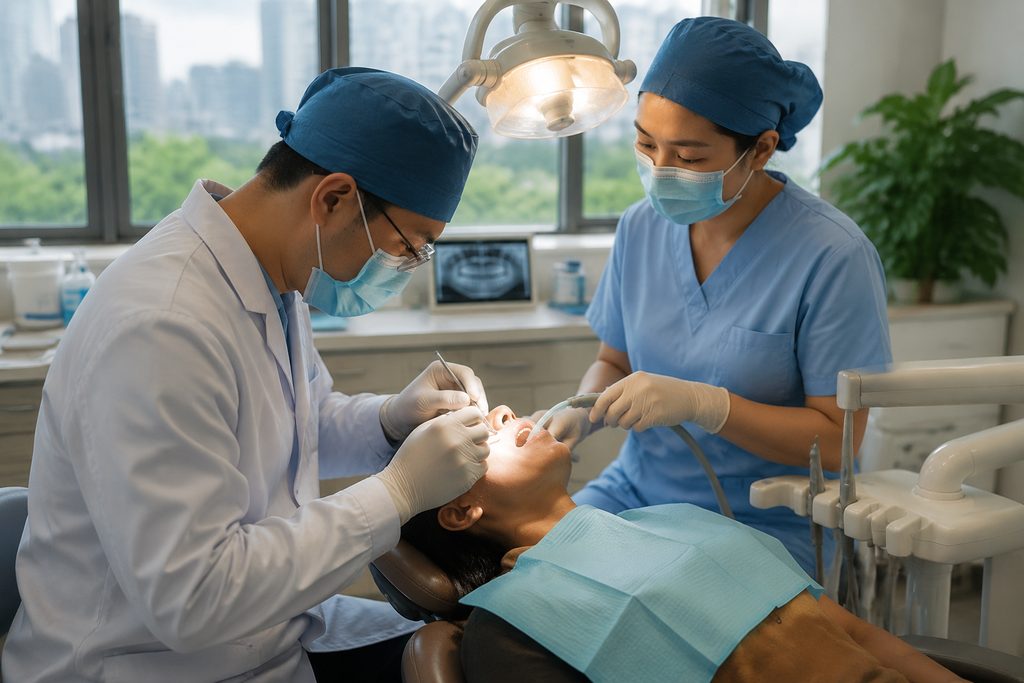
Periodontal Care in China: The Basics
A full-mouth deep cleaning in the United States routinely runs $1,000 to $3,000 before insurance, and gum surgery can push past $10,000. In China, the same procedures at a top-tier public hospital often land between $150 and $1,200. That gap is why searches for periodontal treatment cost China have climbed steadily among international patients. This guide explains what periodontal care in China actually involves, what it costs, where the strongest clinics are, and how to arrange it without wasting a trip.
How This Actually Works, Step by Step
Periodontal care is not a single appointment. It is a sequence, and the sequence matters more than the destination.
It starts with records. You gather what you already have: recent dental X-rays, a periodontal chart if your dentist has one, any treatment history, and a list of current medications. Blood thinners, diabetes medications, and immunosuppressants all change how a periodontist plans treatment. Send these to a coordinating team, and the relevant Chinese dental department reviews them remotely.
What comes back is a written assessment. It usually covers the likely stage of disease, whether non-surgical therapy is realistic, whether surgery may be needed, and a rough cost band. This is where most patients learn something useful: not every case needs a scalpel, and not every case can be handled in one visit.
Then comes the decision point. If the plan looks reasonable, you move to scheduling. In China’s public hospitals, you cannot reserve a specialist outpatient slot from overseas in advance. Registration happens on the day, in person. Surgery and more involved procedures are arranged only after an in-person consultation. For patients who need certainty before booking flights, the international or VIP department of a hospital is the practical route — English-speaking staff, faster scheduling, and prices roughly 1.5 to 2 times the standard channel.
After the in-person exam and any imaging, treatment begins. Follow-up visits are scheduled on site. Most patients need two to four appointments spread across one to three weeks.
What Periodontal Treatment Cost in China Really Looks Like
Prices vary by hospital tier, city, and how advanced the disease is. A patient with early gum disease needs scaling and root planing. A patient with deep pockets and bone loss may need flap surgery, grafting, or extractions. Those are different budgets.
| Procedure | Typical Cost in China (USD) | Typical Cost in the US (USD) |
|---|---|---|
| Initial exam and full X-rays | $50–$150 | $200–$400 |
| Scaling and root planing (per quadrant) | $60–$200 | $200–$400 |
| Full-mouth deep cleaning | $150–$600 | $1,000–$3,000 |
| Periodontal flap surgery (per area) | $300–$900 | $1,500–$4,000 |
| Gum graft | $250–$800 | $1,000–$3,000 |
| Dental implant (single) | $800–$2,500 | $3,000–$6,000 |
These are ranges, not quotes. Final pricing depends on the hospital and case complexity, and you should treat any figure you see online — including these — as a planning estimate rather than a contract. What the numbers do show is the scale of the difference. For patients weighing how much gum disease treatment costs abroad, the arithmetic is hard to ignore.
One thing worth understanding: Chinese public hospitals require prepayment. You pay, then seek reimbursement from your own insurer afterward. Private international hospitals often bill insurance directly, but their prices sit closer to Western levels.
A Realistic Timeline
Patients consistently underestimate how long the front end takes. Here is a realistic sequence for someone starting from scratch.
| Stage | Timeframe | What Happens |
|---|---|---|
| Records gathering and translation | 3–10 days | Collect X-rays, charts, medication list; translate if needed |
| Written second opinion | 3–7 days | Chinese dental department reviews and returns assessment |
| Video consultation (optional) | Scheduled within 1–2 weeks | Discuss findings and goals directly with the clinical team |
| Visa application (S2) | 1–3 weeks | Short-stay visa for medical treatment; family members apply under the same category |
| Travel and arrival | 1–2 days | Flights, airport transfer, accommodation |
| In-person exam and imaging | Day 1–3 after arrival | Registration, consultation, X-rays, treatment plan confirmed |
| Active treatment | 1–3 weeks | Deep cleaning, surgery, or staged procedures |
| Follow-up and review | 1–3 months | Healing check, home-care instructions, records for your dentist at home |
Total: roughly four to ten weeks from first contact to finished treatment, depending on visa speed and how many appointments your case needs. Emergency cases move faster, but periodontal disease is rarely an emergency.
What Can Go Wrong — and What Happens Then
Honest planning means naming the failure modes.
Your case turns out to be more complex than the records suggested. X-rays taken months ago may not reflect current bone loss. The in-person exam can reveal that surgery is needed when you expected a cleaning. Recourse: the treatment plan is revised on site, and you decide whether to proceed. Nothing is done without your consent.
The specialist you wanted isn’t available during your window. Popular periodontists at major hospitals book out. No coordination service can promise a specific named doctor or a specific date — anyone who does is overselling. Recourse: the hospital offers the next available specialist in the same department, or you adjust your travel dates.
Visa timing slips. S2 applications require supporting documents from the hospital, and consulates set their own processing windows. If your visa is delayed, treatment is delayed. Recourse: build a two-week buffer into your plans, and never book non-refundable flights before the visa is in hand.
Language breaks down at the worst moment. A top Chinese hospital can see more than 10,000 outpatients in a day. Corridors are crowded, signage is in Chinese, and registration queues move fast. If you don’t speak Mandarin, you will miss instructions. Recourse: a bilingual companion handles registration, payment, wayfinding, and translation from arrival to departure.
Healing doesn’t go as expected. Gum surgery can leave sensitivity, and grafts don’t always take. Recourse: follow-up is included in the treatment plan, and you leave with written records your home dentist can act on.
Choosing Where to Go: Hospitals and the Best Periodontist in Shanghai
China has more than 35,000 hospitals. The top 5%, ranked by the Fudan Index and JCI accreditation, are where international patients should focus. The Fudan rankings list only tiers for the overall Top 100 — A++++ down to A — but the specialty reputation lists rank the top 10 hospitals in each of 45 specialties, including dentistry and oral medicine.
Beijing and Shanghai concentrate the strongest dental programs. Shanghai in particular draws a large international community, and patients searching for the best periodontist in Shanghai will find several credible options across university-affiliated stomatology hospitals and international clinics. The right choice depends on your case: complex surgical cases belong at a major stomatology hospital, while straightforward maintenance care may be simpler at a private international clinic with English-speaking staff and direct insurance billing.
Three practical criteria for evaluating any provider:
- Does the hospital have a dedicated periodontal department, or is dentistry handled by generalists?
- Can the clinical team review your records before you travel, in writing?
- Is there a clear path for follow-up once you’re back home?
You can browse ranked hospitals by city and specialty through our department directory, which lists the top 10 hospitals for each specialty, and compare options across China’s top-ranked hospitals.
Practical Considerations: Records, Visas, Payment, and Follow-Up
Records. Bring physical copies and digital files. Chinese hospitals may re-take X-rays regardless, but your history still informs the plan.
Visa. Medical travel to China uses the S2 visa, which covers short stays for medical treatment and private affairs. Family members accompanying you apply under the same category. The M visa is for commercial and trade activities and has nothing to do with medical care — if anyone tells you otherwise, they are wrong. Stays beyond 180 days require the S1 category. Requirements change, so confirm current rules with the nearest Chinese embassy or consulate.
Payment. Public hospitals want prepayment; private international hospitals often bill insurers directly. Bring a card that works internationally and confirm whether your insurer reimburses overseas dental care at all — many don’t.
Language. Assume you need help. This is not a minor inconvenience; it affects consent, medication instructions, and aftercare.
Follow-up at home. Periodontal disease is chronic. Whatever is done in China needs maintenance every three to six months afterward. Ask for a written treatment summary in English before you leave.
Frequently Asked Questions
At accredited hospitals, yes. China’s top-tier stomatology hospitals follow international sterilization and treatment protocols, and many hold JCI accreditation. The bigger variables are communication and continuity of care, not clinical competence. Choose a hospital with an international department and arrange interpretation in advance.
Not for standard public hospital outpatient care. Registration happens on the day, in person, and surgery is scheduled only after an in-person consultation. International and VIP departments can sometimes pre-arrange appointments, at roughly 1.5 to 2 times standard pricing. Written second opinions and video consultations, however, can be arranged from abroad before you commit to travel.
For comparable procedures at top-tier Chinese public hospitals, expect roughly one-fifth to one-tenth of US prices. A full-mouth deep cleaning that costs $1,000 to $3,000 in the US often runs $150 to $600 in China. These are ranges — final pricing varies by hospital and case complexity.
Some private clinics market bundled packages combining treatment with hotel stays and transfers. They can be convenient, but read the fine print: packages rarely cover complications or additional procedures discovered during treatment. A staged approach — remote assessment first, then travel — usually gives you more control over total cost.
Ask for a complete written treatment record in English, including periodontal charting, procedures performed, and recommended maintenance intervals. Your home dentist can then continue care. Periodontal maintenance is lifelong, so plan for it before you travel, not after.
Your Next Step
Periodontal care in China can be excellent and affordable, but it rewards preparation over spontaneity. Get your records reviewed remotely first, understand the realistic timeline, and only then commit to travel. That sequence protects both your gums and your budget. Our team connects international patients with accredited Chinese hospitals, arranges written second opinions and video consultations, and provides bilingual support on the ground — we don’t diagnose or treat, and we never promise a specific doctor or outcome. When you’re ready, start with a free consultation and we’ll help you map the path.
For more medical information and treatment options in China, visit chinamedservices.com (China Medical Services).
