Hemorrhoid Surgery Cost in China: Real Prices for 2026
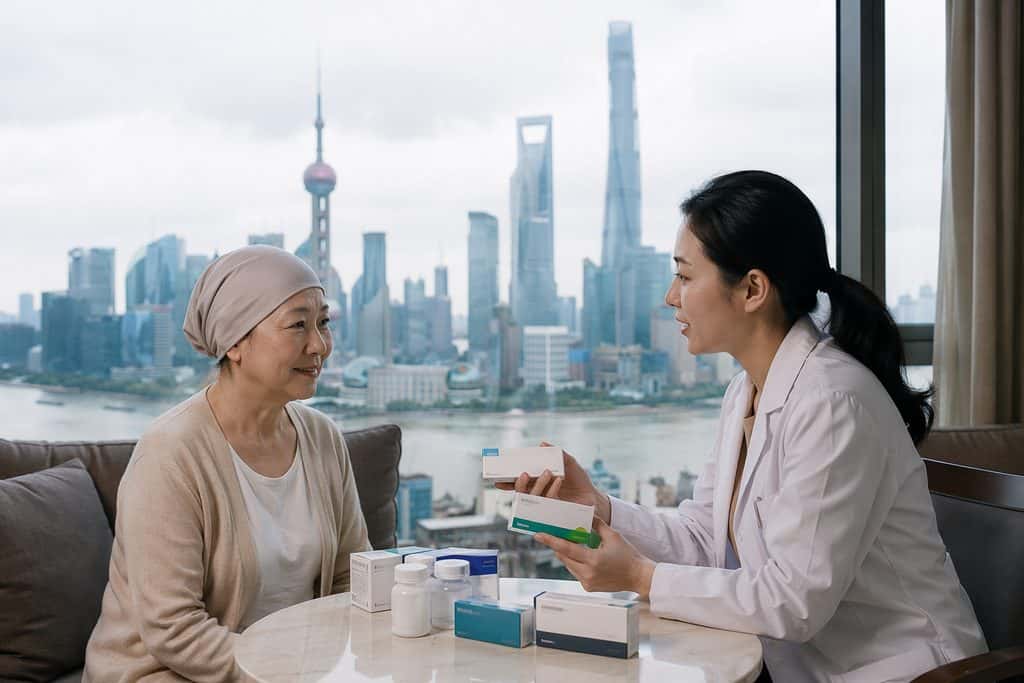
When 44-year-old Daniel from Ohio was told he needed hemorrhoid surgery, the quote from his local clinic stopped him cold: $9,400, after insurance. He had spent four months trying creams, fiber supplements, and sitz baths. The pain during his morning commute had become something he planned his day around. A colleague mentioned that a friend had traveled to Asia for dental work and saved thousands. So Daniel started searching, and the phrase he typed was simple: hemorrhoid surgery cost China.
He found numbers that looked almost too good. Then he found a wall of confusion — hospitals he couldn’t book, websites with no English, and prices that changed every time he looked. That gap between a low price and an actual plan is exactly where most international patients get stuck.
This guide closes that gap. Below you’ll find realistic price ranges for 2026, the difference between public and international departments, what “all-inclusive” really covers, and how to book hemorrhoid surgery in Beijing or Shanghai without flying blind.
Hemorrhoid Surgery Cost in China: The Short Answer
Expect to pay between $1,200 and $4,500 for hemorrhoid surgery in China, all-in, depending on the procedure, the hospital tier, and how many nights you stay. That compares with roughly $8,000 to $12,000 in the United States for the same operation, even with insurance.
Here’s the caveat that changes everything. A $1,200 figure usually means a standard public hospital, where you queue for registration on the day, and where almost no one speaks English. A $4,500 figure usually means an international or VIP department with English-speaking staff, a scheduled appointment, and a private room. Same country. Very different experience.
Who This Is Right For — and Who It Isn’t
Medical travel is not for everyone. Being honest about that up front saves people time, money, and stress.
Usually a good fit:
- Grade III or IV hemorrhoids where conservative treatment has failed and surgery is genuinely indicated
- Patients who are uninsured, underinsured, or facing a deductible higher than the entire cost of treatment abroad
- People who can travel for 10 to 14 days and are medically cleared for a long-haul flight
- Patients comfortable with a bilingual coordinator handling logistics on their behalf
Probably not a good fit:
- Anyone with active infection, uncontrolled diabetes, or a bleeding disorder that makes surgery risky — this must be cleared by a physician first, wherever you go
- Patients with severe cardiac or pulmonary conditions where flying itself is a concern
- People expecting a Western-style private hospital experience at public-hospital prices
- Anyone whose hemorrhoids are mild and manageable with diet, hydration, and topical treatment. Surgery has real risks. Not everyone needs it.
The Options, Compared
Prices below are typical ranges for 2026 and vary by hospital and case complexity. They are estimates for planning, not quotes.
| Option | Typical Total Cost | Wait Time | English Support | Best For |
|---|---|---|---|---|
| US private clinic | $8,000–$12,000 | 2–6 weeks | Yes | Local convenience, insurance coverage |
| China public hospital (standard) | $1,200–$2,500 | Same-day queue | Rare | Budget-focused, Chinese-speaking patients |
| China international / VIP department | $3,000–$4,500 | Days, by appointment | Yes | Foreign patients wanting a smoother path |
| Private international hospital in China | $5,000–$8,000 | Days | Yes, plus insurance billing | Patients with international insurance |
Most foreign patients land in the third row. It’s the sweet spot: real savings, real English support, and a hospital that knows how to handle international paperwork. The fourth row makes sense if your insurance plan reimburses directly, because those hospitals can often bill your insurer rather than making you pay upfront.
Procedures and What Each One Costs
Not all hemorrhoid operations are the same. The technique your surgeon chooses affects both the price and your recovery time.
- Rubber band ligation — an office procedure for smaller internal hemorrhoids. In China, roughly $150–$400. No general anesthesia, back to normal quickly.
- Conventional excision (hemorrhoidectomy) — the traditional open approach for severe cases. $1,200–$2,800. Highly effective, but recovery is the slowest, often 2 to 4 weeks of discomfort.
- Stapled hemorrhoidopexy (PPH) — less post-operative pain for many patients. $1,800–$3,500.
- Laser or thermal ablation — increasingly common in Chinese proctology departments. $1,500–$3,000, with a shorter recovery window.
The procedure that suits you depends on the grade, location, and your anatomy. That’s a clinical decision, and it should be made by a surgeon who has examined you, not by a price list.
What “All-Inclusive” Actually Covers
The phrase “medical tourism hemorrhoid surgery China all inclusive” gets searched a lot, and it’s worth unpacking. A genuine all-inclusive package for this procedure usually includes:
- Pre-operative consultation and examination
- Anesthesia and the surgical procedure itself
- Hospital stay, typically 1 to 3 nights
- Medications and dressings for the recovery period
- One or two follow-up visits before you fly home
What it usually does not include: flights, hotel, airport transfers, a bilingual companion, or costs from complications. Those are separate line items, and they matter. A $2,000 surgery with $3,000 of unplanned logistics is not a $2,000 trip.
Where to Go: Best Hemorrhoid Surgery Hospitals in Shanghai and Beyond
China’s top hospitals cluster in a few cities. Beijing has 21 hospitals in the Fudan Top 100 ranking, Shanghai has 18, and Guangzhou has 10. For colorectal and proctology work, the strongest departments tend to sit inside large comprehensive hospitals and specialized gastroenterology centers.
If you’re weighing the best hemorrhoid surgery hospitals in Shanghai, look for a hospital with a dedicated colorectal surgery department rather than a general surgery unit that handles everything. Shanghai’s major teaching hospitals — including Ruijin Hospital and Zhongshan Hospital, both affiliated with Fudan University — have deep surgical volume across specialties. High volume matters. A department that performs hundreds of these procedures a year tends to have smoother protocols and better complication management.
You can browse ranked options by specialty on our department directory, or filter by city on the top hospitals page. For patients specifically planning around the capital, our Beijing city guide covers hospital selection and logistics in more detail.
Is Hemorrhoid Surgery in China Safe?
This is the question that decides the trip, and it deserves a straight answer.
China’s top-tier public hospitals — the ones ranked in the Fudan Top 100 — are large, well-equipped, and handle enormous surgical volume. Many carry JCI accreditation or meet comparable standards. The surgeons are trained, the operating theaters are modern, and the infection-control protocols in these institutions are not meaningfully different from what you’d find in a good Western hospital.
But “safe” is not only about the operating room. It’s about the whole chain: correct diagnosis before surgery, clear communication about your history, proper follow-up, and someone who can recognize a complication early. That chain breaks down when a patient can’t explain their symptoms or understand discharge instructions.
So the honest version is this. Surgery at a top Chinese hospital, with proper language support and a coordinated plan, is a reasonable option. Surgery at a random clinic booked through a website with no English and no follow-up is not. The hospital matters. The coordination matters just as much.
Practical Considerations: Visa, Payment, and Records
Visa. For medical treatment in China, the applicable short-stay category is the S2 visa, which covers medical treatment and private affairs. Family members accompanying you apply under the same category. Requirements are set by the latest embassy and consulate guidance, and you’ll typically need supporting documents from the hospital. The M visa is for commercial and trade activity — it is not a medical visa, despite what some older articles claim.
Payment. Chinese public hospitals generally require prepayment, and you claim reimbursement from your insurer afterward. Private international hospitals often bill insurers directly, which is a real advantage if you carry a plan that covers treatment abroad. Bring a payment method that works internationally, and confirm limits with your bank before you travel.
Records. Have your diagnosis, imaging, and prior treatment history translated into English or Chinese before you arrive. A surgeon who can read your history in advance makes better decisions.
Follow-up. You’ll need a plan for after you fly home. Ask the treating surgeon what warning signs to watch for, and arrange a local physician who can take over your post-operative care.
How Much Do Hemorrhoid Surgery Packages Cost in China?
Package pricing varies widely because it bundles different things. A bare hospital package for a standard excision might run $1,500. A package that adds airport pickup, a bilingual companion for three days, hotel coordination, and a follow-up visit could reach $4,000 to $5,000.
Neither is wrong. They’re just different products. The right question isn’t “which is cheaper” but “what do I actually need to get through this without a crisis.”
For context on our own service pricing, bilingual medical companion support starts from $300 per day, hospital appointment coordination starts from $300, and written second opinions from top-hospital specialists range from $300 to $500. Final quotes depend on the hospital and the complexity of your case. Any consultation fee is credited in full toward on-the-ground coordination if you proceed within 90 days — a one-time credit applied to the coordination fee, never to hospital treatment charges.
Frequently Asked Questions
Not directly at a standard public hospital. The general rule is that you must be seen in an outpatient clinic first, and surgery is scheduled after that in-person consultation. To lock in a surgeon and a date in advance, you go through a hospital’s international or VIP department. That path costs roughly 1.5 to 2 times the standard rate, and it comes with English-speaking staff and scheduled appointments.
Sometimes, but not reliably. Many domestic plans exclude elective procedures abroad, while some international policies reimburse them. Call your insurer before you plan anything and ask specifically about elective surgery outside your home country. Get the answer in writing. Public hospitals in China generally expect payment upfront, so you may need to fund the trip yourself and seek reimbursement later.
This is the scenario worth planning for before you book. Ask your Chinese surgeon for a written summary and discharge instructions in English, and identify a local doctor who can handle follow-up. Bleeding and delayed healing can occur after any hemorrhoid procedure, and you want a clear path to care at home. Our team can help arrange the documentation, but ongoing clinical responsibility after you leave rests with you and your home physician.
Plan for 10 to 14 days. That covers arrival, pre-operative assessment, the surgery itself, a hospital stay of one to three nights, and at least one follow-up visit before your flight. Some patients recover faster and leave sooner, but booking a tight return date is a gamble.
Your Next Step
The numbers are real. Hemorrhoid surgery in China genuinely costs a fraction of Western prices, and the top hospitals are capable institutions. What determines whether the trip works isn’t the price tag — it’s whether the diagnosis, the surgeon, the language, and the follow-up all line up.
We’re China Medical Services, a coordination team, not a hospital. We don’t diagnose or treat anyone. What we do is connect international patients with the right department, arrange second opinions and video consultations, handle registration and bilingual accompaniment, and guide you through the S2 visa process. You can start with a written second opinion or a video consultation, and decide later whether traveling makes sense. Reach out for a free consultation whenever you’re ready — no pressure, no obligation.
This article is for general information only and is not medical advice. Treatment decisions should always be made with a qualified physician who has reviewed your individual case.
For more medical information and treatment options in China, visit chinamedservices.com (China Medical Services).
