Awake Brain Surgery Cost in China: What Patients Actually Pay
Awake Brain Surgery Cost in China: What Patients Actually Pay
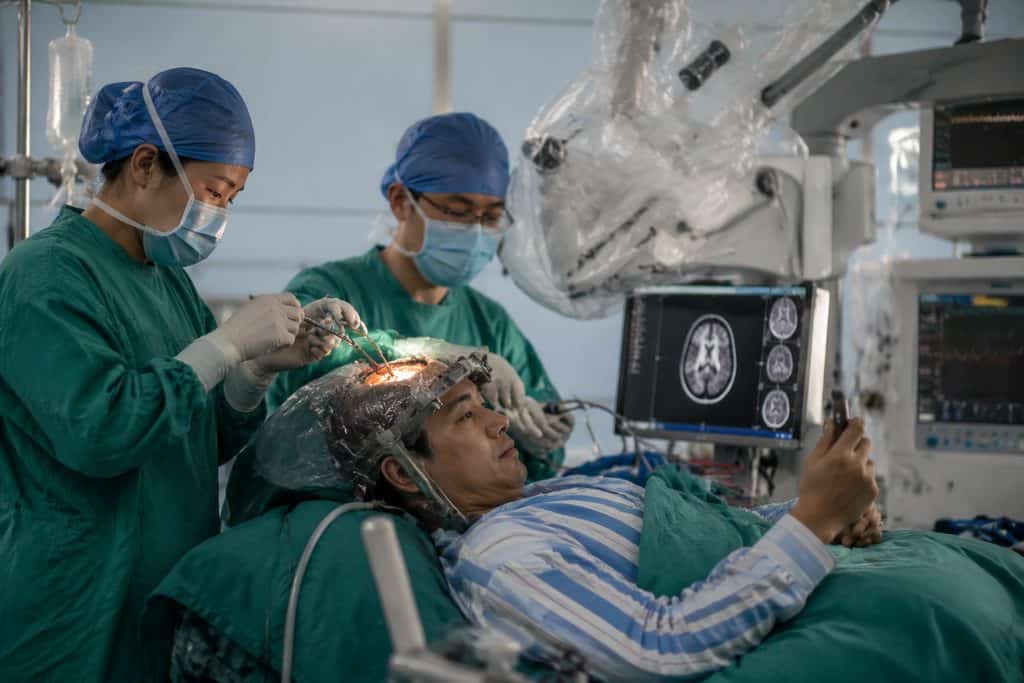
What does awake brain surgery cost China patients in 2026, and why do so many international families now ask that question before they ask about anything else? The short answer: for a procedure that routinely runs past $150,000 in the United States, the awake brain surgery cost in China at a top-tier public hospital typically lands between $25,000 and $45,000 — and sometimes less. That gap is not a marketing trick. It reflects how Chinese public hospitals are funded, staffed, and priced.
But the number alone tells you very little. What matters is which hospital, which surgeon, how complex the tumor, and whether you enter through the standard queue or the international department. This guide walks through all of it, honestly.
How This Actually Works, Step by Step
Here is the real sequence, from the moment you start searching to the moment you wake up in a recovery room in Beijing or Shanghai.
Step one: you send records. Not a summary — the actual imaging. MRI and fMRI DICOM files, pathology reports if a biopsy was already done, EEG results, and any neuropsychological testing. Our team arranges certified translation into Chinese, because neurosurgery departments review in Chinese.
Step two: a Chinese neurosurgery team reviews. Usually within five to ten business days. What comes back is a written second opinion: whether awake craniotomy is appropriate for your lesion, whether it is near eloquent cortex (speech, motor, or language areas), and what the realistic resection goal is.
Step three: a video consultation. You speak directly with the specialty team through an interpreter. You hear their recommendation. They hear your goals. This is where most patients decide whether to proceed.
Step four: coordination. If you agree, we handle hospital registration, medical card creation, and appointment scheduling through the hospital’s official international department. You receive an invitation letter for your visa.
Step five: you arrive, you are seen in person, and surgery is scheduled. No Chinese public hospital books a craniotomy from overseas imaging alone. An in-person consultation is mandatory. That is a safety rule, not bureaucracy.
Step six: surgery, recovery, and a follow-up plan you can take home.
What Drives the Price Up or Down
Awake craniotomy is not a single product with a single sticker. The range is wide because the inputs vary enormously.
| Cost Factor | Lower End | Higher End |
|---|---|---|
| Hospital tier | Standard tertiary (Class 3A) ward | International / VIP department |
| Surgeon seniority | Attending neurosurgeon | Department director, high-volume epilepsy/tumor surgeon |
| Intraoperative mapping | Standard cortical stimulation | Awake mapping + intraoperative MRI |
| Length of ICU stay | 1–2 days | 4–7 days |
| Histopathology | Standard frozen section | Molecular profiling, next-gen sequencing |
| Total estimate | ~$25,000 | ~$45,000+ |
Two things move the number most: whether you enter through the international department (roughly 1.5 to 2 times the standard channel price, in exchange for English-speaking staff and faster scheduling), and how much intraoperative technology the case requires.
Is Awake Brain Surgery Safe in China?
This is the question families ask quietly, usually second or third. It deserves a straight answer.
Awake craniotomy — sometimes called awake craniotomy with intraoperative mapping — is a well-established technique worldwide. It exists because certain brain tumors sit next to tissue that controls speech or movement, and the only reliable way to know where those boundaries are is to talk to the patient while stimulating the cortex. The patient is sedated for the opening, woken for the mapping and resection, then sedated again for closure. Most patients describe it as strange rather than painful.
China’s top neurosurgery centers perform these procedures at volume. High case volume matters in surgery — it correlates with better outcomes, and that relationship is well documented in the surgical literature. Beijing’s Tiantan Hospital, for example, is one of the largest neurosurgical centers in the world by annual case volume. Shanghai’s Huashan Hospital carries a comparable reputation in neurosurgery and neurology.
What we cannot tell you is that any hospital is “safe” in absolute terms. Craniotomy carries real risks anywhere on earth: infection, bleeding, seizure, neurological deficit, incomplete resection. The honest framing is that the risk profile in a top Chinese center is broadly comparable to a top Western center, while the price is not.
You can review neurosurgery rankings by specialty on our department directory, which lists China’s top hospitals by discipline based on the Fudan specialist reputation survey.
Best Hospitals for Awake Brain Surgery in Beijing
Beijing concentrates more top-ranked hospitals than any other Chinese city — 21 of the Fudan Top 100 sit there. For neuro-oncology and epilepsy surgery, three names come up repeatedly.
Beijing Tiantan Hospital. Affiliated with Capital Medical University, it is China’s flagship neurosurgery institution and handles an extraordinary annual surgical volume across tumor, vascular, and functional neurosurgery.
Peking Union Medical College Hospital. Often described as China’s most prestigious general hospital, with a neurology and neurosurgery program that draws complex referrals from across the country.
Chinese PLA General Hospital. A large tertiary center with strong neuro-oncology capabilities and an established international patient office.
Outside Beijing, Shanghai’s Huashan Hospital and Fudan University Shanghai Cancer Center are serious options, particularly for tumor-specific work. Guangzhou’s Sun Yat-sen University Cancer Center is another.
You can browse these by city on our top hospitals by city page, or read the Beijing-specific breakdown at our Beijing guide.
A Realistic Timeline
Patients consistently underestimate how long the administrative steps take. Here is a grounded schedule, assuming no complications.
| Stage | Typical Duration | What Happens |
|---|---|---|
| Records gathering | 3–10 days | You collect DICOM files, pathology, reports from your home hospital |
| Translation & submission | 2–5 days | Certified Chinese translation, submission to neurosurgery department |
| Written second opinion | 5–10 business days | Specialist review and written analysis returned to you |
| Video consultation | 3–7 days to schedule | Live session with interpreter |
| Visa (S2) application | 1–3 weeks | Requires hospital invitation letter and supporting documents |
| Travel & arrival | 2–5 days | Flights, accommodation, airport transfer |
| In-person consultation | 1–3 days after arrival | Mandatory face-to-face assessment before surgery is scheduled |
| Pre-operative workup | 3–7 days | Blood work, cardiac clearance, repeat imaging, anesthesia review |
| Surgery & inpatient stay | 7–14 days | Craniotomy, ICU, step-down ward |
| Recovery before flying | 2–4 weeks | Surgeon clearance required before long-haul flight |
Realistically, from first email to surgery day: six to twelve weeks. Anyone promising three weeks is skipping steps that exist for your protection.
What Can Go Wrong — and What Happens Then
We would rather you hear this from us than discover it later.
The tumor turns out to be inoperable. It happens. Some lesions sit in tissue where resection would cause unacceptable damage. In that case the team recommends alternatives — biopsy only, radiation, chemotherapy, or watchful waiting. You will have paid for the evaluation, not for a surgery that never happens.
The surgeon recommends a different approach. Maybe an asleep craniotomy, maybe a stereotactic biopsy first. Chinese neurosurgeons are generally conservative about awake mapping — they use it when it genuinely adds value, not as a default.
The visa is delayed. S2 applications require correct documentation. An incomplete invitation letter or a missing hospital stamp can add a week or two. Build buffer into your plans.
Surgery is postponed after you arrive. A fever, an abnormal blood result, or an uncontrolled blood pressure reading can push a case back days. This is good medicine, not disorganization.
Complications occur. Infection, seizure, temporary or permanent neurological deficit. Top Chinese hospitals manage these routinely, but no one can promise they will not happen. If a complication extends your stay, costs rise accordingly.
How Much Does Awake Craniotomy Cost in China Compared With Home?
Context matters more than the raw number. Here is how the same procedure stacks up across markets.
| Country | Typical Cost (USD) | Notes |
|---|---|---|
| United States | $150,000 – $300,000+ | Before insurance; varies wildly by state and facility |
| United Kingdom (private) | £60,000 – £90,000 | NHS wait times are the alternative |
| Germany | €70,000 – €110,000 | Strong neuro-oncology centers |
| China (top public, standard channel) | $25,000 – $45,000 | Includes surgery, ICU, pathology, inpatient stay |
| China (international department) | $40,000 – $70,000 | English service, faster scheduling |
These are ranges, not quotes. Final pricing varies by hospital and case complexity, and no responsible provider will give you a firm figure before seeing your imaging.
What the table does not capture is the cost of waiting. In several public systems, the gap between diagnosis and surgery for a low-grade glioma can stretch months. For aggressive tumors, that gap has consequences.
Practical Considerations: Records, Visas, Payment, and Follow-Up
Records. Get your imaging on physical media or a secure cloud link. Hospitals in China generally cannot pull records from your home institution. Bring more than you think you need.
Visa. Medical travel to China uses the S2 visa, annotated for medical treatment purposes. Family members accompanying you apply for S2 as well. Stays exceeding 180 days require the S1 category instead. Requirements shift, so confirm current specifics with the nearest Chinese embassy or consulate. Note that the M visa is for commercial and trade activity and is not the correct category for medical treatment.
Payment. Chinese public hospitals require prepayment. International insurance is typically reimbursed after the fact rather than billed directly. Some private international hospitals do offer direct billing with certain insurers — worth checking before you commit.
Language. China’s top hospitals see tens of thousands of outpatients daily. Signage is in Chinese. Interpretation is not optional for most international patients, and it is one of the most common gaps families discover too late.
Follow-up at home. Ask for your operative notes, pathology reports, and imaging in English before you leave. Your home oncologist will need them.
If you want to understand the wider landscape first, the China Medical Services homepage gives an overview of how international patient pathways work across 340+ top-ranked hospitals in 37 cities.
Frequently Asked Questions
Most international patients at top public hospitals land between $25,000 and $45,000 for surgery, ICU, pathology, and inpatient stay. Entering through an international department typically pushes that to $40,000–$70,000. Final figures depend on tumor complexity, ICU duration, and whether molecular pathology is required.
At high-volume centers like Beijing Tiantan or Shanghai Huashan, outcomes are broadly comparable to leading Western institutions. The technique itself carries standard craniotomy risks everywhere — infection, bleeding, seizure, neurological deficit. No hospital anywhere can eliminate those risks, and any provider claiming otherwise should concern you.
You can begin the process from overseas — records review, written second opinion, video consultation, and hospital coordination. But surgery itself cannot be scheduled before an in-person consultation. That rule applies at every Chinese public hospital, and it exists to protect you.
Be careful with “all-inclusive” framing. Reputable coordination covers records translation, appointment scheduling through official hospital channels, interpretation, and logistics. It does not cover hospital treatment charges, and no legitimate provider bundles those into a flat package price. Ask for a line-item breakdown of both coordination fees and estimated hospital costs.
Coordination fees for appointment scheduling are refunded in full if the requested appointment cannot be secured. Hospital treatment charges are separate and follow the hospital’s own rules.
Your Next Step
The core message is simple: awake brain surgery in China costs a fraction of Western pricing, the technical capability at top centers is genuine, and the process is navigable — but only if you plan for the administrative steps most patients underestimate. Start with records, not flights.
We are China Medical Services. We are not doctors and we do not provide medical advice. What we do is translate your records, connect you with the right neurosurgery department through official hospital channels, coordinate appointments, and put a bilingual companion beside you from arrival to discharge. If you would like a written second opinion or a video consultation to clarify whether this path makes sense for your case, start with a free consultation. No pressure, no obligation — just a clearer picture of your options.
This article is for general information only and does not constitute medical advice. Treatment decisions should always be made with a qualified physician who has reviewed your individual case.
For more medical information and treatment options in China, visit chinamedservices.com (China Medical Services).
