Awake Brain Surgery in China: Shanghai’s Huashan Hospital and What It Costs
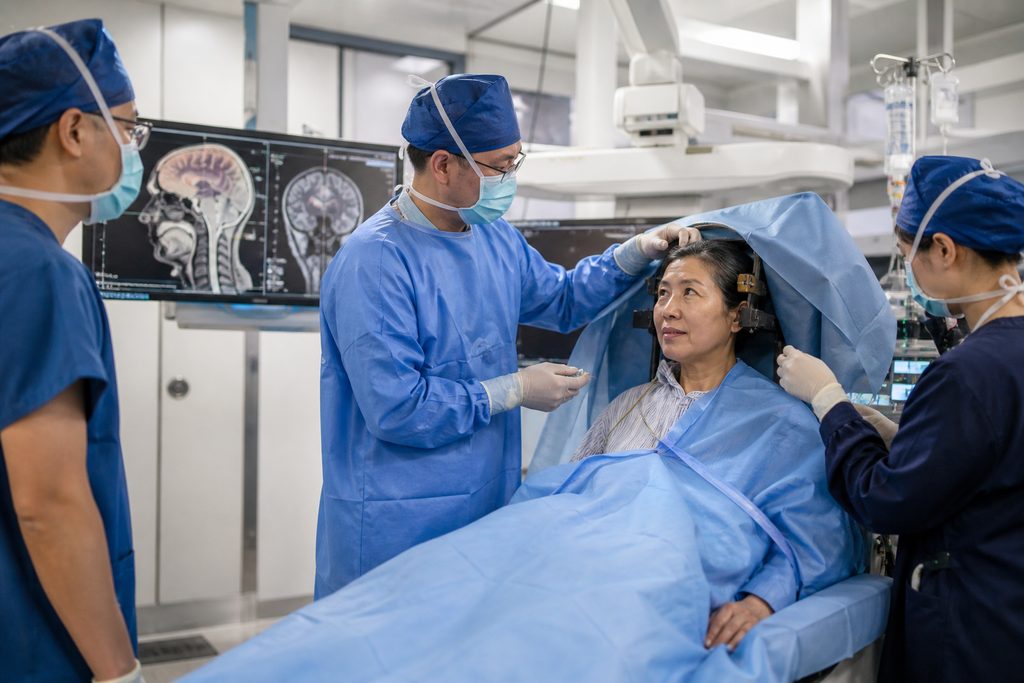
In the United States, an awake craniotomy for tumor resection can exceed $100,000 in facility and surgeon fees alone. At Shanghai’s Huashan Hospital, the same procedure—using intraoperative MRI and direct cortical stimulation—is consistently performed for between $25,000 and $45,000. That stark differential is what brings our phone lines to life. But the awake brain surgery cost China figure only answers the financial question. It doesn’t tell you whether you’re a candidate, how the logistics actually work, or what happens when you land in a city of 29 million people and need a neurosurgical team you can trust. Our organization exists to bridge that gap.
Awake Brain Surgery in China: The Short Answer
Yes. Awake brain surgery is not only possible in Shanghai—it is a high-volume, technologically mature procedure at Huashan Hospital’s Department of Neurosurgery. The department handles over 17,000 neurosurgical cases annually. Awake craniotomies for glioma resection, particularly in eloquent cortex, are a core competency, not an experimental offering. The team uses intraoperative MRI, neuronavigation, and direct electrical stimulation mapping as standard.
The complication? Access. Huashan’s public neurosurgery clinic sees thousands of patients daily. You cannot email the department and book a surgery date. For international patients, the route runs through the hospital’s International Medical Center, which coordinates specialist appointments, preoperative workup, and admission. That channel requires documentation, patience, and someone who speaks the language. That’s where we come in—but we’ll get to that.
Who This Is Right For — and Who It Isn’t
Awake craniotomy is a precise tool for a narrow problem. It is not a universal upgrade over traditional surgery. Knowing who should not pursue this is as important as knowing who should.
Typically a strong candidate if:
- You have a primary brain tumor (low-grade or high-grade glioma) located in or near eloquent cortex—areas controlling speech, movement, or sensation.
- Your tumor is resectable, and maximal safe resection is the goal.
- You are neurologically intact enough to cooperate with intraoperative testing for 2–4 hours.
- You are an adult without severe anxiety, claustrophobia, or cognitive impairment that would prevent you from lying still and responding to commands during surgery.
- You have exhausted local surgical options due to wait times, cost, or a surgeon’s assessment that the tumor is inoperable—and you want a high-volume center’s second opinion.
Not a good candidate if:
- Your tumor is diffuse, multifocal, or located in deep structures where awake mapping adds no benefit.
- You have significant baseline dysphasia or motor deficit that would make intraoperative testing unreliable.
- You have uncontrolled intracranial pressure, severe cardiac or pulmonary comorbidities, or a BMI that makes prolonged prone or lateral positioning unsafe.
- You are seeking awake surgery purely to avoid general anesthesia risks. The awake phase is only for mapping; you still undergo sedation and local scalp blocks, and conversion to general anesthesia is always a backup plan.
- You are a minor, or you cannot provide informed consent in a language the surgical team speaks—unless a qualified medical interpreter is present throughout.
Being honest about exclusion criteria is what keeps our credibility intact. We have seen families fly across the world only to learn during the preoperative assessment that awake mapping was never appropriate. That is preventable.
The Options, Compared
When a patient searches for how much does awake craniotomy cost abroad, they are usually comparing three paths. Here is what that comparison looks like with real numbers.
| Factor | Awake Craniotomy in United States | Awake Craniotomy in Western Europe (Germany/UK) | Awake Craniotomy at Huashan Hospital, Shanghai |
|---|---|---|---|
| Total cost (hospital + surgeon) | $80,000–$150,000+ | $40,000–$80,000 | $25,000–$45,000 |
| Wait time for surgery | 2–6 weeks (insurance-dependent) | 4–12 weeks (public system); 1–3 weeks (private) | 1–3 weeks after in-person consultation and preoperative clearance |
| Intraoperative MRI availability | Available at major academic centers | Available at select centers | Standard at Huashan’s neurosurgery suites |
| Annual neurosurgery case volume | Varies widely (500–3,000 per center) | Varies widely | Over 17,000 cases/year (entire department) |
| Language barrier for English speakers | None | Minimal | Significant; requires interpreter or bilingual coordinator |
| Postoperative stay included in cost | Usually 2–5 days | Usually 5–10 days | Usually 7–14 days (included in surgical package) |
This table tells a story, but it leaves out the most important variable: the surgeon. Huashan’s neurosurgery department is ranked among China’s top three for the specialty. Its glioma team performs awake mapping several times per week. Volume matters in neurosurgery. So does subspecialization. If you choose the Shanghai route, you are not getting a general neurosurgeon who occasionally does awake cases. You are getting a team for whom this is Tuesday.
But the table also exposes the trade-off. You are traveling to a country where you do not speak the language, into a hospital system that operates differently from Western institutions. That trade-off is manageable—but only if you acknowledge it upfront.
What Huashan Hospital Actually Offers International Patients
This is the section that answers the underlying question behind the search Huashan Hospital neurosurgery international patients price. People are not just asking for a number. They are asking: if I pay this, what am I actually getting, and will I be treated like a real patient or a medical tourist?
Huashan Hospital, affiliated with Fudan University, runs a dedicated International Medical Center (IMC) on its Huashan campus. This is not a separate private wing leased to a third party. It is hospital-operated, staffed by the same attending neurosurgeons who work in the public wards. The IMC provides:
- English-speaking care coordinators who manage appointments, admissions, and discharge planning.
- Private inpatient rooms with amenities closer to what Western patients expect—en-suite bathrooms, visitor accommodations, and nursing ratios that allow for more individualized attention.
- Direct access to the neurosurgery department’s full diagnostic toolkit: 3T MRI, functional MRI, diffusion tensor imaging tractography, and intraoperative monitoring suites.
- Coordination of the preoperative workup, which typically includes a repeat MRI with contrast, neurological exam, anesthesia clearance, and a formal surgical plan discussion with the attending neurosurgeon.
What the IMC does not do is jump the queue. The neurosurgeon who will operate on you still needs to personally review your imaging, examine you, and agree that surgery is indicated. That in-person consultation is non-negotiable. You cannot send your MRI on a USB drive and receive a surgery date by return email. You must come to Shanghai, sit with the specialist, and go through the same clinical decision-making process as every other patient. The IMC streamlines the logistics. It does not bypass medical judgment.
For international patients who want to book awake brain surgery Huashan Hospital China, the sequence is: remote preliminary review of your existing records → travel to Shanghai → in-person consultation → preoperative workup → surgery scheduling. The entire process from landing to surgery can be as short as 7–10 days if your case is straightforward and all clearances are obtained without delays.
What Awake Brain Surgery at Huashan Actually Costs
The awake brain surgery cost China figure we quoted earlier—$25,000 to $45,000—requires unpacking. That range covers the hospital’s surgical package for international patients through the IMC. It typically includes:
- Surgeon and anesthesiologist professional fees
- Operating room charges, including intraoperative MRI and neuronavigation
- Awake mapping with direct cortical stimulation and speech pathology monitoring
- Inpatient stay (usually 7–14 days in a private room)
- Postoperative imaging and basic medications during admission
- Nursing care and daily rounds by the neurosurgery team
It does not include:
- Preoperative outpatient consultations and diagnostic imaging (budget $1,500–$3,000)
- Airfare and ground transportation
- Accommodation for family members during your hospital stay
- Post-discharge rehabilitation, if needed
- Any complications requiring extended ICU stay or reoperation
- Medical interpreter or patient coordination services
The variance between $25,000 and $45,000 depends on tumor location, complexity of mapping, length of stay, and whether any unexpected findings require additional intraoperative procedures. A small glioma in a single eloquent region will land at the lower end. A larger tumor abutting both motor and language cortex, requiring hours of mapping and a longer recovery, will push toward the upper end.
Payment is required upfront. Huashan’s IMC accepts wire transfers and major credit cards. They do not directly bill international insurance. You pay the hospital, then seek reimbursement from your insurer. We always advise patients to obtain pre-authorization in writing before traveling.
Practical Considerations: Records, Visas, and Follow-Up
The question can foreigners get brain surgery in Shanghai is not just about medical eligibility. It is about whether the system is set up to receive you. The answer is yes—but only if you arrive prepared.
Medical records. You need a complete dossier: all MRI scans (DICOM format on CD or uploaded to a secure portal), radiology reports, pathology reports if a biopsy was done, a summary letter from your treating neurosurgeon or oncologist, and a list of current medications. These must be in English or accompanied by a certified translation. The Chinese neurosurgery team will re-read every scan themselves. They do not rely on outside radiology interpretations.
Visa. Foreign nationals traveling to China for medical treatment apply for an S2 visa, which covers short-term private affairs including medical care. The application requires an invitation letter from the hospital. Huashan’s IMC provides this once you have a confirmed consultation appointment. Family members accompanying you also apply for S2 visas. Do not apply for an M visa—that is for commercial and trade activities and will be rejected if the stated purpose is medical treatment. Processing time varies by country, but budget 2–4 weeks.
Language. The IMC coordinators speak English. The neurosurgeons may have functional English for clinical discussions, but the operating room, nursing staff, and daily ward interactions are conducted in Mandarin. You will need a bilingual medical companion or interpreter for everything outside the IMC coordinator’s office: preoperative instructions, consent forms, anesthesia consultation, postoperative nursing communication, and discharge planning. This is not a luxury. It is a safety requirement.
Follow-up after returning home. Huashan’s team will provide a discharge summary, operative report, pathology results, and postoperative MRI images. They typically recommend a follow-up MRI at 3 months, then at intervals determined by tumor grade. You will need a neurosurgeon or neuro-oncologist in your home country willing to accept these records and continue your care. Establish that relationship before you travel. Do not assume your local hospital will seamlessly take over. Some will. Some will resist. Have the conversation early.
Frequently Asked Questions
The complication rates for awake craniotomy at high-volume Chinese centers are comparable to published international benchmarks. Huashan’s neurosurgery department publishes peer-reviewed outcomes data. But direct comparisons are difficult because case mix differs. A center that operates on more complex, recurrent tumors will have higher complication rates than one that selects only straightforward cases. Ask the attending neurosurgeon directly about their personal complication rate for your specific tumor type and location. If they cannot answer that question clearly, that is a red flag—anywhere in the world.
No. If an intraoperative complication occurs—bleeding, swelling, seizure, or neurological deficit—you will be managed in Huashan’s neurosurgical ICU by the same team. Medical evacuation to another country while you have an open craniotomy or are in the immediate postoperative period is not realistic. This is why candidate selection matters. If you have comorbidities that make you a high-risk surgical candidate, traveling abroad for brain surgery is probably not the right decision. The cost savings are not worth the risk of being critically ill in a foreign ICU far from your family and your established medical team.
Yes. Huashan’s IMC facilitates written second opinions. You submit your imaging and records. A neurosurgeon from the glioma team reviews them and provides a written assessment: whether the tumor appears resectable, whether awake mapping is indicated, and what the recommended surgical approach would be. This costs between $300 and $500 and typically takes 5–10 business days. It is not a binding surgical plan, and the surgeon reserves the right to change the recommendation after an in-person examination. But it gives you a data point from one of the world’s highest-volume centers before you commit to travel. Our team can coordinate this process and ensure your records are submitted in the correct format.
Some international health insurance plans cover treatment abroad, particularly if the procedure is significantly less expensive than in the home country or if wait times at home are prohibitive. Others exclude non-emergency care outside the policy’s network. You must contact your insurer directly. Ask specifically: does my plan cover elective neurosurgery at a hospital outside my home country? What pre-authorization is required? What documentation will I need for reimbursement? Get the answers in writing. We have seen patients assume coverage and then face a $35,000 out-of-pocket bill. We have also seen insurers approve the full amount because the savings compared to a US facility were so substantial that the carrier came out ahead.
Your Next Step
The decision to travel to Shanghai for awake brain surgery is not one you make from a Google search. It starts with a clear-eyed assessment of your candidacy, a remote second opinion from the team that would operate on you, and an honest conversation about what the logistics will demand of you and your family.
Our organization does not perform surgery. We do not make diagnoses. We are a medical coordination team that connects international patients with China’s top-ranked hospitals—340+ institutions across 37 cities. For neurosurgery specifically, we work with the departments that lead China’s national rankings, including Huashan Hospital’s neurosurgery program. We handle the practical barriers: obtaining that initial remote opinion, scheduling the in-person consultation, arranging a bilingual medical companion for your hospital stay, and navigating the visa process. If you want to understand whether this path makes sense for your specific situation, reach out for a free consultation. We will tell you what we know, and we will tell you what we don’t.
For more medical information and treatment options in China, visit chinamedservices.com (China Medical Services).
