LASIK Cost in China: What You’ll Pay in 2026
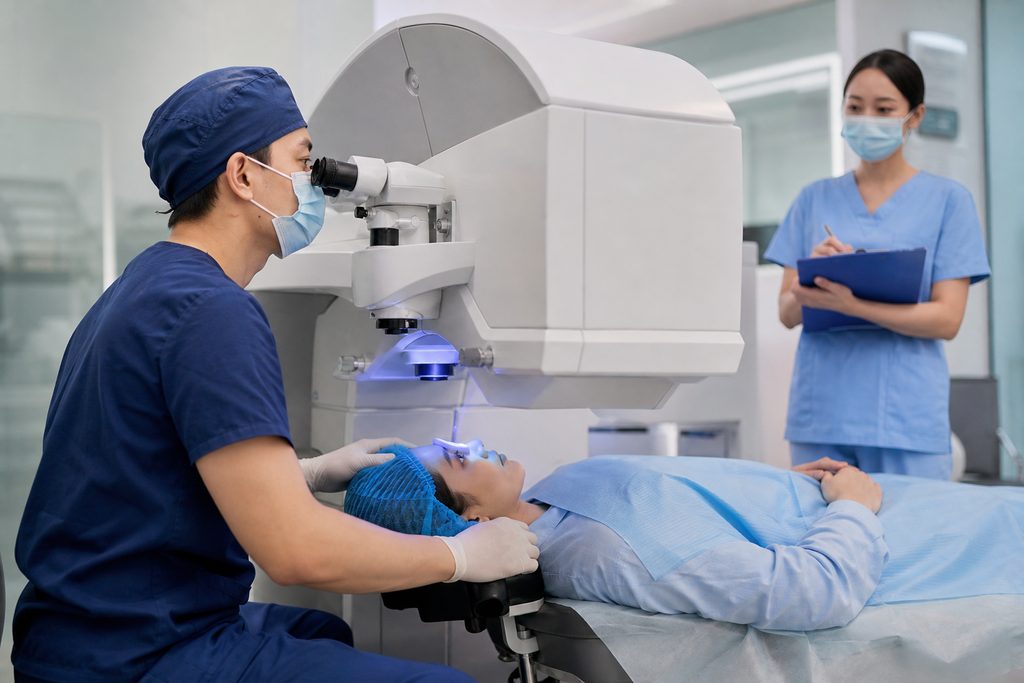
LASIK Cost in China: What You’ll Pay
LASIK is laser eye surgery that reshapes your cornea so you can see without glasses. The whole procedure takes about 10 minutes per eye, and most people notice clearer vision the same day. So here is the number you came for: lasik eye surgery cost China typically runs $1,000 to $3,000 per eye at top-tier public hospitals and international clinics. In the United States, the same procedure averages $2,200 to $3,000 per eye. That gap — often 40% to 60% — is why patients from Australia, the UK, and the US keep searching for options abroad.
But price alone is a bad reason to get surgery. This guide walks through what you actually pay, where the good clinics are, how to book, and what can go sideways.
Key takeaway: A realistic all-in budget for LASIK in China — surgery, hotels, flights, and follow-up — lands between $2,500 and $6,000 for both eyes at a reputable hospital, depending on the city and the technology used.
How This Actually Works, Step by Step
Eye surgery in China is not a walk-in transaction. The public hospital system runs on a specific sequence, and understanding it saves you days of confusion.
Start with a remote evaluation. You send your existing eye examination records — refraction results, corneal topography, intraocular pressure readings, and your prescription history. A Chinese ophthalmology department reviews them and tells you whether you are even a candidate. Roughly 1 in 5 people who want LASIK turn out to be unsuitable because of thin corneas, dry eye, or an unstable prescription. Better to learn that before you book a flight.
Next comes the appointment itself. Public hospitals in China generally do not allow overseas patients to pre-book an ordinary outpatient slot. You register on the day, queue, and see the doctor in person. The surgery can only be scheduled after that face-to-face consultation. This is a hard rule across most public tertiary hospitals, and no amount of planning changes it.
If you want to lock in a specific surgeon and a specific date before you travel, you go through the hospital’s international department or VIP channel. You get senior specialists, English-speaking staff, and predictable scheduling. The trade-off is cost — expect roughly 1.5 to 2 times the standard channel price.
Then there is the surgery day, a follow-up check the next morning, and a second check around day seven. Most patients fly home after that.
What Drives the Price Up or Down
Two clinics can quote wildly different numbers for what sounds like the same operation. Here is why.
The technology. Standard femtosecond LASIK uses a blade-free flap created by laser. SMILE (small incision lenticule extraction) is a newer, flapless technique that some surgeons prefer for dry-eye-prone patients. PRK, the oldest method, costs less but has a longer recovery. SMILE and topography-guided LASIK sit at the top of the price range.
The hospital tier. A private international clinic in Shanghai with JCI accreditation, English-speaking nurses, and direct insurance billing charges more than a public tertiary hospital’s standard ophthalmology department. Both can be excellent. They serve different needs.
The city. Beijing and Shanghai run higher than Chengdu, Wuhan, or Xi’an. The difference is usually 15% to 30%, not double.
Your eyes. High myopia, astigmatism correction, and repeat treatments cost more. So does anything requiring a customized ablation profile.
| Procedure / Setting | Typical Price Per Eye (USD) | Notes |
|---|---|---|
| Standard LASIK, public tertiary hospital | $1,000 – $1,600 | Queue-based registration, minimal English |
| SMILE, public tertiary hospital | $1,400 – $2,200 | Flapless, faster dry-eye recovery |
| LASIK or SMILE, private international clinic | $2,000 – $3,000 | English staff, insurance billing, shorter waits |
| Public hospital VIP / international department | $1,800 – $2,800 | Pre-booked senior specialist, English support |
| Same procedure in the United States | $2,200 – $3,000 | National average, varies by state |
Prices vary by hospital and case complexity. Treat every figure here as a starting range, not a quote.
Is LASIK Surgery Safe in China?
This is the question that keeps people up at night, and it deserves a straight answer.
China performs more refractive eye surgery than any other country. Its leading ophthalmology departments — several rank among the top 10 in the Fudan specialist reputation rankings — handle volumes that most Western clinics never approach. Volume matters in surgery. Surgeons who perform hundreds of procedures a year tend to have fewer complications than those who perform dozens.
Equipment is not the issue either. The femtosecond lasers and excimer systems used in Chinese tertiary hospitals are the same German and American platforms used in London and Los Angeles. Regulatory approval for these devices follows national standards, and major hospitals maintain international accreditation.
The real variables are these: choosing an accredited facility, confirming your surgeon’s actual case volume, and getting a proper pre-operative screening. Safety in eye surgery is 90% about patient selection. A clinic that rushes you past screening is the risk — not the country.
Be cautious of any provider that quotes a price before seeing your corneal scans, or that offers surgery on the same day as your first consultation without a full workup. Both are red flags anywhere in the world.
A Realistic Timeline
Here is how a typical medical trip for LASIK actually unfolds, including the waiting steps people forget.
| Stage | Timeframe | What Happens |
|---|---|---|
| Record collection and translation | Days 1–7 | Gather eye exam records, get them translated if needed |
| Remote review / second opinion | Days 5–14 | Chinese ophthalmology team assesses candidacy |
| Visa application (S2 category) | 1–3 weeks | Requires hospital invitation documents; processing times vary by consulate |
| Travel and in-person consultation | Day 1 in China | Full workup, final candidacy decision, surgery scheduling |
| Surgery | Day 2–3 in China | About 10 minutes per eye; same-day discharge |
| Post-op check one | Next morning | Flap or incision check, vision measurement |
| Post-op check two | Day 7 | Cleared to fly in most cases |
| Long-term follow-up | Months 1, 3, 6 | Can often be done with your local optometrist |
Total time from first email to flying home: roughly four to eight weeks. The visa stage is the one people underestimate.
What Can Go Wrong — and What Happens Then
Honest talk. LASIK is elective surgery, and things do occasionally go off script.
You are screened out. This happens more than people expect. Thin corneas, keratoconus risk, pregnancy, or an autoimmune condition can disqualify you. The recourse is straightforward — your records come back with an explanation, and you discuss alternatives like implantable lenses or simply staying in glasses. No money changes hands for surgery that does not happen.
Dry eye gets worse. This is the most common side effect. Most cases resolve within three to six months. Some patients need lubricating drops for a year or longer. SMILE tends to produce fewer dry-eye complaints than flap-based LASIK, which is worth discussing with your surgeon.
Undercorrection or overcorrection. Roughly a small percentage of patients need an enhancement procedure later. Many Chinese hospitals include one enhancement within 12 months in the original fee. Ask before you pay.
Communication gaps. This is the failure mode unique to medical travel. If you do not speak Mandarin, a large public hospital is genuinely difficult to navigate — registration, payment, and pharmacy are all in Chinese. A bilingual medical companion solves this, but you have to arrange it in advance.
Follow-up after you fly home. Your Chinese surgeon cannot examine you from 6,000 miles away. Most patients arrange a local check at week one and month three. Bring your operative report and your post-op medication list with you.
How to Choose a Clinic — and What to Ask
The best lasik clinic Shanghai price is not the cheapest one. Here is how to separate good from merely affordable.
Ask how many procedures the surgeon performs per month. Anything under 50 is worth a second look. Ask which laser platform they use and when it was last serviced. Ask whether the quoted price includes the pre-operative workup, all post-operative visits, and any enhancement within the first year. Ask what happens if you are screened out on arrival — do you get a refund, or a credit?
For hospital selection, the Fudan rankings group China’s best hospitals into tiers rather than numbered positions, and ophthalmology is one of 45 specialties with its own top-10 list. You can browse accredited hospitals by city and specialty through our directory of top-ranked departments, or start with the Fudan-ranked hospital database to see what is available in Beijing, Shanghai, and Guangzhou.
One more thing. The phrase “lasik surgery abroad fast recovery” gets thrown around a lot. Recovery is fast, yes — but “fast” means days to functional vision, not hours. Plan for a week in the country, not a weekend.
Practical Considerations: Visas, Payment, and Language
For medical treatment in China, the correct visa is the S2 category, which covers short-stay medical treatment and private affairs. If your stay will exceed 180 days, you would look at S1 instead. Accompanying family members apply under the same S2 category. Note that the M visa is for commercial and trade activities only — it has nothing to do with medical care. Requirements shift, so always confirm current rules with your nearest Chinese embassy or consulate and bring supporting hospital documents.
Payment at public hospitals is prepaid. You pay before treatment and seek reimbursement from your insurer afterward. Private international clinics often bill insurance directly, which is a real convenience if your plan covers overseas care. Bring a card that works internationally, and expect to settle in Chinese yuan.
Language is the last piece. A bilingual medical companion — someone who handles registration, queueing, payment, wayfinding, and translation — typically costs from $300 per day. Given that a single miscommunication about medication can cost you a follow-up trip, most patients consider it money well spent. You can read more about how that works on our medical travel services homepage.
Frequently Asked Questions
Beijing and Shanghai track closely — usually $1,200 to $2,800 per eye at reputable hospitals, with private international clinics at the upper end. Beijing has the larger concentration of top-ranked ophthalmology departments; Shanghai tends to have more English-friendly private options. The gap between the two cities is smaller than most people assume.
Not for standard public hospital slots. Public hospitals require an in-person consultation before scheduling surgery. What you can arrange in advance is a remote record review to confirm candidacy, and — through a hospital’s international department — a pre-booked consultation with a specific specialist. Anyone promising a guaranteed surgery date before examining your eyes is overpromising.
The equipment and surgical standards at accredited Chinese hospitals match those in Europe and North America. Safety outcomes depend far more on patient selection and surgeon volume than on geography. Choose a hospital with international accreditation, verify your surgeon’s experience, and insist on a full pre-operative workup.
Most patients complete their final in-person check in China around day seven, then arrange local follow-ups at month one, three, and six. Bring your operative report, your medication list, and your pre-operative scans. Any competent optometrist can handle routine post-LASIK monitoring.
Your Next Step
The core message is simple: LASIK in China can cost 40% to 60% less than in the US, and the surgical standards at accredited hospitals are genuinely comparable. The complexity is not the surgery — it is the logistics around it.
We are China Medical Services, a bilingual coordination team that connects international patients with 340+ top-ranked hospitals across 37 cities. We do not perform surgery and we do not make medical recommendations. What we do is help you gather records, obtain a written second opinion, navigate the S2 visa process, and arrange bilingual support on the ground. If you would like to understand your options before committing to anything, start with a free consultation — no pressure, no obligation.
This article is for general information only and is not medical advice. Treatment decisions should always be made with a qualified ophthalmologist who has examined your eyes.
For more medical information and treatment options in China, visit chinamedservices.com (China Medical Services).
