Health Checkup: Book Your Baseline in China for Under $500
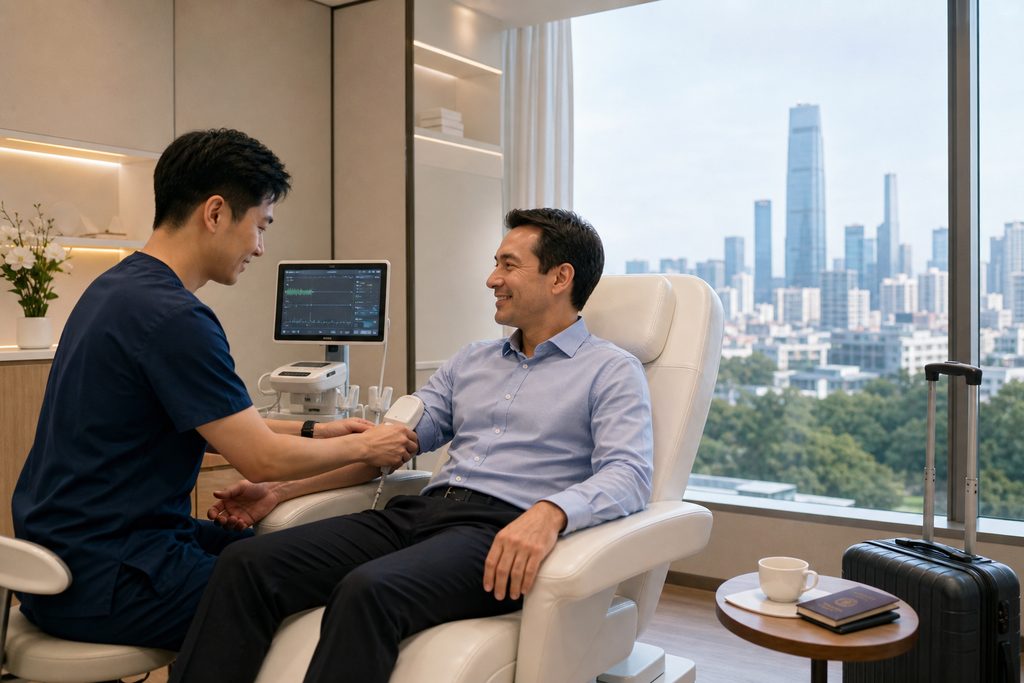
When 42-year-old Michael first heard the diagnosis, he had no idea where to start looking for treatment. His cardiologist in Chicago mentioned an anomaly on a routine scan. Nothing urgent. But Michael wanted certainty — and a full picture, not just a single organ. He started researching comprehensive screening options. The quotes in the U.S. stopped him cold. An executive physical at a major American hospital ran $4,000 to $7,000. His insurance covered a fraction. Then a colleague mentioned getting a thorough workup during a business trip to Shanghai. Michael was skeptical. Could a hospital in China really deliver equivalent imaging, labs, and specialist review for a fraction of the price? The answer surprised him. The full body checkup cost China hospitals charge typically ranges from $300 to $800 for a comprehensive package — roughly one-tenth of what he’d been quoted at home.
Health Checkup: Book Your Baseline — The Short Answer
You can book a comprehensive full body checkup at a top-tier Chinese hospital for $300 to $800, often within one to two weeks of inquiry. The exam typically includes blood panels, abdominal ultrasound, chest X-ray or low-dose CT, ECG, and specialist review. Most international patients complete everything in one morning. That’s the headline. The caveat: you cannot simply walk into a public hospital’s regular outpatient department and expect an English-speaking coordinator to hand you a package. The efficient path runs through a hospital’s international medical center or VIP department — or a service like ours that handles the registration, translation, and logistics.
Who This Is Right For — and Who It Isn’t
A baseline health checkup in China suits a specific profile. You’re generally healthy, over 35, and want a data-driven snapshot of your cardiovascular, metabolic, and organ function. You’re traveling to China anyway for business or family. Or you’re willing to make the trip because the cost difference justifies it.
Good candidates:
- Adults 35–65 with no acute symptoms who want a preventive baseline
- People with a family history of cancer, heart disease, or diabetes seeking earlier screening
- Patients who want a second look at borderline findings from a previous exam
- Travelers who value speed — many packages return results within 24–72 hours
Who should not pursue this:
- Anyone with active, undiagnosed symptoms — chest pain, unexplained weight loss, persistent fever. You need a diagnostic workup, not a screening package.
- Patients with complex, unstable chronic conditions requiring continuous management. A one-time checkup won’t replace your ongoing care.
- People who cannot travel comfortably or who lack the flexibility to spend one to three days in a Chinese city.
- Anyone expecting a guarantee of perfect health from a single exam. Screening reduces uncertainty. It doesn’t eliminate it.
The Options, Compared
The full body checkup cost China facilities quote depends heavily on which tier you choose. Public hospital international departments, private international hospitals, and standalone health screening centers all offer packages. They are not interchangeable.
| Option | Typical Cost (USD) | What’s Included | Language Support | Wait Time |
|---|---|---|---|---|
| Public hospital — standard package | $150–$400 | Core labs, ultrasound, ECG, chest X-ray | Limited English | Same-day, but crowded |
| Public hospital — international/VIP department | $400–$800 | Expanded labs, CT option, specialist review, private lounge | English-speaking coordinators | 1–2 weeks booking |
| Private international hospital (United Family, Jiahui, Parkway) | $600–$1,500 | Full executive panel, same-day results, Western-style report | Native English common | 3–7 days booking |
| Standalone screening center | $100–$300 | Basic panels, limited imaging | Variable | Walk-in possible |
The public hospital VIP route delivers the best value for most international patients. You get the same imaging equipment and the same senior radiologists as the standard department, but with English coordination and a calmer environment. Private international hospitals cost more because you’re paying for Western-style service, direct insurance billing, and often a more familiar report format. The standalone centers are cheap but rarely worth it for a first-time visitor — you’ll spend more time navigating language barriers than the savings justify.
What a Baseline Package Actually Measures
Here’s what a serious executive health screening package Shanghai hospitals offer — and what Beijing and Guangzhou equivalents include — typically covers. The core is blood work: complete blood count, fasting glucose, HbA1c, lipid profile, liver enzymes (ALT, AST), kidney function (creatinine, eGFR), uric acid, and thyroid panel (TSH, free T4). Many packages add tumor markers — CEA, AFP, CA19-9, PSA for men, CA-125 for women. These are screening tools, not diagnostic tests. An elevated marker doesn’t mean cancer. It means further investigation.
Imaging usually includes abdominal ultrasound (liver, gallbladder, pancreas, spleen, kidneys), a chest X-ray or low-dose CT, and an ECG. Some executive packages add carotid artery ultrasound for cardiovascular risk assessment. Women may receive breast ultrasound or mammography and a pelvic ultrasound. Men over 50 often get a prostate ultrasound. The exact list varies by hospital and package tier.
Then comes the review. A physician — often an internal medicine specialist — goes through every result with you, flags abnormalities, and recommends follow-up. At top hospitals, this happens the same day or within 48 hours. You leave with a written report in English, not just a pile of lab slips.
How Much Is a Comprehensive Health Check in Beijing?
Beijing pricing runs slightly higher than other cities. The concentration of top-ranked hospitals — including Peking Union Medical College Hospital and the international departments of major public institutions — drives demand. Expect to pay $450 to $800 for a comprehensive package at a Beijing public hospital’s international department. Private options like Beijing United Family start around $800 and climb past $1,200 for executive tiers.
Shanghai sits in a similar range. The executive health screening package Shanghai international departments offer typically runs $400 to $700. Guangzhou, Chengdu, and Hangzhou trend 10–20% lower. The variance comes down to three factors: imaging depth (ultrasound only vs. CT vs. MRI), number of tumor markers, and whether a specialist consultation is bundled in.
What drives the price up? Adding a coronary calcium score via CT, a full-body MRI, or genetic testing. What keeps it down? Sticking to the core panel and skipping the luxury add-ons. For most people, the mid-tier package is the right call.
Is Health Screening in China Reliable for Foreigners?
The short answer is yes — at the right hospitals. The equipment is modern. Major Chinese hospitals install the same Siemens, GE, and Philips imaging platforms you’d find in any American or European facility. Radiologists at top-tier centers read thousands of studies annually. The volume is staggering. A single large hospital may perform over 10,000 outpatient visits per day. That repetition builds diagnostic skill.
But reliability has two components: the medicine and the communication. The medicine is solid. The communication is where things break down for foreigners. A standard public hospital report will be in Chinese. The reviewing physician may not speak English. Abnormal findings may be described tersely — “suggest follow-up” — with no explanation of what that means or how urgent it is.
This is why the international department route matters. You get the same imaging and lab quality, plus an English-language report and a physician who can explain findings in terms you understand. The top-ranked hospitals in our database all operate international or VIP departments designed for exactly this scenario. The medicine doesn’t change. The translation does.
What It Costs — A Realistic Breakdown
Let’s put numbers on the full body checkup cost China travelers actually pay. A mid-tier comprehensive package at a public hospital international department: $500. That typically includes all labs, abdominal ultrasound, chest X-ray, ECG, and physician review. Add a low-dose chest CT instead of X-ray: $120–$200 more. Add carotid ultrasound: $80–$150. Add a full-day bilingual medical companion to handle registration, navigation, and translation: from $300. Airport transfer round-trip: $200.
So a realistic all-in budget for one person: $900–$1,200 including the package, one add-on imaging study, companion service, and transfers. That’s still a fraction of the $4,000–$7,000 executive physical in the U.S. And the results are comparable.
What’s not included: visa fees, flights, hotel, meals, and any follow-up diagnostic testing if something abnormal shows up. If your screening flags a lung nodule requiring a biopsy, that’s a separate procedure with separate costs. Screening finds questions. Diagnosis answers them. They are different services.
Practical Considerations: Booking, Visas, and Payment
Generally yes, if the report is in English and includes reference ranges. Top-tier Chinese hospitals use internationally standardized units and reference intervals. Your home physician may want to repeat certain tests to confirm abnormal findings. That’s standard practice regardless of where the screening was done.
You’ll be referred for follow-up. If the finding requires urgent attention, the hospital can arrange a specialist consultation — often within days. Some patients choose to pursue treatment in China. Others return home with a detailed report and a clear recommendation. You are never obligated to continue care at the same facility. The report belongs to you.
No. You need a valid visa to enter China. For medical purposes, the S2 visa is the appropriate category. The hospital or coordination service provides supporting documentation confirming your appointment. Visa approval is at the discretion of the Chinese embassy or consulate processing your application.
Several excellent options exist. Public hospital international departments — including those at Zhongshan Hospital and Ruijin Hospital — offer comprehensive packages with English coordination. Private options like Jiahui and United Family provide a more Western-style experience at a higher price point. The best choice depends on your budget, language comfort, and whether you want direct insurance billing. Our Shanghai hospital guide breaks down the differences in detail.
Your Next Step
A baseline health checkup in China is a practical, cost-effective way to get a comprehensive snapshot of your health. The medicine is strong, the equipment is modern, and the price is a fraction of what you’d pay in the West. The challenge is logistics — booking, language, navigation, and follow-up.
We’re China Medical Services, a coordination team that connects international patients with top-tier Chinese hospitals. We are not a hospital. We don’t diagnose or treat. We handle the practical layer: matching you with the right hospital, booking the package, arranging a bilingual companion, and making sure your report is in English before you fly home. If you’re considering a baseline checkup, start with a conversation. Tell us what you’re looking for, and we’ll tell you honestly whether it makes sense. No pressure. Just clarity.
Frequently Asked Questions
Yes. The hospitals used for international patients are JCI-accredited and follow the same international safety standards as top hospitals in the US and Europe. Surgical teams perform high volumes of procedures — often more than their Western counterparts — which studies show leads to better outcomes.
Costs vary by procedure and hospital, but international patients typically save 40-80% compared to US prices — even when factoring in travel and accommodation. A consultation with our team will give you an exact, all-inclusive quote with no hidden fees.
Send us your existing medical reports to get started. We handle everything from hospital selection and appointment scheduling to visa assistance and post-operative recovery planning. Your medical records are reviewed by the specialist before you even book a flight.
For more medical information and treatment options in China, visit chinamedservices.com (China Medical Services).
