Veneers vs Crowns in China: Which Fits Your Smile and Budget?
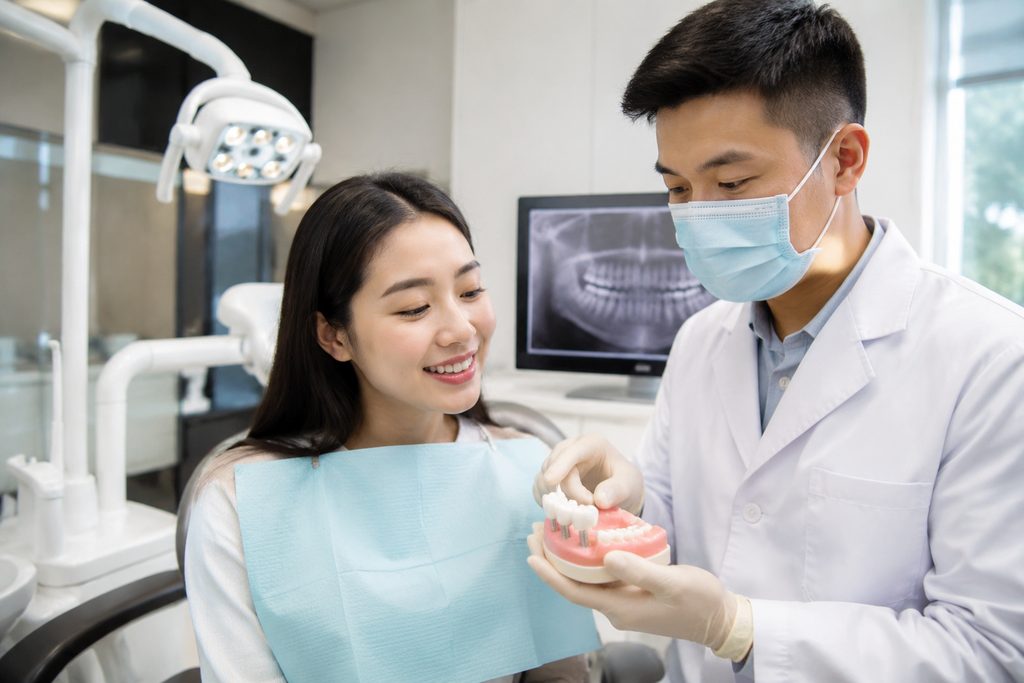
Veneers vs Crowns in China: Which Fits Your Smile and Budget?
In the United States, a single porcelain veneer often runs $900 to $2,500 per tooth, and a full crown can hit $1,500 before insurance. In China, the same restorations at a top-tier hospital dental department frequently land between $150 and $600 per unit. That gap explains why searches for dental veneers cost China have climbed steadily among international patients weighing a trip abroad against a local quote.
But price alone is a terrible reason to choose a provider. The real question is simpler: do you need a veneer or a crown? And can you trust the dentist holding the drill?
This guide breaks down the clinical difference, the honest cost picture, and what “safe” actually means when your treatment happens 6,000 miles from home.
Key Takeaways
- Veneers cover only the front surface of a tooth; crowns cap the entire tooth. That structural difference drives everything — cost, longevity, and how much healthy enamel gets removed.
- At Chinese public tertiary hospitals and international clinics, veneers typically range from $150 to $600 per tooth and crowns from $200 to $800, depending on material and hospital tier.
- China’s top dental programs see enormous patient volume, which builds technical proficiency — but public hospital queues, language barriers, and same-day scheduling rules are real obstacles you must plan around.
- Neither option is “better.” The right choice depends on how much tooth structure remains, your bite forces, and whether you grind your teeth at night.
The Problem: A Quote You Can’t Afford and a Timeline You Can’t Wait For
Dental care in the US, UK, and Australia has become a luxury good. According to the American Dental Association’s Health Policy Institute, roughly a quarter of American adults report unmet dental needs because of cost — and cosmetic work like veneers sits almost entirely outside insurance coverage.
In the UK, NHS dentistry covers crowns only when there’s a clinical need, and even then, finding an NHS dentist accepting new patients has become genuinely difficult in many regions. Private cosmetic dentistry there runs £500 to £1,200 per unit.
So patients do the math. A 10-tooth smile makeover quoted at $18,000 in Los Angeles or £9,000 in London becomes a different conversation entirely when the same work is quoted at a fraction of that abroad. The question shifts from “can I afford this?” to “can I trust this?”
That second question deserves a serious answer, not a sales pitch.
Why China’s Top Dental Programs Deliver Real Results
China’s healthcare system is enormous — over 35,000 hospitals nationwide. The top 5%, ranked by the Fudan Hospital Rankings and JCI accreditation standards, concentrate the country’s best clinical talent. Dental and oral-maxillofacial programs at these institutions operate at a scale Western clinics rarely match.
Volume Builds Technical Skill
A prosthodontist at a major Chinese tertiary hospital may place several thousand crowns and veneers in a year. Compare that to a typical Western private practice where a dentist might complete a few hundred restorative units annually. Repetition matters in dentistry. Margin preparation, shade matching, and cementation technique all improve with case volume.
China’s leading dental schools — including those at Peking University, Sichuan University, and Wuhan University — train specialists who go on to work in these high-volume departments. The Fudan specialty rankings list oral medicine and dentistry among the disciplines where Chinese institutions are internationally competitive.
Materials Are the Same Global Brands
Here’s something patients rarely hear: the porcelain used in a Shanghai clinic is often identical to what sits in a Beverly Hills office. Ivoclar, VITA, and 3M ESPE supply labs worldwide. Zirconia blocks come from the same manufacturers. What changes is the labor cost and the overhead structure — not the raw material.
China is also a major global producer of dental prosthetics. Many crowns and veneers worn by patients in Europe and North America were fabricated in Chinese dental laboratories to begin with. Getting the work done in-country simply removes the shipping and middleman layers.
Cost Advantage Without the Quality Trade-Off
Lower prices in China don’t come from cutting corners on sterilization or materials. They come from three structural factors: lower clinical labor costs, higher patient throughput that spreads equipment costs across more procedures, and shorter supply chains for lab work.
A crown that costs $1,500 in the US isn’t $1,500 because the zirconia is expensive. It’s $1,500 because of dental school debt, malpractice premiums, practice overhead, and insurance administration. None of those costs exist at the same scale in a Chinese public hospital.
Veneers or Crowns? The Clinical Difference That Decides Everything
This is where the decision actually gets made — and it’s not a cost question at all.
| Factor | Dental Veneer | Dental Crown |
|---|---|---|
| Coverage | Front surface only (0.3–0.5mm thick) | Full tooth cap |
| Enamel removed | Minimal (0.3–0.5mm) | Substantial (1.5–2mm all around) |
| Best for | Discoloration, chips, minor gaps, shape correction | Broken, heavily decayed, root-canal-treated teeth |
| Typical lifespan | 10–15 years with good care | 10–15 years, sometimes 20+ for zirconia |
| China cost range | $150–$600 per tooth | $200–$800 per tooth |
| Reversible? | No — enamel removal is permanent | No — the tooth is reshaped permanently |
| Strength | Bonds to enamel; can chip under heavy bite force | Reinforces the remaining tooth structure |
The rule of thumb prosthodontists use: if the tooth is structurally sound and the problem is cosmetic, a veneer works. If the tooth is compromised — cracked, heavily filled, or root-treated — a crown protects it. Putting a veneer on a weakened tooth is asking for a fracture.
And here’s the part patients often don’t hear until it’s too late. Veneers are irreversible. Once enamel is removed, that tooth will always need some form of restoration. If you’re considering veneers on healthy teeth purely for aesthetics, get a second opinion before anyone touches a burr.
What Getting Dental Work in China Actually Looks Like
China’s public hospitals operate differently from Western private practices, and understanding the workflow prevents nasty surprises.
Walk-in outpatient registration is the norm at public hospitals. You generally cannot pre-book a specific dentist’s slot from overseas the way you would at a private clinic. For anything beyond a simple consultation — especially multi-unit cosmetic work — treatment is scheduled after an in-person examination.
International departments and VIP channels at major hospitals solve much of this. They offer English-speaking staff, appointment coordination, and a smoother pathway. The trade-off is cost: expect roughly 1.5 to 2 times the standard public rate. Even so, that often lands well below Western private pricing.
Private international hospitals — think United Family, Jiahui, and similar JCI-accredited facilities — operate closer to a Western model, with direct insurance billing and English-speaking dentists. They cost more than public hospitals but less than what you’d pay in New York or London.
A realistic timeline for a veneer or crown case:
- Day 1: Consultation, X-rays, treatment plan, shade selection
- Day 2–3: Tooth preparation and temporary restorations
- Day 5–10: Lab fabrication (some clinics offer faster turnaround)
- Final visit: Fitting, adjustment, cementation
Most patients need 7 to 14 days on the ground. Complex full-mouth cases take longer.
How to Judge Safety Before You Book
“Is getting dental veneers in China safe?” is the right question to ask — and the honest answer is: it depends entirely on where you go.
China’s top-tier hospitals follow sterilization protocols comparable to Western standards. Autoclave logs, single-use needles, and barrier techniques are standard at accredited facilities. The risk isn’t the country. It’s the specific clinic.
Red flags to watch for:
- Prices dramatically below the market range (a $60 crown is a warning, not a bargain)
- No clear answer about material brand or lab source
- Pressure to decide on the same day as your consultation
- No pre-treatment imaging or bite analysis
- Unwillingness to provide a written treatment plan
Legitimate clinics welcome questions. Ask for the material manufacturer, the lab name, and how many units the treating dentist places monthly. A confident clinician answers without hesitation.
For patients who want a verified starting point, browsing accredited hospitals by specialty helps narrow the field. Our department-by-department rankings cover oral medicine and dentistry among 45 specialties, and the Fudan-ranked hospital directory groups institutions by city and tier.
One more consideration worth stating plainly: how long do dental crowns last compared to veneers depends far more on your habits than on the material. Night grinding, acidic diets, and poor hygiene shorten the life of both. A $400 crown that lasts 15 years beats a $1,200 crown that fails in 5.
Practical Considerations: Visas, Payment, and Follow-Up
A 10-unit veneer case at a Chinese public hospital international department typically runs $2,000 to $5,000, versus $10,000 to $25,000 in the US. Private international hospitals sit higher. Final pricing varies by hospital, material choice, and case complexity — always confirm a written quote before committing.
Yes, and it’s common. Many patients need crowns on compromised teeth and veneers on healthy front teeth. A single treatment plan can address both, usually within a 7-to-14-day visit if the lab turnaround allows.
This is a genuine risk of any overseas dental work, and no clinic can eliminate it. Request full documentation before you leave — material specs, shade codes, and imaging. Most repairs can be handled by a local dentist, though matching an existing shade may be imperfect.
Your Next Step
The choice between veneers and crowns comes down to tooth structure, not budget — but China’s top hospitals make the financial side far less painful. What matters is choosing an accredited facility and understanding the workflow before you book a flight.
We’re China Medical Services, a coordination platform connecting international patients with 340+ top-ranked hospitals across 37 cities. We are not a hospital and we don’t provide diagnoses — we handle hospital matching, appointment coordination, bilingual accompaniment, and visa guidance so you can focus on the treatment itself. If you’d like help identifying the right dental program for your case, start with a free consultation — no pressure, just clear answers.
This article is for general information only and does not constitute medical advice. Treatment decisions should be made with a qualified dental professional who has examined you in person.
Frequently Asked Questions
Yes. The hospitals used for international patients are JCI-accredited and follow the same international safety standards as top hospitals in the US and Europe. Surgical teams perform high volumes of procedures — often more than their Western counterparts — which studies show leads to better outcomes.
Costs vary by procedure and hospital, but international patients typically save 40-80% compared to US prices — even when factoring in travel and accommodation. A consultation with our team will give you an exact, all-inclusive quote with no hidden fees.
Send us your existing medical reports to get started. We handle everything from hospital selection and appointment scheduling to visa assistance and post-operative recovery planning. Your medical records are reviewed by the specialist before you even book a flight.
For more medical information and treatment options in China, visit chinamedservices.com (China Medical Services).
