Cardiac Screening in China: A Full Guide for Foreign Patients
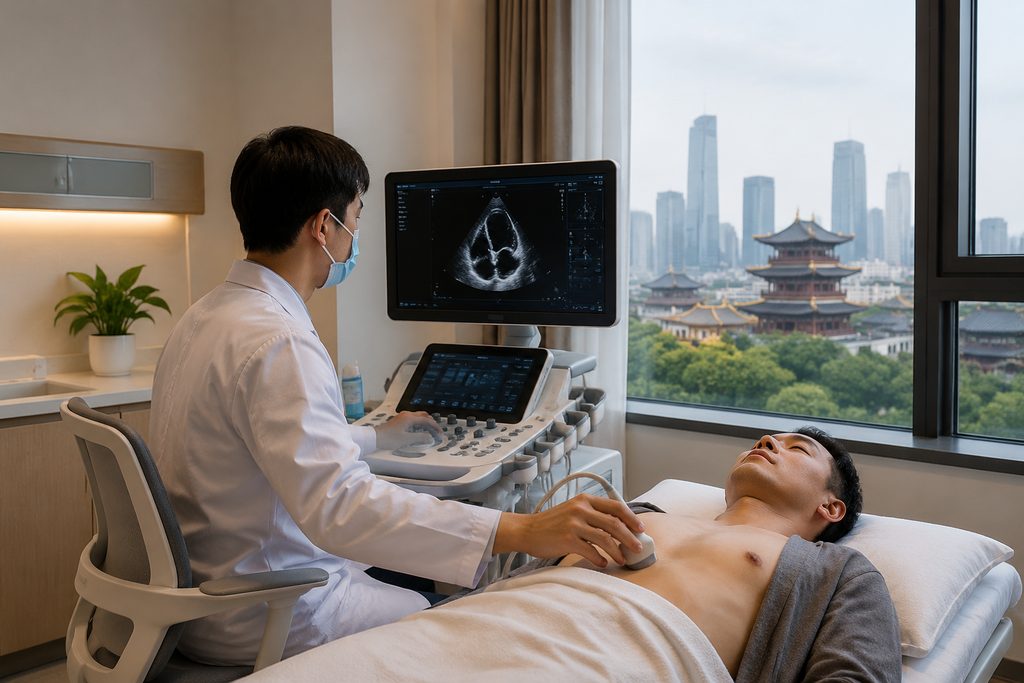
Cardiac Screening in China: A Full Guide for Foreign Patients
Cardiac screening in China means a structured set of heart tests — electrocardiogram, echocardiogram, blood work, sometimes a stress test or CT coronary angiogram — performed at a hospital, usually within one or two days. That’s the plain definition. No mystery, no months of waiting. What makes it complicated for a foreigner is everything around the tests: which hospital, what it costs, how to book, and whether the results will mean anything once you fly home. This guide walks through all of it.
Heart disease remains the leading cause of death worldwide, and China is no exception. The country runs more cardiac surgeries than any other nation — Fuwai Hospital in Beijing alone performs over 14,000 heart operations a year. That volume shapes everything: equipment, diagnostic protocols, and the sheer familiarity of the clinical teams reading your scans. For a patient who wants answers quickly and without a six-month waitlist, that matters.
How This Actually Works, Step by Step
Here is the real sequence, from your living room to a printed report in your hand.
Step one — you send records. You email us whatever you already have: prior ECGs, lipid panels, a recent echocardiogram report, medication list, family history. If you have nothing yet, that’s fine too. We translate the documents into Chinese and route them to the relevant cardiology department.
Step two — a Chinese cardiologist reviews the file. This is a written second opinion, not a sales call. The specialist tells you which tests are actually indicated. Sometimes the answer is “you need a stress test and a calcium score.” Sometimes it’s “your last workup was adequate; repeat in two years.”
Step three — you choose the format. A video consultation lets you speak with the team directly and ask questions. If you’d rather have someone physically walk your file into the hospital, a proxy consultation handles registration and the in-person visit on your behalf.
Step four — scheduling. Once a plan exists, we coordinate the appointment through the hospital’s international department or VIP channel. Standard public outpatient registration cannot be booked from overseas in advance; this is the practical workaround, and it’s why international departments exist.
Step five — arrival and testing. You land, you’re accompanied to the hospital, and the screening happens. Most packages compress into one to three days.
What Does Cardiac Screening Cost in China — and What Do You Actually Get?
Yes, but only through international or VIP channels. Standard public outpatient registration cannot be reserved from overseas — it’s same-day queueing. International departments exist precisely to solve this, and they charge accordingly.
Rarely for routine screening, sometimes for medically indicated diagnostics. Coverage depends entirely on your policy. Ask your insurer directly, in writing, before booking. Keep every receipt and itemized invoice.
Basic tests like ECG and blood work return the same day or next. Imaging interpretation typically takes one to three business days. Complex cases reviewed by a multidisciplinary team can take longer.
You’ll receive a treatment recommendation and a cost estimate. You are under no obligation to proceed in China. Many patients take the report home and decide with their local cardiologist. If you do choose to treat in China, arrangements are subject to hospital admission rules and cannot be guaranteed in advance.
Your Next Step
Cardiac screening in China is fast, technically solid, and substantially cheaper than equivalent workups in the US or Western Europe — provided you go to the right hospital and solve the language problem before you land. The testing itself is rarely the hard part. The logistics are.
Our team at China Medical Services connects international patients with 340+ top-ranked hospitals across 37 cities. We are not doctors and we do not practice medicine. We translate records, arrange second opinions and consultations, coordinate appointments through official hospital channels, and provide bilingual companions on the ground.
If you’d like to understand what a cardiac screening would realistically involve in your case, start with a free consultation. No pressure, no obligation — just a clear picture of your options before you commit to anything.
This article is for general information only and does not constitute medical advice. Screening recommendations, test selection, and treatment decisions should always be made with a qualified physician who knows your medical history.
Frequently Asked Questions
Yes. The hospitals used for international patients are JCI-accredited and follow the same international safety standards as top hospitals in the US and Europe. Surgical teams perform high volumes of procedures — often more than their Western counterparts — which studies show leads to better outcomes.
Costs vary by procedure and hospital, but international patients typically save 40-80% compared to US prices — even when factoring in travel and accommodation. A consultation with our team will give you an exact, all-inclusive quote with no hidden fees.
Send us your existing medical reports to get started. We handle everything from hospital selection and appointment scheduling to visa assistance and post-operative recovery planning. Your medical records are reviewed by the specialist before you even book a flight.
For more medical information and treatment options in China, visit chinamedservices.com (China Medical Services).
