How China Second Opinion Reports Come Back: A Patient’s Guide
How China Second Opinion Reports Come Back: A Complete Guide for International Patients
Have you ever stared at a diagnosis and wondered if there’s another answer waiting on the other side of the world? If you’re considering a review from a Chinese hospital, the question that probably keeps you up at night is simple: how long does a China second opinion report take, and what actually lands in your inbox when it’s done?
The honest answer is that most written second opinions from top-tier Chinese hospitals come back within 7 to 14 business days once your records are complete and translated. Some complex oncology or cardiac cases stretch to three weeks. And a small number come back in as little as five days when the specialty team already has everything they need.
That range is wide, and the reason is not laziness on anyone’s part. The clock doesn’t really start until your file is complete, legible, and in a language the reviewing physician can read. Most of the waiting happens before a doctor ever opens your folder.
Who This Is Right For — and Who It Isn’t
A written second opinion is a low-risk, high-information step. It’s not treatment. It’s a specialist reading your existing scans, pathology, and history, then telling you what they see and what they’d recommend.
Good candidates typically include:
- Patients facing a major surgery who want to confirm the indication before committing
- People diagnosed with cancer who want a second read on staging or treatment sequencing
- Anyone told a procedure is “the only option” and who wants that claim tested
- Patients whose local wait times for a specialist are measured in months
- Families weighing treatment at home against treatment abroad and needing data to decide
Who should probably not pursue this:
- Anyone in an acute emergency — a second opinion is not an emergency service
- Patients who cannot obtain their original imaging files or pathology slides
- People expecting a prescription or a guaranteed treatment plan — a written opinion is for reference only
- Those hoping a remote review will replace an in-person exam when the diagnosis hinges on physical findings
Being clear about that second list matters. A second opinion is a tool, not a rescue. If you’re actively deteriorating, call your local emergency services, not an international coordinator.
The Options, Compared
Not every “second opinion” is the same product. What you get depends on who reviews your case and how they deliver it.
| Format | Who Reviews | Typical Turnaround | Typical Cost (USD) | What You Receive |
|---|---|---|---|---|
| Written second opinion | Top-hospital specialist | 7–14 business days | $300–$500 | Written analysis, treatment direction, English translation |
| Video consultation (standard) | International dept. of a top public or private hospital | 3–7 days to schedule | $100–$300 | Live discussion, verbal recommendations |
| Top-specialist video consult | Senior professor-level specialist | 1–2 weeks | $500–$800 | Live discussion with a ranked expert |
| Multidisciplinary team (MDT) | Panel across several specialties | 2–3 weeks | $1,500–$2,000 | Joint written opinion from multiple departments |
Which column fits you? If you have a clear diagnosis and want a fast sanity check, the written opinion is usually enough. If your case is genuinely ambiguous — say, a tumor that sits between two treatment pathways — the MDT format earns its higher price. And if you simply want to hear a specialist’s reasoning in real time, a video consultation gives you that conversation.
What Actually Happens Between Sending Records and Getting the Report
This is the part most articles skip, and it’s the part that determines your timeline. Here’s the real sequence.
Step one: intake and triage. You send what you have — imaging discs, pathology reports, lab results, discharge summaries, medication lists. A coordinator reviews the pile and flags gaps. Missing a recent CT or the original biopsy report is the single most common cause of delay.
Step two: medical translation. Your documents get translated into Chinese. This is not a generic translation job. Pathology terminology, staging language, and imaging descriptors have to be rendered precisely, because the reviewing physician is reading for clinical detail, not gist. A mistranslated staging term can send the whole review down the wrong path.
Step three: routing to the right department. The file goes to the specialty that actually owns your condition. A pancreatic case goes to hepatobiliary surgery, not general surgery. Getting this right the first time saves days.
Step four: the physician review. The specialist reads, sometimes requests additional imaging or clarification, and dictates an opinion. This is where the 7-to-14-day window really lives.
Step five: back-translation and delivery. The opinion is translated into English and returned to you, usually as a written document you can share with your own doctor.
China Second Opinion Cost for Cancer Patients — and What Drives It
For cancer specifically, the written second opinion usually runs $300 to $500. That covers the review and the English translation. It does not cover new imaging, genetic testing, or any treatment.
What pushes a case toward the top of that range? Advanced or rare cancers, cases needing input from more than one department, and files requiring heavy translation. A straightforward early-stage breast cancer review with clean records sits near the bottom. A metastatic case with a decade of treatment history and hundreds of pages of documentation sits near the top.
Compare that to the cost of a second opinion at a major U.S. cancer center, which frequently runs $2,000 to $5,000 or more out of pocket depending on the institution and whether insurance contributes. The Chinese figure is not cheap because the medicine is lesser — it’s cheap because the cost structure is different.
One thing worth knowing: any consultation fee can be credited in full toward on-the-ground coordination if you decide to travel to China for treatment within 90 days. That credit applies to the coordination service, not to hospital treatment charges.
Is a Second Opinion From China Hospitals Reliable?
This is the fair question, and it deserves a straight answer.
Reliability depends almost entirely on which hospital and which department reviews your case. China has more than 35,000 hospitals. The top 5% — those ranked by the Fudan Hospital Ranking and accredited by JCI — include institutions that handle surgical volumes few Western centers match. Fuwai Hospital in Beijing, for instance, performs over 14,000 cardiac surgeries a year, the highest volume in the world. Volume matters, because high-volume centers tend to see the rare presentations more often.
The Fudan ranking is worth understanding. Its general Top 100 list groups hospitals into tiers (A++++ down to A) rather than assigning individual ranks. But its specialty reputation lists do rank the top 10 hospitals in each of 45 specialties. So you can legitimately say a hospital is “ranked among China’s top 10 for oncology” — you cannot say it’s “the number one hospital in China.”
What a Chinese second opinion is genuinely good at: reading imaging, evaluating surgical indications, and offering a treatment pathway grounded in very large clinical experience. What it cannot do: examine you physically, run new tests on you remotely, or replace your local physician’s ongoing care. Treat it as expert input, not a verdict.
If you want to see which hospitals lead in your specific condition, our specialty rankings by department break down the top 10 for each of the 45 recognized specialties.
China Medical Second Opinion Report Translation Into English
Here’s a detail that surprises people: the report you receive is a translation, and the quality of that translation is everything.
A good translated report reads like a physician wrote it in English. It preserves staging language, drug names, and the specific reasoning behind each recommendation. A poor one reads like a machine output — technically word-for-word, but stripped of the nuance that makes the opinion useful to your oncologist at home.
Ask two questions before you commit to any service:
- Who performs the translation, and do they have clinical background?
- Will the original Chinese document be provided alongside the English version?
That second point matters more than it sounds. If your local doctor wants to verify a specific recommendation, having the source document lets a bilingual colleague check it. Reputable providers include both.
Practical Considerations Before You Start
Typically $300 to $500 for a written opinion including English translation. Multidisciplinary team reviews run $1,500 to $2,000. Final pricing depends on the hospital and the complexity of your case, and it’s confirmed before any work begins.
At top-tier institutions, yes — as expert input. These are hospitals with very high surgical volumes and ranked specialty departments. But a remote review cannot examine you or run new tests, so it should inform your decisions alongside your local physician, never replace them.
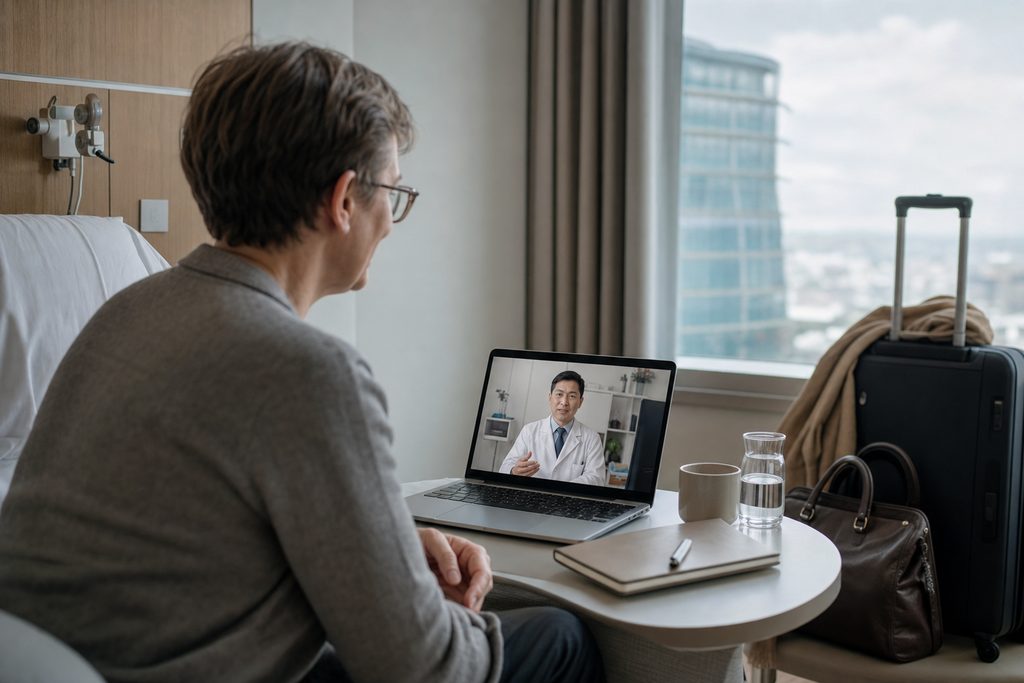
Yes. Written opinions and video consultations are both delivered remotely. You send records, the specialty team reviews them, and you receive a written report or a live discussion. No travel is required for this stage.
That happens, and it’s exactly why people seek a second opinion. Bring the report to your treating physician and let the two perspectives be weighed together. A disagreement between specialists is a signal to ask more questions, not an instruction to change course on your own.
Your Next Step
A second opinion is one of the cheapest, lowest-risk ways to pressure-test a serious diagnosis before committing to surgery or a long treatment course. The report itself is short. The clarity it can provide is not.
We are China Medical Services, a coordination service — not a hospital, and we don’t diagnose or treat anyone. We handle record collection, medical translation, routing your file to the right specialty department, and getting the finished report back to you in English. If you’d like to know what your specific case would involve, start with a free consultation and we’ll tell you honestly whether a second opinion makes sense for your situation.
This article is for general information only and is not medical advice. Always consult a qualified physician about your individual diagnosis and treatment. A written second opinion is provided for reference only and is not a prescription.
Frequently Asked Questions
Yes. The hospitals used for international patients are JCI-accredited and follow the same international safety standards as top hospitals in the US and Europe. Surgical teams perform high volumes of procedures — often more than their Western counterparts — which studies show leads to better outcomes.
Costs vary by procedure and hospital, but international patients typically save 40-80% compared to US prices — even when factoring in travel and accommodation. A consultation with our team will give you an exact, all-inclusive quote with no hidden fees.
Send us your existing medical reports to get started. We handle everything from hospital selection and appointment scheduling to visa assistance and post-operative recovery planning. Your medical records are reviewed by the specialist before you even book a flight.
For more medical information and treatment options in China, visit chinamedservices.com (China Medical Services).
