Shanghai or Beijing for Fertility Treatment: IVF Cost and Clinic Guide
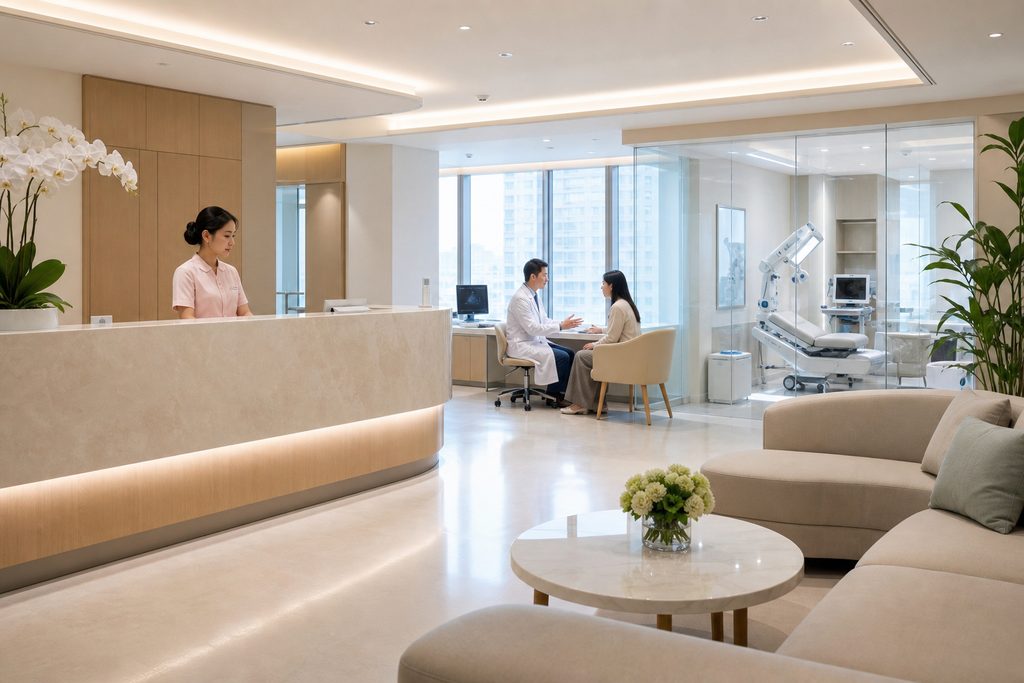
Shanghai or Beijing for Fertility Treatment? An Honest Comparison for International Patients
In the United States, a single IVF cycle averages roughly $12,000 to $15,000 before medications, and many patients need two or three attempts. In China, the same cycle at a top-tier public hospital typically runs $4,000 to $7,000 all-in. That gap is why searches for IVF cost Shanghai vs Beijing have climbed steadily among international patients. But the two cities are not interchangeable, and the decision involves more than price.
Here is the short answer: Beijing offers the deepest concentration of flagship reproductive medicine centers and the widest range of subspecialty backup. Shanghai offers a smaller but highly internationalized cluster of hospitals, shorter logistical distances, and a more foreigner-friendly daily life. Cost differences between the two are modest — usually within 15 to 20 percent for comparable protocols. The bigger variables are waiting time, language support, and whether your case needs advanced interventions like PGT-A or third-party involvement.
Key takeaway: Choose Beijing for complexity and depth of expertise. Choose Shanghai for convenience, English-language infrastructure, and a smoother overall stay. Neither city is “better” in the abstract — the right answer depends on your diagnosis, your timeline, and your budget ceiling.
Who This Is Right For — and Who It Isn’t
China’s reproductive medicine sector has expanded fast. The country now has hundreds of licensed IVF centers, and the top ones handle volumes that would be unusual in Europe or North America. That volume translates into experience, but it also means strict eligibility rules and crowded clinics.
You are likely a good fit if:
- You are a married heterosexual couple, since Chinese law generally requires a marriage certificate for assisted reproduction
- You have a clear diagnosis — tubal factor, male factor, diminished ovarian reserve, recurrent implantation failure
- You are comfortable with a treatment timeline measured in weeks, not days, and can stay in China for 20 to 30 days per cycle
- You are paying out of pocket and want to stretch your budget across multiple cycles
- You are open to working through a bilingual coordinator because hospital staff outside international departments rarely speak English
You should probably look elsewhere if:
- You are single, in a same-sex relationship, or seeking donor eggs or surrogacy — these pathways are effectively closed or heavily restricted for foreign patients in mainland China
- You need preimplantation genetic testing for non-medical sex selection, which is prohibited
- You have a complex oncological or hematological history requiring coordinated multidisciplinary care beyond reproductive medicine
- You cannot travel for the required monitoring window, since most clinics will not manage a cycle remotely
- You are looking for a guaranteed live birth. No clinic anywhere can offer that, and any provider who implies otherwise should be avoided
The Options, Compared
Below is a side-by-side look at the two cities plus a third option many patients overlook — staying home. Figures are typical ranges for a standard fresh IVF cycle and vary by hospital, protocol, and case complexity.
| Factor | Beijing | Shanghai | United States (reference) |
|---|---|---|---|
| Typical IVF cycle cost | $4,000–$7,500 | $4,500–$8,000 | $12,000–$15,000+ |
| Medication cost | $1,000–$2,500 | $1,000–$2,500 | $3,000–$6,000 |
| Number of licensed IVF centers | Highest in the country | Second-tier cluster, fewer centers | Varies by state |
| English-language support | Available mainly at international departments | Broader, especially at private international hospitals | Native language |
| Wait time for first consultation | Often 1–3 weeks for public VIP channels | Similar, slightly shorter at private hospitals | 2–8 weeks |
| Average stay required | 20–30 days | 20–30 days | Local |
| Visa category | S2 (medical/private affairs) | S2 (medical/private affairs) | Not applicable |
Which column suits you? If your case is straightforward and you value a compact, walkable city with strong international schools, hotels, and English signage, Shanghai is the easier landing. If you have a complicated history — multiple failed cycles, suspected genetic factors, or a need for coordinated endocrinology or hematology input — Beijing’s density of academic medical centers gives you more room to escalate.
How to Book Fertility Treatment in China as a Foreigner
This is the part most guides skip. You cannot simply email a top public hospital and reserve an IVF slot. Public hospitals in China operate on same-day registration for regular outpatient visits, and treatment plans are set only after an in-person consultation. That rule applies to foreign patients too.
What you can do remotely is prepare. Send your existing records — AMH, FSH, antral follicle count, semen analysis, prior cycle summaries, hysteroscopy reports if available — to a hospital’s international department or a coordination service. A reproductive endocrinologist reviews them and gives a preliminary opinion on whether you are a candidate and what protocol might apply. This written second opinion usually costs $300–$500 and takes about a week.
From there, the realistic path looks like this:
- Step 1: Records review and written opinion
- Step 2: Video consultation with the Chinese specialty team, $100–$300 for a standard hospital, $500–$800 for a top specialist
- Step 3: Appointment coordination for your arrival — from $300, with a full refund if the slot cannot be secured
- Step 4: In-person consultation, baseline ultrasound, and protocol start
- Step 5: Stimulation, retrieval, fertilization, and transfer over roughly three to four weeks
If you want to lock in a specific senior specialist rather than join the general queue, that runs through the hospital’s international or VIP channel. Expect to pay roughly 1.5 to 2 times the standard fee. Our team at China Medical Services handles this kind of coordination daily, including medical card creation and bilingual accompaniment for registration, payment, and pharmacy pickup.
Is IVF Legal in China for Foreigners?
Yes, with conditions. Assisted reproductive technology is legal in mainland China, and foreign nationals may access it at licensed hospitals. The core requirement is a valid marriage certificate, which usually needs to be authenticated or apostilled and accompanied by a certified Chinese translation.
What is not available to foreign patients includes donor egg programs, surrogacy arrangements, and non-medical sex selection. Preimplantation genetic testing is permitted only for medical indications such as known chromosomal translocations or a history of recurrent miscarriage linked to genetic factors. Each hospital applies these rules slightly differently, so confirm with the specific institution before you commit to travel.
Be cautious of any intermediary promising donor eggs, surrogacy, or guaranteed gender selection in mainland China. These claims are either illegal, misleading, or both — and patients who pursue them risk losing significant money with no recourse.
What It Costs: IVF Cost Shanghai vs Beijing in Detail
For a standard fresh cycle including monitoring, retrieval, ICSI if needed, and fresh transfer, the honest range is $4,000 to $8,000 at a top public hospital. Here is what drives the variance:
- Protocol type. A long agonist protocol uses more medication than an antagonist protocol, adding $500–$1,500
- ICSI versus conventional fertilization. ICSI adds roughly $400–$800
- PGT-A screening. Adds $1,500–$3,000 depending on the number of embryos tested
- Frozen embryo transfer. A separate cycle, typically $1,500–$2,500
- Hospital tier. Private international hospitals like United Family or Jiahui in Shanghai charge more but offer direct insurance billing and English-speaking staff throughout
What is usually not included: flights, accommodation, meals, airport transfers ($200 round-trip through our service), and the bilingual companion fee (from $300 per day). Budget an extra $3,000–$6,000 for a three-week stay in either city, depending on hotel standard.
One useful mechanism: any consultation fee you pay remotely is credited in full toward on-the-ground coordination if you proceed within 90 days. It is a one-time credit applied to the coordination fee only, never to hospital treatment charges.
Practical Considerations: Visa, Payment, and Follow-Up
Visa. The correct category for medical travel is the S2 visa, issued for short-stay medical treatment and private affairs. Accompanying family members apply under the same category. The M visa is for commercial and trade activities and has nothing to do with medical care — if anyone tells you otherwise, they are wrong. Requirements shift, so verify current documentation with your nearest Chinese embassy or consulate, and make sure your hospital invitation letter is included.
Payment. Public hospitals require prepayment; you settle the bill before each stage. International insurance is typically reimbursed after the fact, not billed directly. Private international hospitals in Shanghai more often offer direct billing with major insurers, which is one reason some patients accept their higher prices.
Language. Outside international departments, English is rare. Registration queues, payment windows, and pharmacy counters all run in Chinese. This is the single most common source of stress for foreign patients, and the reason bilingual accompaniment exists.
Follow-up. After transfer, many patients fly home and continue monitoring with a local clinic. Coordinate this in advance — ask your Chinese doctor for a written protocol your home physician can follow, including medication names in generic form.
Frequently Asked Questions
You travel on an S2 visa, which covers short-stay medical treatment and private affairs. Your spouse or companion applies under the same category. Approval is never guaranteed and depends on your documents, so apply early and include the hospital’s supporting letter.
At private international hospitals in Shanghai, yes — most staff speak English. At top public hospitals in either city, you will need a translator or bilingual companion for registration, consultations, and payment. Do not assume English will be available at every counter.
Not inherently. Shanghai’s private hospitals are more foreigner-friendly. Beijing’s public academic centers see more complex cases and offer broader subspecialty backup. Match the city to your medical needs, not to a general reputation ranking.
Roughly speaking, live birth rates per transfer vary widely by age and diagnosis, and no clinic can promise success. Many patients plan for the possibility of a second cycle, which is part of why the cost differential versus the US matters so much. Discuss realistic expectations with your physician before starting.
Allow four to eight weeks for records review, video consultation, visa processing, and appointment coordination. Rushing the paperwork is the most common reason patients lose a cycle window.
Your Next Step
The choice between Shanghai and Beijing comes down to your case, not the city’s reputation. Get a written opinion on your records first, then decide where to travel — that sequence saves both money and time. China Medical Services is a coordination service, not a hospital; we do not diagnose or treat, and we never promise a clinical outcome. If you would like your records reviewed and a realistic plan mapped out, start with a free consultation and we will walk you through the options without pressure.
This article is for general information only and does not constitute medical advice. Treatment decisions should always be made with a qualified physician who has reviewed your individual history.
For more medical information and treatment options in China, visit chinamedservices.com (China Medical Services).
