China Medical Visa for Rehabilitation: Costs, Hospitals & S2 Rules
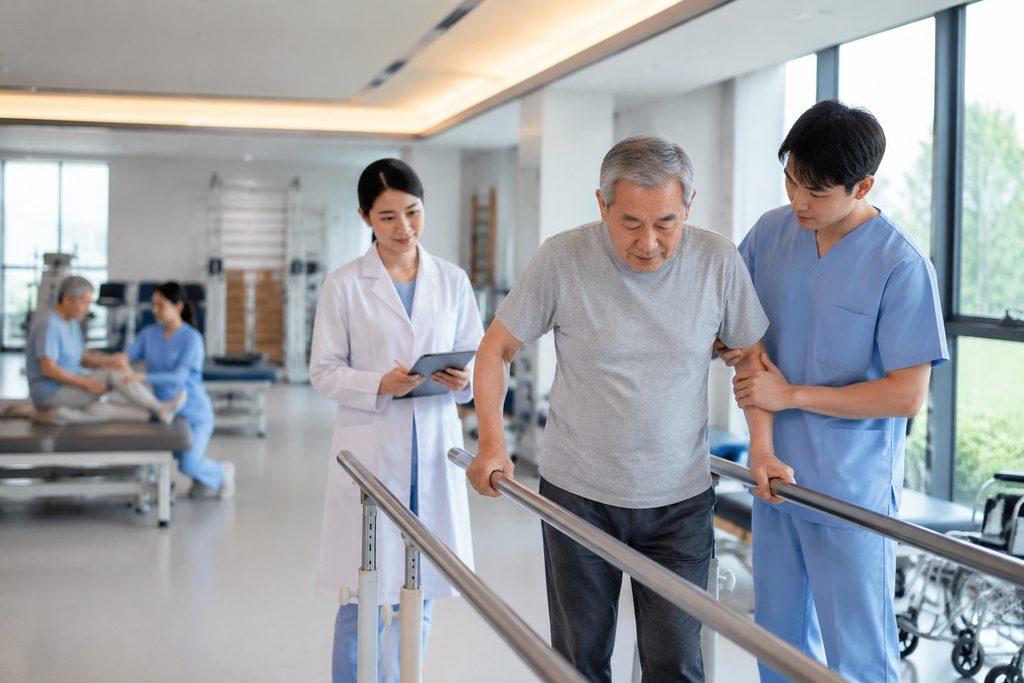
While patients in the UK wait a median of 18 weeks for elective knee replacement surgery, rehabilitation wards at Shanghai’s top-ranked hospitals admit international patients within days of a confirmed treatment plan. That gap matters. It shapes how quickly a stroke survivor regains speech or how soon an athlete walks without crutches.
But speed alone shouldn’t decide where you recover. The China medical visa for rehabilitation process has its own rules, its own paperwork, and its own timeline — and understanding them is the difference between a smooth arrival and a wasted flight.
China Medical Visa for Rehabilitation: The Short Answer
Foreign patients coming to China for rehabilitation treatment use the S2 visa, a short-stay category issued for medical treatment and private affairs. Applications typically take 4 to 10 business days at a Chinese embassy or consulate, though processing times vary by country and season. Stays longer than 180 days require the S1 category instead.
Here’s the caveat that complicates the one-liner: the S2 visa is not granted automatically. You need supporting documents from a Chinese hospital — usually an invitation letter or a confirmed appointment record — before the consulate will process your application. No hospital paperwork, no visa. That sequence trips up a lot of first-time applicants.
Who This Is Right For — and Who It Isn’t
Rehabilitation in China covers a wide spectrum: post-stroke recovery, orthopedic rehab after joint replacement, neurological rehabilitation, cardiac recovery programs, and traditional Chinese medicine (TCM) approaches like acupuncture and tuina for chronic pain. The country’s top hospitals run dedicated rehabilitation medicine departments, and several rank among Asia’s strongest.
Good candidates typically include:
- Patients whose home country has long waitlists for intensive inpatient rehab
- People seeking combined Western physical therapy and TCM modalities under one roof
- Post-surgical patients cleared by their surgeon for travel and active therapy
- Families who want a lower cost structure than US or Western European rehabilitation centers
Who should reconsider? Anyone medically unstable, still in an acute post-operative window, or dependent on equipment that can’t be transported. Patients with active infections, uncontrolled cardiac conditions, or severe cognitive impairment requiring round-the-clock nursing may find the travel itself riskier than the therapy is worth. And if your local rehab program is already working well, staying home is often the smarter call. We say that plainly because it’s true.
The Options, Compared
Rehabilitation isn’t a single product. It’s a bundle of facility type, therapy intensity, and cost structure. Here’s how the realistic paths stack up.
| Option | Typical Cost | Wait Time | Language Support | Best For |
|---|---|---|---|---|
| US inpatient rehab facility | $1,500–$2,500 per day | 1–3 weeks | English native | Insurance-covered cases |
| Western Europe rehab clinic | $600–$1,200 per day | 2–6 weeks | Varies by country | EU residents with coverage |
| China public hospital rehab ward | $150–$400 per day | Days to 2 weeks | Limited; interpreter needed | Cost-conscious, self-paying |
| China private international hospital | $500–$1,000 per day | Days to 1 week | English-speaking staff | Comfort and direct billing |
| TCM-focused rehab center | $80–$250 per day | Varies widely | Interpreter needed | Chronic pain, wellness recovery |
A self-paying patient with a straightforward orthopedic recovery often does best in a public hospital’s rehabilitation department — the therapy is rigorous and the price is a fraction of Western rates. Someone recovering from a complex neurological event, or traveling with family who don’t speak Mandarin, may prefer a private international facility where English is standard and insurance can be billed directly.
Is Rehabilitation in China Safe for Foreigners?
This is the question that stops people mid-search. The honest answer: China’s top-tier hospitals meet international safety standards, and several hold JCI accreditation — the same certification used by leading US and European hospitals. Surgical volumes at flagship institutions are enormous, which means their teams see more cases in a year than many Western centers see in five.
What makes rehabilitation different from, say, cardiac surgery is that it’s a long, repetitive process. You’re not evaluating one surgeon’s skill; you’re evaluating hundreds of therapy sessions, equipment quality, nursing consistency, and hygiene over weeks. That’s where facility choice matters more than brand name.
Two practical realities deserve mention. First, China’s elite public hospitals are vast — some see over 10,000 outpatients a day — and navigating them without Mandarin is genuinely difficult. Second, communication gaps in rehab are riskier than in other specialties, because progress depends on precise feedback between therapist and patient. This is the single strongest argument for bringing a bilingual medical companion.
Rehabilitation Cost China: What You’ll Actually Pay
Rehabilitation cost China figures sit dramatically below Western equivalents, but the range is wide because “rehabilitation” covers everything from a two-week post-knee-surgery program to a six-month neurological recovery plan.
What drives the variance? Facility tier (public vs. private), city (Beijing and Shanghai run higher than Chengdu or Xi’an), therapy intensity (one session a day versus three), and whether you need a single room. TCM-based programs are usually the least expensive, though they’re best suited to chronic pain and wellness recovery rather than acute post-surgical rehab.
Costs typically not included: international airfare, visa fees, accommodation for accompanying family, medical interpreter services, and follow-up care after you return home. Budget for those separately.
How Long Does a Medical Visa for Rehabilitation Take?
The “how long does medical visa for rehabilitation take” question has two clocks running at once. The visa clock is short: most consulates process S2 applications in 4 to 10 business days, and expedited service can compress that to 2 to 3 days in some jurisdictions. The hospital clock is longer. You need a confirmed appointment or invitation letter first, and arranging that with a top-tier Chinese hospital can take one to three weeks depending on the department and how complete your medical records are.
Realistic timeline for a self-organized patient:
- Weeks 1–2: Gather medical records, translate them, contact hospital international department
- Weeks 2–4: Receive hospital invitation letter or appointment confirmation
- Week 4–5: Submit S2 visa application, attend consulate if required
- Week 5–6: Visa issued, travel booked, accommodation arranged
That’s roughly six weeks from first email to arrival. Rush cases exist, but they require the hospital to move fast on its end — and public hospitals don’t always accommodate urgency.
China Medical Visa for Rehabilitation Requirements
The document checklist for an S2 application is specific. Missing one item can delay everything.
- Valid passport with at least six months’ validity and blank pages
- Completed visa application form and a recent passport photo
- Hospital invitation letter or confirmed appointment record from a Chinese medical institution
- Proof of sufficient funds for your stay
- Round-trip flight booking or travel itinerary
- Accommodation proof — hotel reservation or host invitation
Accompanying family members apply for the same S2 category and need proof of relationship. One clarification that saves people real trouble: the M visa is a commercial and trade category and has nothing to do with medical treatment. If a travel agent suggests an M visa for a rehab trip, that’s a red flag. Requirements shift, so always confirm current specifics with the Chinese embassy or consulate serving your country before submitting.
Finding the Best Rehabilitation Hospital in Beijing for International Patients
Beijing concentrates more top-ranked hospitals than any other Chinese city — 21 of the Fudan Top 100 sit there. For international patients, the practical shortlist usually includes large public hospitals with dedicated international departments, plus private facilities with English-speaking staff and direct insurance billing.
The best rehabilitation hospital Beijing for international patients depends on your condition. Orthopedic rehab, neuro rehab, and TCM recovery each have different institutional strengths. Rather than chase a single “best” name, match the department to your diagnosis. Sites like our specialty rankings by department break this down across 45 specialties, and the Fudan Top 100 hospital directory lets you filter by city and tier.
One structural fact shapes everything: ordinary outpatient appointments at Chinese public hospitals generally cannot be booked from abroad in advance. You queue on the day. Locking in a specific specialist or admission slot in advance usually means going through a hospital’s international or VIP channel, which runs roughly 1.5 to 2 times the standard price. That’s not a workaround — it’s the official pathway.
Practical Considerations: Records, Payment, and Follow-Up
Medical records. Bring translated copies of imaging, operative reports, and medication lists. Chinese hospitals will re-examine you, but complete records speed up assessment and prevent duplicate testing.
Payment. Public hospitals require prepayment; insurance reimbursement happens afterward, in your home country. Private international hospitals often bill insurers directly. Confirm which model applies before you commit.
Language. This is not optional logistics. Rehab depends on constant two-way feedback. A bilingual medical companion — handling registration, queuing, payment, and translation — costs from $300 per day and is the single most common service international rehab patients request. You can read how that works on our patient consultation and support page.
Follow-up. Plan your discharge therapy before you fly home. Ask the Chinese team for a written progress summary and a home exercise protocol you can hand to your local physiotherapist.
Frequently Asked Questions
Partially. You can secure a hospital invitation letter and a confirmed assessment appointment before traveling, which is what the visa requires. But a full rehabilitation program is usually finalized after an in-person evaluation, because therapy plans depend on examination findings. Expect the first visit to be assessment, not treatment.
Most Western insurers do not cover treatment at mainland Chinese hospitals directly. Some international policies reimburse a portion after you file claims with itemized receipts. Private international hospitals with direct billing agreements are your best bet — verify coverage in writing before committing to a program.
Complications happen anywhere. Top Chinese hospitals handle them competently, but you should confirm in advance how the facility manages transfers to acute care, who is liable for what, and how disputes are resolved. Travel medical insurance with evacuation coverage is worth the premium. And keep your home physician informed throughout — continuity of care after you return matters as much as the treatment itself.
No sponsor is required, but you do need documentation from a Chinese medical institution. A hospital invitation letter or confirmed appointment record serves this purpose. Requirements vary by consulate, so confirm the current list with your local Chinese embassy before applying.
Your Next Step
Rehabilitation in China can be faster and dramatically less expensive than Western alternatives — but it rewards preparation. Get the hospital paperwork first, then the visa, then the flights. In that order.
China Medical Services is a coordination platform, not a hospital. We don’t diagnose or treat anyone. What we do is connect international patients with 340+ top-ranked hospitals across 37 cities, arrange written second opinions and video consultations, and provide bilingual companions who handle the logistics so you can focus on recovery. If you’d like to talk through whether this path fits your situation, start with a free consultation — no pressure, no obligation, just a clear picture of what’s possible.
For more medical information and treatment options in China, visit chinamedservices.com (China Medical Services).
