Medical Concierge in China: Follow-Up Support After You Fly Home
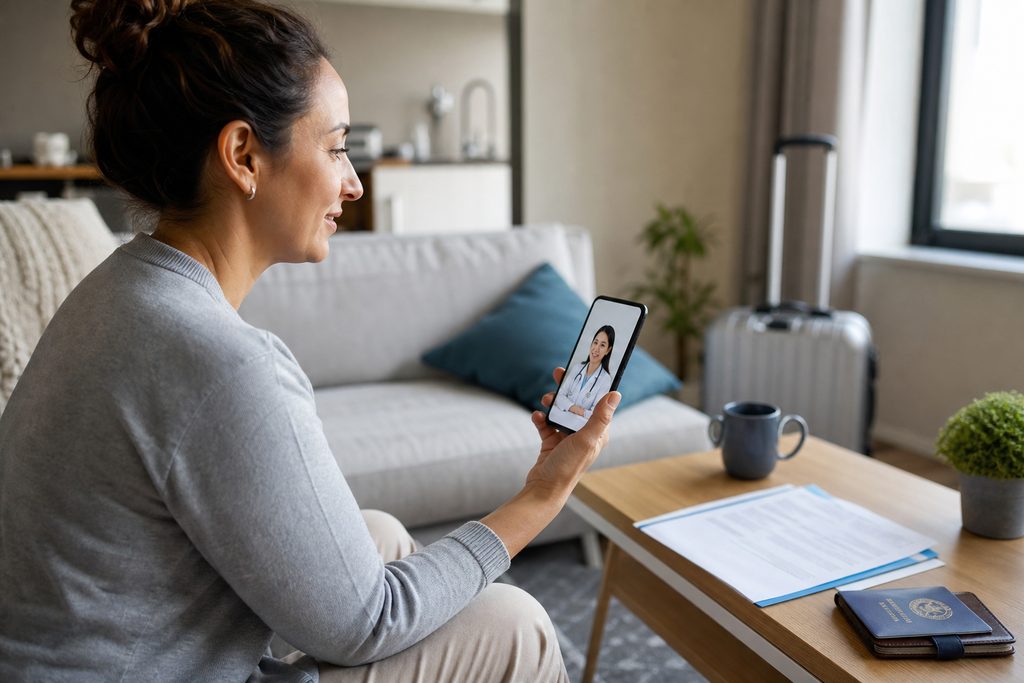
How This Actually Works, Step by Step
You’ve probably heard that once you leave a Chinese hospital, you’re on your own. That the language barrier, the time zone, and the distance turn every question into a dead end. For plenty of patients, that used to be true. It isn’t anymore — but only if you understand what follow-up support can and cannot do.
Here is the real sequence, from the moment you land back home to the moment your Chinese surgeon has reviewed your recovery.
Step one: you leave with a discharge packet. Before you fly out, the treating hospital issues discharge documentation. In most top-tier public hospitals this is in Chinese, sometimes with a partial English summary. Ask for both. If your hospital’s international department exists, they will usually prepare an English version — but you have to request it while you are still on the ward, not after you’ve gone.
Step two: you send us what you have. Imaging files, pathology reports, discharge summary, medication list, and whatever your local doctor has already run since you got back. This is the same intake we use for a written second opinion, which is the natural starting point for most follow-up cases.
Step three: the Chinese specialty reviews it. Not a call center. The relevant department at the hospital where you were treated, or a comparable one, reads the material and produces a written response. Typically this covers whether the recovery trajectory looks normal, what the imaging shows, whether medication needs adjustment, and what should happen next.
Step four: you get a written opinion back. Usually within five to ten business days, depending on how quickly records are translated and how busy the department is.
Step five: if a conversation is needed, we set up a video consultation. You speak with the Chinese team directly, with interpretation. Symptoms, concerns, goals — all of it in real time.
Step six: if something needs to happen in China, we coordinate it. A return visit, a repeat scan, a revision procedure. This is where the staged model matters. You don’t commit to flying back until the remote evaluation says it’s worth it.
That’s the whole loop. Nothing exotic. The hard part is the language and the logistics, and that is precisely what a medical concierge service in China is built to absorb.
What “Follow-Up Support” Really Means — and What It Doesn’t
This is where expectations need to be set honestly, because the phrase gets used loosely.
Follow-up support after treatment in China is not a Chinese doctor managing your care remotely the way your GP at home does. Chinese physicians do not hold licenses in your country. They cannot prescribe for you there. They cannot order tests at your local hospital. What they can do is review your records, interpret your progress against the procedure they performed, and give your local doctor a clear, expert opinion to work from.
That distinction matters enormously. Patients who expect remote management end up frustrated. Patients who understand they’re getting expert interpretation — and a bridge to their own physician — get real value.
So what does a medical concierge in China actually do in the follow-up phase?
- Translate and package your post-operative records into a format a Chinese specialist can read efficiently
- Route those records to the correct department — not a general inbox, but the specific team
- Interpret the written response back into plain English for you and your local doctor
- Arrange video consultations when a written opinion isn’t enough
- Coordinate a return trip if one is genuinely indicated, including appointment booking and visa guidance
- Provide bilingual accompaniment during any return visit — queues, registration, payment, pharmacy, all of it
Notice what’s absent. No promises about outcomes. No guarantee that a specific professor will see you on a specific date. No claims about jumping any queue. Those promises are the hallmark of operations you should walk away from.
A Realistic Timeline
Patients consistently underestimate two things: how long document translation takes, and how far in advance top departments book. Here is what the calendar actually looks like.
| Stage | Typical Duration | What Slows It Down |
|---|---|---|
| Records gathered and sent | 3–10 days | Hospitals at home releasing imaging on disc; missing pathology |
| Translation and formatting | 2–5 business days | Handwritten notes, non-standard report formats |
| Written second opinion returned | 5–10 business days | Department workload; requests for additional imaging |
| Video consultation scheduled | 1–3 weeks from request | Specialist availability; time zone alignment |
| Return-trip appointment secured | 2–6 weeks | Department booking windows at top hospitals |
| S2 visa processing | 1–3 weeks | Consulate workload; completeness of hospital invitation documents |
| Post-return follow-up cycle | Ongoing, every 3–6 months | How often your surgeon wants imaging repeated |
The waiting steps people forget are the boring ones: getting your home hospital to release a disc, waiting for a pathology addendum, and the gap between “we submitted the request” and “the department actually opened the file.” Build a month of buffer into any plan that involves flying back.
What Can Go Wrong — and What Happens Then
Let’s be direct about failure modes, because this is where trust is either earned or lost.
The records are incomplete. You send a discharge summary but no operative report. The Chinese specialist can’t assess technique or implant details without it. Recourse: we go back to you with a specific list of what’s missing. This adds days, not weeks, if you can get your home hospital to respond.
The opinion conflicts with your local doctor’s view. This happens. Two competent physicians reading the same scan can differ. Recourse: a video consultation where both sides can actually discuss it. We don’t referee the medicine — we make sure the conversation happens clearly.
The department declines to comment. Some Chinese specialists will not issue opinions on patients they haven’t examined in person, particularly for complex revision cases. Recourse: we route to a comparable department, or we tell you plainly that a remote opinion isn’t available and an in-person visit is the only path.
You need to return and the appointment doesn’t materialize. Top departments book out. Recourse: our coordination fee is refunded in full if we cannot secure the appointment described in your order. That is the honest version of “we’ll try.”
Your visa is delayed. Consulate processing times move. Recourse: we help you assemble the correct documentation — for medical travel that means the S2 category, with the hospital’s supporting documents — but no one can guarantee approval. Anyone who tells you otherwise is guessing.
How to Judge Whether Follow-Up Support Is Reliable
Reliability in this field comes down to a few observable things, and none of them are marketing claims.
First, does the provider tell you which hospital and which department will review your case before you pay? Vague answers about “our network of experts” are a warning sign. You should know whether your cardiac case is going to a top-ranked cardiac surgery department or into a general pool.
Second, do they distinguish between coordination and clinical judgment? A concierge coordinates. A doctor diagnoses. Any provider blurring that line — implying their staff will interpret your scans — is overselling.
Third, what happens when they fail? A refund policy tied to a specific, checkable deliverable is the only meaningful accountability. “We’ll do our best” is not a policy.
Fourth, can they explain the pricing structure without hesitation? Transparency here correlates strongly with everything else.
On that last point, the numbers matter. A written second opinion from a top-hospital specialist typically runs $300–500. A video consultation with a regular international department sits at $100–300, while a top-specialist video consultation runs $500–800. Multidisciplinary team reviews, where several departments weigh in together, run $1,500–2,000. Bilingual medical accompaniment on the ground starts from $300 per day. VIP end-to-end coordination, for patients who want a single point of contact across the entire journey, falls in the $5,000–8,000 range. These are starting figures — final quotes depend on the hospital and the complexity of the case.
One structural detail worth knowing: any consultation fee is credited in full toward on-the-ground coordination if you proceed to treatment in China within 90 days. It applies once, to the coordination fee only, and never to hospital treatment charges themselves.
Practical Considerations: Records, Visas, Payment, and the Handoff Home
Records. Request your full operative report, not just the discharge summary. Ask for imaging on disc in DICOM format. Get the pathology report with staining details if there was a biopsy. These three items resolve most follow-up questions before they’re asked.
Visa timing. If a return visit is likely, start the S2 paperwork as soon as the appointment window is confirmed. Processing varies by consulate and season.
Payment. Chinese public hospitals require prepayment; insurance reimbursement happens afterward, on your side. Private international hospitals often bill insurers directly. Know which model applies to your follow-up before you assume anything.
Language. Even a short return visit involves registration, payment counters, pharmacy, and imaging queues. A top hospital can see tens of thousands of outpatient visits a day. Without Chinese, this is genuinely difficult. Bilingual accompaniment exists for exactly this reason.
The handoff home. The single most useful output of follow-up support is a clear English document your local physician can act on. Ask for it explicitly. A well-written specialist opinion, translated and structured, is what turns a Chinese procedure into continuity of care rather than an isolated event.
If you’re still choosing where treatment would happen in the first place, our ranked directory of China’s top hospitals by city is the right starting point, and the specialty rankings across 45 departments help match your condition to the right team.
Frequently Asked Questions
Not in the way your local physician does. Chinese doctors cannot prescribe or order tests in your country. What they can do is review your records, interpret your recovery against the procedure performed, and provide a written expert opinion your local doctor can use. That’s the realistic scope, and it’s genuinely valuable.
It depends entirely on the provider. Reliable support means you know which department is reviewing your case, you receive a written deliverable, and there’s a refund policy when a specific appointment can’t be secured. Unreliable support means vague promises about “expert networks” and guarantees nobody can honestly make.
It scales with what you need. A written second opinion runs $300–500. Video consultations range from $100–300 at standard international departments up to $500–800 with top specialists. Ground accompaniment starts from $300 per day. Full VIP coordination sits between $5,000 and $8,000. Final pricing always depends on the hospital and case complexity.
Start by requesting your complete discharge documentation — operative report, imaging, pathology — before you leave the hospital. Once home, send those records plus any new local test results for specialist review. From there, a written opinion or video consultation determines whether anything further is needed in China.
Often not. Many follow-up questions resolve through record review and a video consultation. A return visit becomes necessary when imaging needs repeating on the original equipment, when a physical examination is required, or when a revision procedure is indicated. The staged model exists so you don’t travel before that’s clear.
Your Next Step
Follow-up after treatment in China works well when expectations are accurate: expert review of your records, a written opinion your local doctor can act on, and coordination only when a return trip is genuinely warranted. It does not work when someone promises remote management or guaranteed access.
We’re China Medical Services — a coordination team, not physicians. We don’t diagnose, and we don’t promise outcomes. What we do is connect international patients with the right departments at 340+ top-ranked hospitals across 37 cities, handle the translation and logistics, and stay involved through recovery.
If you’re weighing follow-up options after treatment in China, start with a free consultation. Describe your situation, and we’ll tell you honestly whether remote support is realistic or whether something else makes more sense.
This article is for general information only and is not medical advice. Treatment decisions should always be made with a qualified physician who knows your case.
For more medical information and treatment options in China, visit chinamedservices.com (China Medical Services).
