Second Opinion in China for Bangladeshi Patients: Costs, Hospitals, and How It Works
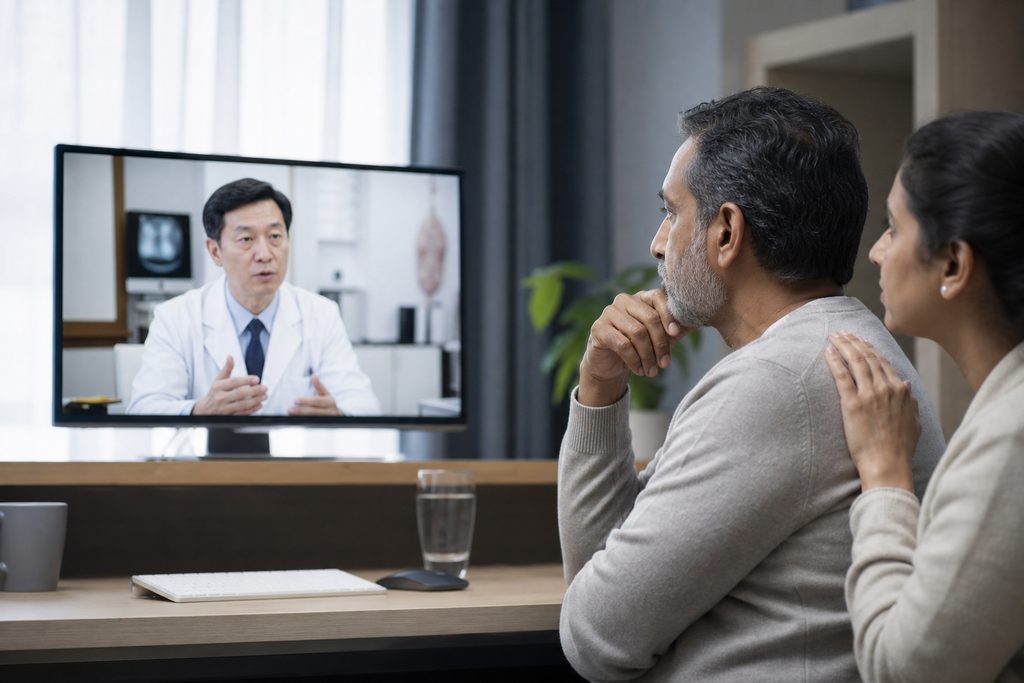
When Rafiq, a 47-year-old garment exporter from Dhaka, was told he needed urgent cardiac bypass surgery, his family faced a decision no one prepares for. The cardiologist in Dhaka was experienced and direct. But Rafiq’s brother, who lives in Kuala Lumpur, kept asking the same question: should we get another set of eyes on this before committing to surgery? Their search led them to a path thousands of Bangladeshi patients now consider each year — a written second opinion from a Chinese hospital, without leaving home first.
Here is the honest answer to what most families want to know. A written second opinion from a top Chinese hospital typically costs between $300 and $500, and the second opinion China cost for Bangladeshi patients rarely exceeds that range unless a multidisciplinary team is involved. You do not need a visa, a flight, or a hotel to get it. What you need is a complete set of your existing examination reports and a clear understanding of what a second opinion can and cannot do.
Second Opinion in China for Bangladeshi Patients: The Short Answer
You send your reports. A Chinese specialty team reviews them and returns a written analysis with treatment suggestions and direction. That is the core of the service, and it usually takes five to ten business days once records are complete.
The caveat matters. A written second opinion is not a diagnosis, and it is not a prescription. It is an expert reading of what you already have. If your imaging is poor quality, incomplete, or older than six months, the value drops sharply. Garbage in, garbage out — that rule holds in Dhaka and in Beijing alike.
Key takeaway: A second opinion is a records review, not a treatment. It helps you decide your next move. It does not replace an in-person examination, and no responsible hospital will promise surgery based on paperwork alone.
Who This Is Right For — and Who It Isn’t
Bangladeshi patients considering China usually fall into a few recognizable groups. The service fits some of them well. For others, it is genuinely the wrong tool.
Usually a good fit:
- You have a serious diagnosis — cancer, cardiac disease, a spinal condition — and surgery has been recommended
- Your local doctors have offered one path, and you want to know whether alternatives exist
- You already have CT, MRI, biopsy, or lab reports in hand, ideally in English or translatable
- You are weighing China against India, Singapore, or Thailand and want a real comparison, not a brochure
- You want to know the likely cost range before committing to travel
Probably not the right fit:
- You need emergency care now. A second opinion takes days. An acute myocardial infarction does not wait.
- You have no imaging or pathology — only symptoms and a verbal impression
- You are looking for someone to confirm a decision you have already made. That is validation, not a second opinion, and it wastes your money.
- Your condition is well managed locally and no major intervention is on the table
Being honest about that last list is the whole point. A second opinion that only tells you what you want to hear is worthless.
The Options, Compared
Bangladeshi patients rarely consider China in isolation. They compare it against India, Singapore, and staying home. Here is how the second-opinion stage actually stacks up.
| Option | Typical Cost (USD) | Turnaround | Travel Required | Language Support |
|---|---|---|---|---|
| Local Dhaka specialist review | $30–100 | 1–3 days | No | Bengali/English |
| India (Apollo, Medanta) | $200–600 | 3–7 days | Often required for full value | English |
| Singapore | $800–2,000 | 5–10 days | Usually required | English |
| China — written second opinion | $300–500 | 5–10 business days | No | English report, bilingual coordination |
| China — top-specialist video consult | $500–800 | Scheduled within 1–2 weeks | No | Interpreter provided |
| China — MDT video review | $1,500–2,000 | 2–3 weeks | No | Interpreter provided |
Which column suits you depends on what you are actually buying. If you want a fast, cheap sanity check, your Dhaka specialist is the rational first stop — and skipping that step is a mistake. If your diagnosis is complex, or surgery has been recommended, the Chinese written review sits in a useful middle ground: more depth than a local review, a fraction of Singapore’s price, and no flight required to get the first answer.
Choosing Among the Best Hospitals in China for Second Opinion Work
This is where most families get lost. China has more than 35,000 hospitals. The ones worth your attention are a small fraction of that.
The Fudan Hospital Ranking is the reference point most Chinese clinicians use. Its general Top 100 list is grouped into five tiers — A++++ down to A — rather than numbered positions, so anyone quoting you “the number three hospital in China” is inventing a ranking that does not exist. What does exist is the specialty reputation list: 45 specialties, each with a ranked top 10. That is the list you want.
Some concrete anchors. Fuwai Hospital in Beijing performs more than 14,000 cardiac surgeries a year, among the highest volumes anywhere. Peking Union Medical College Hospital carries a reputation across internal medicine that spans a century. West China Hospital in Chengdu is a referral center for the entire southwest. Zhongshan Hospital in Shanghai is a destination for hepatobiliary and cardiac work.
For a Bangladeshi patient, the practical question is not “which hospital is best” but “which hospital is best for this specific problem.” A cardiac case and a lymphoma case should not be routed to the same place. Our specialty-by-specialty rankings exist precisely to answer that, and the Fudan Top 100 hospital directory grouped by city lets you see the geographic spread — Beijing alone holds 21 of the tiered hospitals, Shanghai 18, Guangzhou 10.
Practical tip: If your case is oncology, look for a hospital ranked in the specialty reputation list for oncology specifically. A hospital’s overall prestige tells you much less than its standing in your disease area.
How Much Does Medical Second Opinion in China Cost?
For a written review by a top-hospital specialist, budget $300–500. That figure covers the records review and the written opinion. It does not cover translation of your documents if they are not already in English or Chinese, and it does not cover any follow-up consultation.
A video consultation with a regular hospital international department or a private international clinic runs $100–300. When the consultation is with a top-tier specialist, expect $500–800. A multidisciplinary team review — several departments weighing in together on a complex case — runs $1,500–2,000.
What drives the variance? Three things. The seniority and scarcity of the specialist. The complexity of your case, since a straightforward imaging review takes far less time than a multi-organ cancer workup. And whether interpretation is needed during a live session.
One mechanism is worth knowing about. Any consultation fee is credited in full toward on-the-ground coordination if you decide to travel to China within 90 days. That is a one-time credit applied to the coordination fee — never to hospital treatment charges. It means the second opinion is not money thrown away if you proceed.
Practical Considerations: Records, Visa, and Payment
Start with records. You need imaging files, not just the radiologist’s report — the actual DICOM data on a disc or upload. You need pathology slides or blocks if a biopsy was done. You need recent labs, discharge summaries, and a clear timeline of treatment so far. Incomplete records are the single most common reason a second opinion comes back vague.
On the visa question, a frequent and costly misunderstanding: the M visa is a commercial and trade visa and has nothing to do with medical treatment. If you later travel to China for care, the applicable short-stay category is the S2 visa, used for medical treatment and private affairs, subject to the latest requirements from the Chinese embassy or consulate and supported by hospital documents. Stays beyond 180 days fall under S1. Accompanying family members apply under the same S2 category. No one can guarantee approval — that decision belongs to the consulate.
Payment is another reality to plan for. Chinese public hospitals generally require prepayment, with insurance reimbursed afterward. Private international hospitals more often bill insurers directly. If you hold a Bangladeshi policy, confirm in writing whether it covers treatment in China at all before you build a plan around it.
And language. A top Chinese public hospital can see tens of thousands of outpatients in a single day. Signage, registration systems, and most staff operate in Chinese. This is not a reason to avoid China. It is a reason to arrange interpretation in advance rather than improvise on arrival.
Frequently Asked Questions
The records review itself carries no clinical risk — no one is treating you. The real risk is acting on an incomplete opinion. A written review based on partial imaging can mislead. Send complete records, and treat the opinion as one input among several, not a verdict.
Yes, and this is the usual route for Bangladeshi patients, since most cannot easily contact a Chinese hospital’s international department directly. What matters is what the intermediary actually does: translating records, submitting them through the hospital’s official international office, and returning a genuine specialist opinion. Be cautious with anyone promising a specific surgeon’s personal review before they have even seen your files.
That happens, and it is not automatically a sign that anyone is wrong. Different systems have different thresholds for surgery and different access to techniques. The productive move is to bring both opinions back to your treating physician and ask what specifically accounts for the difference. Sometimes the answer is a genuine alternative. Sometimes it is a difference in staging data.
No. The written review and the video consultation are both remote. Travel only becomes relevant if you decide to pursue treatment in China, and even then, an in-person consultation is required before any surgery can be scheduled at a public hospital.
Typically: medical record translation, submission through the hospital’s international office, the specialist’s written analysis, and delivery of the report in English. Video options add a live interpreted session. What is not included is any guarantee of a particular outcome, a specific surgeon, or priority access to treatment — no legitimate provider can promise those.
Your Next Step
A second opinion is not a leap of faith. It is a records review that costs less than a single day of hospital care in many countries, and it can save you from a surgery you did not need — or point you toward one you did. The families who get the most out of it are the ones who gather complete records first and ask specific questions.
We are China Medical Services, a coordination team, not a hospital. We do not diagnose, and we do not treat. We translate records, route them through official hospital international departments, and arrange bilingual support when you need it. If you want to know whether a second opinion makes sense for your situation, start with a free consultation through our patient services page — no pressure, and no obligation to travel.
This article is for general information only and does not constitute medical advice. Treatment decisions should be made with a qualified physician who has examined you. Costs vary by hospital and case complexity.
For more medical information and treatment options in China, visit chinamedservices.com (China Medical Services).
