Neurological Treatment in China: Costs, Hospitals, and How It Works
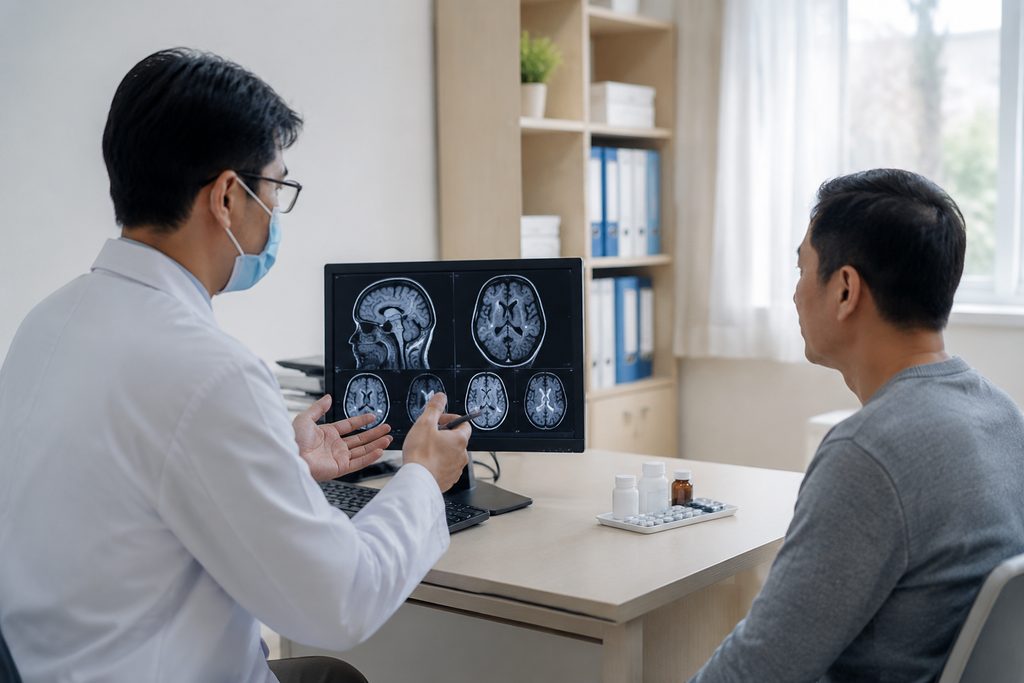
Neurological Treatment in China: Costs, Hospitals, and How It Works
What if the neurologist you need is 7,000 miles away — and the bill for seeing them is one-fifth of what you’d pay at home? That’s the reality driving a quiet surge of international patients toward Chinese neurology departments. The neurological treatment cost in China typically lands between 20% and 40% of equivalent US pricing, and the surgical volumes at the top hospitals are among the highest on earth.
But here’s the part brochures skip. China’s best public hospitals do not run like Western private clinics. You cannot book a specialist from overseas with a credit card and a calendar link. The system rewards preparation, and it punishes assumptions.
Neurological Treatment in China: The Short Answer
Yes, foreign patients can access world-class neurological care in China — for brain tumors, epilepsy, stroke rehabilitation, Parkinson’s disease, spinal disorders, and more. The catch is process, not quality. Top public hospitals require an in-person consultation before any surgery is scheduled, and general outpatient slots cannot be reserved from abroad in advance.
That single rule shapes everything. It means your realistic path runs through a hospital’s international department or VIP channel, where a senior specialist sees you, English interpretation is available, and surgical scheduling becomes possible. Prices there run roughly 1.5 to 2 times the standard channel — still a fraction of Western costs.
Who This Is Right For — and Who It Isn’t
Medical travel suits some patients and quietly harms others. Being honest about which group you’re in matters more than any price table.
Typically a good fit:
- You have a confirmed or strongly suspected diagnosis and clear imaging already in hand.
- You’re facing a long wait at home — weeks or months for a consult, longer for surgery.
- The quoted cost at home is financially out of reach, even with insurance.
- You’re mobile enough to fly and to attend appointments in person.
- You can travel with a companion, or you’re willing to pay for bilingual support.
Probably not the right move:
- You need emergency neurosurgery. Stabilize locally first. Always.
- Your condition is managed well at home and the trip adds risk without adding benefit.
- You’re seeking an experimental procedure unavailable anywhere, on the assumption China offers it quietly. It doesn’t work that way.
- You cannot obtain your records, imaging files, or pathology slides. Without them, no credible evaluation happens.
- You expect a guaranteed surgical date before anyone has examined you. No hospital will promise that.
The Options, Compared
Cost is only one axis. Access speed, language, and payment mechanics differ just as sharply.
| Path | Typical Cost Range (USD) | Wait to See a Specialist | English Support | Payment |
|---|---|---|---|---|
| US academic medical center | $80,000–$200,000+ (complex neurosurgery) | 3–12 weeks | Yes | Insurance billed directly |
| Western Europe (private) | $50,000–$130,000 | 2–8 weeks | Varies | Mixed; often upfront |
| China — top public hospital, standard channel | $15,000–$45,000 | Same-day queue for outpatient; surgery after in-person consult | Limited | Prepayment required; insurance reimbursed later |
| China — public hospital international/VIP department | $25,000–$70,000 | Days to a few weeks, coordinated in advance | Yes | Prepayment; some insurers reimbursed later |
| China — private international hospital | $40,000–$90,000 | Days | Yes, native-level | Direct insurance billing common |
Which column fits you? If your priority is raw surgical volume and the lowest credible price, the public international department is the sweet spot. If you need direct insurance billing and a Western-style ward, look at private international hospitals. If your budget is tight and you can bring your own interpreter, the standard public channel is possible — just slower and harder to navigate.
Which Hospital, and Why Volume Matters in Neurosurgery
Neurosurgery is a volume game. Teams that perform hundreds of a given procedure annually tend to have smoother recoveries and fewer complications than teams that perform a handful. China’s largest centers operate at a scale few Western hospitals can match.
For a best neurology hospital in Beijing, the names that recur are Peking Union Medical College Hospital and Tiantan Hospital, long recognized for neurology and neurosurgery respectively. Shanghai’s Huashan Hospital carries similar weight. Chengdu’s West China Hospital serves as the referral hub for western China. Fuwai Hospital, while primarily cardiac, illustrates the scale principle — over 14,000 cardiac surgeries a year.
Our hospital database covers 340+ top-ranked hospitals across 37 cities — the top 5% of China’s 35,000+ hospitals, ranked by the Fudan Index and JCI accreditation. You can browse by specialty through our department rankings for 45 specialties, or start with Fudan-ranked hospitals grouped by city.
What It Costs — and What Drives the Variance
Published figures for neurological procedures in China vary widely, and anyone quoting you a single number is guessing. Realistic ranges for international patients, all-in:
- Brain tumor resection (craniotomy): $18,000–$45,000
- Awake craniotomy with functional mapping: $25,000–$55,000
- Deep brain stimulation (DBS), including device: $30,000–$60,000
- Epilepsy surgery evaluation and resection: $20,000–$50,000
- Complex spine surgery: $15,000–$40,000
- Gamma Knife radiosurgery: $8,000–$20,000
What moves the number? Implant choice (DBS hardware is the single biggest line item), ICU days, whether a second surgery is needed, hospital tier, and length of stay. These figures cover hospital and surgical fees — they exclude flights, accommodation, meals, and companion costs.
For comparison, the same craniotomy in the US frequently exceeds $120,000 before rehabilitation. That gap is the entire reason medical travel exists.
Is Brain Surgery in China Safe?
This is the question every family asks, usually late at night. The honest answer: safety at China’s top-tier hospitals is well documented, and outcomes at high-volume centers are comparable to Western benchmarks. Safety at an unfamiliar mid-tier hospital you found through a search ad is a different matter entirely.
Three things separate a good decision from a risky one. First, the hospital must be a recognized tertiary center with a dedicated neurosurgery department — not a general hospital that occasionally operates on brains. Second, the surgeon’s case volume in your specific procedure matters more than their title. Third, you need a clear plan for who manages your follow-up after you fly home.
How Long Is Recovery After Brain Tumor Surgery?
Recovery splits into three phases, and patients consistently underestimate the middle one.
Hospital stay: typically 5 to 10 days for an uncomplicated craniotomy. ICU monitoring covers the first 24 to 72 hours.
Early recovery: weeks 2 through 6. Fatigue dominates. Most patients need help with daily tasks. Driving is off the table. Speech, memory, or motor therapy may begin here depending on tumor location.
Return to function: 3 to 6 months for many patients, longer if radiation or chemotherapy follows. Cognitive fatigue often lingers beyond the 6-month mark — a detail that surprises people who expected a linear recovery.
Your fitness before surgery predicts your recovery more reliably than almost anything else. If you have 4 to 8 weeks before travel, use them.
Practical Considerations: Records, Visas, and Payment
Documentation is where most international cases stall. You need your imaging on disc or via a cloud link — DICOM format, not phone photos of a screen. Pathology slides if a biopsy was already done. Operative notes, medication lists, and recent labs. Translated records speed everything up, though Chinese specialists routinely read English-language imaging reports.
On visas: medical travel to China uses the S2 visa, annotated for medical treatment purposes. Stays exceeding 180 days require the S1 category. Accompanying family members apply for S2 as well. Note that the M visa is strictly for commercial and trade activity — it has nothing to do with medical treatment, despite what some outdated websites claim. Requirements shift, so confirm current specifics with your nearest Chinese embassy or consulate before applying.
Payment at public hospitals means prepayment, with insurance reimbursed after the fact. Private international hospitals frequently bill insurers directly. Bring more than one payment method, and confirm your card works internationally before you fly.
Language remains the single largest practical barrier. A top Chinese hospital may see 10,000+ outpatients in a day. Signage, registration systems, and pharmacy queues assume Mandarin. This is precisely where a bilingual medical companion earns their fee — handling registration, queuing, payment, wayfinding, and interpretation while you focus on being a patient.
Frequently Asked Questions
Direct booking of a standard public outpatient slot from abroad generally isn’t possible — those appointments are issued on the day. What is possible is a remote written second opinion or video consultation with a Chinese specialty team, followed by coordinated in-person scheduling through a hospital’s international department once a plan is in place. That staged approach reduces the risk of flying across the world for a five-minute conversation.
Plan for 30% to 50% above the quoted surgical figure. Flights for two, hotel or serviced apartment for 3 to 6 weeks, daily meals, local transport, and interpreter support all add up. A bilingual medical companion runs from $300 per day depending on hours. Airport transfers run around $200 round-trip. These are real costs, not incidentals.
This deserves a concrete answer before you leave China, not after. Request your complete operative report, imaging, and discharge summary in English before departure. Identify a neurologist or neurosurgeon at home who will accept your case and review the records. Ask your Chinese surgical team what follow-up imaging is needed and when. Handoffs between health systems are where continuity breaks — build the bridge yourself, in writing.
Packages vary enormously in quality. A useful one includes hospital matching, appointment coordination, interpretation, and transparent pricing with no markup hidden inside the hospital bill. A less useful one bundles sightseeing with vague clinical promises. Ask any provider directly: are you charging a coordination fee, or are you marking up the hospital’s charges? The answer tells you most of what you need to know.
Your Next Step
China’s top neurology and neurosurgery departments deliver serious clinical capability at a fraction of Western prices. The barrier was never quality — it was navigation. Records, visas, hospital selection, language, and the sequencing of a system that assumes you already know how it works.
We are not a hospital and we do not diagnose. We connect international patients with China’s top-tier hospitals, coordinate appointments through official international departments, and provide bilingual support on the ground. A written second opinion from a Chinese specialist starts at $300, and any consultation fee is credited in full toward on-the-ground coordination if you proceed within 90 days.
If you’re weighing options, start with a conversation rather than a commitment. Tell us about your case and we’ll help you understand what’s realistic — including whether staying home is the better call.
This article is for general information only and does not constitute medical advice. Treatment decisions should be made with qualified physicians who have reviewed your individual case. Costs and timelines vary by hospital and case complexity.
For more medical information and treatment options in China, visit chinamedservices.com (China Medical Services).
