Treatment in China for Mongolian Patients: Costs, Hospitals & Visa Steps
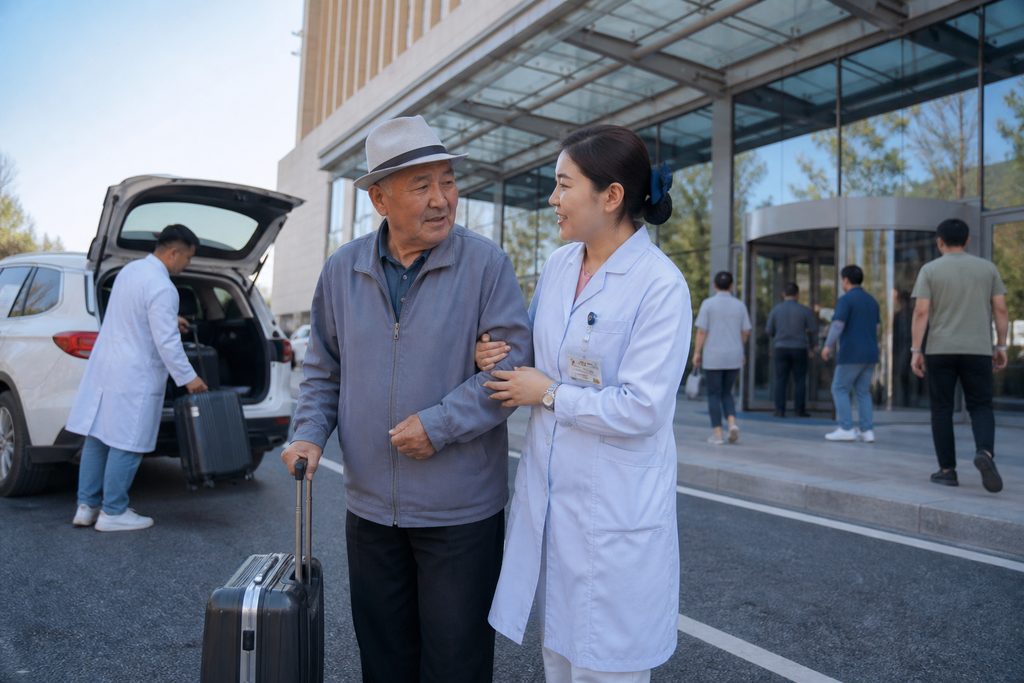
Treatment in China for Mongolian Patients: Costs, Hospitals and the Real Path In
A patient in Ulaanbaatar can wait months for a specialist appointment that a hospital in Beijing or Hohhot may be able to schedule in weeks. That gap is why so many Mongolian families now look south for care. Understanding the realistic treatment in China for Mongolian patients cost — and the steps that come before any price tag — is the difference between a smooth trip and an expensive dead end.
China runs more than 35,000 hospitals. The top 5% of them, ranked by the Fudan University hospital index and JCI accreditation, sit in a different tier entirely from the crowded provincial clinics most people picture. Our team works with 340+ of those top-ranked hospitals across 37 cities, and Mongolian patients are among the most frequent cross-border arrivals we coordinate.
How This Actually Works, Step by Step
Most people assume they can email a Chinese hospital, pick a surgeon, and book a date. That is not how the system works, and knowing this early saves weeks.
Here is the real sequence.
- You gather your records. Existing imaging, lab results, biopsy reports, discharge summaries — whatever you already have. These get translated into Chinese.
- A Chinese specialty reviews them. Not a call center. The relevant department at a specific hospital reads your file and writes back with an assessment, treatment direction, and an estimated cost range.
- You decide whether to travel. This is the pivotal moment. Some cases can be handled remotely or locally. Others genuinely need to be in China.
- Registration and appointment coordination happen. For a standard outpatient visit, this means a same-day queue number. For a locked-in surgery date, it means going through a hospital’s international or VIP department.
- You arrive, see the doctor in person, and admission follows. Surgery in a public hospital requires an in-person consultation first. No exceptions.
That last point trips up a lot of families. You cannot book an operation from Ulaanbaatar and fly in the night before. The face-to-face visit is the gate.
What Treatment in China for Mongolian Patients Cost Looks Like
Let’s put real numbers on the table, because vague answers waste everyone’s time.
China’s top public hospitals generally charge one-fifth to one-tenth of US prices for equivalent procedures. A coronary artery bypass graft — open-heart surgery — runs roughly $12,000 to $20,000 at a leading Chinese public hospital. The same operation in the United States routinely exceeds $120,000. Cardiac surgery volume at Fuwai Hospital in Beijing alone tops 14,000 cases a year, which is part of why the pricing holds.
| Service or Procedure | Typical Range (USD) |
|---|---|
| Written second opinion (top-tier specialist) | $300–500 |
| Video consultation (public international dept. or private) | $100–300 |
| Top-specialist video consultation | $500–800 |
| Multidisciplinary team (MDT) video consult | $1,500–2,000 |
| Bilingual medical companion (per day) | from $300 |
| Hospital appointment coordination | from $300 |
| Coronary bypass surgery (public hospital) | $12,000–20,000 |
These figures vary by hospital and case complexity. A straightforward procedure at a provincial center costs less than the same procedure at a flagship Beijing hospital with an international department. Cancer treatment, orthopedic surgery, and cardiac intervention each have their own curves. We give ranges, never a single guaranteed figure, because no honest provider can quote a final number before a doctor has seen you.
One structural detail matters for budgeting: Chinese public hospitals require prepayment, and you claim reimbursement from your insurer afterward. Private international hospitals — United Family, Jiahui, Parkway, Raffles — often bill your insurance directly, but their prices run higher.
A Realistic Timeline
Here is how a typical case unfolds, with the waiting steps people forget baked in.
| Stage | What Happens | Realistic Duration |
|---|---|---|
| Day 1–3 | You send existing records; intake review begins | 2–4 days |
| Week 1–2 | Translation, specialty assignment, written opinion or video consult scheduled | 5–14 days |
| Week 2–4 | Appointment coordination; S2 visa application and processing | 2–4 weeks |
| Week 4–6 | Travel, in-person consultation, pre-operative testing | 3–7 days on the ground |
| Week 6+ | Surgery or treatment, inpatient stay, discharge planning | Varies by procedure |
| Month 2–3 | Follow-up, remote review of recovery, records sent home | Ongoing |
Visa processing is the step most families underestimate. Build in buffer time. Peak seasons at consulates slow everything down.
What Can Go Wrong — and What Happens Then
Honesty here is worth more than reassurance.
The specialist you wanted is fully booked. Senior surgeons at flagship hospitals have packed schedules. If you specifically request a named professor, there is no guarantee. What we can do is coordinate through the hospital’s official international or VIP channel and, if that specific appointment cannot be secured, refund the coordination fee in full. We never promise a particular doctor or a particular surgery date.
Your case turns out not to need China. This happens more than you would expect. A written second opinion sometimes comes back saying the treatment you were considering is available locally, or that a different approach is better. That is a good outcome, not a failed one — you saved the cost of travel.
The quoted price rises after examination. Initial estimates are based on records. Once a doctor examines you in person and orders fresh imaging, the plan can change. Build a 15–25% buffer into your budget.
Language breaks down at the wrong moment. Chinese flagship hospitals see tens of thousands of outpatients daily. Signage, queue systems, and payment kiosks are in Chinese. Without a bilingual companion, a simple lab visit can consume an entire day. This is not a sales pitch — it is the single most common complaint we hear from families who tried to go it alone.
Choosing the Right Hospital: Best Hospitals in China for International Patients
Not every excellent hospital is set up for foreign patients. The best hospitals in China for international patients share a few traits: an international department with English-speaking staff, experience with cross-border records, and clear prepayment procedures.
Three categories exist, and they serve different needs.
- Public flagship hospitals — the Fudan Top 100. Beijing has 21 of them, Shanghai 18, Guangzhou 10. Names like Peking Union Medical College Hospital, Zhongshan, West China, and Ruijin carry real weight. Best for complex surgery and serious disease, at the lowest cost.
- Private international hospitals — JCI-accredited, English-speaking, direct insurance billing, Western-style service. Higher price, smoother experience. Good for elective procedures and patients who prioritize comfort.
- Traditional Chinese Medicine hospitals — acupuncture, tuina, herbal therapy. Genuinely useful for chronic condition management and rehabilitation. A different tool, not a replacement for surgery.
You can browse the Fudan-ranked hospitals by city or explore specialty rankings through our department guides covering 45 specialties. If your case is cardiac, oncology, or orthopedic, the specialty ranking matters more than the general ranking.
For patients coming from Mongolia, geography is a real factor. Hohhot in Inner Mongolia is the closest major hub. Beijing is a short flight and offers the deepest specialist pool. Many families combine the two — initial consultation closer to home, complex surgery in Beijing.
Practical Considerations: Visa, Payment, and Follow-Up
Visa. Mongolian citizens coming to China for medical treatment apply for the S2 visa, with the purpose of visit noted as medical treatment. Family members accompanying a patient apply for S2 as well. Stays exceeding 180 days require the S1 category instead. The M visa is strictly for commercial and trade activity and has nothing to do with medical care — if anyone tells you otherwise, they are wrong. Always confirm current requirements with the nearest Chinese embassy or consulate and bring supporting hospital documentation.
Payment. Public hospitals want prepayment. Bring a method that works internationally, and confirm the amount before admission. Private hospitals may bill insurers directly.
Records. Bring physical copies and digital files. Chinese hospitals will often re-run imaging on their own equipment, but your original scans help the first consultation move faster.
Follow-up. After discharge, you will want a written summary in a language your home doctor can read. Ask for this before you leave the hospital, not after.
Frequently Asked Questions
China’s top-ranked hospitals meet international standards, and many hold JCI accreditation. Outcomes at flagship centers for cardiac surgery, oncology, and orthopedics are comparable to Western benchmarks. Safety depends heavily on choosing the right hospital for your specific condition — which is exactly why a written second opinion before travel matters.
You start by sending your existing records for review. A relevant Chinese specialty assesses them and returns treatment suggestions and cost direction. From there, appointment coordination goes through the hospital’s official international or VIP channel. Standard outpatient slots cannot be reserved from abroad in advance, and surgery always requires an in-person consultation first.
It is the S2 visa, annotated for medical treatment purposes, with accompanying family members applying under the same category. Stays beyond 180 days use S1. Requirements change, so verify current rules with the Chinese embassy or consulate in Mongolia and prepare supporting documents from the treating hospital.
We can request a named specialist through official hospital channels, but we cannot guarantee it. Senior surgeons have full schedules. If a requested appointment cannot be secured, the coordination fee is refunded in full. No provider can honestly promise a specific surgeon or date in advance.
Add 15–25% for post-examination adjustments, plus travel, accommodation, meals, and companion services. Bilingual medical companion support starts from $300 per day. Airport transfers run $200 round-trip. These are separate from hospital charges and vary by length of stay.
Your Next Step
The core message is simple: get a specialist to read your records before you book a flight. That single step prevents most of the costly mistakes Mongolian patients make when navigating Chinese healthcare for the first time.
Our team connects international patients with 340+ top-ranked Chinese hospitals across 37 cities, and we handle record translation, appointment coordination, and bilingual accompaniment. We are not doctors, and we do not promise clinical outcomes or guaranteed appointments — we coordinate, translate, and walk beside you through a system that is genuinely hard to navigate alone.
If you are weighing treatment in China, start with a free consultation. Send what records you have, and we will tell you honestly whether China is the right path for your case. You can reach us through our patient consultation page whenever you are ready.
This article is for general information only and does not constitute medical advice. Treatment decisions should always be made with a qualified physician who has reviewed your individual case.
For more medical information and treatment options in China, visit chinamedservices.com (China Medical Services).
